
The HYPE token price just put in one of the more striking moves in crypto this year. A 44% rally over five days, a fresh all-time high of $76.90 on Tuesday, and open interest on HYPE futures crossing the $3 billion mark — all while most of the broader crypto market has been grinding lower. Whether that $80 level holds any special gravity is debatable, but the underlying story here goes well beyond a number on a chart.
- The HYPE token price rallied 44% in five days, reaching a new all-time high of $76.90 before pulling back slightly.
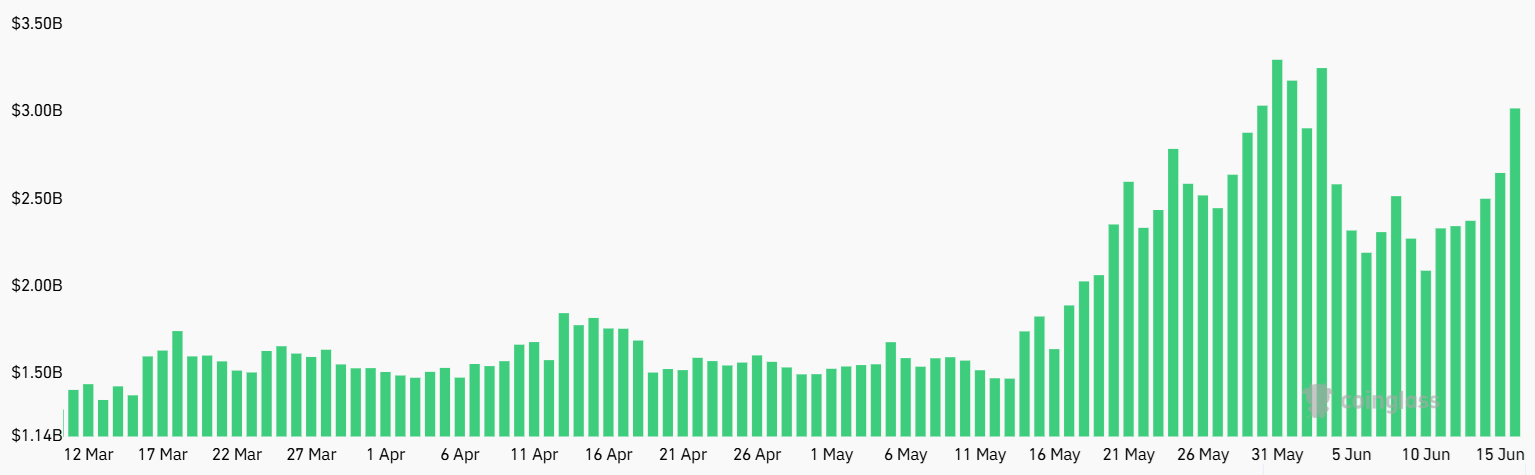
- HYPE token price momentum is backed by $3 billion in open interest, a 32% weekly jump driven largely by short sellers.
- Hyperliquid controls 53% of all perpetual DEX volume globally, with TradFi contracts now exceeding $2.9 billion in open interest.
- A fully diluted valuation of $71.3 billion puts Hyperliquid in the same weight class as major financial firms like Aon Plc.
Table of Contents
HYPE Token Price Surge: What the Numbers Actually Say
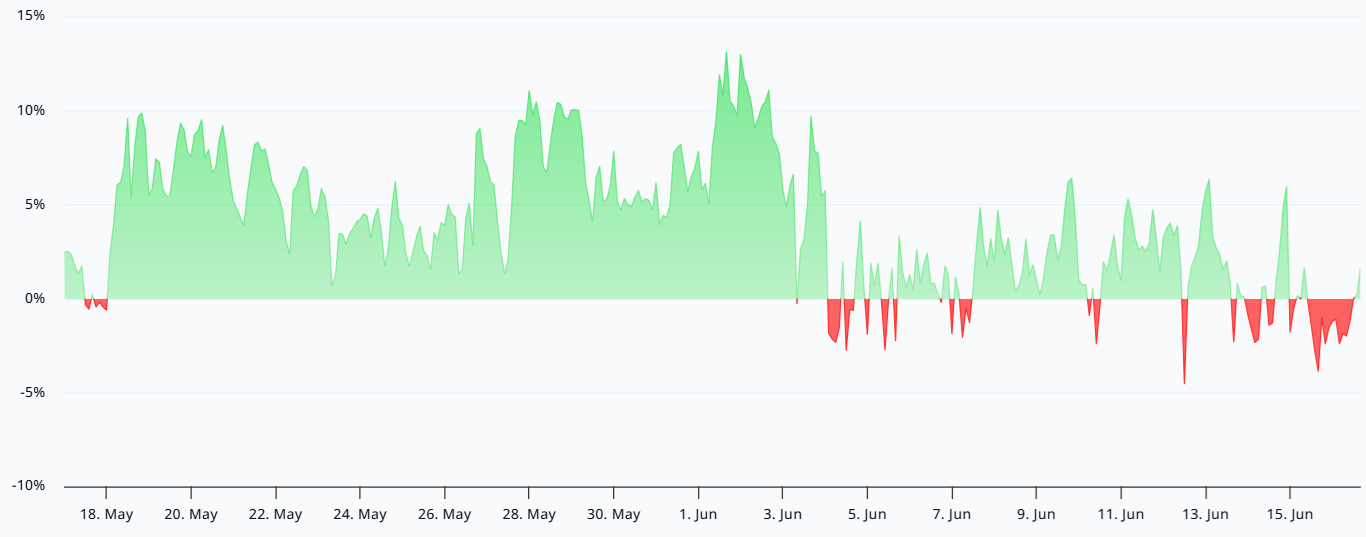
Aggregate open interest on HYPE futures climbed 32% in a single week, according to CoinGlass data. That’s a meaningful signal of growing market participation, but the direction of that participation is where things get interesting. The annualized funding rate on HYPE perpetual futures has stayed below the neutral 6% threshold throughout the rally — which typically means demand for leveraged long positions isn’t actually the engine here.
So who’s adding exposure? The most credible read is that short sellers have been piling in, doubling down against the price rise and absorbing losses in the process. There’s also a reasonable case that core contributors — whose tokens remain locked — have been using futures to partially hedge their unrealized gains. Either way, the open interest surge doesn’t look like a classic retail-driven long squeeze setup. It’s a more complex picture.
The HYPE token price pulled back to around $73 after hitting its peak, which is the kind of consolidation you’d expect after a move that sharp. But the futures market refusing to cool off significantly suggests there’s real conviction on both sides of the trade — a market characteristic that tends to produce volatile follow-through in either direction.
Why Hyperliquid Is Winning the Perpetuals War
To understand the HYPE token price trajectory, you have to understand what Hyperliquid has actually built. The decentralised exchange currently holds a 53% market share in perpetual trading volumes, according to DefiLlama. To put that in perspective: Binance, the world’s largest centralised crypto exchange, sits at just 14%. Bybit comes in at 9%, Bitget at 8%. Hyperliquid isn’t just leading — it’s lapping the field.
That dominance is even more striking given the context. Aggregate DEX volumes have fallen roughly 57% over the past six months as the crypto bear market has ground down activity across the board. Hyperliquid is generating $9.6 billion in activity against that headwind. In perpetual contracts specifically, its 38% market share puts it in a category of one.
A big part of that story is Hyperliquid’s aggressive push into what it’s calling TradFi perpetuals — essentially crypto-native contracts tied to traditional financial instruments. The platform now lists perpetuals on the S&P 500, the Nasdaq 100, crude oil, gold, silver, Google, and Micron. Open interest across these TradFi contracts has crossed $2.9 billion, which is remarkable — and it has already surpassed Bitcoin’s $2 billion in open interest on the same platform.
The most headline-grabbing addition is SpaceX pre-IPO shares, listed under the ticker SPCX. Trading exposure to a company that hasn’t gone public yet, on a decentralised exchange, with 24/7 liquidity — that’s the kind of product that makes traditional brokerages look slow. It’s also exactly the kind of innovation that’s been attracting attention from beyond the usual crypto audience.
Institutional Eyes Are on Hyperliquid
Former Boston Federal Reserve Chair Eric Rosengren publicly highlighted Hyperliquid’s performance, which isn’t the kind of attention most DeFi protocols attract. That’s followed by a notably bullish research report from Citrini Research, a financial analysis firm that doesn’t typically cover crypto with enthusiasm. When you’ve got former central bankers and traditional financial analysts taking notes, the story has moved past niche.
HYPE exchange-traded funds have accumulated $208 million since launch, adding another layer of institutional access to the token without requiring direct on-chain interaction. ETF flows at that scale this early suggest there’s genuine buy-side demand from allocators who want exposure to Hyperliquid’s growth without navigating crypto wallets and private keys.
That institutional angle matters for the HYPE token price outlook because it changes the demand profile. Retail-driven crypto rallies are notoriously volatile and prone to sharp reversals. A broader institutional base — even a nascent one — tends to create more durable support levels and a different kind of market behaviour under stress.
The Valuation Reality Check
Before anyone gets too comfortable with $80 as a layup, there’s a valuation conversation worth having. Hyperliquid’s circulating supply stands at approximately 253.41 million tokens, but the maximum supply is 953.92 million. At current prices, that gives the project a fully diluted valuation of around $71.3 billion.
For context, Aon Plc, one of the world’s most profitable professional services and financial risk management firms, carries a market capitalisation of roughly $70 billion. Aon generates billions in real annual revenue from insurance brokerage, reinsurance, and risk consulting. Hyperliquid is a three-year-old decentralised exchange.
That comparison isn’t meant to dismiss Hyperliquid — it’s genuinely one of the most impressive DeFi builds in recent memory. But it does frame the risk. The dilution gap between circulating and maximum supply means that as more tokens enter the market, existing holders face meaningful pressure unless revenue and usage grow fast enough to justify the higher base. Right now, growth is there. The question is whether it compounds at a rate that makes the FDV look cheap in retrospect, or stretched.
Does $80 HYPE Actually Make Sense?
Looking at the HYPE token price through the lens of what Hyperliquid has actually built — dominant perpetuals infrastructure, a credible TradFi expansion playbook, real institutional attention, and $9.6 billion in recent activity — $80 doesn’t require a suspension of disbelief. It’s approximately 9% above where the HYPE token price was trading as of the pullback to $73, which is well within range given the open interest dynamics and the momentum profile.
What could get in the way? A broader crypto market downturn that overwhelms platform-specific strength. Regulatory scrutiny of TradFi perpetuals on a decentralised platform — which is exactly the kind of product that catches regulators’ attention. Or simply a sustained short squeeze unwinding that removes the artificial support that piled-in short sellers have inadvertently been providing.
The NYSE’s parent company ICE has already started pushing for a ‘level playing field’ around 24/7 on-chain perpetuals, which signals that incumbents are watching Hyperliquid’s model closely — and not necessarily with friendly intentions. Competition from well-capitalised centralised players who decide to build similar products could erode the market share advantage over time.
Still, 53% of global perpetual DEX volume is an extraordinary position to defend from. Hyperliquid has earned its current valuation through execution, not narrative. Whether $80 comes this week or next month is less important than what happens when the TradFi perpetuals category matures — and right now, Hyperliquid is writing those rules.
Frequently Asked Questions
What is driving the HYPE token price rally?
The HYPE token price has been pushed higher by surging open interest in HYPE futures, Hyperliquid’s dominant 53% share of perpetual DEX volumes, and growing institutional interest including $208 million flowing into HYPE ETFs since their launch.
Why is Hyperliquid’s open interest growing even during a crypto bear market?
Hyperliquid has expanded beyond crypto by listing TradFi perpetuals covering assets like the S&P 500, gold, crude oil, and SpaceX pre-IPO shares. These real-world asset contracts have attracted traders who might otherwise stay away from crypto-only platforms.
What is the fully diluted value of Hyperliquid, and why does it matter?
With a circulating supply of around 253 million tokens but a maximum supply of around 953 million, Hyperliquid’s fully diluted valuation sits at roughly $71.3 billion — comparable to the market cap of Aon Plc, a major global financial services company. That dilution risk is a real factor for long-term holders.
Does the HYPE futures funding rate suggest a sustainable rally?
Not straightforwardly. The annualized funding rate on HYPE perpetual futures has stayed below the neutral 6% threshold, suggesting the open interest growth is being led by short sellers rather than leveraged bulls — an unusual dynamic for a token trading near all-time highs.