
For years, picking a browser was a relatively boring decision. You either stuck with Chrome because everything worked in it, used Safari because you were on a Mac, or picked Firefox because you cared about the open web. That calculus has shifted dramatically. The best Chrome alternatives in 2026 aren’t just offering better privacy or slicker interfaces — they’re promising to do things for you, acting as AI agents that can send emails, book calendar slots, fill out forms, and research topics without you lifting a finger. The browser wars have entered a genuinely new phase, and the stakes couldn’t be higher.
Table of Contents
Why the Browser Wars Are About AI Now
Google Chrome and Apple Safari still command the overwhelming majority of browser market share. Chrome’s continued dominance owes a lot to how aggressively Google has tied its generative AI features into search — when Gemini is baked right into the address bar, switching browsers has a real cost. But that dominance is exactly what’s drawing challengers. Everyone from OpenAI to Y Combinator-backed startups is betting that the browser is about to become less of a passive window onto the web and more of an active participant in your digital life. For anyone evaluating the best Chrome alternatives, this shift in ambition is the most important story in tech right now.
The question isn’t really whether browsers will get smarter. It’s which company’s AI will end up with a front-row seat to everything you do online — your passwords, your email, your banking, your calendar. That’s an extraordinary level of access, and it explains why so much venture capital and Big Tech ambition is flowing into this space right now. Choosing among the best Chrome alternatives has never carried more consequence.
Best Chrome Alternatives Powered by AI
The most talked-about best Chrome alternatives right now are those built around AI agents. Below is a breakdown of the leading contenders and what sets each one apart.
Perplexity Comet
Perplexity has built a credible reputation as a search engine challenger, and its new browser, Comet, is the company’s most ambitious move yet. Rather than just answering questions, Comet can take action — summarising your emails, browsing pages on your behalf, and sending calendar invites. It’s essentially a chatbot with a browser wrapped around it. The catch? It’s currently locked behind Perplexity’s $200-per-month Max plan, making it one of the most expensive browser propositions on the market. A public waitlist is open for everyone else. At that price, Comet is clearly aimed at power users and enterprise customers first. As a best Chrome alternative, it’s exceptional in capability but limited in accessibility.
The Browser Company’s Dia
The Browser Company built a devoted following with Arc, a browser that genuinely rethought how tabs and navigation should work. Now the New York-based startup has introduced Dia, an AI-first browser that, on the surface, looks fairly similar to Chrome. The real difference is under the hood: Dia can see every website you’ve visited and every service you’re logged into, using that context to help you find information, answer questions about pages you’re browsing, and summarise documents you upload. It’s currently invite-only, available to existing Arc members, with a waitlist for newcomers. The approach raises obvious questions about data handling, but The Browser Company has staked its identity on being user-first rather than advertiser-first. For users already sold on Arc’s philosophy, Dia is a natural next step among the best Chrome alternatives.
Opera Neon
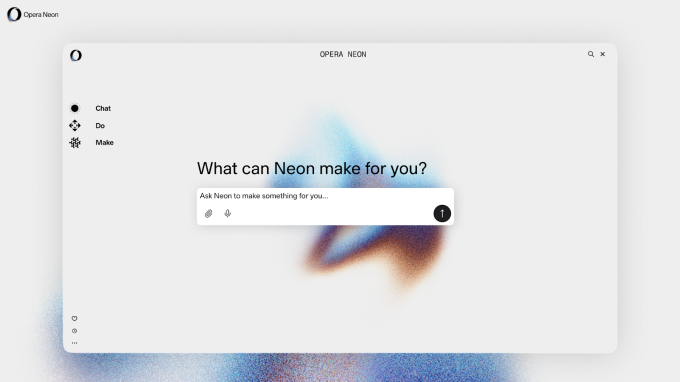
Opera has always been willing to experiment where others won’t, and Neon is the company’s answer to the agentic browser moment. It can research topics, help with shopping, write snippets of code, and — notably — keep working on tasks even when you’re offline. That last capability sets it apart from most rivals. Available now on macOS and Windows at $19.90 per month, Neon is the most accessible premium AI browser currently in general availability. If you’re weighing the best Chrome alternatives by value, Neon sits in a sweet spot between Comet’s steep pricing and the free tiers offered by newer entrants.
OpenAI’s Atlas
It’s hard to overstate how significant it is that OpenAI — the company that essentially started the current AI gold rush with ChatGPT — has entered the browser market. Atlas lets users query ChatGPT directly about search results and browse within the chatbot interface itself, removing the need to jump between tabs. Its ‘agent mode’ goes further, letting ChatGPT complete tasks autonomously on your behalf. Atlas was widely rumoured for a summer launch but only arrived on macOS in October. Windows, iOS, and Android versions are reportedly coming. The integration with ChatGPT gives Atlas a distribution advantage that most rivals simply can’t match — OpenAI already has hundreds of millions of users who are familiar with the interface. Among the best Chrome alternatives, Atlas may have the broadest built-in audience from day one.
Aside

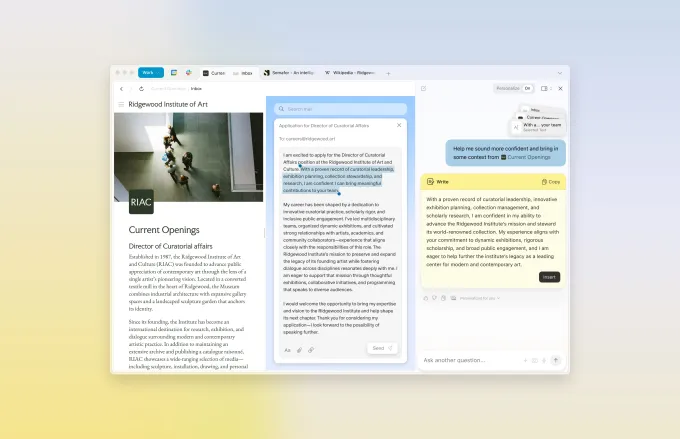
Backed by Y Combinator, Aside is taking perhaps the most audacious approach of any entrant in this space. The company describes its product bluntly: ‘Give it your passwords, browsing history, and browser context.’ From there, Aside autonomously completes tasks, fills out forms, and manages data — working natively inside the browser rather than relying on third-party integrations. That means it works across Gmail, Notion, Slack, Figma, and even banking platforms without needing those services to build a special connector. Aside hasn’t launched publicly yet, but a waitlist is open. If the privacy implications don’t scare you off, the capability ceiling here looks genuinely high. As one of the best Chrome alternatives for deep automation, Aside is one to watch closely.
Jatter
On the more accessible end of the AI browser spectrum sits Jatter, which launched in June. It lets you ask questions about any web page, surfaces personalised recommendations based on your browsing history, and includes a built-in Notes app that it can learn from over time. Jatter is available on Mac, Windows, iOS, and Android — the broadest platform coverage of any AI browser listed here — and it’s free, with an optional premium tier at $10 per month. That free tier makes it the lowest-friction entry point for anyone curious about AI-assisted browsing without committing to a subscription. For casual users exploring the best Chrome alternatives, Jatter is an easy first step.
Best Chrome Alternatives for Privacy
Not every user wants an AI agent reading their emails. For those whose priority is reclaiming data from trackers and advertisers, these best Chrome alternatives make a compelling case.
Brave
Brave has been making the privacy case for years, and it remains one of the most compelling options for users who want aggressive protection without much configuration. Ad and tracker blocking are on by default, and the browser’s unusual reward system — where users can opt into seeing ads and earn Basic Attention Token (BAT) cryptocurrency in return — has attracted a loyal niche. Brave has since added a built-in VPN, an AI assistant, and video calling. It’s become less of a single-purpose privacy tool and more of a full-featured browser that happens to take privacy seriously. As one of the best Chrome alternatives for everyday use, Brave’s combination of familiarity and built-in protection is hard to beat.
DuckDuckGo
Most people know DuckDuckGo as a search engine, but its browser has become a serious product in its own right. Founded back in 2008, the company has recently invested heavily to stay competitive, adding a generative AI chatbot and significantly upgrading its scam-blocking capabilities. The updated scam blocker now catches fake cryptocurrency exchanges, scareware pop-ups, and fraudulent e-commerce sites — threats that have exploded in sophistication over the past couple of years. It doesn’t track user data, which means far fewer cookie consent pop-ups and no behavioral advertising profile being built in the background. Among the best Chrome alternatives for privacy-first users, DuckDuckGo’s browser deserves more attention than it typically gets.
Ladybird
The most ambitious privacy project in the browser space right now isn’t from a startup with a slick pitch deck — it’s led by Chris Wanstrath, the co-founder and former CEO of GitHub. Ladybird’s goal is to build an entirely new open-source browser engine from scratch, without borrowing any code from existing browsers. That’s an almost unprecedented undertaking. The vast majority of alternative browsers — Brave, Edge, Opera, and many more — are built on Google’s Chromium engine, meaning Google’s architectural decisions still shape most of the web. Ladybird wants to break that dependency entirely. An alpha version is targeted for 2026, initially on Linux and macOS. It’s a long-term project, not an immediate Chrome replacement, but it matters enormously for the long-term health of the open web. You can follow its progress at ladybird.org. In the broader landscape of the best Chrome alternatives, Ladybird is the one thinking furthest ahead.
Vivaldi
For power users who want deep customisation without sacrificing compatibility, Vivaldi deserves a look. Created by one of Opera’s original developers, it’s Chromium-based — so it handles the modern web without issues — but it layers an unusually rich set of interface options on top. Tab stacking, split-screen browsing, and granular privacy controls are all part of the package. It won’t win over users who want simplicity, but for anyone who felt Chrome gradually stripped away options over the years, Vivaldi is a genuine antidote and one of the best Chrome alternatives for customisation-focused power users.
What This All Means for the Future of Browsing
The sheer number of serious browser launches in 2026 tells you something important: the industry believes the browser is about to become the most strategically valuable piece of software on your device. Not the phone’s operating system, not individual apps — the browser. Because if your browser is also your AI agent, it sees everything. It’s the layer that sits between you and the entire internet. That’s precisely why evaluating the best Chrome alternatives is no longer just a matter of personal preference — it’s a decision about who gets access to your digital life.
That’s an extraordinary amount of trust to hand over, and it’s striking how openly some of these companies are asking for it. Aside literally tells users to hand over their passwords. Dia monitors every site you’ve logged into. Comet reads your emails. These aren’t bugs in the pitch — they’re features. The value proposition only works if the browser has full context.
Google and Apple aren’t standing still, of course. Chrome’s AI integrations are deepening with every update, and Safari’s tie-in with Apple Intelligence is only going to grow tighter as Apple pushes further into on-device AI. The challengers have a real window right now, while the incumbents are still figuring out how aggressively to push AI features without alienating privacy-conscious users. Whether any of today’s upstarts can convert that window into lasting market share is the defining question of browser competition for the next few years — and the answer will shape how AI ends up embedded in our everyday digital lives. Whichever of the best Chrome alternatives ultimately wins that race, the browser you choose today has never mattered more.
Frequently Asked Questions
What are the best Chrome alternatives for privacy in 2026?
Brave, DuckDuckGo, and Vivaldi remain the top privacy-focused picks. Brave blocks ads and trackers by default and even rewards users with cryptocurrency. DuckDuckGo has added AI features while maintaining its strict no-tracking policy. Ladybird, an open-source browser built from scratch, is due in alpha later this year.
What is the best Chrome alternative with AI built in?
It depends on your budget. OpenAI’s Atlas and Perplexity’s Comet are the most capable agentic options, letting ChatGPT or Perplexity’s AI complete tasks on your behalf. Opera Neon and The Browser Company’s Dia offer more affordable AI-assisted browsing, while Jatter is free with an optional $10 monthly upgrade.
Is Perplexity Comet available to everyone?
Not yet. Comet is currently restricted to subscribers on Perplexity’s Max plan, which costs $200 per month. Everyone else can join a public waitlist. It’s one of the most expensive AI browser offerings currently on the market.
When will OpenAI’s Atlas browser come to Windows and mobile?
Atlas launched on macOS in October, later than initially expected. OpenAI has indicated Windows, iOS, and Android versions are coming soon, though no firm release dates have been announced.