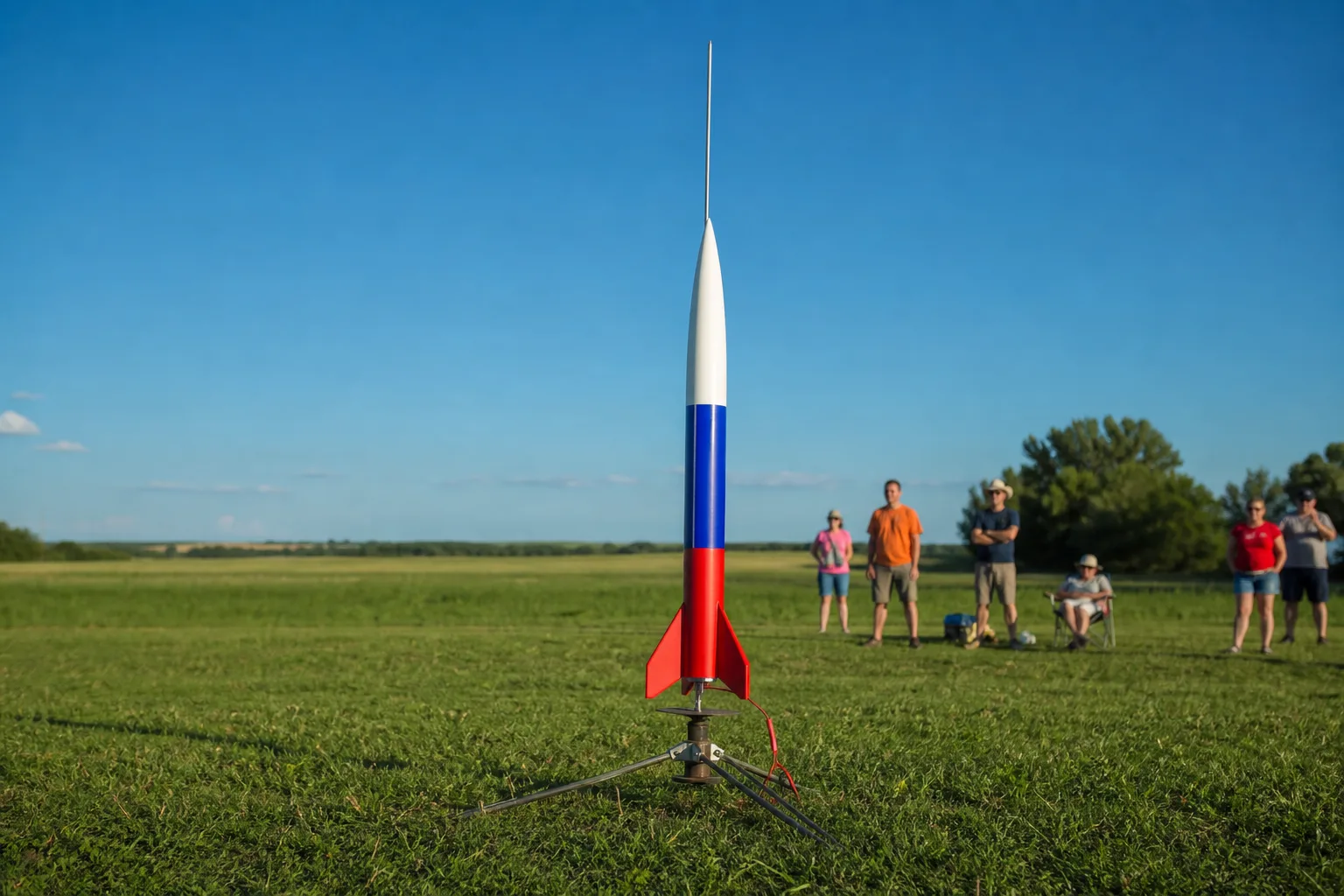
America’s 250th birthday only happens once, and if a backyard fireworks display feels a little too ordinary, the Estes Liberty Star model rocket is a genuinely compelling alternative. Draped in red, white and blue, priced at $38.84, and capable of punching 920 feet into the sky, it’s the kind of limited-edition product that sits at a rare intersection of nostalgia, hobby culture, and national celebration.
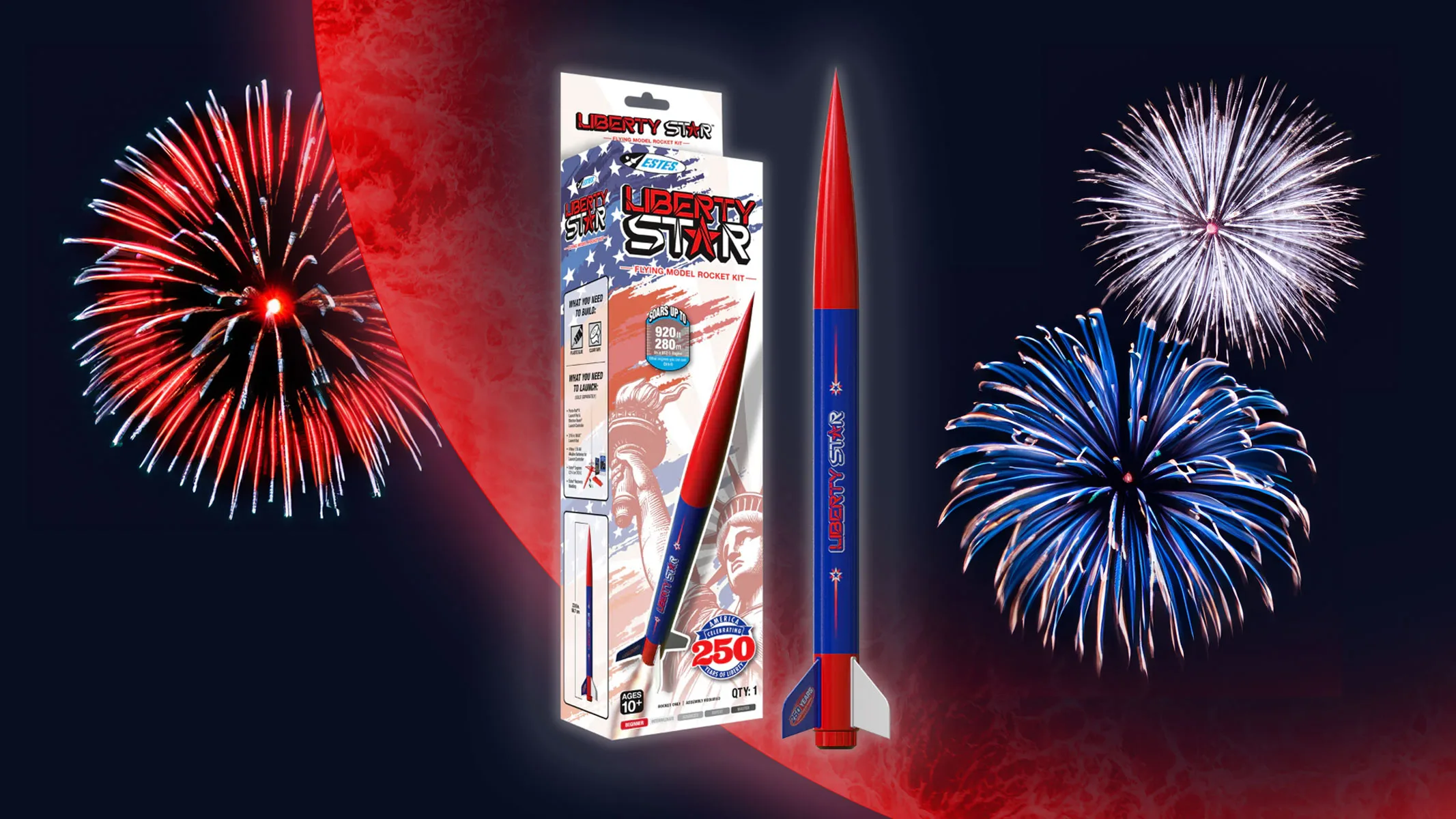
Table of Contents
What the Estes Liberty Star Model Rocket Actually Is
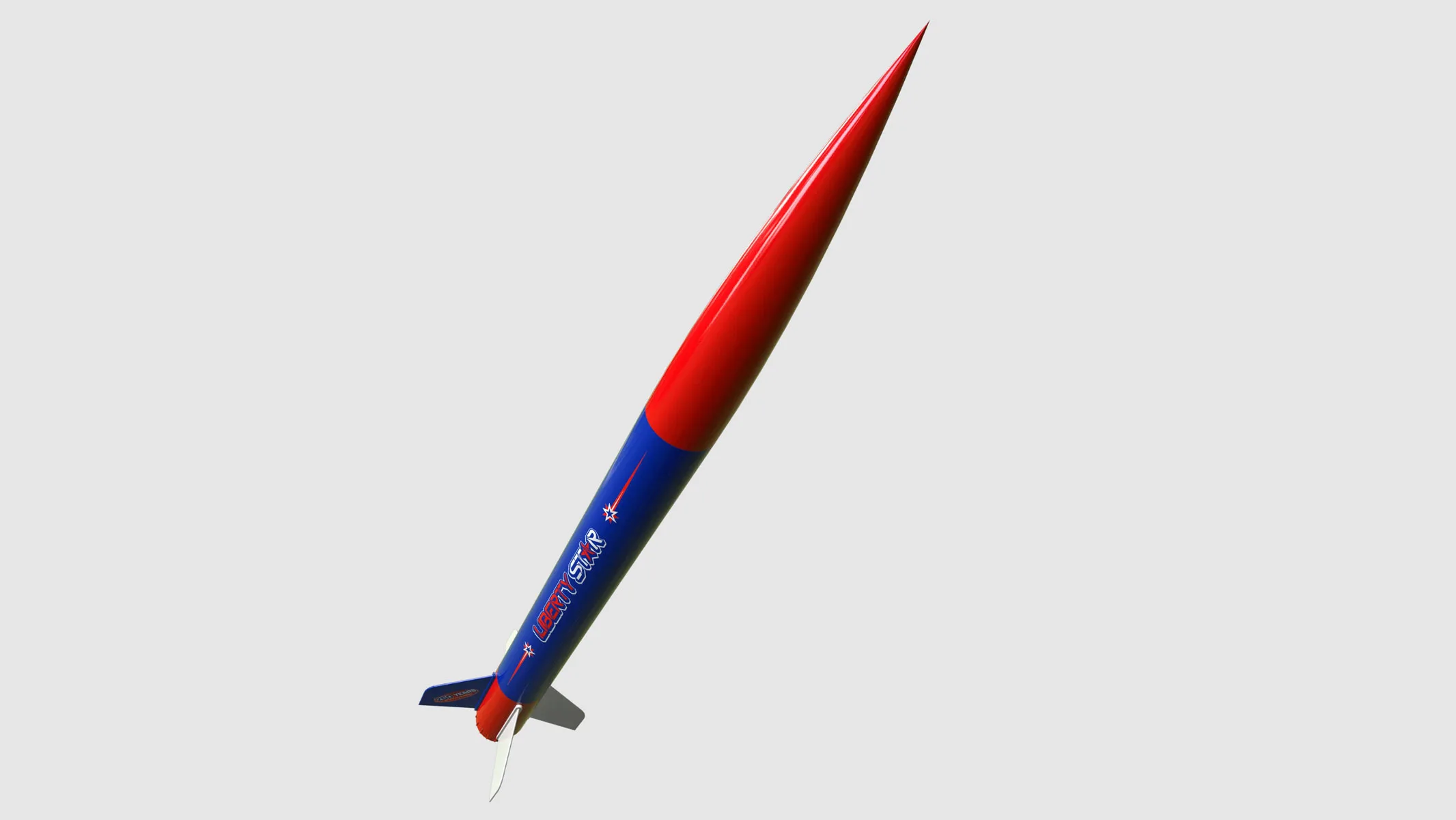
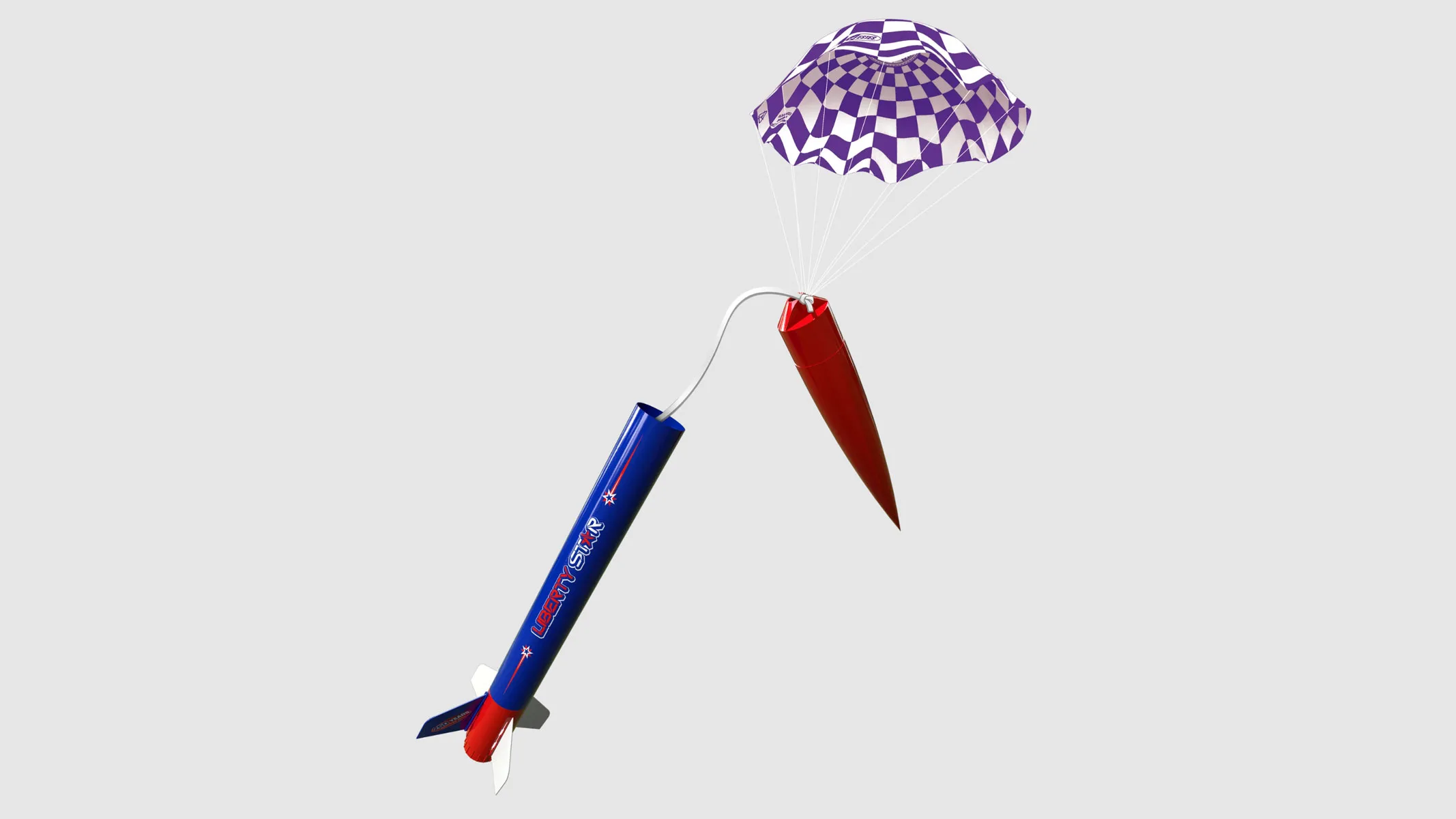
At its core, the Estes Liberty Star model rocket is a single-stage model rocket built around Estes’ well-established beginner platform. The kit ships with pre-moulded plastic fins — no balsa sanding required — and the entire assembly clocks in at under 10 minutes. That’s a deliberate design choice. Estes has spent decades refining entry-level kits for first-time flyers, and the Liberty Star fits squarely into that lineage.
The specs are straightforward: the rocket weighs just 3.5 oz (99.2 g), stands ready for a C11-5 or D12-5 motor, and carries a 15-inch (38 cm) parachute packed into the nose cone section. When the motor burns out and the ejection charge fires, that chute pops and floats the rocket back down for another flight. It’s a recovery system Estes has trusted for decades, and it works.
Projected altitude sits at 920 feet — roughly the height of a 90-storey building. That’s not nothing. You’ll watch it shrink to a speck before the parachute opens, which is honestly most of the fun.
Why the Estes Liberty Star Model Rocket Is More Than a Novelty
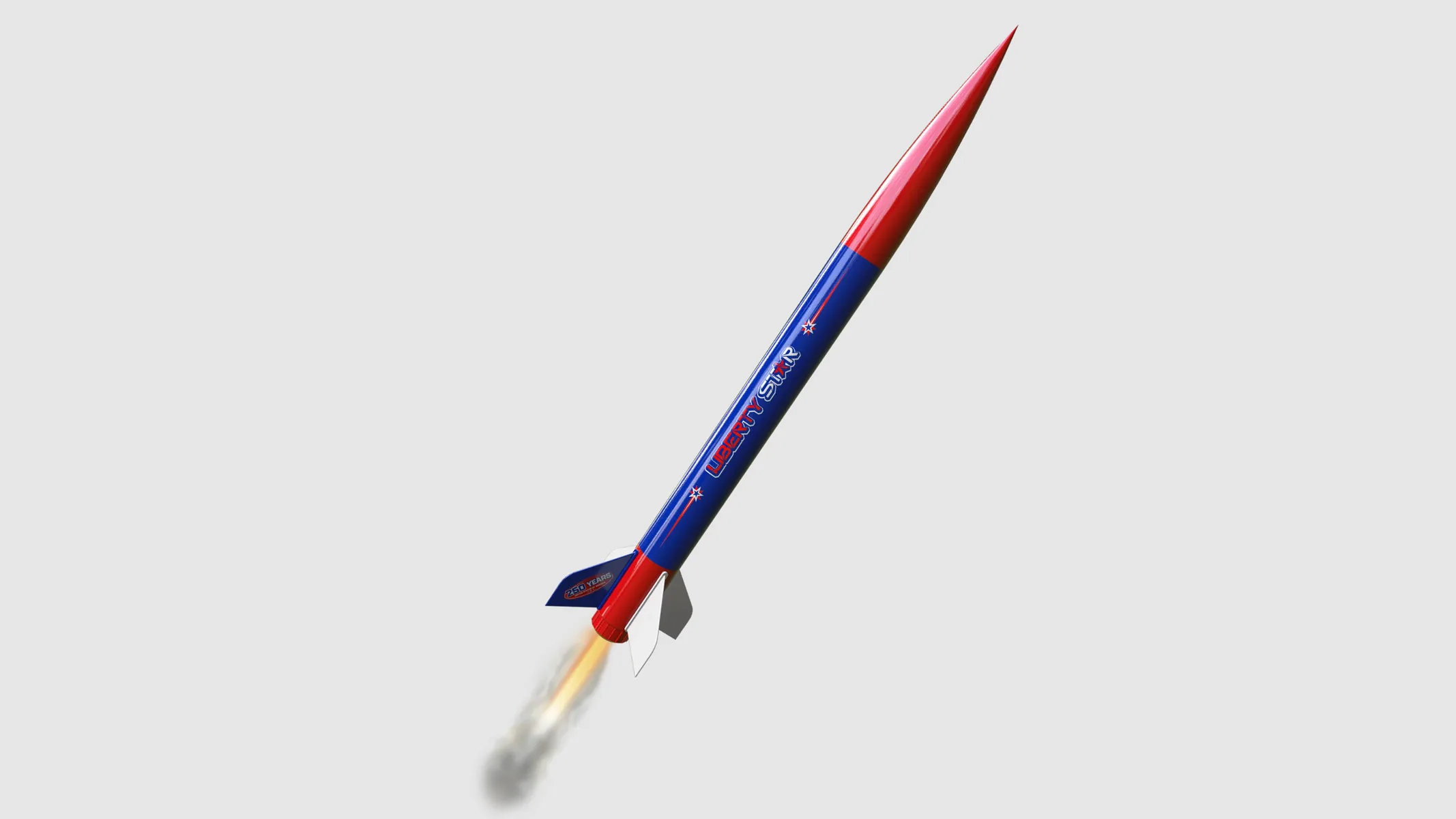
The timing here is worth taking seriously. America’s 250th anniversary falls on July 4, 2026 — a milestone that won’t come around again for any of us. Estes clearly designed the Estes Liberty Star model rocket with that in mind, and the red, white and blue livery is a lot more considered than a simple paint job. The ‘Liberty Star’ name, the commemorative positioning, the limited-edition label — this is a product that functions as both a working rocket and a collectible.
That dual identity matters. Parents who want to introduce a kid to model rocketry have a natural hook: ‘We launched this on the 250th Fourth of July.’ That’s a story. Meanwhile, collectors who already have an Estes fleet on display have an obvious gap to fill. A limited-edition release tied to a once-in-a-generation national anniversary is exactly the kind of thing that ends up staying in the box — which is arguably a shame, because the Estes Liberty Star model rocket is meant to fly.
Estes’ Long History With Safe Model Rocketry
It’s impossible to talk about Estes without acknowledging the company’s foundational role in making model rocketry a safe, accessible hobby. When Estes launched in the late 1950s, the landscape was genuinely dangerous. Teenagers were mixing their own propellants from scratch, and serious injuries were disturbingly common. Estes helped change that by working with the National Association of Rocketry (NAR) to establish standardised safety codes that the hobby still runs on today.
Those standards cover everything from minimum launch site distances to motor classification — the A through F engine codes that every model rocketeer learns early. The C11-5 and D12-5 motors recommended for the Estes Liberty Star model rocket fall well within the NAR’s ‘model rocket’ classification, meaning they’re commercially manufactured, pre-loaded, and contain no user-accessible propellant. You’re not mixing anything. You’re inserting a certified cartridge and following a checklist.
That history matters when you’re handing a rocket to a beginner. Estes isn’t just a brand — it’s the organisation that professionalised hobby rocketry as a category. Six of their rockets appear in our model rocket guide, and that’s not coincidence.
What You’ll Actually Need to Launch
The Estes Liberty Star model rocket kit is beginner-friendly, but ‘beginner-friendly’ doesn’t mean ‘everything included.’ If you’re coming to model rocketry for the first time, you’ll need a few additional items before launch day:
- Estes Porta-Pad II launch pad — a folding, portable pad with blast deflector that keeps the motor exhaust from scorching the ground beneath the rocket.
- Estes 3/16-inch Maxi launch rod — the rod guides the rocket through its initial boost phase until it has enough velocity to fly stable on its own.
- C11-5 or D12-5 motor — available from hobby stores or directly through Estes. The D12-5 will push the rocket closer to that 920-foot ceiling; the C11-5 is a slightly milder option.
None of this is expensive. The Porta-Pad and rod typically run $15–$25 combined, and motors cost a few dollars each. But it’s important to budget for it — showing up on July 4th with a rocket and no launch equipment would be a painful experience.
One more thing: model rocketry is regulated at the local level in many US states and municipalities. Fire codes in California, for example, can be extremely restrictive during summer months. Check your county’s rules, pick a wide open grass field well away from trees, and keep a bucket of water nearby. Estes has been preaching this for sixty-plus years, and they’re right to.
Is $38.84 the Right Price?
At $38.84 — the same on both Amazon and Walmart at time of writing — the Estes Liberty Star model rocket sits comfortably in the entry-level to mid-range bracket for Estes kits. You can find simpler Estes rockets for under $20, but they won’t carry the commemorative branding or the collectible appeal of a limited-edition anniversary release.
The value proposition depends on what you’re buying it for. As a first model rocket, the Estes Liberty Star model rocket is a strong choice — the quick build time and pre-moulded fins reduce the frustration barrier that trips up a lot of first-timers. As a collector’s piece, a $38.84 price tag on a limited-edition, date-specific release looks reasonable in five years’ time. And as a 250th anniversary experience shared with a kid, a parent, or a group of friends on a summer afternoon? That’s harder to put a number on.
The broader model rocket market has seen steady growth over the past several years, driven partly by the renewed public interest in spaceflight following the commercial space boom. SpaceX, Rocket Lab, and Blue Origin have put rockets back into mainstream cultural conversation in a way they haven’t been since the Apollo era. Estes, quietly, benefits every time a launch captures headlines. A generation of kids watching Falcon 9 boosters land themselves are the same kids who are now asking their parents for a kit to try at home. The Estes Liberty Star model rocket arrives at exactly the right cultural moment.