

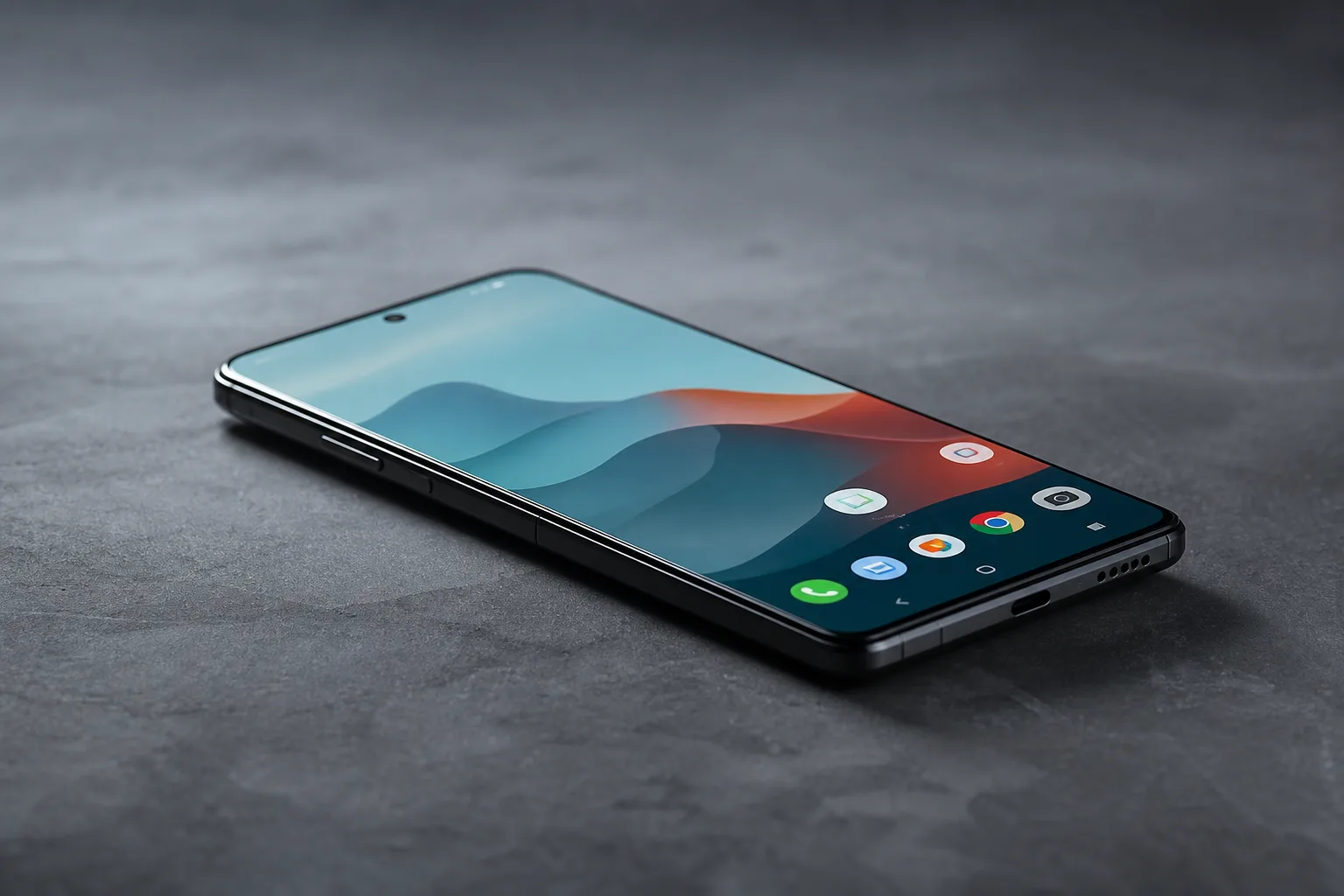
The Xiaomi 18 Pro hasn’t been officially announced yet, but thanks to prolific Weibo leaker Digital Chat Station, we already have a surprisingly detailed picture of what Xiaomi is planning for its next flagship. And if the reported specs hold up, this is shaping up to be one of the more significant generational jumps the company has made in a while.
- The Xiaomi 18 Pro is expected to launch in September 2025 alongside two siblings, powered by Qualcomm’s next-gen Snapdragon 8 Elite Gen 6 Pro.
- The Xiaomi 18 Pro’s camera system reportedly jumps to a 200MP main sensor, a significant step up from the 17 Pro’s primary shooter.
- A flat ‘ultra-clear’ display with symmetrical ultra-narrow bezels on all four sides marks a notable design shift from the curved screen on the 17 Pro.
- Battery capacity is set to grow substantially, with early reports pointing to a larger cell with faster wired and wireless charging.
Table of Contents
Xiaomi 18 Pro Arrives with Qualcomm’s Next Big Chip
The headline spec is the processor. The Xiaomi 18 Pro is reportedly set to run on the Snapdragon 8 Elite Gen 6 Pro — the premium variant of Qualcomm’s upcoming Snapdragon 8 Elite successor. If that pans out, Xiaomi will be among the very first manufacturers in the world to ship a device on this silicon, continuing its tradition of being an early Qualcomm launch partner.
That ‘Pro’ suffix on the SoC matters. Qualcomm has started tiering its flagship chips more aggressively, and the Pro variant typically means higher clock speeds and, in some configurations, additional AI processing headroom. For the Xiaomi 18 Pro, that could translate to better on-device AI features — something every Android OEM is now racing to tout.
The Xiaomi 18 and the Xiaomi 18 Pro Max are expected to launch alongside it, making September 2025 a potentially important moment for Qualcomm’s new architecture. Three devices at once means volume, and volume means the Snapdragon 8 Elite Gen 6 gets a real-world stress test almost immediately after launch.
A 200MP Camera Is the Biggest Upgrade on Paper
One of the most eye-catching claims in the leak is the camera. The Xiaomi 18 Pro is said to feature a 200MP main sensor — a dramatic increase from the primary camera on the Xiaomi 17 Pro. That’s a substantial jump in resolution, at least on a spec sheet.
Now, megapixel counts are a famously unreliable proxy for actual image quality. Samsung has been shipping 200MP sensors in its Galaxy S Ultra line since the S23 Ultra, and the results have been genuinely impressive, but only because the underlying sensor hardware and software processing are up to the task. Xiaomi partnering with Leica on its camera tuning — a collaboration that began with the Xiaomi 12S series — gives some confidence that raw resolution will be matched with competent processing. Whether this is a Samsung HP9-class sensor or something purpose-built will be a key detail to watch when official specs drop.
Beyond the main camera, further details on the telephoto and ultrawide configuration haven’t been confirmed, though Xiaomi’s recent flagships have pushed hard on periscope zoom. It would be surprising if the Xiaomi 18 Pro stepped back there.
Flat Display Makes a Comeback
Display design tells you a lot about where a brand thinks the market is heading. For the Xiaomi 18 Pro, the reported shift from a curved screen to a flat panel is a meaningful signal. Digital Chat Station describes it as an ‘ultra-clear’ small flat screen with large rounded corners and ultra-narrow symmetrical bezels on all four sides.
The industry has been quietly walking back its love affair with curved displays. Samsung narrowed the curve on the Galaxy S25 series significantly compared to earlier generations. Google’s Pixel 9 Pro went flat. OnePlus has toggled back and forth. There’s a pragmatic reason: curved edges look sleek in renders but create accidental touches, complicate screen protector installation, and can distort content near the edges. Flat is, increasingly, what power users actually want.
Ultra-narrow bezels across all four sides is the trickier engineering challenge. Achieving symmetry on the chin — historically the thickest bezel — requires tighter component packaging and more sophisticated display bonding. If Xiaomi pulls it off, the Xiaomi 18 Pro could genuinely rival the Galaxy S25 Ultra and the iPhone 16 Pro in terms of screen-to-body ratio.
Battery Gets a Meaningful Bump
Early reports also point to a larger battery. The Xiaomi 18 Pro is said to pack a considerably larger cell than its predecessor, with reportedly faster wired and wireless charging speeds that would put Xiaomi well ahead of Samsung and Apple on both metrics.
To put that in context: Apple’s iPhone 16 Pro Max tops out at around 27W wired charging. Samsung’s Galaxy S25 Ultra manages 45W. Xiaomi’s approach — prioritising raw charging speed alongside larger batteries — reflects a fundamentally different philosophy, one that’s resonated strongly in Asian markets and is slowly winning converts in Europe.
Whether a larger battery introduces any weight or thickness trade-offs compared to the 17 Pro will depend on the cell chemistry Xiaomi uses. The company has been investing in silicon-carbon battery technology, which offers higher energy density than conventional lithium-ion. If that’s what’s inside the Xiaomi 18 Pro, the larger capacity doesn’t necessarily mean a heavier phone.
What This Means for the Android Flagship Race
The Android flagship market in the second half of 2025 is going to be fiercely competitive. Samsung already has its Galaxy S25 series in the field. Google will almost certainly announce the Pixel 10 Pro around October. OnePlus is expected to update its flagship line. And Apple, of course, will reveal the iPhone 17 series in September — the same window Xiaomi is targeting.
The Xiaomi 18 Pro landing in that same month is no accident. Xiaomi wants to be part of the same conversation. Globally, the brand still trails Samsung and Apple in brand recognition outside China, but the spec-per-dollar proposition has always been its sharpest weapon. A 200MP camera, a next-generation Snapdragon, a flat display with thin bezels, and a large fast-charging battery — if all of that comes in at a price below what Samsung charges for the Galaxy S25 Ultra, Xiaomi has a genuine argument to make.
There’s also the broader chipset story to consider. The Snapdragon 8 Elite Gen 6 being first seen in a Xiaomi device reinforces a relationship that’s been building for years. Qualcomm benefits from the early volume; Xiaomi benefits from the first-mover marketing. It’s a dynamic that’s worked well for both parties, and it’s unlikely to change anytime soon.
We’re still months out from a formal announcement, and leaked specs have a habit of shifting before launch day. But the trajectory is clear: Xiaomi isn’t playing it safe with the 18 Pro.

