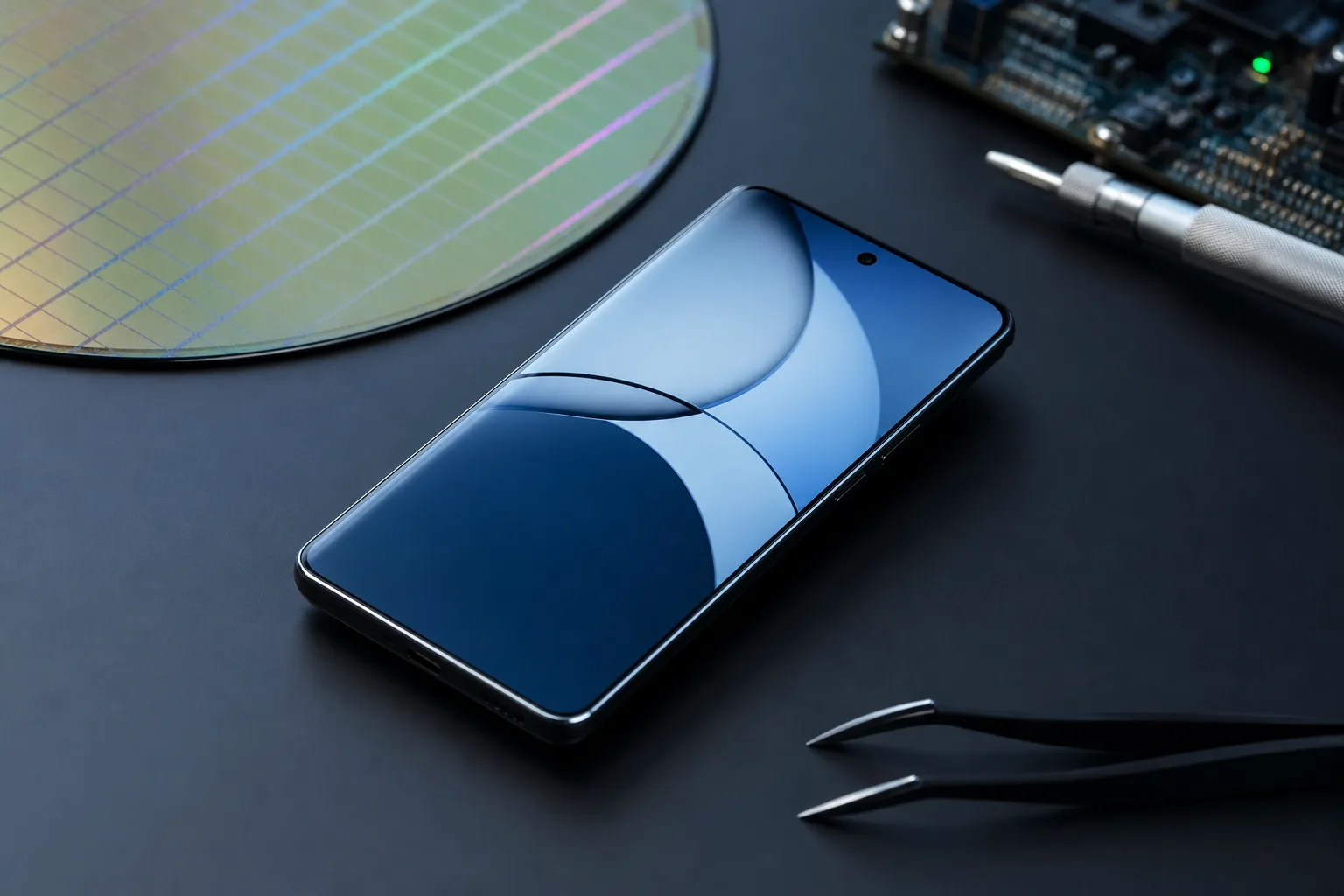
- Pixel 11 Tensor could make Google the first phone maker to ship TSMC’s 2nm process in a consumer handset.
- The Pixel 11 Tensor lead may last only weeks, yet it marks a notable change in the usual Apple-first chip manufacturing order.
- Tensor G6 is expected to update CPU, modem and security hardware, while reported graphics architecture may remain a weak point.
- Google’s August 12 Pixel 11 event will reveal whether the new process translates into meaningful battery and heat improvements.
Table of Contents
Pixel 11 Tensor may win a rare race against Apple
Google has spent years being judged against Apple and Qualcomm on raw silicon performance, often for understandable reasons. That is why the report that Pixel 11 Tensor will use TSMC’s 2nm manufacturing process before Apple’s next iPhone processor is more interesting than it first appears. Google may get to market first with the industry’s newest chipmaking node — a position Apple has usually treated as its own reserved parking space.
Economic Daily News, via reporting from 9to5Google, says the Tensor G6 inside the Pixel 11 family will be built on TSMC’s 2nm process. Google has already set an August 12 launch event for the Pixel 11 and Pixel Watch 5. With Apple expected to introduce its next iPhones in September, the timing could give Google a brief but very real claim: the first mainstream smartphone powered by a 2nm chip.
That distinction matters. A process-node first is not the same thing as a performance first. Consumers don’t buy transistors; they buy phones that survive a full day, take photos quickly, stay cool while navigating in the car, and don’t turn into a hand warmer when a game gets demanding. Still, the prospect of the Pixel 11 Tensor arriving ahead of Apple at 2nm tells us something about Google’s changing relationship with semiconductor manufacturing.
Google moved Tensor production to TSMC with the Pixel 10 generation after years of Samsung-made Tensor chips. That was already a meaningful course correction. TSMC is the world’s contract-chip heavyweight, and its leading nodes are used by Apple, Nvidia, AMD, Qualcomm and much of the modern computing industry. Getting early access to 2nm capacity is not an accident; it suggests Google is willing to spend more and plan further ahead to stop treating its chip as an afterthought.
What TSMC’s 2nm process actually changes
Chip process names have become marketing shorthand, and they should be read with a little skepticism. A move from 3nm to 2nm does not mean components literally shrink by one nanometer in some clean, ruler-friendly way. But TSMC’s 2nm node represents a significant technical transition, using a transistor design called gate-all-around nanosheets rather than the FinFET approach used in earlier generations.
The practical promise is familiar: better performance at the same power draw, lower power use at the same performance level, or some blend of both. In a phone, that extra efficiency can be more valuable than a flashy benchmark score. For the Pixel 11 Tensor, it can mean fewer compromises between sustained speed and battery life, particularly in camera processing, on-device AI features, cellular use and background tasks that quietly nibble at the battery all day.
TSMC’s 2nm technology is expected to improve performance and power efficiency. Those are foundry-level expectations, not a promise that the Pixel 11 will suddenly get more battery life. The final result depends on the chip design, display, modem, software and Google’s choices around thermals. The important point is that Pixel 11 Tensor has a more credible foundation for efficiency gains than several of its predecessors.
There is a wrinkle in the report. Apple’s A20 series, along with future Qualcomm Snapdragon and MediaTek Dimensity flagships, are also expected to use a refined version of TSMC’s 2nm platform. Google might be first through the door, but rivals could arrive shortly afterward with slightly newer furniture. That could limit any technical advantage, especially if Apple’s custom CPU architecture continues its long-running lead in single-core performance.
Frankly, that is the likely outcome. Google getting there first is a headline. Google matching Apple’s sustained efficiency, modem quality and graphics performance is the harder story.
Tensor G6 still has work to do beyond the process node
Leaks around Tensor G6 point to updated CPU cores, changes to the security hardware and modem, plus an improved GPU that may nonetheless be based on older graphics technology. Until Google announces the chip and independent testing lands, those details should be treated as provisional. Pixel leaks are often directionally right, but silicon specifications are exactly where a small change in clock speed, cooling or memory configuration can alter the whole picture.
The concern is that the Pixel 11 Tensor could repeat a familiar Pixel pattern: an excellent platform for Google’s specific software features, paired with hardware that looks merely adequate next to the best Snapdragon and Apple chips. Tensor has never been designed as a pure benchmark monster. Google uses it to prioritize computational photography, speech recognition, security and AI functions that run locally on the phone. That strategy has produced genuinely useful stuff, including Pixel’s call features and image processing, even if it has also left enthusiasts staring at benchmark charts with pursed lips.
There is nothing inherently wrong with that trade-off. A phone chip should serve the phone, not a spreadsheet. But a 2nm transition raises expectations. If Google gets the manufacturing edge and still ships a device that throttles under load or trails badly in graphics, it will be harder to shrug off with a clever Magic Editor demo.
The modem deserves special attention. A great application processor cannot rescue poor cellular efficiency. Weak signal conditions are where battery drain becomes painfully obvious, and Pixel owners have had enough reason to scrutinize radio performance over recent generations. If the Pixel 11 Tensor modem improvements are real, they may do more for day-to-day satisfaction than any headline about transistor density.
A short exclusivity window can still matter
The Pixel 11 is reportedly facing price increases in some configurations, according to recently surfaced retail listings. If that proves accurate, Google will need a stronger answer than “new colors and another year of AI features.” A Pixel 11 Tensor built on TSMC 2nm gives the company a clean, understandable hardware message: this is a more efficient chip made on the newest process available.
That message will also help Google in a market where Android flagships increasingly arrive with similar displays, cameras and generative AI tricks. Samsung’s Galaxy S phones, OnePlus flagships and Xiaomi’s top-tier devices tend to share Qualcomm’s latest silicon. Google needs a reason for Pixel hardware to feel deliberately different rather than simply a vehicle for Android’s newest tricks.
Still, nobody should confuse a few weeks of exclusivity with a permanent competitive reversal. Apple will ship in greater volume, Qualcomm’s next flagship platform will appear across a broad Android ecosystem, and TSMC’s newest capacity will be expensive and constrained at first. The Pixel 11 Tensor advantage may be short-lived by design.
My read is that Google does not need to beat Apple at Apple’s game. It needs to prove that its custom silicon is finally mature enough to make Pixels more dependable under pressure: better battery endurance, less heat, stronger connectivity and AI features that actually earn their place. If Tensor G6 can deliver that, being first to 2nm will look like more than a nice bit of launch-day trivia. If it cannot, Google will have won the race to the starting line and little else.
Google’s August event should provide the official specifications, while Google’s Pixel product blog remains the company’s primary channel for launch details. The real verdict, as ever, will wait for the phones — and for the battery tests that marketing slides can never quite replicate.