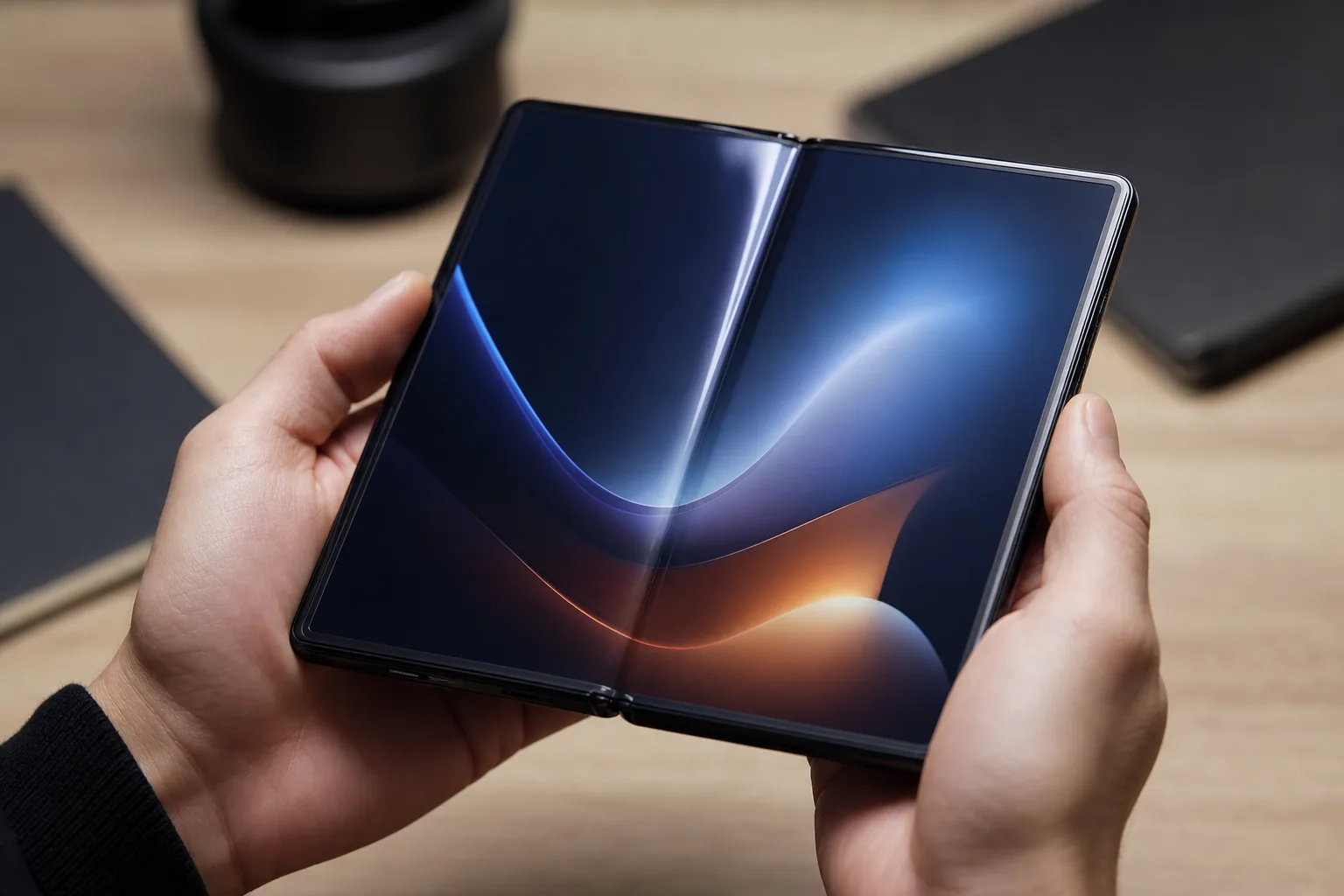
- The Galaxy Z Fold 8 uses Samsung’s Flex Titanium display design to make its inner-screen crease substantially less noticeable.
- Samsung says the Galaxy Z Fold 8 combines a thin titanium-alloy film with a supporting titanium plate beneath the OLED.
- The new construction removes internal air gaps, which should provide steadier support when the large inner screen is opened.
- Samsung has not yet said whether its titanium display architecture will improve on the Fold 7’s 500,000-fold durability rating.
Table of Contents
Galaxy Z Fold 8 targets the foldable phone’s most obvious flaw
The crease is the tax every foldable-phone buyer has paid so far. You can ignore it for a while, particularly when you are reading an article or watching a video, but tilt the screen toward a window and there it is: a line down the middle of a very expensive display. Samsung now says the Galaxy Z Fold 8 has a structural answer to that problem, and it involves titanium rather than another software trick or cosmetic tweak.
The company has outlined a new display architecture called Flex Titanium, planned for its next foldable Galaxy devices. That language points squarely at the Galaxy Z Fold 8 family, including a rumored Ultra model. Samsung’s central claim is refreshingly straightforward: the revised stack should make the crease less visible while giving the inner OLED more consistent physical support.
That matters because foldables have largely crossed the threshold of being usable, polished products. Samsung’s recent Fold models are thin, capable and expensive in the way premium phones are supposed to be. Yet the center crease remains the little reminder that you are carrying a device with a moving screen. Chinese rivals such as Oppo, Honor and Huawei have often looked better on this one visual metric. Samsung needs to close that gap.
What Samsung’s Flex Titanium display actually changes
Samsung says the Galaxy Z Fold 8 will place an ultra-thin titanium-alloy film beneath the OLED panel. Samsung says the material has 20 times the mechanical stiffness of plastic films used in conventional display structures, despite measuring less than 30% of the thickness of a human hair. That is an eye-catching specification, though it needs a little translation.
A stiffer layer does not mean the phone becomes rigid or stops folding. It means Samsung can better control how force travels through the display assembly when the device shuts and opens. Picture repeatedly bending a paperback at the same spine: eventually, the material learns where to collapse. The job of the supporting layers is to spread that stress around so the OLED is not asked to absorb all of it at one narrow point.
The second piece is a titanium plate beneath the display module. Samsung says it eliminates air gaps between the module and adhesive, leaving fewer spaces where the panel can flex unevenly. In theory, that should make the display feel more planted when it is flat and reduce the formation of a pronounced valley at the hinge line. The Galaxy Z Fold 8 may still have a crease — physics has not been canceled — but reducing its visibility is the practical goal.
Samsung’s own wording is careful. It promises a better viewing experience, added durability and reduced crease visibility, not a completely crease-free panel. That distinction is sensible. Anyone promising an entirely invisible fold in a mass-market phone should be treated with the same skepticism we reserve for battery-life claims made under ideal lab conditions.
The durability question Samsung has not answered
The unanswered question is whether this new material stack also extends the phone’s useful life. Samsung has not attached a new fold-cycle rating to Flex Titanium. Its Galaxy Z Fold 7 was rated for 500,000 folds, an already enormous number that works out to years of opening and closing even for someone who compulsively checks messages. Still, a lab cycle rating is only one slice of durability.
Real phones encounter heat, grit, pocket lint, drops, pressure in a bag and the occasional child who treats a hinge like a small engineering challenge. A titanium-backed panel could improve resistance to permanent deformation without necessarily changing the headline fold count. Conversely, it could help Samsung post a higher number when the full Galaxy Z Fold 8 specifications arrive. We do not know yet.
The material choice also raises the price question. Titanium has become a useful premium-material signal in phones since Apple put the word on the iPhone 15 Pro spec sheet, but here it appears to be doing real mechanical work. Even so, more complex materials and tighter assembly tolerances rarely make a device cheaper. Leaks have pointed to a higher price alongside a bigger battery, 45W wired charging and 20W wireless charging. If those reports hold, Samsung will need buyers to feel the display improvement every time they unfold the phone.
A small visual change with outsized importance
For the Galaxy Z Fold 8, a less obvious crease could matter more than a marginal processor bump. Foldable buyers spend a lot of time looking at that big inner screen, and the center line has been the category’s most visible compromise throughout its history. A cleaner panel makes the whole premise feel less like a clever prototype and more like a normal premium device that happens to open into a tablet.
Samsung also has a competitive reason to make this change now. The company remains the brand most consumers associate with book-style foldables, but it cannot rely on familiarity forever. Rivals have improved thinness, camera hardware and crease treatment at an aggressive pace. Google’s Pixel Fold line has added pressure in the US, while Chinese manufacturers have spent years showing just how discreet a foldable crease can become.
Samsung is expected to formally reveal the Galaxy Z Fold 8 on July 22, and the company has already begun dangling reservation incentives, including a $30 credit and advertised savings that can reach $1,230. That is standard launch-season theater. The meaningful test will be simpler: open the phone, catch it in harsh light, and see whether your eye still goes straight to the middle. If Flex Titanium passes that test, Samsung may have fixed the one compromise users notice before they notice anything else.
Samsung’s official global newsroom has more on the company’s mobile strategy and product announcements. We will need the final specifications — and, frankly, hands-on time outside a controlled demo — before declaring the crease problem solved. But this is the first Samsung display change in years that sounds aimed at the right target.