


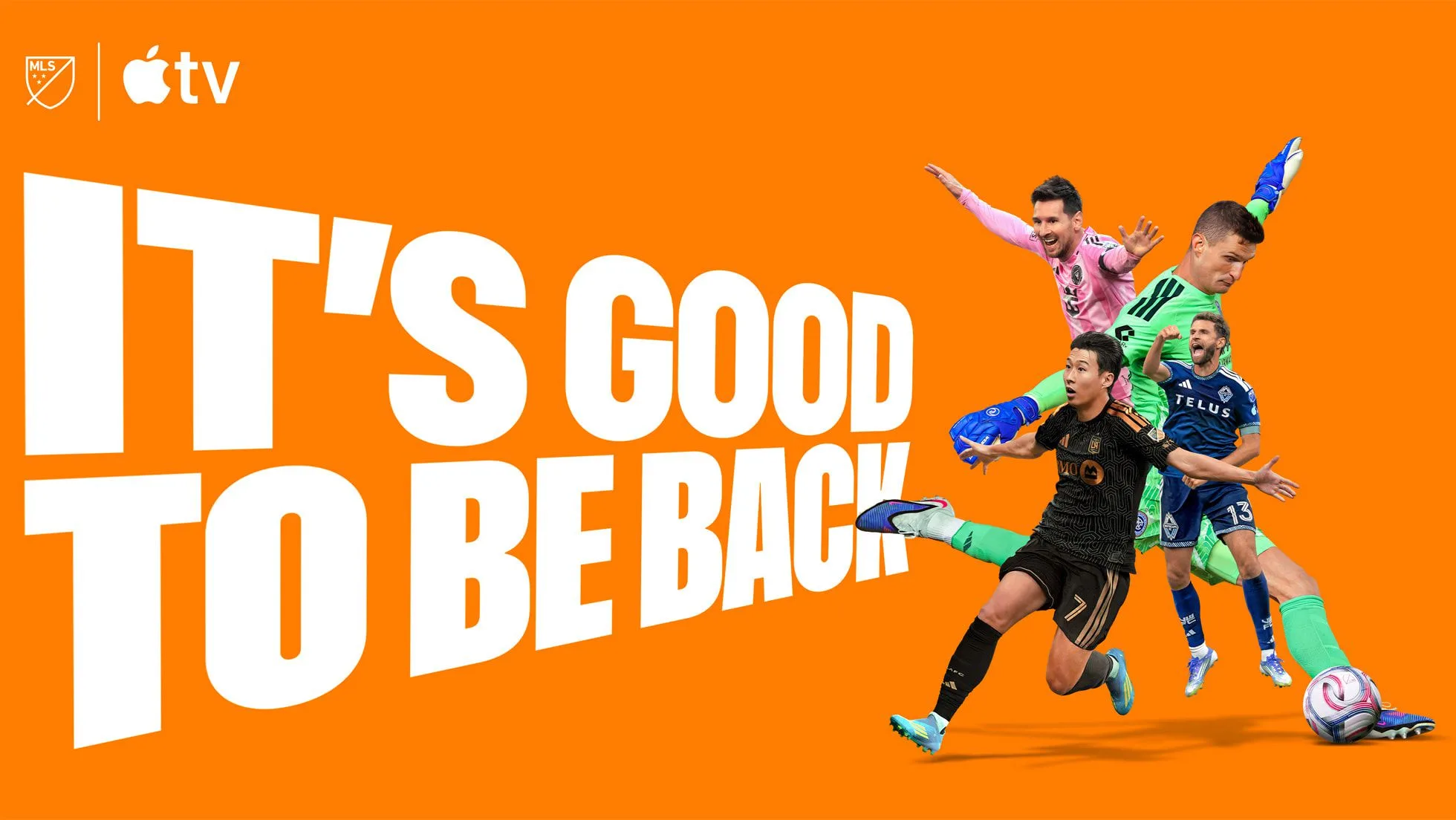
- Apple TV MLS coverage resumes July 16 as the league restarts following the 2026 FIFA World Cup break.
- Apple TV MLS now places every match inside the standard Apple TV subscription across more than 100 countries.
- Apple has removed the separate MLS Season Pass purchase, reducing a longstanding point of friction for casual soccer viewers.
- The post-World Cup restart gives Apple a valuable test of whether global soccer attention can translate into sustained MLS viewing.
Table of Contents
Apple TV MLS returns at exactly the right moment
The World Cup has a way of making every other soccer competition feel briefly quieter. That makes the return of Apple TV MLS on July 16 a smart bit of scheduling: Major League Soccer resumes just as the 2026 FIFA World Cup reaches its end, and Apple wants to catch viewers while soccer is still the dominant item on the sporting calendar.
For the rest of the regular season, Apple TV subscribers in more than 100 countries will be able to watch every MLS match through the Apple TV service. The important change is simple: games are back, and a separate subscription is no longer required. What was previously sold as MLS Season Pass is now folded into the broader Apple TV offering.
That’s a cleaner proposition for anyone who actually uses streaming services instead of studying subscription matrices like they’re tax forms. If you already pay for Apple TV, the league comes with it. No add-on, no separate renewal date, no moment of realizing that the match you wanted sits behind another checkout screen.
Apple has spent years presenting its TV app as a place where premium drama, movies, live sports, and rented entertainment can live together. That promise has often been more complicated in practice because Apple TV also acts as a storefront for other services. The MLS move cuts through some of that clutter, at least for soccer.
Why the Apple TV MLS bundle matters
Apple’s original MLS deal was ambitious by any reasonable standard.
But the standalone Season Pass model asked fans to make an extra decision. Apple TV subscribers received a discount, yet they still had to opt in and pay separately. Die-hard supporters will jump through that hoop. The larger audience Apple needs — the person who watched Lionel Messi highlights during lunch or tuned into a World Cup knockout match because everyone else was talking about it — probably won’t.
Putting Apple TV MLS into the base subscription changes that calculation. It makes the league a retention feature for Apple TV and makes Apple TV easier to pitch as a sports service, rather than a platform with one sports property parked off to the side. Frankly, it is the kind of packaging decision Apple should have made earlier.
There’s a financial trade-off. Apple may sacrifice direct revenue from standalone passes, particularly from committed fans who would have paid either way. But subscriptions are increasingly won through perceived value, not one marquee show. A season of live matches gives people a recurring reason not to cancel between episodes of whatever Apple drama happens to be in fashion that month.
The timing also matters. MLS paused its regular season for the expanded World Cup, a tournament hosted across the United States, Canada, and Mexico. The league has never had a better chance to introduce itself to viewers who may be newly interested in club soccer in North America. Whether it can hold their attention after the trophy lift is another matter.
A global product meets a very local league
Apple says Apple TV MLS will be available in more than 100 countries, continuing one of the most unusual aspects of the rights arrangement. MLS is a North American league, yet its distribution is global by default. That gives a supporter in Europe, Asia, or Latin America a relatively straightforward path to games that would once have been difficult to find legally.
That reach is especially useful now that MLS has worked hard to position itself as an international league. Messi’s arrival at Inter Miami turned routine fixtures into global social-media events, while clubs have continued bringing in recognizable players and developing talent that moves abroad. Not every match suddenly becomes required viewing, obviously. But Apple’s distribution system means the league can at least meet the curiosity it creates.
The format also avoids the old cable-era experience of discovering that your local team is blacked out while an obscure channel carries a match from another market. The inclusion of Apple TV MLS in the standard service gives that promise a much wider potential audience.
For the official Apple TV service and its availability, viewers can consult Apple’s Apple TV page. Individual match schedules, club details, and standings remain available through Major League Soccer’s official site.
Sports rights are becoming one of the few entertainment assets that still create appointment viewing, and that matters for Apple. Scripted series can be binged, postponed, or abandoned after a free trial. A live match starts at a fixed time, and fans tend to return week after week. Apple doesn’t need MLS to rival the NFL overnight; it needs the league to make Apple TV feel more indispensable than it did yesterday.
The real test begins after the final whistle
The 2026 World Cup will generate massive attention, especially across North America. But tournament fandom and league fandom are different beasts. One is a month-long cultural event; the other asks viewers to care about standings, transfers, rivalries, and a rainy Wednesday night match in July. Apple and MLS have to turn the former into the latter.
This is where the included subscription could help. A viewer who is merely curious can sample Apple TV MLS without feeling they are buying an expensive commitment. They can watch Miami, Los Angeles, Seattle, Toronto, or whichever club has captured the moment, then decide whether there is a reason to return. Reducing that barrier may sound mundane, but consumer behavior is often decided by mundane friction.
Apple will also need to keep improving discovery. Having every match available is only half the job. New viewers need clear prompts toward the most meaningful fixture, compelling highlights, useful context around players, and a way to follow a club without treating the schedule as homework. The company’s polished broadcasts have generally looked the part, but polish alone doesn’t manufacture sports habits.
My read is that this is a pragmatic reset rather than a victory lap. The standalone pass gave Apple a clean way to measure demand, while the bundle gives it a better chance to build demand. If Apple TV MLS can convert even a small share of World Cup viewers into regular watchers, Apple’s long bet on live soccer will look considerably more credible. If it cannot, the company will have learned an expensive lesson about the difference between owning global rights and owning an audience.

