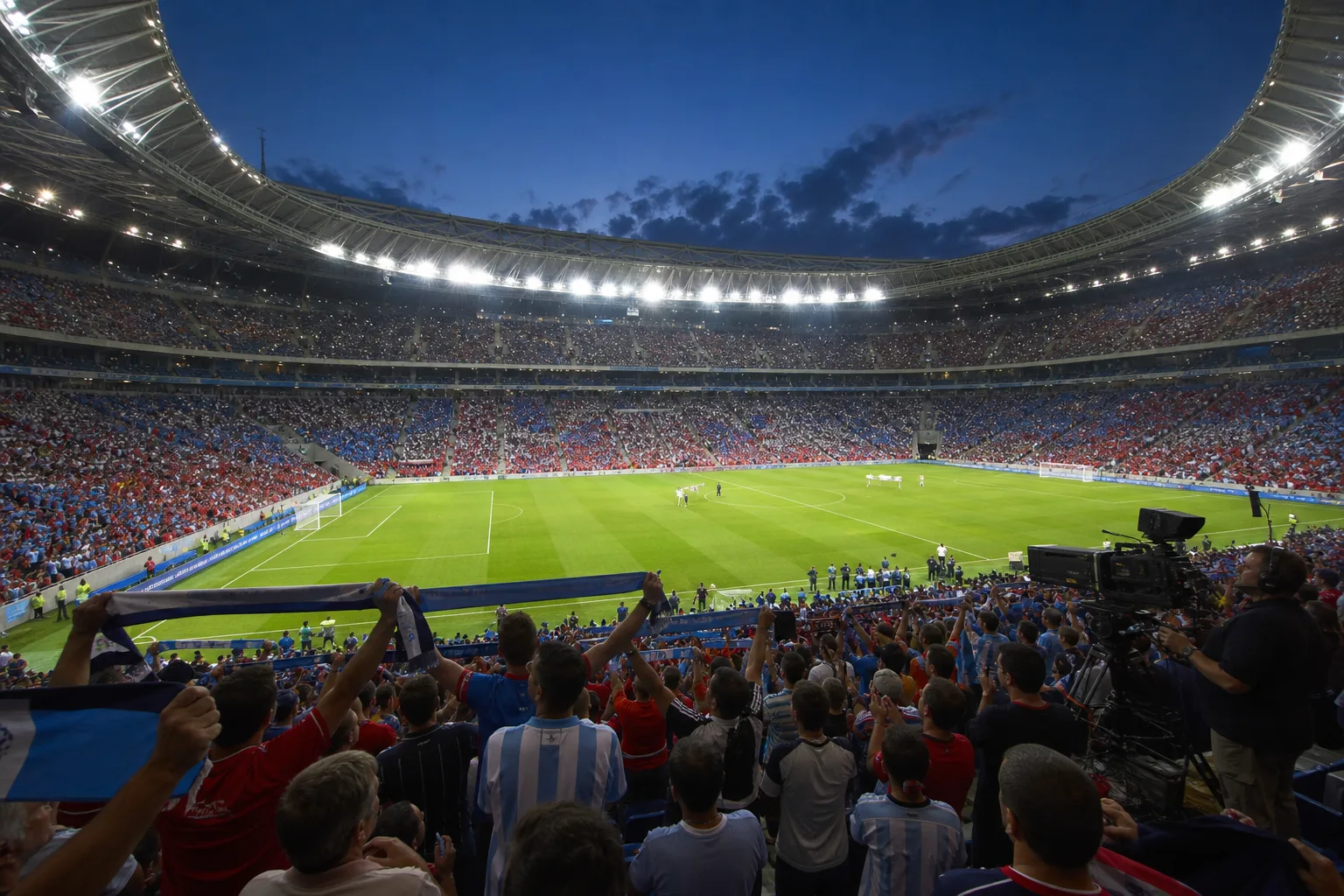
- The 2026 World Cup final sends Spain and Argentina to New York/New Jersey Stadium on Sunday, July 19, at 3 pm EDT.
- US viewers can stream the 2026 World Cup final through Fox One, YouTube TV, Fubo, Hulu Live, or Peacock’s Spanish-language coverage.
- France and England meet in Miami on July 18 to decide third place after falling short in the semifinals.
- FIFA’s 48-team format turned the tournament into an unusually large test of sports streaming infrastructure.
Table of Contents
The 2026 World Cup final has a very modern problem: finding the right stream
The 2026 World Cup final has landed on the matchup FIFA’s commercial machine would happily draw up itself: Spain versus Argentina, scheduled for 3 pm EDT on Sunday, July 19, at New York/New Jersey Stadium. It’s a massive sporting occasion, obviously. But for US viewers, the immediate practical question is less romantic: which subscription, app, language feed, or television package will actually get you to kickoff without an eleventh-hour login disaster?
Argentina reached the final after beating England in the July 15 semifinal, while Spain advanced from the other side of the bracket. France and England will instead play the third-place match in Miami at 5 pm EDT on Saturday, July 18. The three host countries — the US, Canada, and Mexico — are all out. That’s a bit of a deflating ending for local fans, but it also means the final has none of the host-nation complications that can turn a stadium into a pressure cooker.

FIFA says more than 6.2 million people attended matches in person by the quarterfinal stage, alongside millions following through broadcasts, digital platforms, and fan events. If those figures hold up through the final weekend, this expanded tournament will have delivered exactly what FIFA promised in scale. Whether all that scale made for a better competition is a separate argument.
How to watch the 2026 World Cup final in the US
The straightforward route to the 2026 World Cup final is Fox Sports for anyone with a traditional cable or satellite package. Cord-cutters have a messier, though familiar, menu. Fox One carries the match for $20 per month, while YouTube TV’s sports plan is listed at $55 per month. Fubo starts at $46 per month, and Hulu’s live television package is listed at $90 per month.
For Spanish-language coverage, Peacock is streaming the tournament through Telemundo’s rights package. That may be the better viewing experience for plenty of households, not merely a fallback. US Spanish-language soccer broadcasts have built a deserved reputation for treating the match as an event rather than dead air between ad breaks, and Telemundo has become a serious part of the country’s sports-media equation.
My advice: do not wait until Sunday afternoon to test a new service. Live sports streaming is like airport security — it works fine until everyone shows up at once. Confirm your plan includes the channel, sign in on the screen you intend to use, and check local blackout or device rules beforehand. FIFA’s official tournament site maintains schedules that default to a viewer’s local time zone and lists broadcasters by market.
One detail deserves emphasis: the 2026 World Cup final begins at 3 pm EDT, not when the halftime spectacle starts. FIFA is billing the interval as its first Super Bowl-style World Cup halftime show, with Justin Bieber, Madonna, Shakira, BTS, and conductor Gustavo Dudamel named in the source lineup. That kind of entertainment stack is absurdly ambitious, even by FIFA standards. Expect the show around 4 pm EDT, assuming a conventional first half and no lengthy stoppage.
FIFA is importing the Super Bowl playbook
The halftime show tells us a lot about what this World Cup has become. FIFA has always sold global spectacle, but a dedicated, celebrity-heavy break pushes the final closer to the NFL’s biggest media ritual: a sporting contest engineered to hold the attention of people who may not know an offside call from an OLED panel.
Frankly, I’m skeptical of putting a pop festival in the middle of football’s most consequential match. The World Cup final already has its own drama, ritual, and global audience; it doesn’t need validation from a Super Bowl template. Yet from a broadcast business perspective, the move is almost inevitable. Streaming services and advertisers measure attention in minutes, and halftime has historically been an opportunity for viewers to wander off for snacks or scroll on their phones.
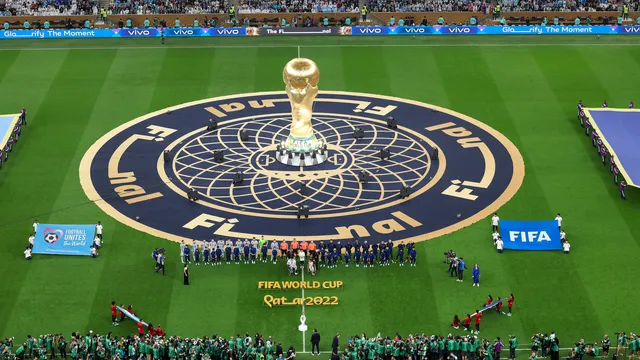
The technology angle matters here. A three-country tournament means broadcasters, rights holders, mobile networks, stadium operators, and streaming platforms have had to move enormous audiences across a patchwork of venues and time zones. FIFA’s partnership with YouTube as a preferred streaming partner reflects where the market is heading: sports rights are still sold in regional blocks, but the viewer increasingly expects one global digital front door.
The 48-team format created a longer, louder tournament
This was the first men’s World Cup with 48 teams, up from 32. The new structure began with 12 lettered groups, followed by a Round of 32, Round of 16, quarterfinals, semifinals, and the final. In practical terms, the expansion added a Round of 32.
For smaller national teams, that extra access is meaningful. A World Cup appearance can transform a federation’s finances and raise the profile of players who would otherwise be invisible outside their domestic leagues. But the trade-off is real: more group-stage matches, more travel, more programming inventory, and more chances for the sport’s most valuable event to feel stretched out.
The 2026 World Cup final is therefore the endpoint of an experiment in abundance. FIFA has more teams, more hosts, more tickets, more broadcast partners, and now more entertainment packed into the broadcast window. There’s no question the organization has built a bigger product. The question is whether fans will remember the summer for the football, or for the machinery built around it.
What to expect on the final weekend
Spain versus Argentina offers a clean contrast in footballing identity and international pedigree, which should make the 2026 World Cup final appointment viewing regardless of the platform carrying it. The third-place game is often dismissed as a consolation fixture, but France and England have enough talent and enough recent tournament frustration to make Miami more than a ceremonial stop.
For viewers planning the 2026 World Cup final, this is also a preview of the next fight in sports television. Fox, Telemundo, Peacock, YouTube, Fubo, and Hulu are all competing for a slice of a single matchday audience. Consumers may get choice, but they’re also asked to navigate a small maze of tiers and bundles. FIFA’s expanded tournament has proved that global football can fill every available screen. Now the industry has to prove it can make watching feel less like assembling a cable package from spare parts.