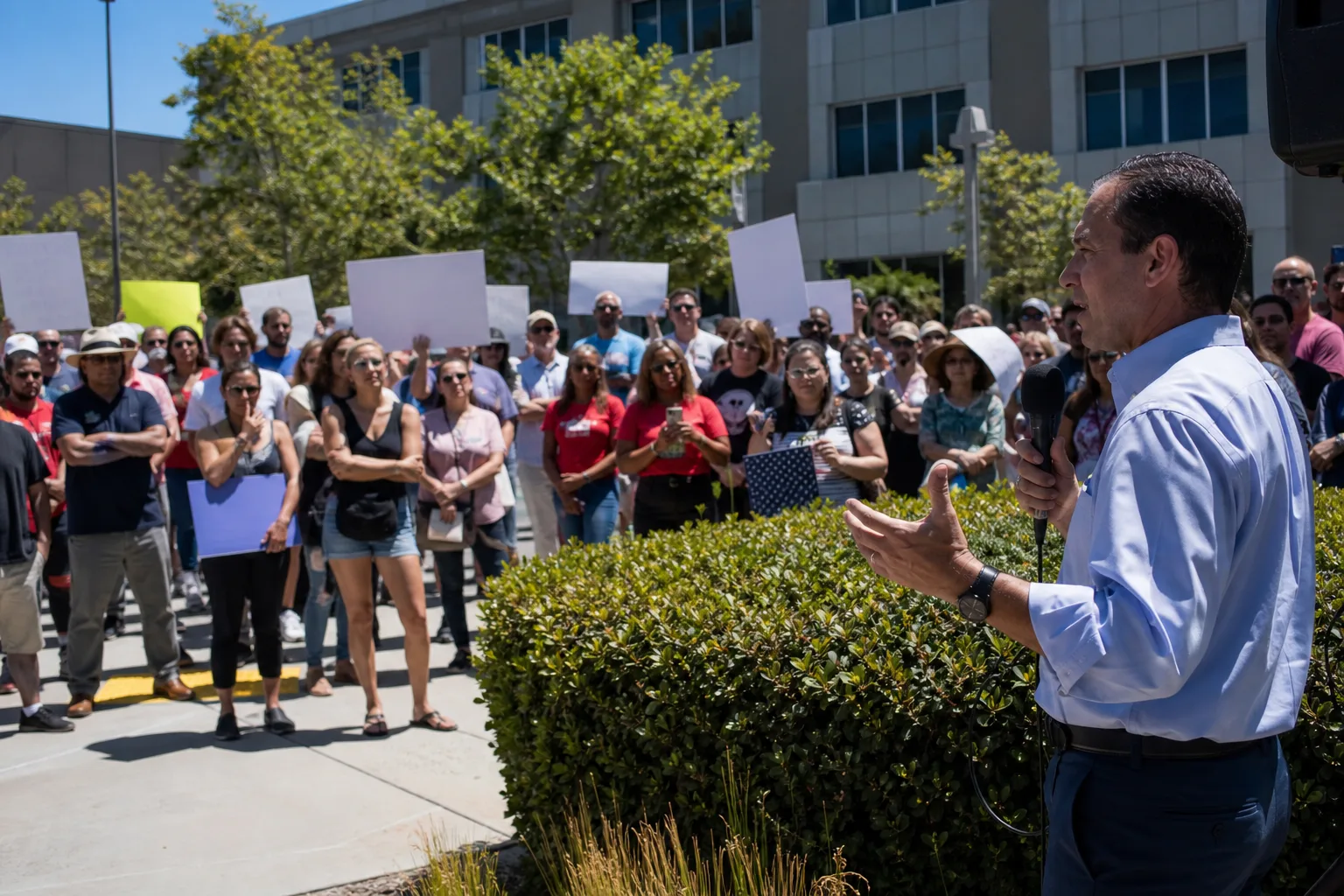
- Xbox layoffs prompted hundreds of Bethesda and Zenimax workers to rally outside the company’s Rockville, Maryland headquarters.
- Union organizers say Xbox layoffs bypassed a proposed bargaining process that could have established severance and worker protections.
- Five coordinated demonstrations across North America put Microsoft’s labor record under fresh scrutiny after years of gaming acquisitions.
- The protests show organized game workers are increasingly willing to publicly challenge the companies that employ them.
Table of Contents
Xbox layoffs bring the fight to Bethesda’s front door
Nearly 100-degree heat didn’t stop hundreds of Bethesda Game Studios and Zenimax Online Studios employees, former colleagues, and supporters from gathering outside Zenimax’s Rockville, Maryland headquarters. The immediate trigger was the latest round of Xbox layoffs, but the rally’s message was broader: workers are tired of being told that a company’s growth plan requires their jobs to disappear.
Signs carried the kind of gallows humor game developers have perfected over decades: ‘Layoffs… layoffs never change,’ a pointed Fallout reference, and ‘Our players deserve better.’ That second slogan gets at the uncomfortable truth behind this protest. When a studio loses developers, producers, artists, and QA staff, players eventually feel it in delayed patches, thinner support, canceled projects, and teams asked to do more with less.
For an industry that likes to sell games as the product of individual visionaries, the reality is much more ordinary. Big games are built by large groups of people doing painstaking work over years. Cut enough of those people, and even a company with Microsoft’s resources can’t simply paste ‘AI’ over the hole and call it a strategy.
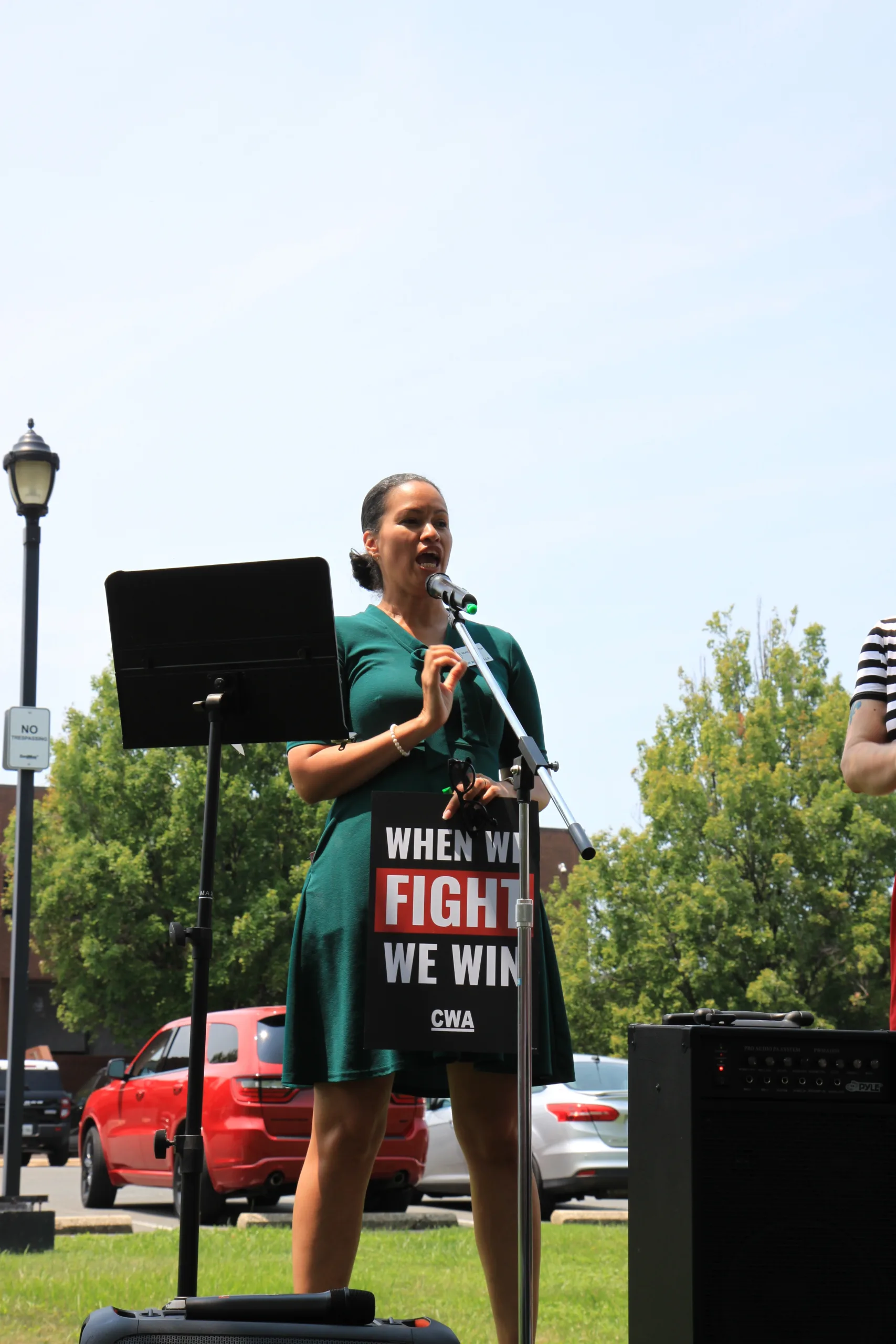
Bethesda is a major Montgomery County employer, not some faceless operation floating above the community around it.
Why the Xbox layoffs dispute centers on bargaining
The job cuts are only part of the dispute. Zenimax Workers United, affiliated with the Communications Workers of America, says Microsoft declined to bargain over the reductions with uncontracted Bethesda Game Studios employees. The union had reportedly put a reduction-in-force proposal before the company months earlier, seeking a process and protections before the axe fell.
Nathan Hahn, a Bethesda technical producer and volunteer union organizer, described the rally as a way to ensure employees were publicly visible and that Microsoft understood they did not accept the cuts quietly. Hahn said the group had been trying to negotiate, but that management had not responded to its proposal.
‘They can either come meet at the table or they can meet us in the street,’ CWA District 2-13 Vice President Mike Davis told the gathering. ‘They can meet us anywhere they want, but they’re gonna fight with us.’
That’s blunt language, and frankly it reflects where labor relations in games have landed. Workers aren’t asking the public to view every layoff as illegal or avoidable. They are demanding a meaningful say in how a wealthy parent company handles them. There is a difference between a struggling independent studio running out of runway and a large corporation reducing headcount after acquiring Activision Blizzard.
A separate deal with Zenimax QA testers last year included guaranteed severance for laid-off workers. That agreement matters because it offers a tangible contrast: collective bargaining can produce protections, while workers outside an agreement may have less warning and less recourse. The current Xbox layoffs are therefore becoming a test of whether Microsoft will extend that framework or keep treating each unit as a separate labor problem.
Five cities, one increasingly organized game workforce
The Rockville event was one of five coordinated actions organized across Texas, California, and Montreal. This was more than a lunch-hour protest outside one office. It was a networked response spanning a corporate organization assembled through acquisition.
Microsoft has spent years presenting itself as a comparatively union-friendly Big Tech employer. In 2022, it signed a labor-neutrality agreement with the CWA around the pending Activision Blizzard deal, a move that helped ease political pressure surrounding the acquisition. Workers at ZeniMax and Activision Blizzard subsequently formed unions, including the groundbreaking quality-assurance group at ZeniMax.
But neutrality during organizing and cooperation during cost cutting are very different things. The Xbox layoffs have put that distinction in harsh daylight. A company can refrain from union-busting tactics and still make decisions that unions believe violate bargaining obligations or disregard the agreements workers are trying to secure.
The timing is hard to ignore. Since 2023, publishers and platform holders have eliminated tens of thousands of jobs, often after years of pandemic-era expansion and expensive acquisitions. Embracer Group’s collapse into cost cutting became a symbol of the mess, but Microsoft, Sony, Electronic Arts, Riot Games, and numerous smaller studios have all cut staff too. The industry spent heavily to chase perpetual growth, then seemed startled when that growth slowed.
My read is that workers have learned from the pattern. A sympathetic LinkedIn post from an executive and a few months of severance do not repair the underlying instability. Organizing is increasingly the answer from people who would prefer a contractually defined process to a surprise calendar invite.
What Microsoft risks by treating layoffs as routine
Microsoft has not publicly detailed a response to the rally’s bargaining demands in the information available so far. It does, however, face a credibility problem that reaches beyond this one round of Xbox layoffs. Xbox has spent the last decade buying talent, studios, and publishing capacity because making blockbuster games internally is brutally difficult. It cannot keep presenting acquisitions as an investment in creative teams while repeatedly shrinking those teams afterward.
There is a business case for discipline. Game budgets have become absurdly large, release schedules slip, and subscription services have complicated the old sales model. Microsoft needs its gaming division to operate with some financial logic. Nobody serious believes every studio can be permanently insulated from changing plans.
Still, layoffs are not a force of nature. They are management choices shaped by acquisition strategy, portfolio planning, executive incentives, and assumptions about future revenue. Workers at Bethesda are challenging Microsoft to acknowledge that reality at the bargaining table rather than treating it as unavoidable weather.
The larger question is whether the Xbox layoffs become another forgettable entry in the industry’s layoffs ledger, or a moment that strengthens organized labor’s hand in games. If Microsoft returns to negotiations, it could establish a model for how an enormous platform owner handles workforce reductions. If it does not, expect more workers to conclude that the street is the only table they’ll be offered.
For Microsoft’s stated labor commitments, that would be a costly own goal.
Readers can review the CWA’s public work on video-game organizing at the union’s official video game organizing page.