
Apple’s smallest tablet has spent years living in an odd little corner of the lineup: beloved by the people who own one, largely ignored by everyone else. That could change soon. Bloomberg reports that an OLED iPad mini may arrive this fall, giving the 8-inch tablet the kind of display upgrade its fans have been waiting for since the current design debuted in 2021.
My read is that Apple has a genuine opportunity here, but it’s also setting up a familiar frustration. OLED would make the iPad mini’s screen look dramatically better for reading at night, watching video, editing photos, and using dark-mode apps. If reports of a 60Hz panel are accurate, though, Apple may once again ask buyers to pay a premium while withholding a feature that has become normal elsewhere in its own product family.
- The OLED iPad mini is reportedly planned for this fall, ending years of minor updates to Apple’s smallest tablet.
- A 60Hz OLED iPad mini could deliver superior contrast but still trail Apple’s ProMotion-equipped phones and premium tablets.
- Apple faces a difficult pricing question as storage, cellular connectivity, and accessories can quickly push a small tablet beyond $700.
- The mini’s compact size remains its real advantage for readers, note-takers, pilots, clinicians, and anyone carrying a crowded bag.
Table of Contents
Why the OLED iPad mini matters
The iPad mini has always been less about raw screen real estate than physical freedom. An 11-inch iPad Air is a better laptop companion and a 13-inch iPad Pro is a fantastic portable canvas, but neither slips into a small bag, jacket pocket, or aircraft cockpit with the same ease. The mini is the tablet you grab for a train ride, a round of reading, a kitchen recipe, or a meeting where a laptop would feel faintly ridiculous.
That portability is why the current 8.3-inch model has retained such a devoted following despite a pretty sleepy update cycle. The current base model starts at 128GB of storage, but it remained fundamentally the same device introduced three years earlier. The bezels, Touch ID button, single rear camera, and LCD panel all telegraphed a product that Apple was content to maintain rather than chase aggressively.
The 2024 iPad mini still makes the case for compact tablets, even if its hardware changes were modest beside the 2021 redesign.
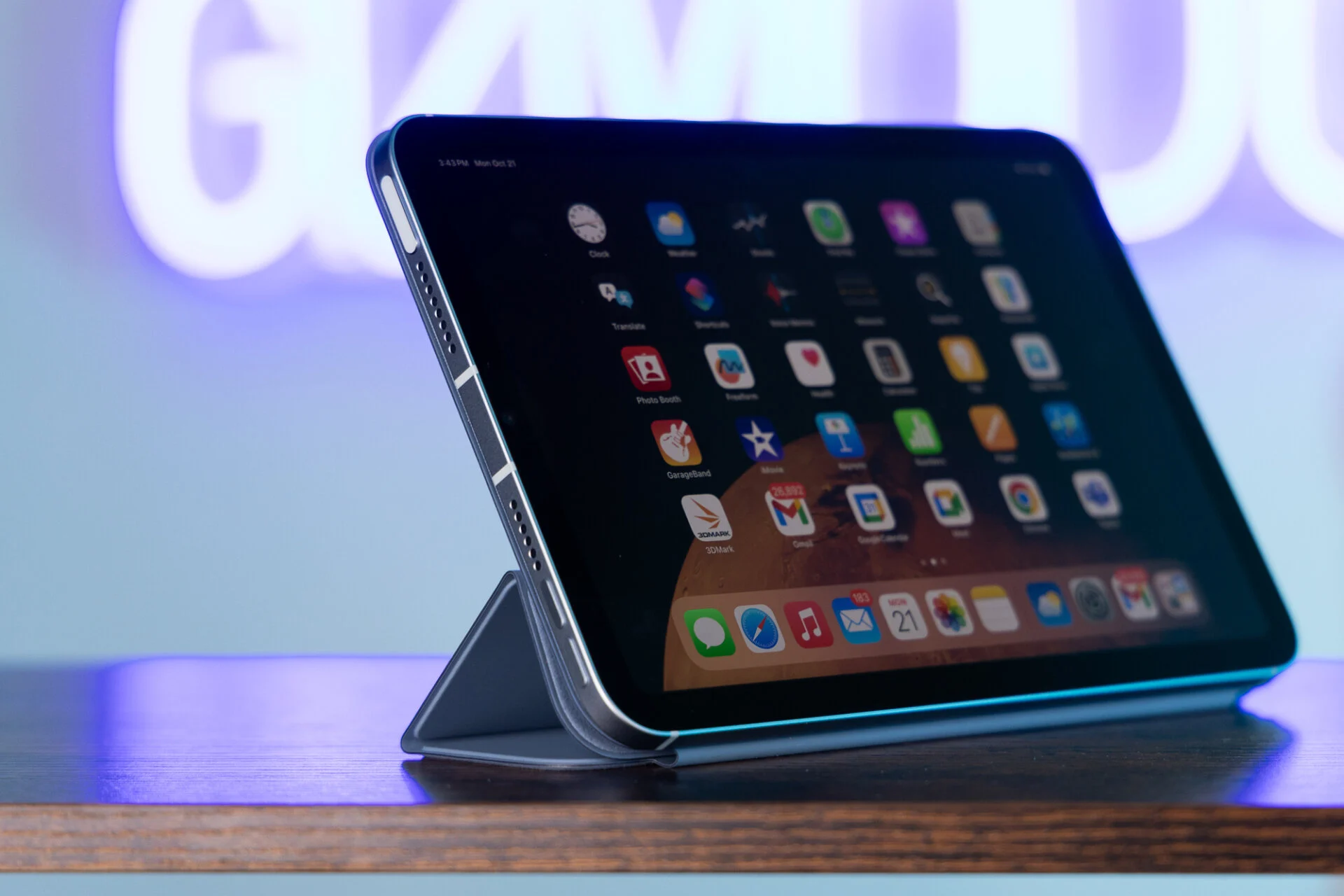
An OLED iPad mini would make that compact form factor feel current again. OLED pixels light themselves rather than relying on a backlight, which means properly black backgrounds, stronger perceived contrast, and tighter control over bright and dark areas of an image. It’s why iPhones look so good in a dark room, and why Apple made OLED the centerpiece of the 2024 iPad Pro redesign.
Apple’s own iPad Pro display specifications show how far it can take the technology: the company uses a tandem OLED arrangement on those models to reach unusually high brightness. Bloomberg’s reporting suggests the mini will not get that expensive panel technology. Frankly, that’s fine. Nobody needs an 8-inch tablet to match a professional reference display. A conventional OLED panel would still be a striking upgrade from the mini’s LCD.
That would put the iPad mini much closer to the viewing experience iPhone owners already know, especially with films, comics, and dark-interface apps.
A 60Hz screen would be a very Apple compromise
There is one detail that could drain some of the excitement. Korean leaker yeux1122, cited by MacRumors, has suggested the new panel may remain at 60Hz. That would mean the OLED iPad mini could have gorgeous blacks and still lack ProMotion, Apple’s branding for adaptive refresh rates up to 120Hz.
For plenty of people, 60Hz is not a dealbreaker. Text will remain crisp. Movies are commonly produced at 24 frames per second. And an iPad mini is hardly a primary gaming machine, even if Apple would like its App Store economics to say otherwise. But once you’ve used a 120Hz iPhone or iPad Pro, scrolling at 60Hz can feel like pushing a shopping cart with one sticky wheel. It works. You notice it anyway.
The more awkward comparison may be within Apple’s own store. The company has gradually spread high-refresh displays across its iPhone range, while the iPad lineup remains sharply segmented. A 60Hz OLED iPad mini would be a textbook example of Apple’s tiering strategy: offer the feature people can immediately see in a showroom, reserve the feature they feel after a week for the higher-priced device.
That strategy may protect iPad Pro sales, but I’d argue it misunderstands the mini buyer. This is not usually the customer choosing between an 8-inch iPad and a 13-inch Pro. They’re choosing between buying a mini at all, carrying a larger tablet, or simply using the big OLED phone already in their pocket.
The OLED iPad mini has a price problem
That last comparison is the uncomfortable one. Apple’s current iPad mini begins at $600 in the US with 128GB of storage, while cellular service adds $150. Add an Apple Pencil Pro and a case, and a supposedly lightweight secondary device can become a $700-plus purchase remarkably quickly. OLED panels cost more than LCDs, so an OLED iPad mini could put even more pressure on that price.
At $599, Apple could make a persuasive case: a premium small tablet for people who value its size. At $699 before accessories, the math gets rough. Apple’s 11-inch iPad Air offers a much larger display, an M-series chip, and better productivity headroom for buyers who can tolerate the bigger footprint. At the other end, a modern iPhone gives buyers an OLED screen, excellent cameras, and a device they already carry every day.
The mini needs to avoid becoming a luxury duplicate. Its best argument is practical: it is easier to hold for an hour than an iPad Air, more useful for focused tasks than a phone, and less cumbersome than a laptop. The OLED iPad mini makes that argument more attractive, but it cannot make it alone.
Apple’s wider iPad refresh could leave the mini carrying the story
Bloomberg also expects refreshed entry-level iPads and iPad Air models early next year, likely centered on processor updates rather than substantial redesigns. The next iPad Pro may also be a relatively restrained revision when it appears in 2027. If that schedule holds, the OLED iPad mini becomes the unusual iPad launch with a clear visual story.
Plenty remains unsettled. Bloomberg’s report does not settle the new mini’s chip, battery life, brightness, storage tiers, or final price. Apple could also surprise everyone with ProMotion, though the company’s history gives me little reason to bet on generosity. Remember when the standard iPhone held onto 60Hz long after Android phones at far lower prices had moved on? Apple knows exactly how to make a missing feature feel like an upgrade path.
Still, the core idea is sound. A sharper, higher-contrast OLED iPad mini would give Apple’s most neglected tablet a reason to exist beyond nostalgia. The question is whether Apple can resist pricing that reason out of reach.