

- LG smart TV apps containing residential proxy software must remove it or face suspension from the company’s webOS platform.
- Researchers found proxy-related components in more than 42 percent of LG smart TV apps examined across the webOS store.
- Residential proxy SDKs can rent a household’s internet connection to outside customers, often through innocuous games and utility apps.
- LG’s decision raises overdue questions about app-store review, informed consent, and who truly controls connected devices at home.
Table of Contents
LG smart TV apps are being told to cut the proxy code
Your television should not quietly moonlight as somebody else’s internet exit point. Yet that is effectively what a sizeable share of LG smart TV apps have been able to do, according to recent research from security firm Spur. LG Electronics USA now says it will suspend apps that retain residential proxy functionality on its webOS platform.
The company’s position is admirably plain. LG senior vice president John Taylor told KrebsOnSecurity that a residential proxy network is not an intended use for LG televisions, and that developers are being required to remove the option. Apps that do not comply, Taylor said, will be suspended. LG also says its review is already underway, and the policy applies to LG smart TV apps already on the platform.
That should be the bare minimum, frankly. A smart TV is a computer with a large screen, a microphone in many homes, and a permanent place on the network. But people don’t treat it like a computer. They install a puzzle game or a screensaver, click through a consent screen on the couch, and reasonably assume the app is there to do one modest job.

Spur’s findings made that assumption look dangerously outdated. Its researchers reported that more than 42 percent of apps available through LG’s webOS store contained software development kits that could enroll a television in a residential proxy network indefinitely. The firm also found comparable components in more than a quarter of Samsung Tizen apps it examined.
Those figures deserve a little caution: they describe the catalog Spur analyzed, not a forensic finding that every affected television was actively sending traffic at that moment. Still, if the numbers hold, the scale is hard to shrug off. This is not one sketchy app lurking in a forgotten corner of an app store. It points to a business model that slipped into ordinary connected-home software, including LG smart TV apps.
What a residential proxy does to your home connection
A residential proxy provider sells access to IP addresses that appear to belong to normal households. A paying customer can route requests through those addresses rather than a cloud data center, making their traffic look more like it came from an ordinary person’s home connection. There are legitimate uses, including market research and testing whether websites behave differently by region. There are also obvious opportunities for scraping, fraud, evading rate limits, and making abuse harder to trace.
For app makers, the pitch is simple: add an SDK, obtain a user’s consent, and get paid. For the household, the bargain is much murkier. A TV may be online all day, sit idle overnight, and never prompt its owner to revisit a decision made months earlier. That makes LG smart TV apps with proxy code remarkably convenient nodes in a proxy network.
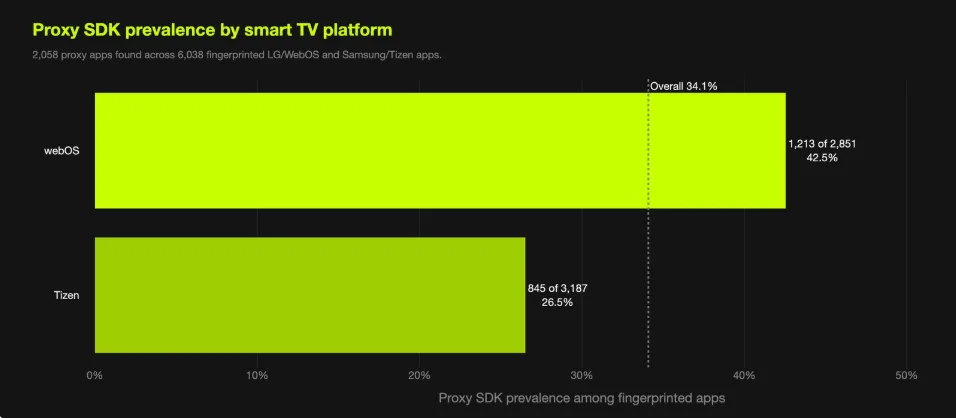
Spur identified proxy SDKs inside everything from Pac-Man-style games to file tools and screensavers. Bright Data represented a majority of the proxy components found across the LG and Samsung app ecosystems, the researchers said. Bright Data did not respond to KrebsOnSecurity’s request for comment. Proxy companies typically say they vet customers and place technical limits on access to a participant’s local network. Those safeguards matter, but they do not settle the core consumer question: did the person who bought the TV understand that their bandwidth could be rented out?
Spur researcher Trevor Sutter put it well: “A one-time consent prompt buried in a TV app is not a substitute for meaningful transparency, ongoing control, and platform oversight.” He also flagged a particularly awkward reality of shared screens: minors or other household members may agree to something they have no business authorizing.
The app-store review problem is bigger than LG
LG’s move shines a brighter light on its LG smart TV apps, but this is an industry problem. Smart-TV platforms have spent years chasing the economics of phones: app stores, advertising, subscriptions, data partnerships, and developer incentives. What they have not consistently copied is the mature security expectation that software needs meaningful review before it reaches millions of people.
Even mobile app stores, for all their flaws, have trained users to expect permission controls and regular updates. TV interfaces remain conspicuously weak at explaining what an app is doing in the background. You can inspect which streaming services are installed; finding out whether LG smart TV apps are relaying external web traffic is another matter entirely.
LG says it will strengthen its evaluation of developer submissions, including apps that incorporate proxy SDKs. Readers can follow the company’s platform documentation through the official webOS developer portal, though the meaningful test will be enforcement rather than a policy page. Will LG scan submitted apps for known proxy libraries? Will it require developers to disclose network-monetization arrangements? Will it notify owners whose installed apps are removed? The company has not publicly laid out those operational details.
My read is that an outright prohibition is cleaner than trying to make residential proxies acceptable through better prompts. Consent dialogs are already one of consumer tech’s great fiction machines: technically visible, practically unread. On a television, navigated with a remote while someone is waiting to watch a show, they are even less defensible.
LG needs to make the cleanup visible
There is a slightly uncomfortable backdrop here. LG has also drawn criticism over software tied to some of its monitors that promoted paid McAfee antivirus subscriptions after arriving through Windows Update, as reported by Gamers Nexus. That is a separate issue from residential proxies, but the common thread is obvious: hardware owners increasingly discover that the screen in front of them is also a channel for somebody else’s software and commercial agenda.

For people with an LG set, this is not a reason to panic or unplug the television tonight. It is, however, a good reason to prune apps you do not use, keep the TV firmware current, and be skeptical of free utilities whose business model is invisible. A screensaver does not need much of your data, your bandwidth, or your trust.
LG deserves credit for drawing a firm line on LG smart TV apps that include residential proxy tools. But the company should go further: publish the categories of affected apps, tell customers when removals happen, and explain how new reviews will catch this code before it ships. Connected TVs have become a fixture of home networks. The platforms running them need to start acting like the security gatekeepers they are.

