

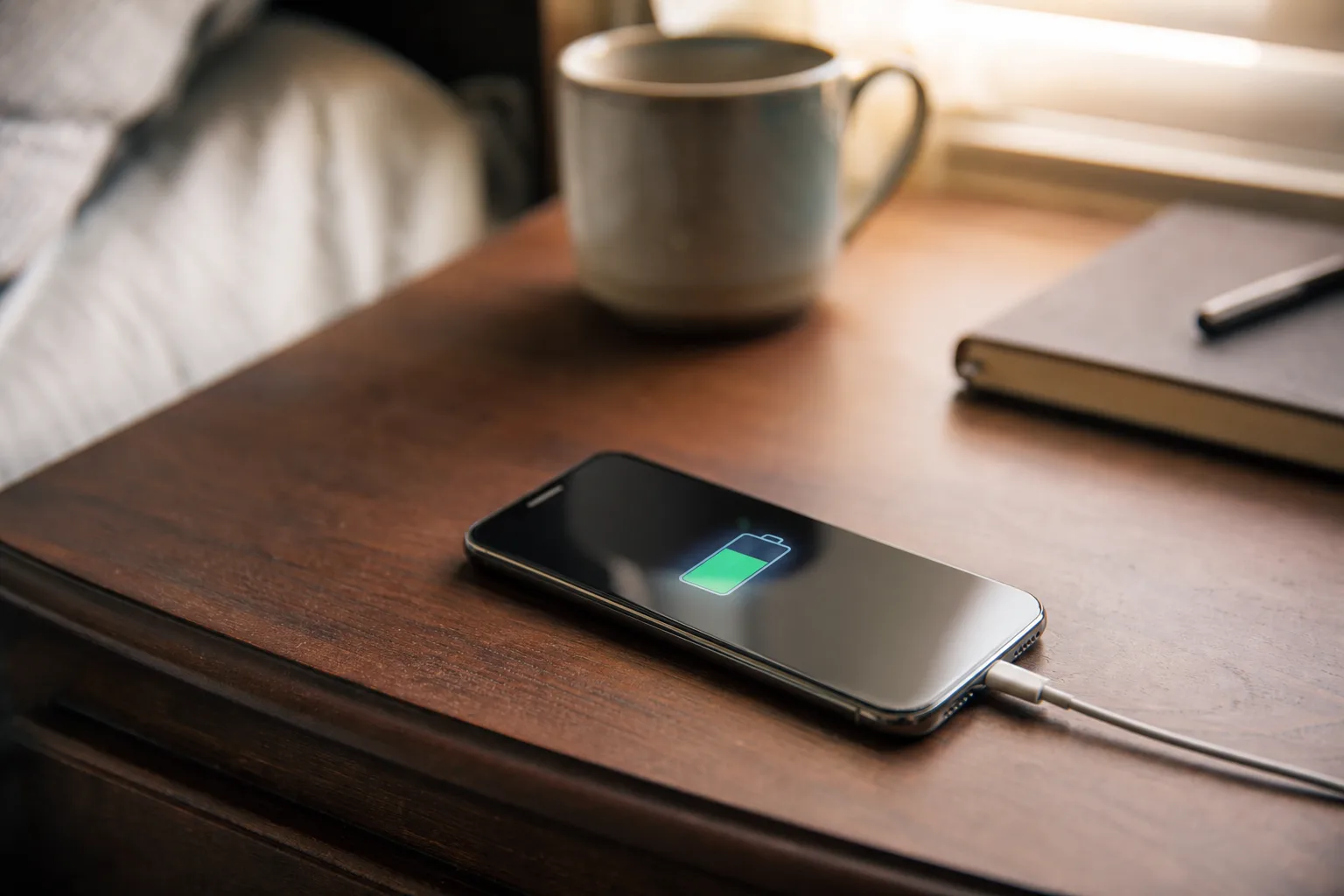
Samsung has apparently decided that Galaxy S27 charging can wait another year for a meaningful upgrade. A Chinese certification filing points to 25W wired charging for the standard Galaxy S27, while the larger Galaxy S27+ is expected to top out at 45W. Those figures aren’t disastrous. They are, frankly, remarkably familiar.
The alleged listings on China’s 3C certification database name the Galaxy S27 as model SM-S9520 and the Galaxy S27+ as SM-S9560. Certification documents are not launch announcements, and specs can change before a phone ships. Still, 3C entries have become a reliable early signal for hardware headed to the Chinese market, particularly when they identify specific charging adapters and electrical ratings.
My read: Samsung’s split is less about technical inability than product positioning. The company can build faster-charging devices. It simply continues to treat charging speed as a carefully rationed feature.
- Galaxy S27 charging reportedly remains capped at 25W, matching Samsung flagships that launched several years ago.
- Galaxy S27 charging on the larger S27+ model is listed at 45W, preserving Samsung’s familiar two-tier approach.
- China’s 3C filings identify the purported phones as SM-S9520 and SM-S9560 ahead of Samsung’s expected announcement.
- Samsung risks looking conservative as competing Android flagships routinely offer wired charging far beyond 45W.
Table of Contents
Galaxy S27 charging looks stuck in Samsung’s comfort zone
The base model’s reported 25W ceiling is the headline here because it has been Samsung’s default answer for compact Galaxy S phones for far too long. The Galaxy S20, launched several years ago, also supported 25W wired charging. If this filing reflects the final retail hardware, Galaxy S27 charging will land at the same quoted maximum as a flagship separated from it by roughly seven product generations.
That comparison needs a little care. Wattage alone doesn’t tell the whole charging story. Battery capacity, charge curves, heat management, cell chemistry and software all matter. A phone that holds high power longer can beat one with a bigger number on the box. Samsung may improve real-world times through efficiency or a revised battery design, and a 3C listing cannot answer those questions.
But consumers don’t live in a laboratory. They live in the awkward ten minutes before leaving the house, when a phone is at 18% and a cable is somewhere beneath the sofa. In that scenario, the practical promise of Galaxy S27 charging at 25W will likely feel conservative beside phones from OnePlus, Xiaomi, Oppo and others that have spent years treating rapid top-ups as a basic flagship convenience.
Samsung has traditionally defended a slower, more controlled approach through battery longevity and thermal caution. Those are real concerns. The Galaxy Note7 battery disaster remains one of the industry’s most painful reminders that phone makers can’t treat power delivery like a spec-sheet arms race. Yet safety and speed aren’t mutually exclusive; rivals have demonstrated that repeatedly, and Samsung itself has been willing to go further on selected models.
The S27+ keeps 45W, but that is hardly a victory lap
The purported SM-S9560 listing gives the Galaxy S27+ 45W wired charging support. That matches the level Samsung has used on its larger premium phones for multiple generations. For buyers who want the biggest non-Ultra Galaxy, that means Galaxy S27 charging may be appreciably quicker than on the entry model, assuming Samsung again pairs it with a suitably large battery and a favorable charging curve.
There is an irritating catch, though: getting Samsung’s quoted fastest rate has often required the right USB Power Delivery PPS charger and cable, neither of which has always been bundled with the phone. The relevant accessory is the 45W Power Adapter. That’s normal in a USB-C world, but it makes the headline number less useful if shoppers need to buy extra equipment to reach it.
More awkwardly, Samsung’s 45W implementation has not always produced the dramatic gap users might expect versus 25W. On some recent Galaxy generations, the real difference was measured in minutes rather than in a completely different charging experience. That doesn’t make 45W pointless; a few saved minutes matter when you’re rushing. It does make Samsung’s stubborn tiering look a bit like selling an express checkout with only one fewer customer in line.
For the S27+, retaining 45W is better than a downgrade. It just doesn’t feel like progress. And when the base phone reportedly stays at 25W, the entire Galaxy S27 charging story risks becoming one of those annual Samsung leaks where the most notable detail is what did not change.
Why certification filings matter, and where they mislead
China’s 3C system, short for China Compulsory Certification, covers a broad range of products sold in the country, including phones and power equipment. A filing can reveal model numbers, battery details, radio hardware or adapter capabilities months before a company is ready to show the finished device. It is useful evidence, not gospel.
Listings typically identify what a device is certified to support, not necessarily every behavior users will see on day one. Regional variants can differ. Samsung might also alter its charger recommendations, battery size or software charging logic before the Galaxy S27 family reaches stores. We don’t yet know the likely launch date, pricing, battery capacities, camera configuration, chipset strategy or whether the Ultra model will receive a charging change of its own.
Still, the documents fit Samsung’s recent pattern well enough that skepticism should focus on the final implementation rather than the broad outline. Standard model: 25W. Plus model: 45W. Ultra model: potentially its own category. Samsung knows this playbook by heart.
Samsung is choosing polish over a spec-sheet fight
There’s a reasonable argument for Samsung’s restraint. The company’s Galaxy S phones are widely sold across markets, carrier networks and climates. It has to manage warranty costs, heat, long-term battery behavior and a sprawling accessory ecosystem. A broadly dependable 25W experience is better than a poorly tuned 80W one that cooks the handset on a hot day.
But that argument becomes weaker each year Samsung leaves the number untouched. Premium-phone buyers have accepted disappearing chargers, rising prices and increasingly incremental camera tweaks. Asking for a more competitive Galaxy S27 charging setup is not asking for magic. It is asking Samsung to address one of the few daily pain points that hardware can genuinely improve.
The company’s real challenge is perception. Apple can get away with charging speeds that look modest on paper because its buyers expect ecosystem continuity and resale value. Samsung competes in the same premium bracket while also facing Android rivals that are happy to wave 80W, 100W or higher figures in customers’ faces. Samsung doesn’t need to join every wattage contest. It does need an answer that feels current.
If these certification details hold, the S27+ will offer the more sensible charging proposition, while the base Galaxy S27 will again ask buyers to pay flagship money for a several-year-old charging class. At some point, caution stops looking disciplined and starts looking complacent.

