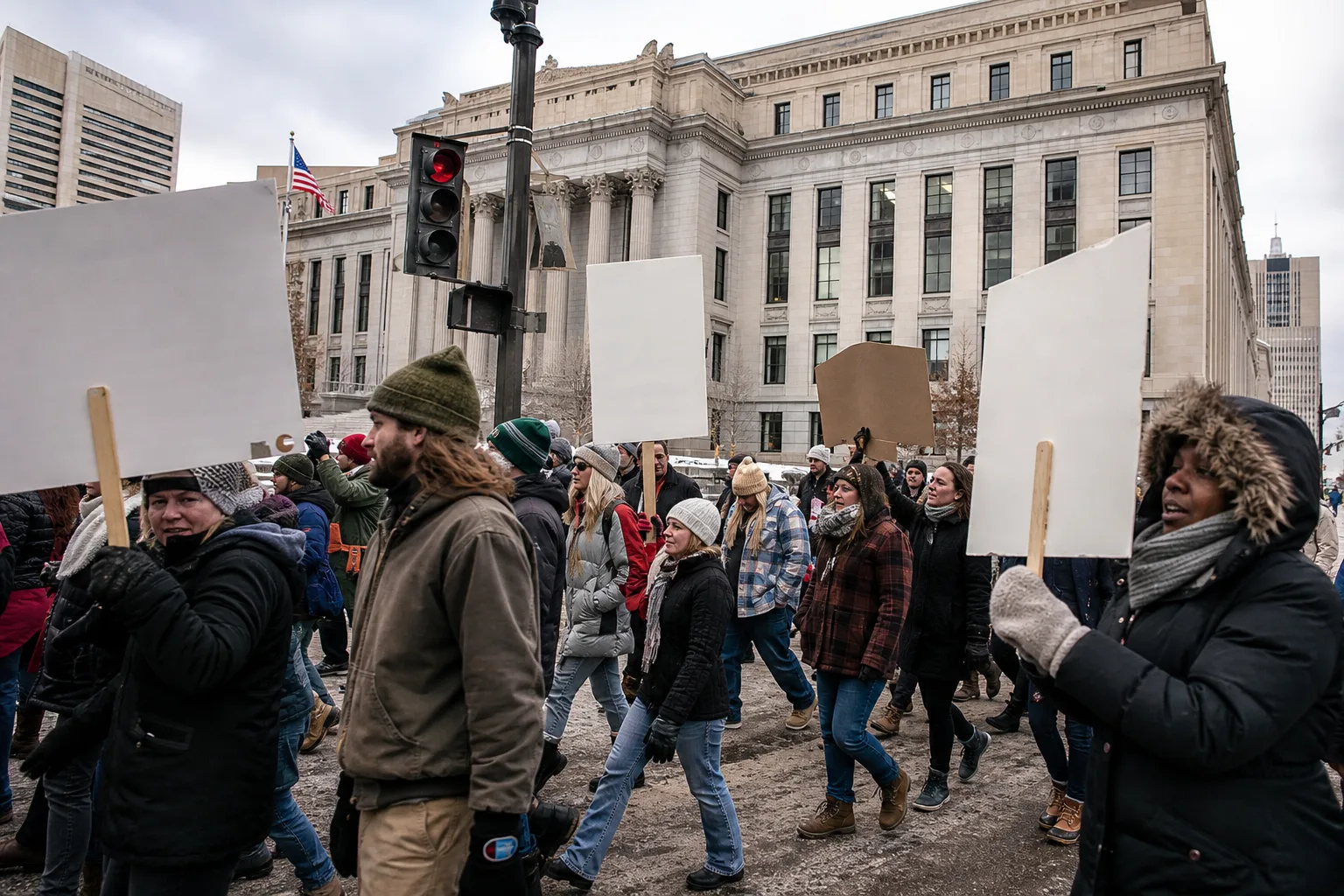
- DHS protest surveillance records show agents monitored meetings, activist Signal chats and financial activity linked to anti-ICE organizing.
- The DHS protest surveillance operation reportedly named unions and established nonprofit groups that have not been charged with crimes.
- Undercover agents allegedly attended public trainings and private meetings, sometimes recording participants and collecting vehicle license plate information.
- The disclosures could test whether federal investigators drew a lawful line between investigating crime and monitoring protected political association.
Table of Contents
DHS protest surveillance moved far beyond the street
The troubling part of the newly disclosed DHS protest surveillance records is not that federal investigators watched demonstrations. Law enforcement has always done that, and some of it is plainly legitimate. The concern is how far the reported operation appears to have reached: into union finances, nonprofit activity, encrypted group chats, church meetings, public-library trainings and ordinary political organizing.
Records filed in a federal criminal case against 15 Minneapolis protesters describe a Department of Homeland Security inquiry known as Operation Puppet Master. The stated goal was to identify a supposed network coordinating opposition to Immigration and Customs Enforcement during the administration’s immigration enforcement surge in Minnesota.
A protest crowd may contain people who break laws; that does not turn every labor organizer, climate activist or person attending a meeting into part of a criminal conspiracy. Yet the documents reportedly pull several mainstream organizations into investigators’ orbit, including the AFL-CIO, Service Employees International Union, Democratic Socialists of America, Showing Up for Racial Justice and the Sunrise Movement. None has been charged in the case.
The DHS protest surveillance reports surfaced through discovery litigation surrounding the prosecution, rather than through a voluntary public accounting by DHS. Kevin Riach, a lawyer for one defendant, said he was struck by the operation’s breadth and what he called its apparent lack of investigative discipline. DHS did not respond to requests for comment cited in the reporting, while the Justice Department declined comment.
What the records say investigators actually did
According to the filings, DHS protest surveillance included undercover personnel at organizing sessions in Minneapolis and New York, as well as access to Signal chats used by activists. One operative attended a Sunrise Movement resistance-skills event at a Minneapolis library, where the discussion reportedly centered on recruitment, de-escalation, safety marshals and police liaisons.
The agent’s own report reportedly concluded that the group focused on peaceful protest. But the agent also engaged attendees, suggesting he worked in construction and could create things useful for more direct action, while saying jail did not concern him. That is a red flag. Infiltration is one thing; an officer dangling escalation in a space where people are discussing de-escalation is another. Courts have spent decades wrestling with that boundary for good reason.
Other reports describe an undercover agent joining a virtual meeting about ICE brutality at Hunter College, attending gatherings at a Minneapolis labor center and a church, and recording audio. At one church gym event, an agent joined boxing and sparring practice while secretly recording; the device reportedly fell to the floor and had to be retrieved later. It would be darkly comic if the underlying stakes were not so serious.
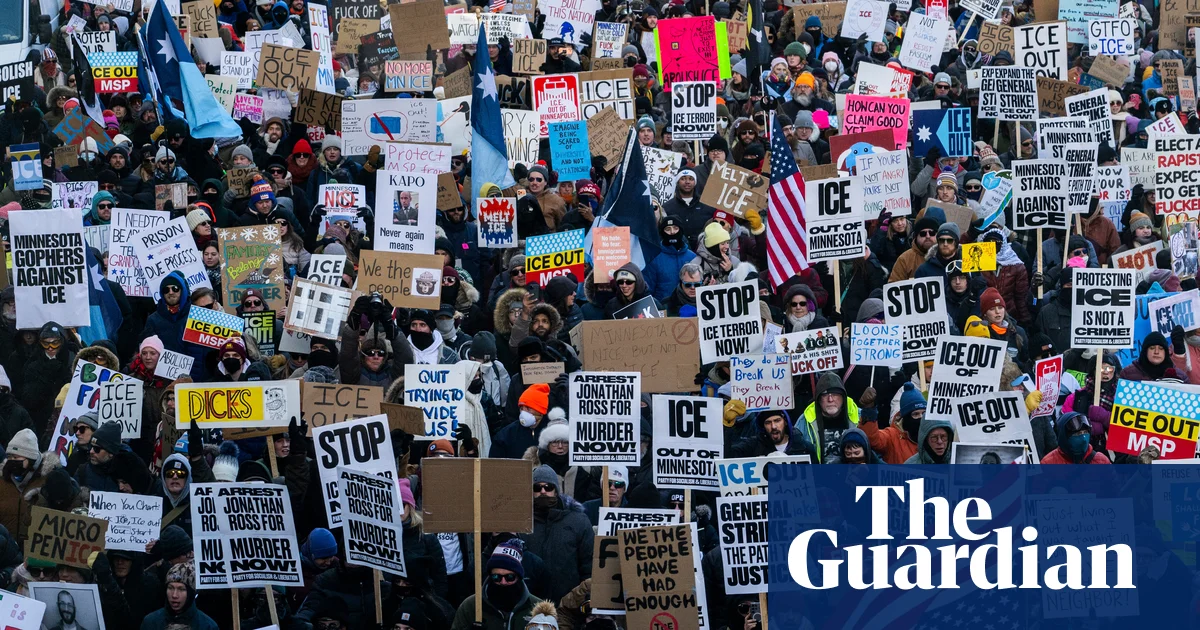
Agents also documented license plates at an anti-ICE church event, according to the records. When attendees asked two undercover personnel whether they were ICE, the agents said they were not. That may be standard tradecraft, but it illustrates the basic imbalance here: participants were making decisions about speech and association without knowing the government was collecting data around them.
Financial records are the most consequential part
The most expansive element of the reported DHS protest surveillance may be financial. Investigators sought banking information under a theory of domestic-terrorist financing, including wire-transfer records involving SEIU. The documents also indicate a request for financial information related to the Communications Workers of America from the Federal Reserve Bank of New York, and records connected to the Sunrise Movement.
Financial data can map an organization with startling precision. A public event tells investigators who showed up one afternoon. Payment trails can reveal vendors, travel, recurring relationships, internal infrastructure and the mundane machinery that keeps a group alive. For a union or nonprofit, that is closer to handing over a building’s wiring diagram than looking through a front window.
There are legal channels for agencies to obtain records, and administrative subpoenas do not automatically mean wrongdoing by investigators. Still, the target selection is where scrutiny belongs. Calling a broad political ecosystem a terrorism-financing inquiry can create a stigma that outlives the investigation itself. People donate less, attend fewer meetings and think twice before joining a chat when they believe federal agents may be reading over their shoulder.
The technology angle matters
This DHS protest surveillance model, as described in these records, did not rely on a single spy in a trench coat. It blended human sources, audio capture, social-group access, vehicle data and financial requests. Each input may look limited on its own. Combined, they can create an intimate picture of a political community.
Signal deserves particular attention. The app’s end-to-end encryption protects message content from outsiders, but it cannot stop an invited participant from reading, copying or reporting what a group says. Encryption is excellent at securing the pipe; it cannot determine who is standing at the other end. That distinction gets lost whenever officials or pundits talk about secure messaging as if it were a force field.
The disclosures arrive amid a broader fight over political surveillance, facial recognition, data brokers and police access to privately held information. For organizers, the practical lesson is bleak: digital privacy tools reduce some risks, but they do not erase social engineering or undercover access. The larger democratic question is whether agencies can use every available data source simply because the technology makes it convenient.
Protected dissent cannot become a suspicious category
The First Amendment protects speech, assembly and association, including criticism of immigration policy and ICE. It does not shield violence or genuine planning for criminal acts. But the reported DHS protest surveillance operation appears to show how easily those distinct categories can blur when officials begin with a theory that a loose political coalition is centrally controlled and dangerous.
That theory resembles older federal surveillance playbooks, from COINTELPRO’s targeting of civil-rights and antiwar groups to post-9/11 investigations that treated broad community networks as potential security threats. The tools have changed. The institutional temptation has not: start with a label, gather everything, then search for the connective tissue that validates the label.
Riach’s request for additional disclosure may determine whether these documents are an incomplete window into a wider program or the core of the government’s case. Either way, the courts should demand a clear account of what evidence justified this scope, who approved it and how investigators separated protected advocacy from criminal conduct. Readers can review the basic legal protections at the ACLU’s protest-rights guidance, but constitutional rights mean little if exercising them quietly places someone in an investigative database. My read is that this case will become a test of whether the government still recognizes that distinction.