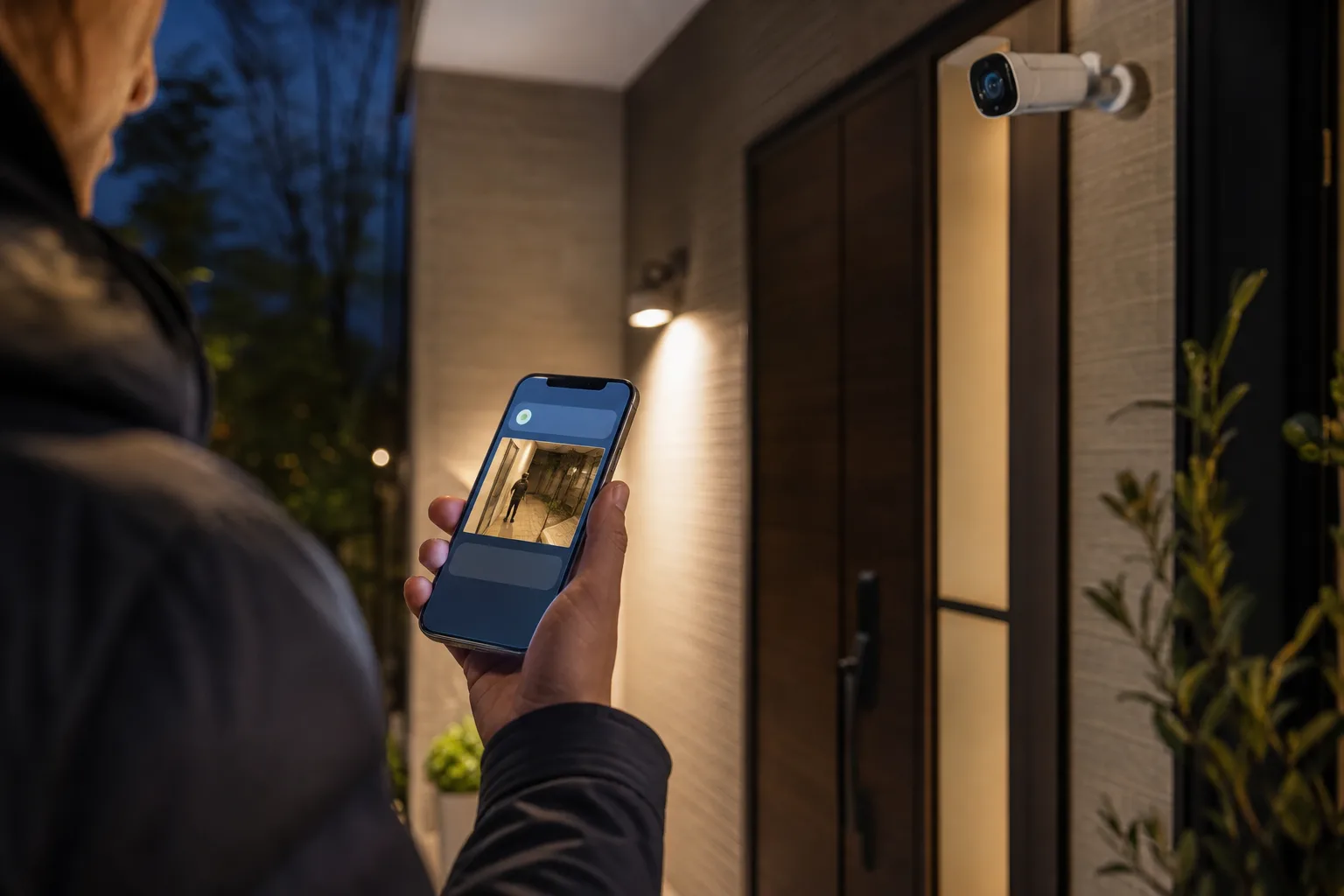
- Apple’s iCloud+ AI camera feature starts at $9.99 monthly, but that plan enables intelligent summaries for only one supported camera.
- The iCloud+ AI camera limits diverge sharply from HomeKit Secure Video, which permits five recording cameras on Apple’s $2.99 tier.
- Users with five cameras need Apple’s $59.99 monthly 12TB plan to receive AI-generated motion descriptions across every feed.
- The pricing structure suggests Apple sees home security as a promising new source of hardware and recurring monitoring revenue.
Table of Contents
Apple has put an expensive gate in front of a useful feature
The awkward truth about Apple’s new iCloud+ AI camera setup is that it turns a sensible home-security convenience into a luxury add-on remarkably quickly. iOS 27 can turn a motion alert into a readable description of what happened: a person approached the porch, a delivery arrived, a dog crossed the driveway. But Apple is tying that capability to storage tiers that make very little sense for households that already bought into HomeKit cameras.
According to Apple’s newly detailed limits for Apple Intelligence features in the Home app, the $9.99-per-month 2TB iCloud+ plan enables AI summaries for one camera. Two cameras require the 6TB plan at $29.99 per month. Want summaries on as many as five cameras? That means the 12TB plan, priced at a hefty $59.99 every month.
That is not a typo, and it is hard to dress up. A home with a front-door camera, a backyard camera, and a nursery or garage camera could be looking at a storage bill that exceeds the cost of several mainstream security subscriptions combined. My read is that Apple has priced a broadly useful notification feature as if it were an enterprise analytics product.
The feature itself is easy to understand. Apple Intelligence examines detected activity and converts the event into a short text summary, with recognition intended for people, animals, vehicles, packages, and more general motion. Anyone who has scrolled through a dozen identical alerts after a windy afternoon knows why that sounds appealing. Notifications are supposed to save time, not become a part-time job.
Why the iCloud+ AI camera limits sting so much
What makes the iCloud+ AI camera policy particularly frustrating is the contrast with Apple’s existing HomeKit Secure Video allowances. A 50GB iCloud+ plan costing $0.99 monthly supports one recording camera. The $2.99, 200GB tier supports up to five cameras. At 2TB for $9.99, Apple permits unlimited HomeKit Secure Video cameras for recording.
Then iOS 27 arrives and redraws the map. A household paying for 2TB can record video from a whole fleet of compatible cameras, yet Apple’s AI layer will only describe activity from one of them. The company is effectively telling customers: your recordings can be unlimited, but your useful notifications are rationed.
That distinction will feel especially punishing to Apple One Premier subscribers. The bundle includes 2TB of iCloud+ storage, which sounds generous until its owner discovers that the new iCloud+ AI camera benefit applies to one camera alone. Apple One has long sold itself on simplicity; this is the opposite of simple.
Apple has said the number of supported cameras and other iCloud+ benefits may change over time. That caveat leaves room for a friendlier middle tier later, though customers should not have to buy based on the hope that a pricing chart eventually improves. There is currently no option for unlimited AI summaries, even at the top end.
Apple’s rivals make the comparison uncomfortable
Cloud-camera subscriptions are hardly new. Ring Protect, Google Home Premium, Arlo Secure, and Nest Aware all ask users to pay for video history, intelligent alerts, or both. Nobody should pretend that smart security cameras are a subscription-free paradise. Still, those companies generally price around the service a homeowner actually wants: a camera plan, a number of devices, or a video-history window.
Apple’s iCloud+ AI camera pricing instead ties a camera intelligence entitlement to giant storage buckets. That may be technically convenient for Apple’s billing system, but it is a poor fit for real homes. Plenty of people do not need 6TB of photos, backups, documents, and messages just because they installed a second security camera.
There is also a philosophical wrinkle here. Apple has spent years pitching HomeKit Secure Video as a privacy-minded alternative, emphasizing encrypted video handling and processing that reduces dependence on an advertiser-backed cloud ecosystem. You can see the company’s broader Home vision on its official iCloud+ page, where storage and privacy are presented as core parts of the package. But privacy is not a magic word that makes any price feel fair.
Apple may argue that generating natural-language event descriptions consumes meaningful computing resources, whether on-device, in the cloud, or through a hybrid arrangement. Fine. AI workloads cost money. Yet a $50 monthly jump from one camera to five is an astonishing way to recover those costs, particularly when competitors already provide person, package, and vehicle alerts at far lower household prices.
This looks like a preview of Apple’s home-security business
Recent reports about Apple developing its own home camera hardware and a wider security and monitoring push make the timing hard to ignore. If that arrives, the iCloud+ AI camera model starts to look less like an isolated iOS 27 oddity and more like the foundation for a recurring-revenue business.
That is a familiar Apple playbook: sell polished hardware, make the basic experience work, then reserve the cleverest ongoing features for services. It worked reasonably well with iCloud storage because people understand why a growing photo library needs more space. A camera-summary limit is different. The footage may already be stored under a plan the customer has paid for; Apple is charging again to make the alerts less dumb.

Apple’s broader Apple Intelligence strategy is visible here too. Apple has indicated that some Siri AI functions, image-generation tools, and photo-editing capabilities will also have usage limits, with paid ways to increase access planned. The company is testing how much subscription friction its customer base will tolerate in exchange for AI features. Frankly, the Home app may be the worst place to test that tolerance. Security alerts are practical, frequent, and often time-sensitive.
For now, the sensible move for existing HomeKit households is to treat AI summaries as optional rather than redesign a storage plan around them. One camera, perhaps the front door, may be enough to prove whether the descriptions genuinely reduce notification fatigue. But Apple should not mistake curiosity for acceptance. If it wants the smart home to become its next durable services business, the iCloud+ AI camera price needs to feel like a convenience fee, not a tollbooth at the driveway.