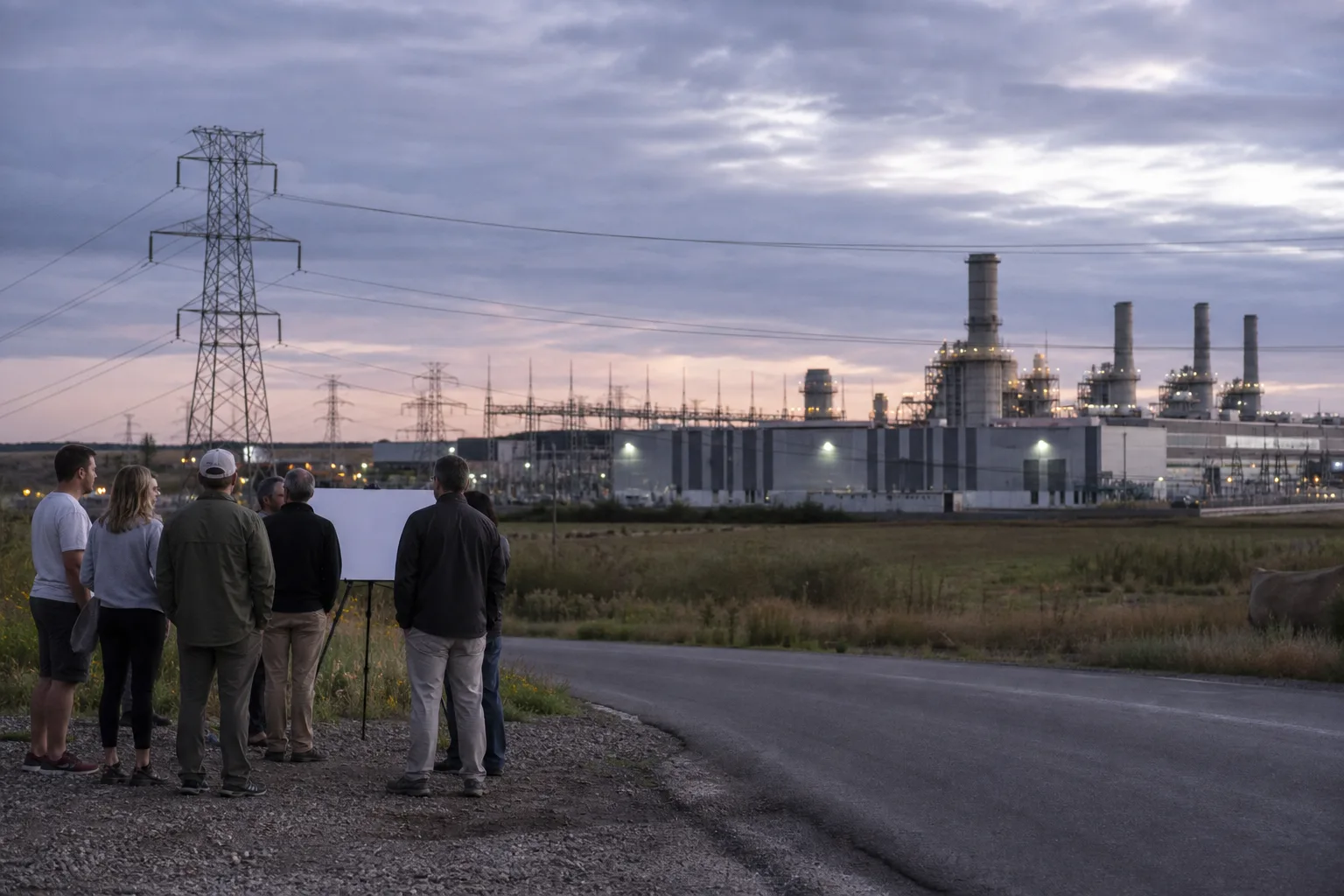
- The data center backlash is driven by local concerns over water, electricity bills, noise, and opaque deals with powerful technology companies.
- A growing data center backlash could become a climate fight as AI demand extends the life of natural gas generation.
- BloombergNEF projects data centers could exceed 5 percent of global electricity demand by 2035, with much new demand met by gas.
- Tech companies promise grid improvements, but communities need enforceable commitments before approving massive new computing campuses.
Table of Contents
The data center backlash has a climate blind spot
The data center backlash is no longer a niche fight waged by a few neighbors worried about a giant warehouse going up at the edge of town. It has become a broad political problem for the companies racing to build AI infrastructure — and for the elected officials offering them land, tax breaks, water, and access to an already stressed electrical grid.
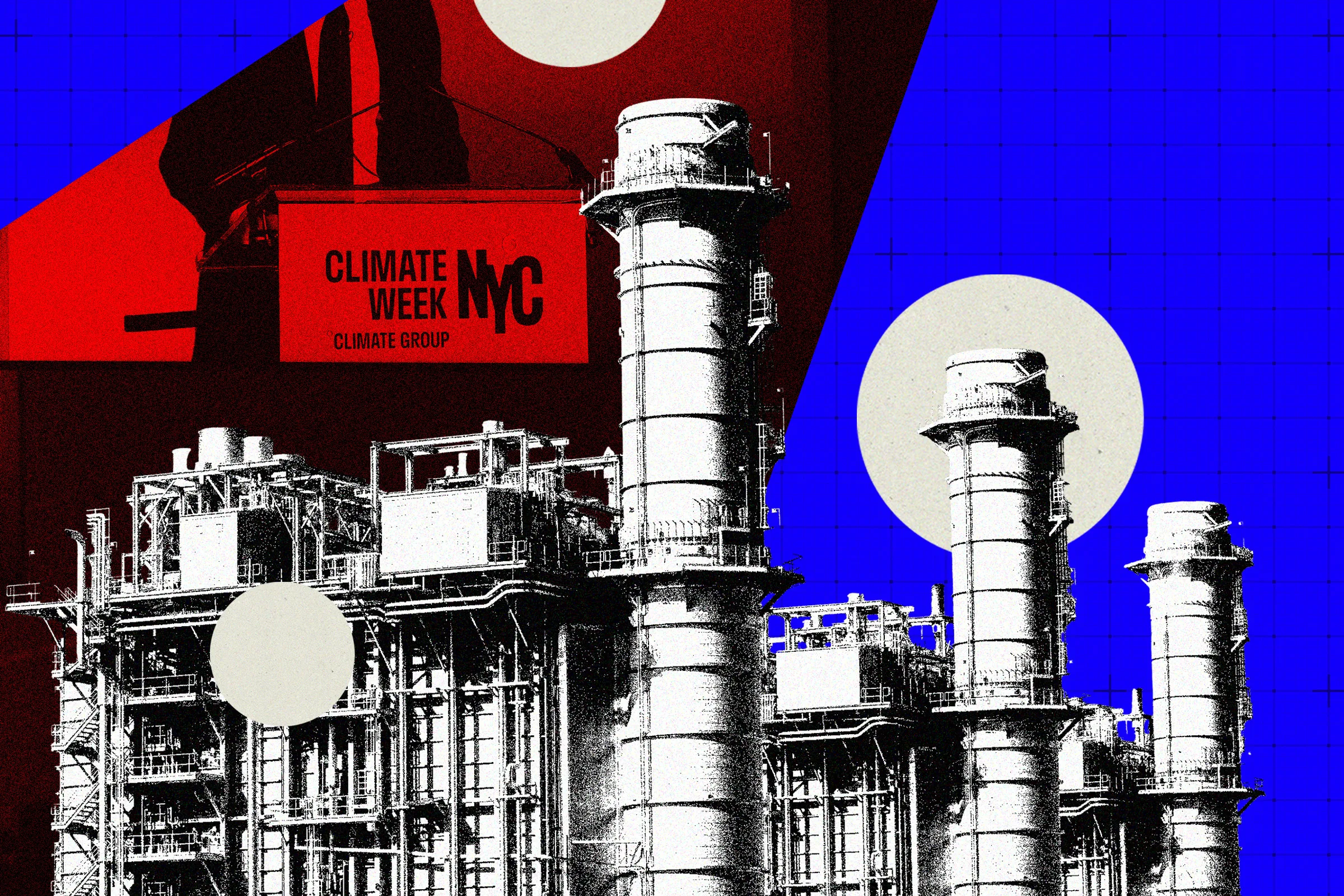
At a Climate Week panel in New York, that tension spilled into the room. Activists with Extinction Rebellion NYC repeatedly interrupted executives discussing AI and data centers, challenging the premise that an industry powered in part by fracked gas can be squared with climate targets. Security removed the protesters. The underlying argument, naturally, did not leave with them.
My read is that the protesters were pointing at the problem most executives would rather treat as an unfortunate footnote: AI’s physical footprint is arriving before the clean-energy system needed to support it. Yet outside climate conferences, that’s not usually what gets residents riled up first. They’re looking at water use, transformer stations, construction traffic, backup-generator fumes, and the unsettling possibility that a hyperscaler’s new campus will help push up their monthly power bill.

Those fears are neither irrational nor anti-technology. A data center may be the place where you store photos, stream video, use a chatbot, or run a business application. But to the town beside it, the facility can look more like a factory: massive, energy-hungry, lightly staffed, and negotiated behind closed doors. The industry has spent years selling cloud computing as weightless. The public is finally seeing the concrete, pipes, power lines, and gas turbines.
Local fights are about more than emissions
The data center backlash has spread across political lines because its most visible costs are local and unglamorous. In Northern Virginia, the world’s largest data-center cluster has fueled battles over transmission corridors, land use, and diesel-generator emissions. In Georgia, Arizona, Indiana, and elsewhere, residents have pressed officials for clearer information about water consumption and utility commitments. Moratorium proposals have appeared in states led by both Democrats and Republicans.
That bipartisan unease matters. Climate policy is often framed in national abstractions — gigatons, 2050 targets, international pledges. A new data center proposal is far more immediate. Will this project use potable water during a drought? Who pays for a new substation? How loud will the cooling equipment be at 2 a.m.? Will local taxpayers be subsidizing a company with a market capitalization larger than the state budget?
William Lawrence, a Democratic congressional candidate in Michigan’s 7th District and a cofounder of the Sunrise Movement, has made opposition to unchecked AI expansion part of his campaign. His platform describes data centers as threats to air, water, and quality of life. Climate change is part of the larger picture, Lawrence has said, but voters frequently put water and electricity costs ahead of emissions.
Frankly, that ordering makes sense. People tend to organize around the harm they can see from their kitchen window or in their utility bill. Climate consequences are no less serious because they’re farther away in time and geography. But a political movement that ignores the local ledger is going to lose to a press release promising jobs and innovation every time — and the data center backlash will only intensify.
The data center backlash meets the gas reality
The industry does have a pitch worth taking seriously. Varun Sivaram of Emerald AI has argued that data centers can act as better grid participants: shifting flexible computing workloads away from stressed hours, helping finance new clean generation, and becoming what he called “good citizens” of the power system. In theory, huge and sophisticated electricity buyers could do exactly that.
In practice, the data center backlash is growing because that theory is running headlong into the buildout happening now. AI companies need capacity quickly. Utilities need reliable power around the clock. Wind and solar are expanding, but transmission construction takes years, battery storage remains limited in duration, and nuclear plants cannot be summoned like an extra server rack. Natural gas is the expedient answer — which is precisely why it keeps winning.
BloombergNEF analysts project that data centers could account for more than 5 percent of global electricity demand by 2035, roughly triple today’s level. Their analysis suggests much of that additional demand will be supplied by new and existing gas-fired power, potentially lifting power-sector emissions by 6 percent within a decade. That estimate does not fully settle the question of off-grid generation built specifically for campuses, an increasingly attractive option for developers tired of waiting in utility interconnection queues.
The distinction between a corporate renewable-energy contract and actual 24-hour clean electricity is crucial here. A company can buy enough wind or solar credits to cover its annual consumption while drawing grid power at night, during heat waves, or when renewable output is low. If the marginal generator in those moments is a gas plant, the emissions are real regardless of how tidy the annual sustainability report looks.
For a useful benchmark, see the electricity outlook. Accelerating demand from data centers, AI, and cryptocurrency is reshaping electricity forecasts in advanced economies. The challenge isn’t that computing uses electricity. Everything useful does. It’s that the demand spike is landing in grid systems already struggling to replace fossil fuels while keeping the lights on.
What data center builders need to prove
Companies such as Microsoft, Google, Amazon, Meta, and Oracle are not building this infrastructure for charity. They are pursuing the computing capacity required for AI products, cloud services, advertising systems, and enterprise customers. That commercial logic is obvious. What has not been established is why communities should absorb the risk while accepting vague promises that more demand will eventually produce a cleaner grid.
The data center backlash will become much harder to dismiss if developers keep treating public consultation as a box to tick after the deal is done. Cully Cavness, cofounder and president of Crusoe, suggested at Climate Week that critics may overlook the tax-base benefits data centers bring. Sometimes they do bring real revenue. But tax revenue is not a universal solvent. It does not automatically fix groundwater depletion, land-use conflicts, pollution, or a utility system that spreads upgrade costs across captive customers.
Here are practical ways to make these projects less extractive. Regulators can require large facilities to disclose projected water use, hourly electricity demand, backup-generation emissions, and tax incentives before approval. Utilities can develop tariffs that make major new loads pay fairly for dedicated infrastructure. Developers can commit to hourly carbon-free electricity targets rather than relying solely on annual renewable certificates, and they can build in genuine load flexibility when grid operators need relief.
None of that means every proposed facility should be rejected. A blanket ban would be simplistic, and it could merely move construction to places with weaker rules. But the data center backlash is a deserved correction to an old Silicon Valley habit: treating physical constraints as somebody else’s boring problem. Remember when the cloud was marketed as though it floated above the weather? That illusion is over.
AI’s infrastructure boom needs a tougher social contract
The climate argument should not displace the local one. It should connect with it. Water stress, expensive power, dirty peaker plants, and carbon emissions are all signs of the same mismatch: private demand is scaling faster than public infrastructure and public oversight.
That is why the industry’s current messaging feels so thin. Saying data centers may help finance a cleaner grid someday is not enough when gas capacity is being planned today. Saying a campus creates jobs does not answer whether its power draw will force a new fossil plant onto the system. And telling a rural community to trust a confidential agreement with a trillion-dollar company is, well, not a serious political strategy.
If these electricity forecasts hold, the data center backlash will move from zoning meetings into the center of the AI debate. The data center backlash will not fade if companies continue to treat local costs as an afterthought. The question won’t be whether people want useful AI services. They plainly do. The question is whether the companies profiting from them are willing to pay for a grid that can support their ambitions without locking everyone else into another decade of gas.
So far, the industry has offered promises where communities need terms.
Frequently Asked Questions
Why is there a data center backlash in so many communities?
Residents are often reacting to immediate local costs: large water withdrawals, grid strain, diesel-generator pollution, construction noise, and fears of higher electricity bills. The projects can also receive major tax breaks, while the permanent job count is usually modest compared with the scale of public infrastructure required.
Do data centers increase electricity prices for households?
They can. Large data centers add substantial demand to regional grids, requiring new transmission lines, generation, and substations. Whether household bills rise depends on utility rules and contracts, but critics argue that ordinary ratepayers should not be left paying for infrastructure built to serve wealthy technology companies.
Can AI data centers run on clean energy?
Yes, but annual renewable-energy purchases are not the same as operating on clean electricity every hour. A data center needs power when the grid is short on wind or solar, and many regions still turn to gas plants then. Hourly clean-power matching and new local generation would make those claims more credible.