

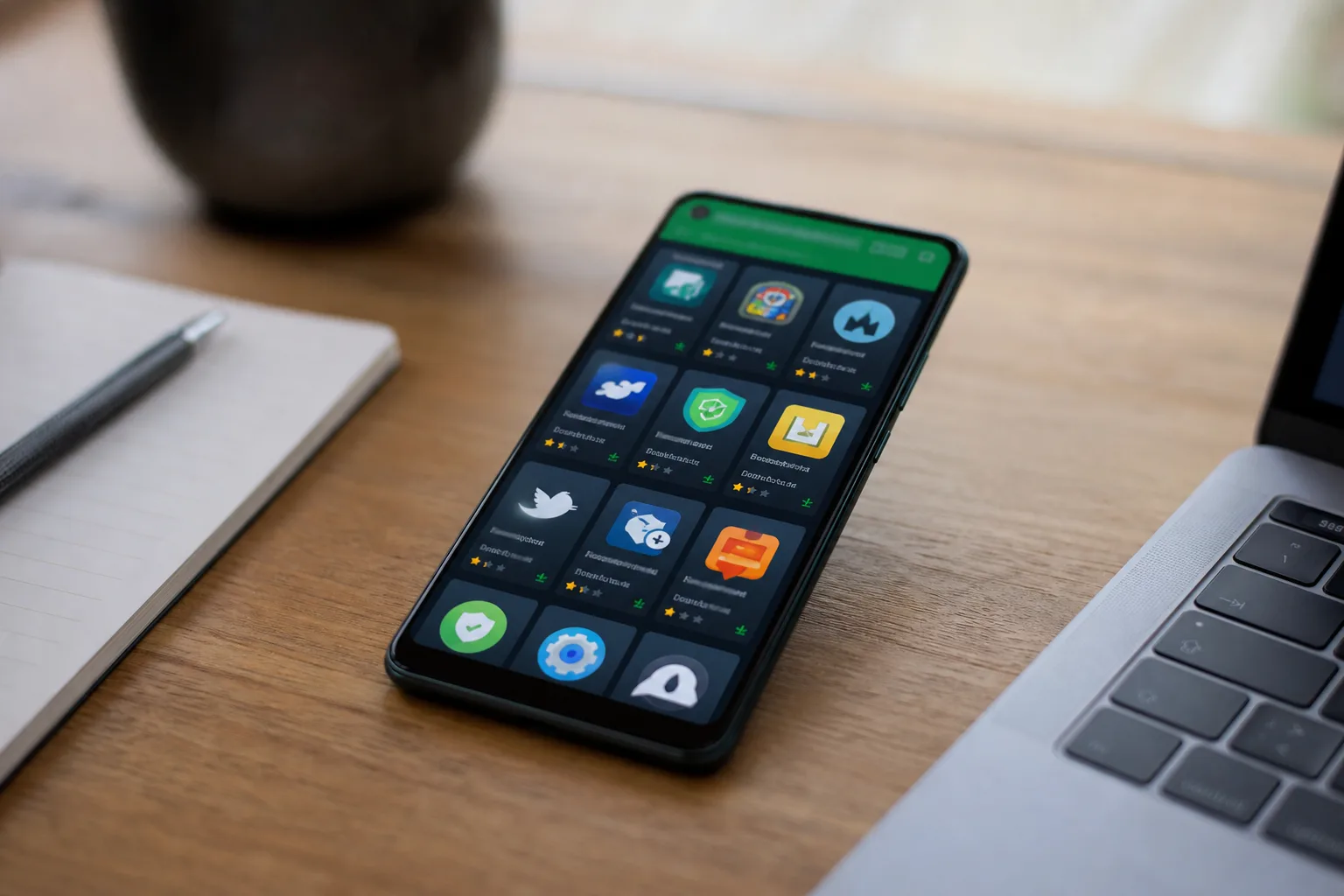
The next F-Droid update matters because Android’s independent app ecosystem has spent years looking like a useful tool built by people who would rather write code than run a retail store. Functional? Usually. Friendly? Not always. The open-source app repository is finally preparing the kind of overhaul that could make it feel less like a relic of early Android and more like a credible daily destination.
That timing is awkward, and probably not accidental. Google is moving toward stricter rules around software installed outside the Play Store, commonly called sideloading. F-Droid has never been a pirate bay for APKs; it is one of the more principled alternatives in Android software. But principles do not exempt a project from platform policy. As the operating system’s gatekeeper tightens the rules, F-Droid is trying to improve the experience before the doorway gets narrower.
- The F-Droid update tackles the two chores that matter most to regular users: finding open-source apps and keeping them current.
- This long-awaited F-Droid update arrives as Google prepares tighter controls around software installed outside Play Store channels.
- The redesign goes after everyday friction—trustworthy search results, useful metadata and updates that do not require babysitting.
- F-Droid’s future may hinge on whether Android’s new sideloading requirements leave room for genuinely independent software repositories.
Table of Contents
Why the F-Droid update has taken so long
F-Droid’s existing client does the job. It lists apps, pulls package metadata, checks repositories, and installs updates. That is not a small achievement for a volunteer-driven service whose catalog favors free and open-source software. Yet the interface has long asked users to bring patience. Search can feel blunt, category browsing is uneven, and updates have sometimes carried the unmistakable texture of a utility rather than a consumer product. A worthwhile F-Droid update has to make those routine tasks feel less like maintenance work.
The coming F-Droid update is described as a much larger refresh than a coat of paint. Search and updating are central targets, which is exactly where they should be. A store lives or dies on whether people can find an app they need and trust that it will stay current afterward. If you have ever tried to replace a mainstream Android app with an open-source equivalent, you know the problem: the software may exist, but discovering the good version amid similarly named projects can be a chore.
That discovery problem is more consequential than it sounds. Google Play has its own issues, from aggressive recommendations to junky subscriptions and cloned listings, but it has trained users to expect screenshots, descriptions, ratings, compatibility signals and a mostly painless update path. The F-Droid update does not need to copy every piece of that formula. Ratings can be gamed, and recommendation engines have a habit of turning every marketplace into a casino floor. Still, clearer navigation and better app information are table stakes.
The project’s official site makes its core distinction plain: F-Droid distributes free and open-source Android applications. Its packages are assembled from source code, rather than simply accepting whatever binary a developer uploads. That build-and-review model has trade-offs. It can mean slower releases than a developer’s own website or Google Play listing. It also creates a different kind of accountability, one that is increasingly rare in mainstream mobile software.
Android sideloading is becoming a policy battlefield
For years, Android’s ability to install apps from outside Google Play was one of its strongest practical differences from Apple’s iPhone. Yes, Android throws warning screens at users, and yes, those warnings are often justified. Malware frequently arrives through deceptive download pages, fake utilities and repackaged popular apps. But sideloading also lets people install software Google does not carry, use regional services, test developer builds, preserve older apps, and avoid being locked into a single corporate checkout line.
Google’s security argument is not frivolous. The average person does not inspect signing keys or compare package hashes before tapping install. They see a convincing ad, download a fake banking app, and suddenly the technical purity of an open platform is little comfort. Android needs defenses against that sort of attack.
Still, there is a meaningful difference between protecting people from malicious installation flows and making independent distribution so bureaucratic that only large companies can participate. The coming F-Droid update lands right in that gap. Google has indicated that developer verification and new safeguards will shape the future of off-Play installations, though the final impact will depend on implementation details, regional obligations and potential exemptions.
My read is that Google will frame the shift as user safety while also benefiting from a cleaner, more governable ecosystem. Both things can be true. Google Play is a security product, a business platform and a policy enforcement mechanism all at once. That makes outside stores inconvenient in ways that are not purely technical.
A better storefront is about trust, not visual polish
There is a temptation to treat alternative app stores as ideological artifacts: use them if you care about software freedom, ignore them if you want convenience. That misses the larger point. F-Droid has value precisely because it makes a different set of choices visible. It gives users access to applications that often avoid ads, analytics SDKs, account requirements and subscription traps.
Consider the ordinary phone-owner use case. You want a simple podcast player, a local music app, a two-factor authenticator, a weather client, or an offline map tool. In the usual store, you may find a perfectly good option. You may also find ten apps that want an account, a trial period, notification permissions and access to data they plainly do not need. For that user, the F-Droid update should make the better alternatives easier to identify. F-Droid will not solve every category, especially those dependent on proprietary APIs or huge commercial budgets. But it gives users a place where the incentives are visibly different.
That is why the F-Droid update needs to do more than look contemporary. Search results need to communicate which apps are maintained, what permissions they request, whether a package has known anti-features, and how recently it was updated. F-Droid already has a vocabulary for some of this, including warnings around tracking and non-free dependencies. The challenge is presenting it without making every install feel like reading a license agreement.
Trust also means honesty about limitations. Some F-Droid apps lag behind upstream releases because the repository builds them independently. Some popular Android services cannot be replicated without Google components. And some open-source projects are simply rough around the edges. A polished client should make those realities easier to understand, not hide them behind marketing gloss.
F-Droid’s real competition is user indifference
The obvious rival is Google Play, but that is not quite right. F-Droid does not need to replace Google Play for most users. It needs to become useful enough that people keep it installed. A secondary store that handles a handful of privacy-respecting essentials, then quietly keeps them updated, has already succeeded. That is the standard the F-Droid update must meet.
There are other alternative-distribution efforts, from developer-hosted APK pages to stores such as Aurora Store and third-party marketplaces aimed at gaming or regional audiences. Most fall into one of two traps: they are too sketchy for newcomers, or they depend too heavily on Google’s own infrastructure to feel truly independent. F-Droid’s source-built approach gives it a credible identity. Its client has simply needed an experience to match.
If this F-Droid update makes the repository easier to browse, less stressful to maintain and more legible to people outside the open-source faithful, that is a genuine win for Android. Not because every user should abandon Google Play, but because a healthy platform ought to have a viable exit ramp.
Google now has to prove that safer sideloading does not become sideloading in name only. F-Droid, meanwhile, has to prove that software freedom can be pleasant to use on a Tuesday morning when someone just wants an app that works. That is a far more consequential test than a redesigned button bar.
Frequently Asked Questions
What is F-Droid?
F-Droid is an alternative Android app repository focused on free and open-source software. Its catalog is built from publicly available source code, and the service distributes applications without the conventional advertising and tracking model common in much of the mobile app economy.
What changes in the F-Droid update?
The incoming release centers on a substantial redesign of the F-Droid client, with attention to app search, browsing and update management. The goal is less about adding flashy storefront features and more about making the basic act of finding and maintaining open-source Android apps less cumbersome.
Will Android sideloading restrictions affect F-Droid?
Potentially. Google’s evolving Android security approach could add requirements for apps installed outside Google Play, including developer identity and verification processes. F-Droid’s model is different from a casual download site, but any rule that increases approval friction could still affect alternative repositories and their users.

