

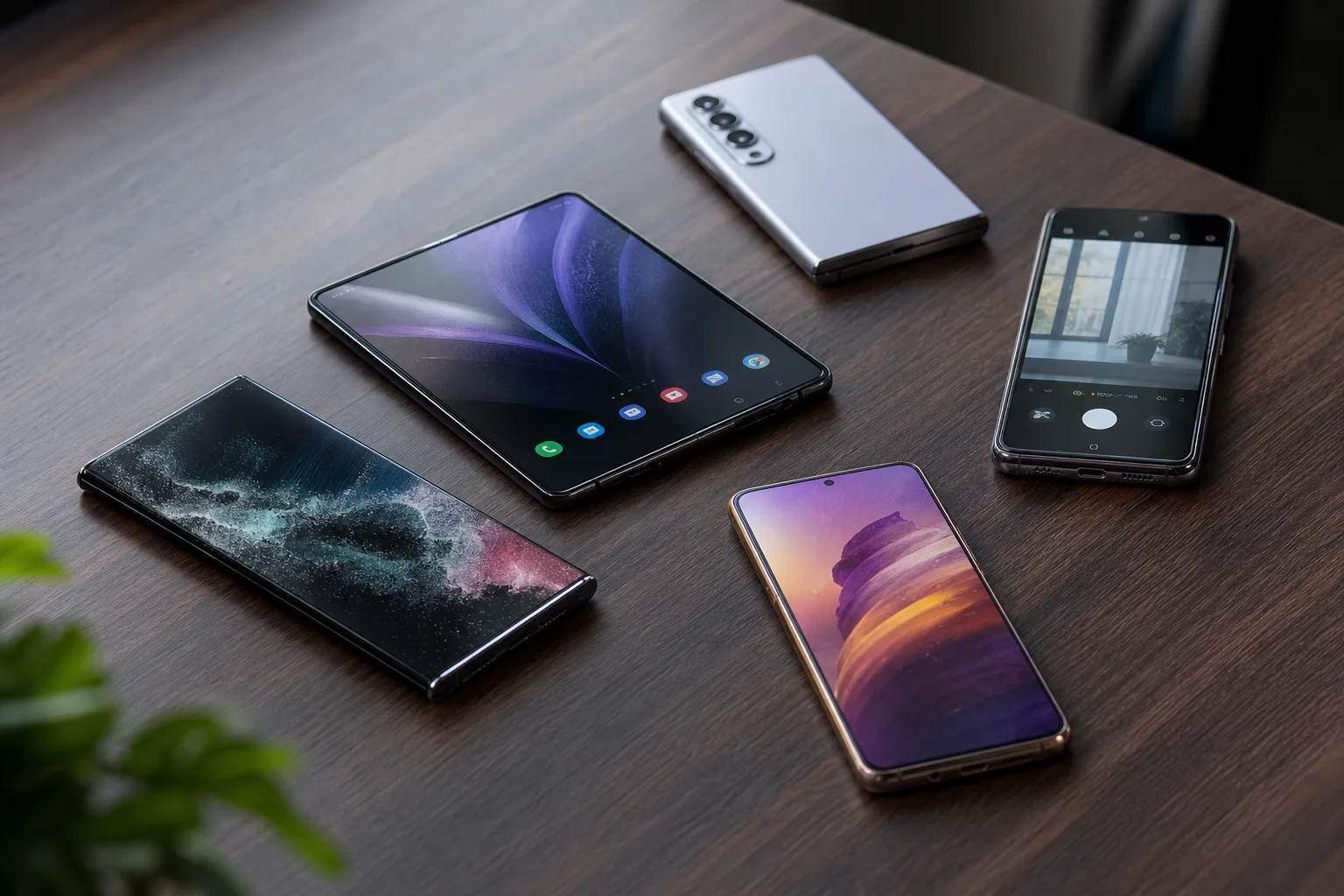
- The upcoming Android phones worth watching will probably improve cameras, battery life and on-device AI rather than reinvent the handset.
- Samsung, Google, OnePlus and foldable makers have plenty of incentive to make upcoming Android phones more compelling for buyers who skipped 2026.
- Waiting makes sense only if your current phone remains supported, secure and capable enough that patience doesn’t become a daily annoyance.
- The next flagship cycle may show whether Android makers can make AI genuinely useful instead of merely impossible to ignore.
Table of Contents
The case for waiting on upcoming Android phones
The upcoming Android phones of 2027 may be a better reason to hold onto a perfectly functional handset than another annual spec bump. That doesn’t mean every shopper should wait. If your current phone has a swollen battery, stopped receiving security patches, or takes three attempts to find a signal, buy what works now. Life is too short to suffer through a dying USB-C port for a product that has not been announced.
But the flagship Android market is entering a useful pressure point. Samsung has settled into a very mature Galaxy formula. Google is still figuring out how to turn its software and Tensor chips into a clear consumer advantage. Chinese brands such as OnePlus, Xiaomi and Oppo keep pushing battery capacity, charging and camera hardware in ways the US market often sees later, if at all. Foldables, meanwhile, have reached the stage where people no longer ask what they are. They ask whether they break, whether they are too expensive, and whether the cameras are any good.
Those are better questions. And they should shape the next wave of phones.
The original temptation with any future-phone list is to pretend we know the full roadmap. We don’t. Companies haven’t detailed their 2027 plans, and names, launch timing and component choices can shift abruptly. What we can do is identify the product lines where a meaningful upgrade is plausible—and where the Android industry has unfinished business.
5 upcoming Android phones worth putting on the radar
1. Samsung’s next Galaxy S Ultra
Samsung’s next top-tier Galaxy S Ultra is the obvious candidate, even if its eventual name remains unknown. A Galaxy S27 Ultra would follow years of increasingly polished but increasingly familiar Ultra phones: enormous display, S Pen support, a broad camera array, premium materials and a price that tends to make ordinary people blink twice before hitting checkout.
What should Samsung fix? Camera consistency. The company’s best images can look spectacular, but motion capture and processing choices still invite comparisons with Google and Apple. Samsung also needs to be disciplined about AI. Galaxy AI has produced genuinely useful features such as translation and editing tools, but plenty of phone AI still feels like a showroom demo designed to impress for 45 seconds.
For buyers, the appeal of this class of upcoming Android phones is straightforward: Samsung pairs strong hardware with long software support and broad availability. It’s the safe choice, which sounds faintly boring until you remember that a phone ought to remain safe, supported and good for years.
2. Google’s next Pixel flagship
Google’s future Pixel line may be the more interesting story. Pixel phones have long had a split personality: excellent cameras and clever software on one side, uneven performance, thermal concerns and occasionally peculiar hardware compromises on the other. Google has made steady progress, but the Pixel remains a phone people recommend with an asterisk.
The next flagship Pixel, likely part of a Pixel 11-era family if Google holds its current numbering, could be where that asterisk gets smaller. Google’s advantage is control of Android itself. Features such as call screening, voice transcription, image processing and spam detection often arrive on Pixel first because Google builds the operating system and the services underneath it.
The challenge is execution. Google needs its Tensor strategy to provide sustained performance and efficiency, not merely bespoke AI talking points. That matters more than another tiny bump in benchmark scores.
3. The OnePlus flagship that pushes the basics
OnePlus remains one of the few major Android brands that can make a conventional slab phone feel refreshing. Its flagships have often focused on the things people notice every day: fast charging, fluid displays, large batteries and performance that doesn’t feel apologetic after six months.
A future OnePlus flagship could be among the upcoming Android phones putting the most pressure on Samsung and Google. Not because it will necessarily sell more units, but because it shows how much value buyers can get outside the usual two-brand shortlist. OnePlus and its wider corporate family also tend to experiment aggressively with silicon, cooling, charging and camera partnerships.
The catch is familiar. Availability varies by region, software tastes are personal, and long-term support must be weighed against Samsung and Google’s increasingly generous commitments. Still, if your priority is a phone that feels quick at 8 p.m. with 12 percent battery left, rather than one with the most elaborate AI pitch deck, this is a line worth watching.
4. Samsung’s next Galaxy Z Fold
Foldables need a breakout year, not another respectable one. Samsung’s next Galaxy Z Fold has the clearest opportunity to deliver it. The Fold format remains compelling for people who read, edit documents, work from airports or simply want a compact device that opens into a small tablet. Once you’ve answered emails side by side with a calendar on a large inner screen, the appeal is obvious.
Then you close it, feel the price, and remember the compromises.
Samsung needs a thinner body, less visible crease, better camera hardware and an outer display that feels like a normal phone rather than a narrow concession. Durability and repair costs remain equally important. A foldable doesn’t need to be indestructible, but consumers should not feel as though they are carrying a luxury appliance with a fragile hinge.
Among upcoming Android phones, the next Fold may be the clearest test of whether Android’s hardware experimentation can become mainstream purchasing logic. Google, Honor, Oppo and others will keep competing here, yet Samsung’s scale gives it the best chance to normalize the category.
5. Google’s next Pixel Fold—or a serious Fold rival
Google’s foldable ambitions deserve separate attention because its software could be the missing ingredient. Android has improved dramatically on large screens since the awkward tablet years, but foldable apps still need better continuity, smarter multitasking and fewer moments where an app simply stretches itself across a display like a low-resolution poster.
A next-generation Pixel Fold could force the issue. Google can tune Android’s behavior across the cover display and inner panel in a way third-party manufacturers cannot. If it improves battery life, reduces bulk and matches the camera quality expected from a Pixel flagship, it could become one of the few upcoming Android phones with a genuinely distinct reason to exist.
There is another possibility: a rival brand beats Google to it. Honor’s Magic V series and Oppo’s Find N line have shown that thin, wide foldables are possible. The problem for US buyers is often access, carrier compatibility and after-sales support. Hardware innovation means less when getting a cracked screen repaired becomes a cross-border logistics project.
What will actually matter in the 2027 cycle
Specs will still dominate launch-day slides: brighter panels, faster Qualcomm chips, larger image sensors and fresh generative tools. Some of that will matter. Much of it will blur together.
For shoppers weighing upcoming Android phones, the real dividing lines will be battery health, thermal behavior, camera reliability, modem quality and software support. These are unglamorous topics, right up until they affect the phone you use six hours a day. A device that remains smooth after three years is more valuable than one that wins a benchmark in its first week.
AI is the wildcard. Every major phone maker is trying to make on-device AI sound inevitable, and some features are already useful. Live translation can be valuable. Better transcription is valuable. Search that understands what is on your screen can be valuable. But consumers don’t need another photo editor that turns lunch into an oil painting. My read is that the companies which make AI quiet, fast and reliable will win more goodwill than those that plaster it across every settings menu.
Don’t wait blindly
There is a bad version of waiting for upcoming Android phones: endlessly postponing a needed purchase because next year’s device might be thinner or have a slightly larger sensor. That path ends with a four-year-old phone overheating in the back seat while you try to use maps.
If your device is healthy, supported and meeting your needs, patience could pay off. The next Android generation has room to make progress where it counts, particularly on foldable durability, computational photography and battery efficiency. If manufacturers merely add more AI labels to familiar hardware, though, shoppers may discover that the smartest move was buying a discounted current flagship all along.
Frequently Asked Questions
When should I buy upcoming Android phones instead of a current flagship?
Waiting is sensible when your current handset still receives security updates and handles the apps you use without trouble. Buyers with an aging battery, cracked display, unreliable modem or expired software support should not postpone an upgrade solely for unannounced hardware.
Will 2027 Android flagships have better battery life?
They may, but battery gains depend on chip efficiency, display tuning, modem performance and software management as much as battery capacity. New silicon usually improves power use, yet thinner designs and brighter screens can consume those gains quickly.
Are Android foldables worth waiting for?
Foldables are worth waiting for if a larger screen would genuinely change how you work, read or travel. Buyers who mainly want dependable cameras, easy one-handed use and lower repair risk will probably get better value from a conventional flagship.