

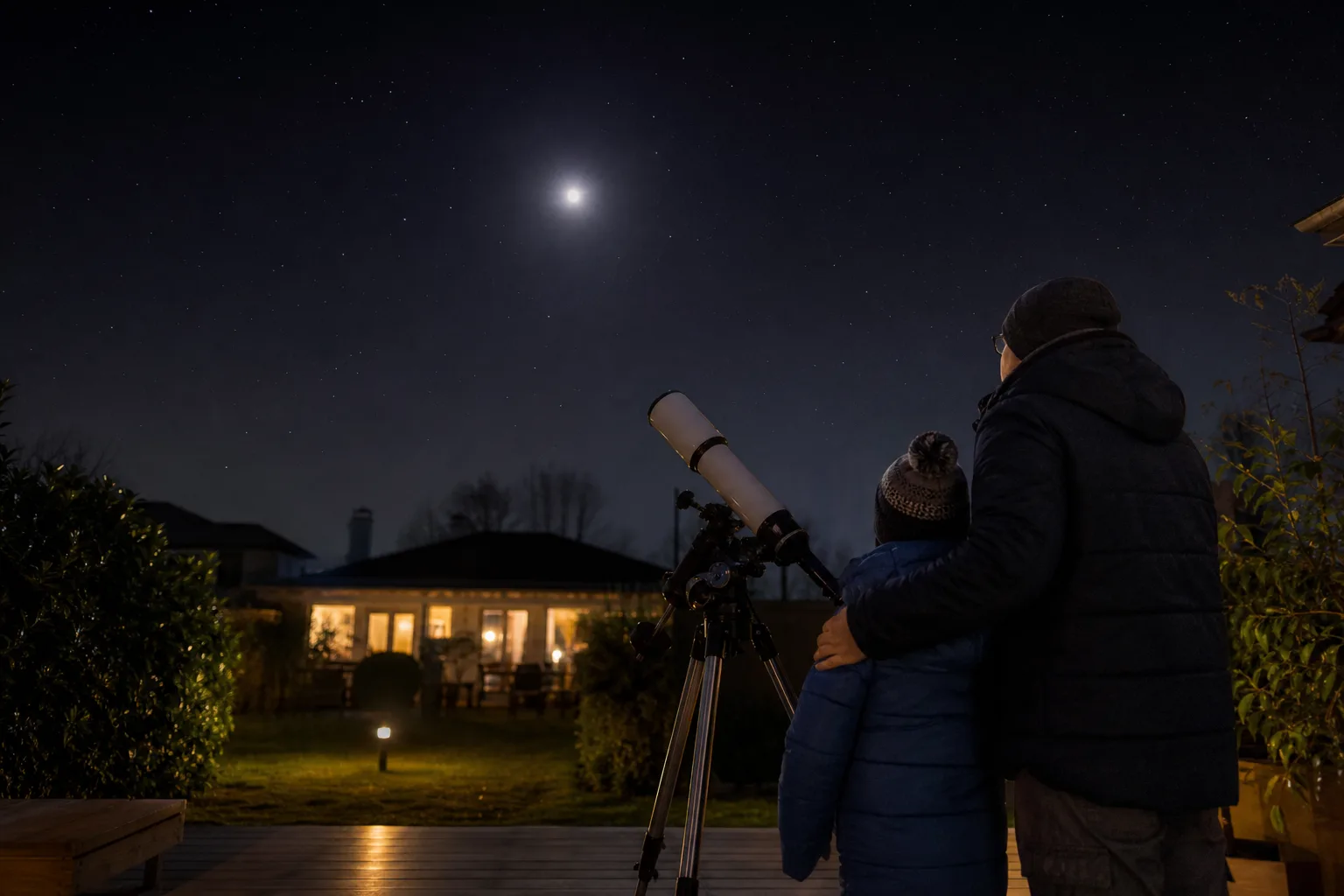
- The Celestron Travel Scope 70 has fallen to $90, a practical entry price for first-time stargazers and families.
- The Celestron Travel Scope 70 includes two eyepieces, a tripod, finderscope, software, and a backpack for travel.
- Its 70mm aperture is best for the Moon, Jupiter, bright planets, and major star clusters rather than faint galaxies.
- Amazon’s $90 price is good, but the telescope reached $81 during June’s Prime Day sales.
Table of Contents
At $90, the Celestron Travel Scope 70 earns its place
The fastest way to ruin a budding astronomy hobby is to hand someone a giant box of fiddly hardware, a wobbly mount, and instructions that feel like they were translated from a submarine manual. The Celestron Travel Scope 70, currently listed at $90 on Amazon, avoids most of that drama. It is a small 70mm refractor built for people who want to look up tonight, not spend three weekends researching counterweights.
That price is $30 below the typical $120 asking price. It also matches the current price at B&H Photo and Best Buy, so this is less an Amazon-exclusive steal than a broadly available seasonal discount. Still, $90 is a reasonable threshold for an experiment: a gift for a curious kid, a compact travel companion, or a low-risk way to find out whether astronomy sticks.
The package includes 10mm and 20mm eyepieces, a finderscope, a collapsible full-height tripod, Celestron’s basic Starry Night software, and a backpack. That last item is more meaningful than it sounds. A telescope that stays in a closet because it is awkward to move might as well be a decorative lamp.
What the Celestron Travel Scope 70 can actually show
Marketing images have done lasting damage to entry-level telescopes. You will not point the Celestron Travel Scope 70 at Saturn and see a NASA-grade portrait floating in the eyepiece. You can, however, see the rings as rings under decent conditions, spot Jupiter’s four Galilean moons, trace craters and shadows across the Moon, and pick out brighter open clusters. Those are real, memorable views—the sort that make a phone screen suddenly feel a little less magical.
The 70mm aperture matters here. Aperture is the diameter of the main lens, and it governs how much light the telescope gathers. Seventy millimeters is modest, but it is enough for nearby, bright targets. The Moon is the obvious winner. Jupiter performs well. Venus and Mars can be enjoyable, although Mars is famously difficult because it appears so small for much of its orbit. Deep-sky observing is possible in the broadest sense, but expectations need to be calibrated: a bright cluster is realistic; richly detailed nebulae and faint galaxy hunting are not this scope’s job.
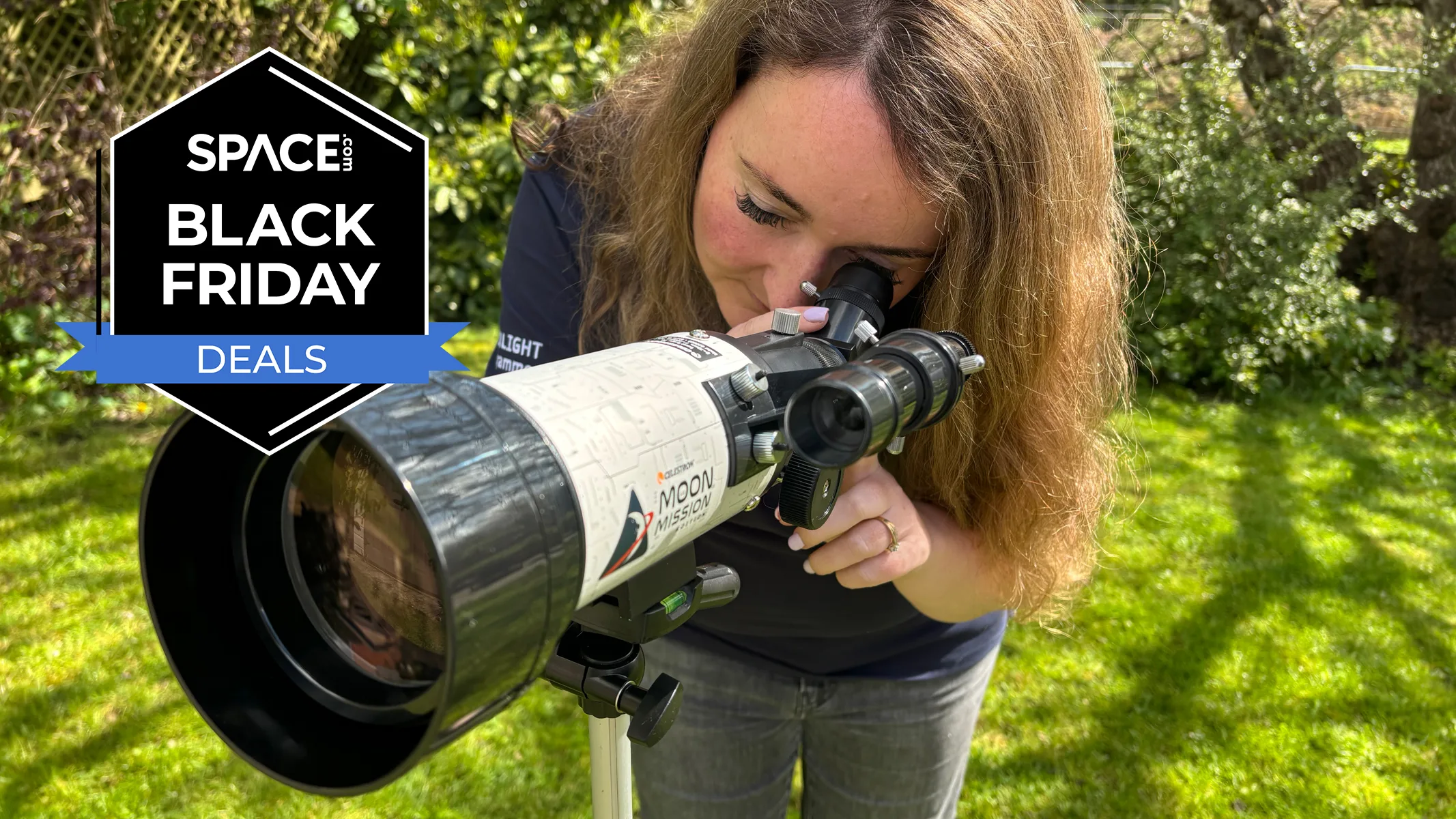
A review of Celestron’s Moon Mission Travel Scope 70—a cosmetically lunar-themed version of essentially the same instrument—found it especially capable on the Moon and awarded it three-and-a-half stars. That squares with the hardware. A simple refractor has fewer optical compromises than many cheap department-store reflector telescopes, and it is generally less intimidating for a newcomer to operate.
Portability is the point, not a compromise to ignore
The Celestron Travel Scope 70 is designed around mobility. It can fit in the supplied backpack, which makes it plausible for camping trips, a dark-sky weekend, or a family holiday where trunk space is already a competitive sport. Celestron has long sold its Travel Scope range on that premise, and it is a fair one: the best telescope is often the one you will carry outside.
But portable gear asks for trade-offs. The included tripod is functional rather than luxurious, and users should expect to handle it gently at higher magnification. A light mount can wobble after you touch the focusing knob, forcing you to wait a few seconds for the image to settle. That is annoying, not fatal. Frankly, it is a more forgivable limitation than poor optics, because a steadier tripod can be added later if the hobby takes hold.
The supplied 20mm eyepiece will be the friendlier place to start. It gives a wider, brighter view and makes locating an object far easier. The 10mm eyepiece increases magnification, but higher magnification also amplifies vibration and atmospheric turbulence. Beginners often assume more zoom equals a better view. In astronomy, that is like turning up a blurry video: eventually you are enlarging the problem.
Who should buy it—and who should wait
I would recommend the Celestron Travel Scope 70 to a complete beginner, a parent unsure whether their child’s interest will last beyond the first clear night, or anyone who wants a genuinely packable telescope. It is also a better answer than many novelty telescopes sold around the holidays, which frequently advertise absurd magnification figures while offering dim, frustrating views.
I would not recommend it to someone already committed to the hobby. If you know you want to chase faint nebulae, resolve globular clusters, or learn astrophotography, save toward a larger aperture instrument with a sturdier mount. A 130mm tabletop Dobsonian, for example, gathers substantially more light and often offers better value for serious visual observing, though it will not disappear into a backpack. The official Celestron product page is also useful for checking the exact included accessories before buying, since retailer bundles can change.
One more reason to hold off: the Celestron Travel Scope 70 dipped to $81 during Amazon’s June Prime Day event. With Black Friday sales approaching, another lower price is plausible. But waiting to save nine dollars can be its own kind of false economy if it means missing a clear autumn weekend and the chance to see the Moon in a way no app can replicate.
The best first telescope is the one you use again
The Celestron Travel Scope 70 is not a forever telescope, and Celestron does not pretend otherwise. Its appeal is that it lowers the barrier between curiosity and observation. Set it up, aim it at the Moon, and the payoff arrives quickly. For $90, that is a better deal than a flashy but unusable scope—and a reminder that consumer tech can still be most satisfying when it encourages people to put the screen down and look somewhere else.
My read is simple: buy this model for portability and a low-stakes introduction, not for limitless upgrade potential. If the family keeps checking the weather forecast for clear skies a month from now, then it will be time to shop for something bigger.
Frequently Asked Questions
Is the Celestron Travel Scope 70 good for beginners?
Yes. The Celestron Travel Scope 70 is a sensible first telescope for beginners because it is compact, simple to transport, and supplied with the basic accessories needed to start observing. Its strongest targets are the Moon, bright planets, and larger star clusters.
What can you see with a 70mm telescope?
This 70mm telescope can provide better views of the Moon, planets such as Jupiter, and some star clusters. It can also show some deep-sky objects, though it is not designed to deliver the most detailed views.
Is $90 a good price for this Celestron telescope?
At $90, the Travel Scope 70 is selling for $30 below its usual $120 price and matches listed pricing at B&H Photo and Best Buy. It was cheaper at $81 during Amazon’s June Prime Day event, so patient buyers may see another modest drop.