

- Jensen Huang leadership turned Nvidia into the defining supplier of AI computing, helped along by a founder story that feels unusually personal and tightly managed.
- The Jensen Huang leadership model puts decisions close to the center, which makes questions of accountability harder to dodge when business, regulatory, or ethical problems arise.
- Nvidia’s dominance in AI chips gives Huang extraordinary influence. Export controls and data-center growth have also put the company under a brighter spotlight.
- A reported claim of Huang’s resignation still needs independent confirmation, as does his current role.
Table of Contents
Jensen Huang leadership was built around the story
Jensen Huang leadership has always been more than a management style. It is a carefully cultivated story about an immigrant engineer, a Denny’s-startup founder, a leather-jacketed chip executive, and the man who spotted accelerated computing before Wall Street knew what to call it. That story helped Nvidia become the company every AI lab, cloud provider, and government now has to reckon with.
There is a catch. When one executive is portrayed as uniquely informed, relentlessly involved, and personally responsible for nearly every important decision, there is not much room to claim distance when something goes wrong.
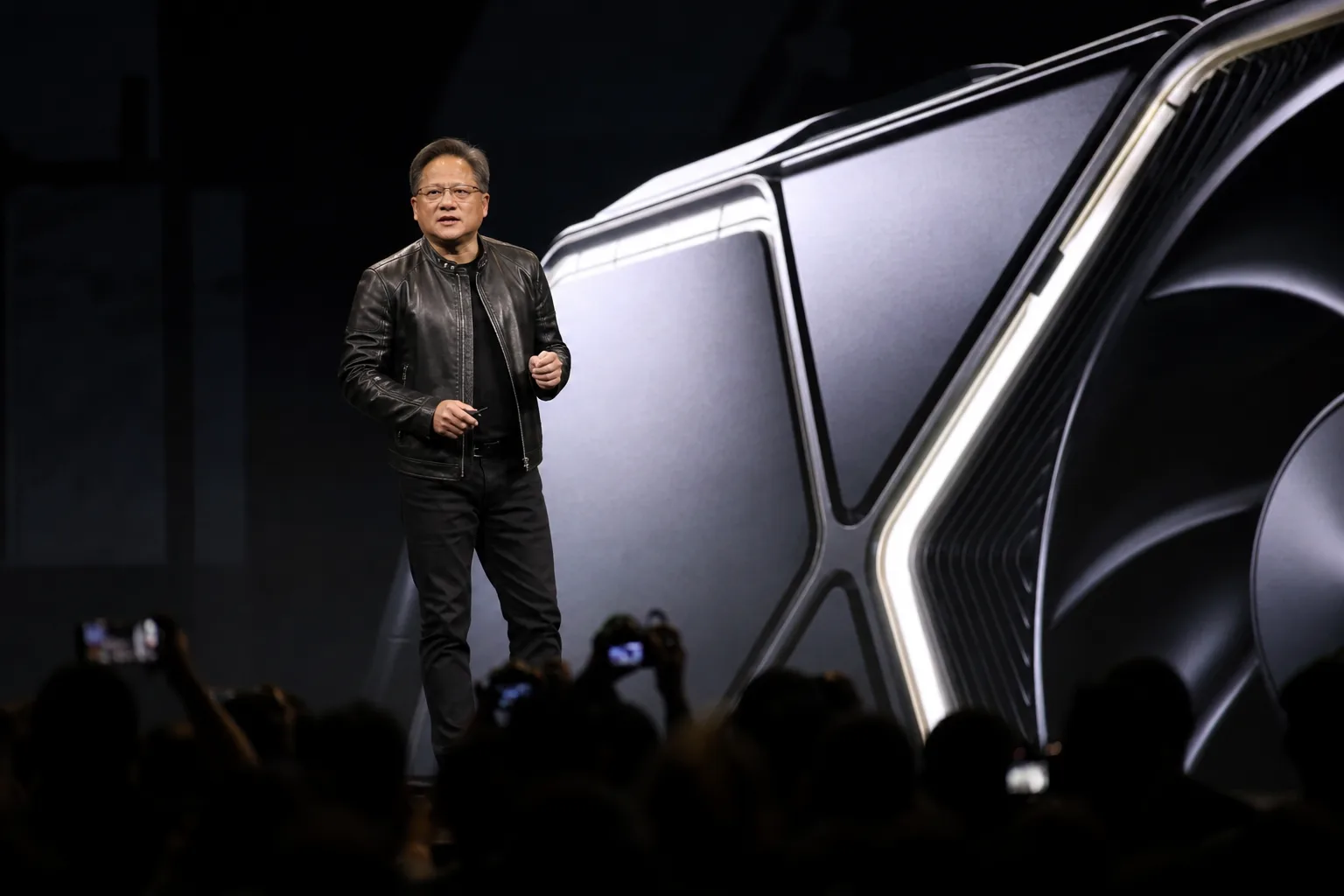
A recent account of Huang’s rise frames that tension through an awkward public interview at SIGGRAPH in Denver in July 2024. The session reportedly came with unusually active preparation by Nvidia’s communications team, including input from Huang’s daughter Madison, and Huang used presentation slides alongside the questions. That is not, by itself, evidence of misconduct. Big-tech CEOs stage-manage appearances all the time. But it does reveal something more interesting: Nvidia’s chief executive seems to see the company narrative as a product that needs the same exacting stewardship as a GPU launch.
Huang has been unusually candid about this. In a 2024 conversation cited by the source, he said, ‘Strategy setting is storytelling. Culture building is storytelling.’ Frankly, he is right. The best founders often have to persuade employees, customers, investors, suppliers, and regulators to believe in an outcome before the evidence fully arrives.
Steve Jobs did it. Elon Musk does it at industrial scale. Huang did it with Nvidia, too—except his story happened to line up with a spectacularly lucrative technical bet.
The upside and risk of a flat empire
Jensen Huang leadership is often described as flat. Huang has said that dozens of senior executives report directly to him; outside accounts have variously put that number around 35 to 60. The logic is simple: fewer layers between the chief executive and the people making decisions means less bureaucratic drag. In chipmaking, where product road maps run years ahead and a supply constraint can wreck a quarter, speed matters.
Nvidia has a credible case that this approach worked. The company spent decades developing CUDA, its software ecosystem for programming GPUs, when many rivals treated graphics processors as a narrower gaming component. When generative AI burst into public view, Nvidia had the hardware, software, developer relationships, and manufacturing arrangements ready to capture demand. That was not luck. It was preparation mixed with impeccable timing.
Flat organizations also have a downside, one that tends to disappear from view while the share price is climbing. They can become a wheel with too many spokes leading to one hub. Employees may move quickly, but they can also learn that the boss’s view is the view that matters. Dissent becomes harder, especially when a charismatic founder is both the company’s public face and its internal operating system.
That is where Jensen Huang leadership deserves a stricter standard than the usual founder worship. If Huang truly remains close to supply, allocations, customer commitments, export-sensitive sales, and product strategy, then Nvidia cannot casually separate the chief executive from the consequences of those decisions. You cannot sell omniscience as a leadership virtue and invoke ignorance when the spotlight turns harsh.
It is a familiar Silicon Valley trap. The founder mythology says one exceptional person makes everything possible. Corporate governance exists because no person, however gifted, should be the sole answer when accountability is required.

China, energy, and the uncomfortable scale of Nvidia
The stakes for Jensen Huang leadership extend well beyond an uncomfortable conference interview. Nvidia is trapped, in the most profitable sense of the word, between Washington’s national-security priorities and the Chinese market that its products helped build. The US government has repeatedly tightened restrictions on exports of advanced AI chips, forcing Nvidia to redesign products and manage a complicated relationship with customers on both sides of the Pacific.
Huang lobbied the Trump administration to loosen export controls so Nvidia could sell chips to China. It is a reasonable commercial argument, though it clashes with the view in Washington that high-end AI compute is a strategic resource, not merely a server component. Nvidia cannot talk its way out of that conflict. It can only adapt to it.
Energy is the other pressure point. Training and operating frontier AI systems requires increasingly large data centers packed with accelerators, cooling equipment, and power infrastructure. Nvidia is not the only company responsible for that footprint; Microsoft, Google, Amazon, Meta, utilities, and model developers all own pieces of it. But Jensen Huang leadership has made Nvidia the most recognizable symbol of the AI compute boom, so the company will keep drawing questions about electricity, water use, and emissions.
Those questions are not anti-technology. They are the price of becoming infrastructure. Nobody asks a small graphics-card vendor to explain the grid. They ask the company whose chips are being ordered by the hundreds of thousands.
The supplied account says Huang has resigned, but offers no independently verifiable corporate filing, board statement, or announcement to support that extraordinary claim. Nvidia’s leadership page should be checked independently. Until such evidence appears, readers should treat the claim as unconfirmed.
Founder myth meets the accountability test
The uncertainty matters because the bigger story is not whether Huang can command a stage, or whether an executive communications team tried to shape an interview. Every large technology company manages its message; most are simply worse at it. The real question is whether Jensen Huang leadership can mature from founder-centered control into an institution built to withstand political pressure, operational failures, and public scrutiny without relying on the founder’s personal authority.
For now, Nvidia remains an extraordinary business. Its position in AI is closer to a toll road than a typical product cycle: nearly every serious builder of large-scale models wants access to the same scarce computing capacity. Competitors including AMD, Intel, Google, Amazon, and a growing roster of AI-chip startups are working hard to create exits, but CUDA and Nvidia’s supply-chain execution remain formidable barriers.
My read is that Huang’s story will not end because the mythology got too polished. It will end, or endure, based on whether Nvidia accepts the unglamorous obligations of power. The company no longer gets to act like a scrappy underdog eating breakfast at Denny’s. It is the establishment now. And the establishment has to answer questions even when it cannot control the slides.
Frequently Asked Questions
What defines Jensen Huang leadership at Nvidia?
Huang has long described Nvidia as a relatively flat organization, with dozens of senior leaders reporting directly to him. The model is designed to keep decisions close to the CEO and speed up responses in a fast-moving chip market, but it also concentrates responsibility at the top.
Why is Nvidia’s corporate governance under scrutiny?
Nvidia now sits at the center of the global AI buildout, while US export rules limit sales of advanced chips to China and data centers draw environmental attention. A company with that much economic and geopolitical influence faces more pressure to explain who knew what, and when.
Has Jensen Huang resigned as Nvidia CEO?
The supplied source asserts that Huang resigned, but it does not provide corroborating details such as a company filing or board statement. Nvidia’s official leadership page identifies Huang as founder and CEO, so readers should treat any resignation claim as unconfirmed unless Nvidia or regulators announce it.