

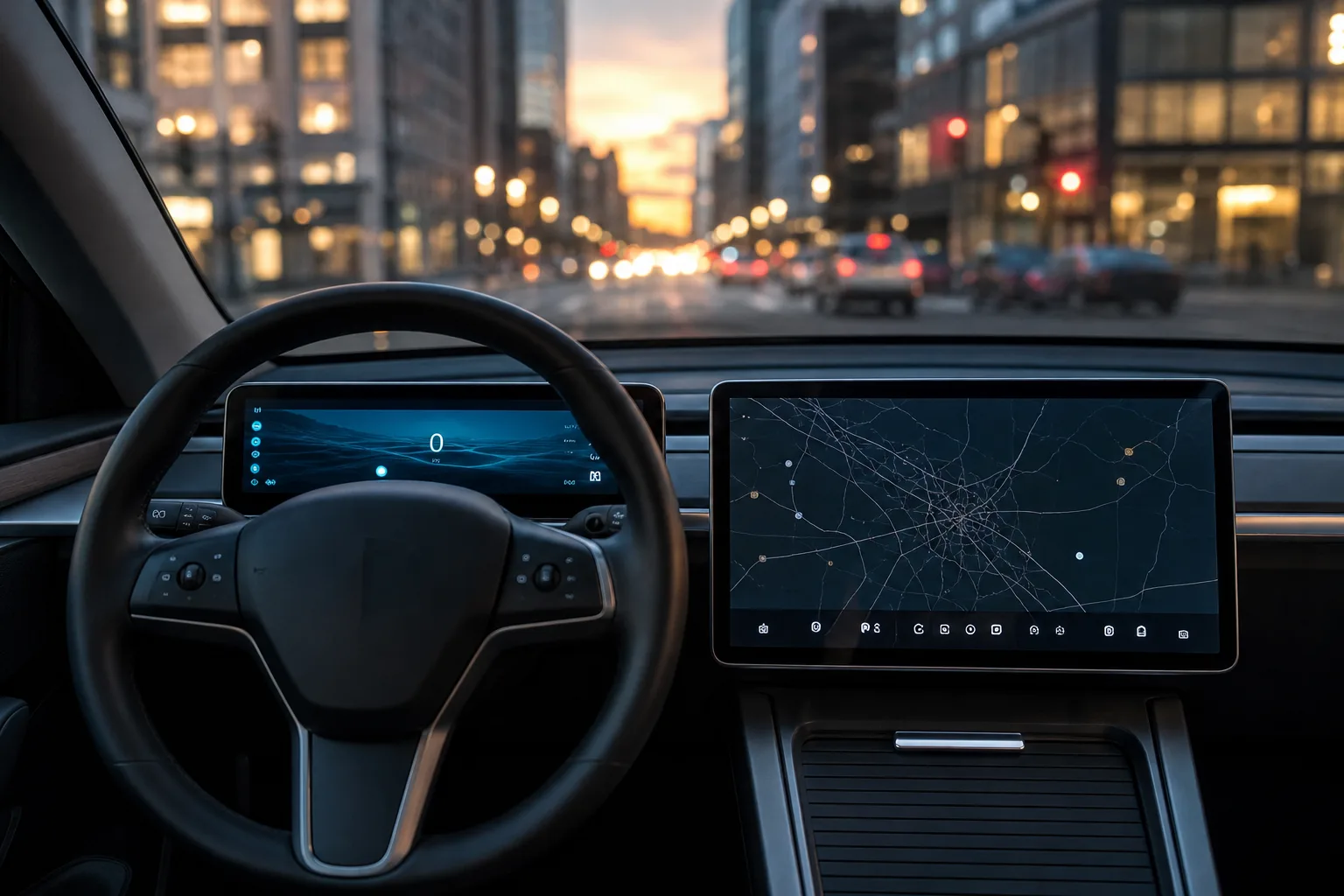
- CarPlay Ultra pushes Apple beyond infotainment by integrating vehicle controls, displays and instrument-cluster information into one interface.
- Apple’s CarPlay Ultra expansion will test whether carmakers will surrender more dashboard real estate to an outside software platform.
- Reports of macOS-capable iPads highlight Apple’s familiar tension between protecting product categories and answering customer demand.
- Walmart’s decision to remove Apple Pay support shows how retailers still value ownership of checkout data and customer relationships.
Table of Contents
CarPlay Ultra is Apple’s real play for the dashboard
CarPlay Ultra matters because Apple is no longer content with putting iPhone apps on a car’s center screen. The company wants a much deeper role: the gauges ahead of the driver, the climate controls below the display, and the digital layer that increasingly defines what modern cars are. That is a far more consequential ambition than picking a playlist from the steering wheel.
A daily Apple-news roundup from 9to5Mac highlighted fresh details on the vehicles expected to receive the system, alongside reports involving iPads, the iPhone 18e, and Walmart’s withdrawal of Apple Pay from its own digital checkout options. The stories put Apple in familiar territory: pushing hardware design, testing platform boundaries and trying to control how customers reach the products and services they use.
CarPlay Ultra is the logical endpoint of Apple’s original CarPlay pitch. Standard CarPlay took over a portion of the infotainment screen and made the car more familiar to an iPhone owner. Ultra reaches into a much more sensitive area: vehicle information and controls that manufacturers have historically treated as their own turf.
That distinction matters. A carmaker can swap its infotainment software every few years; it cannot casually hand over the instrument cluster or core controls without taking responsibility for reliability, regulations and brand identity. If a driver cannot quickly find the defroster button because a software update rearranged the dashboard, nobody is going to shrug and blame abstract platform strategy.
Apple’s official CarPlay overview is available online. CarPlay Ultra widens that promise considerably. The upside is easy to see: less fragmented software, fewer clumsy manufacturer apps and one coherent interface across the screens drivers use every day. But the liability is just as clear. Cars last much longer than phones, and software support in the auto industry has rarely earned blind trust.
Why carmakers may welcome CarPlay Ultra anyway
For automakers, CarPlay Ultra presents an awkward bargain. Their own software efforts have often been expensive, slow and unpopular. General Motors’ decision to move away from Apple CarPlay and Android Auto in some newer EVs showed that manufacturers see the dashboard as a strategic asset, particularly as subscriptions, charging services and navigation data become recurring revenue opportunities.
But building a credible software ecosystem is hard. Just ask the many brands whose touchscreen interfaces have become a punchline among owners. Apple offers a shortcut to a polished user experience, an established developer ecosystem and a customer base already trained to expect their phone, music, messages and maps to work together.
There is still a basic question hanging over the rollout: how much freedom will Apple actually give manufacturers? A luxury brand does not want its cabin to resemble every other vehicle on the road, and a mass-market company cannot afford a software arrangement that makes it dependent on Cupertino’s product decisions. The appeal of CarPlay Ultra is strongest when it looks like a useful partnership rather than Apple colonizing the dashboard one pixel at a time.
The list of upcoming compatible cars will say more than which models support the feature. It will show which manufacturers believe Apple can improve the ownership experience without hollowing out their own digital identity. Early adoption by premium brands would make sense, since those companies already sell design, personalization and tech as part of the package. Wider adoption will be the tougher test.
The iPad problem has not gone away
The same roundup also revived a perennial Apple rumor: iPads reportedly running macOS internally. That claim needs some restraint. Apple testing something behind closed doors does not mean consumers will ever receive it. Big companies prototype unusual ideas all the time; most are discarded before anyone outside the building hears about them.
Still, the rumor gets attention because the demand is real. The iPad Pro has powerful Apple silicon, keyboard accessories and a display good enough for serious work. Yet iPadOS remains constrained by design, especially for people who need desktop-class file management, pro applications or the sort of flexible multitasking that makes a laptop a laptop.
Frankly, Apple has created this tension itself. It markets premium iPads as extraordinarily capable machines, then preserves a visible gap between those devices and the Mac. A full macOS iPad could cannibalize some MacBook sales, but it could also make the iPad vastly more useful to people who currently carry both. Apple’s usual answer has been to split the difference with incremental multitasking features. That may be commercially tidy, but it is not especially persuasive to a buyer staring at laptop-like iPad pricing.
A strange camera rumor and a familiar payments fight
CAD-based imagery reportedly points to an unusual camera arrangement for the rumored iPhone 18e. CAD files are useful clues because accessory makers need case dimensions early, but they are not a final product announcement. Treat any resulting design render as a sketch of Apple’s possible direction, not gospel. The more interesting issue is whether Apple continues turning its lower-cost iPhone line into a distinctive product rather than simply a compromise made from older flagship parts.
Walmart has reportedly dropped Apple Pay support from its app and website. This is not merely a dispute over tap-to-pay convenience. Payments are customer data, loyalty programs, promotions and control over the checkout relationship. Retailers have spent years trying to keep that relationship in-house, and Walmart has ample reason to prefer its own payment and wallet ambitions over routing shoppers through Apple’s system.
That episode is a useful reminder that Apple’s platform power has limits. CarPlay Ultra may be attractive, but manufacturers will only embrace it where the benefits outweigh the loss of control. Apple Pay may be convenient, but a retailer can still decide convenience is not the most valuable thing on offer. And an iPad capable of running macOS may exist in a lab without ever becoming a product.
Apple’s next challenge is less about building interfaces than convincing partners that its interfaces leave enough room for them. In the car, that negotiation could determine whether CarPlay Ultra becomes the industry standard or another elegant Apple experience fenced into a select group of vehicles.