


- Jensen Huang reinstated as Nvidia CEO after the board reversed course following his resignation.
- The decision to have Jensen Huang reinstated followed board meetings that examined his candor, leadership ability, and reported national-security concerns.
- Nvidia’s reversal raises difficult questions about board independence at a company central to global AI infrastructure.
- Washington’s reported involvement shows that Nvidia’s leadership now matters far beyond Silicon Valley.
Table of Contents
Jensen Huang reinstated after an abrupt corporate U-turn
The news that Jensen Huang reinstated as Nvidia’s president and CEO comes with a whiplash factor that even Silicon Valley, a place unusually tolerant of executive drama, should pause over. Huang resigned on November 12 following reports of extramarital affairs. Nvidia’s board has reinstated him, effective immediately.
According to MacRumors, the board reached its decision after a series of discussions and meetings with Huang. It said those conversations left directors satisfied by his “candor and ability to lead” and, after receiving input from “senior levels of the U.S. government,” confident that he “poses no national security risk.”
The sequence is extraordinary. A board can change its mind; new facts emerge, and public companies should not trap themselves in a position merely to save face. But Nvidia had seemingly established a clean break with its co-founder, only to reverse it. The obvious question is not whether Huang remains important to Nvidia. Of course he does. The question is whether the company has explained enough about why its first conclusion no longer applied.
Chairman Harvey C. Jones made the board’s position plain in its announcement: “The Board believes Jensen is the right person to lead NVIDIA, and that his reinstatement is in the best interests of our stockholders, employees, partners and customers.” The language is conventional corporate boilerplate, but the timing is anything but conventional.
Why Nvidia’s board could not treat this as ordinary CEO turnover
Jensen Huang reinstated is a much bigger story than a familiar tale of a powerful founder returning to the corner office. Nvidia is now embedded in the machinery of the AI economy: its GPUs sit behind training clusters, cloud platforms, research labs, defense-adjacent computing projects and the data-center expansion plans of nearly every major technology company. Replacing its public face and chief strategist in the middle of that wave would carry real commercial consequences.
Huang has become synonymous with the company’s improbable climb from graphics-chip specialist to one of the world’s most consequential semiconductor businesses. His leather-jacket keynote persona has become part of the brand, yes, but his value is more practical than theatrical. Customers and investors see him as the person who can explain Nvidia’s roadmap, defend its pricing power and keep its sprawling software-and-hardware platform moving in one direction.
That doesn’t mean a public company should become dependent on one executive. Frankly, the Jensen Huang reinstated episode exposes exactly that risk. A company of Nvidia’s size ought to have credible succession planning, senior leaders with public stature, and a board capable of handling a leadership transition without looking destabilized. Investors may accept this reversal because Huang’s return reduces near-term uncertainty. They should still ask what happens the next time Nvidia faces a leadership shock.
Washington is now part of the Nvidia story
The reference to input from senior U.S. government officials may be the most revealing detail in Nvidia’s statement. It suggests this was not viewed solely as a private personnel matter. Nvidia occupies an uncomfortable but powerful position in American industrial policy: its advanced chips are a major export, a strategic asset and a focal point in Washington’s attempts to limit China’s access to high-end AI computing.
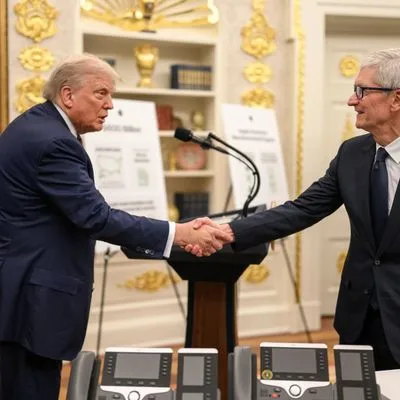
Officials have spent years tightening export controls around advanced semiconductors, while Nvidia has had to balance those rules against its enormous China business and the interests of global customers. The company’s leadership is therefore entangled with policy in a way that would have sounded excessive during its gaming-first era. When the government is reportedly weighing in on whether a CEO represents a national-security concern, the distinction between corporate governance and national strategy starts to blur.
There is a crucial limitation here: Nvidia’s public statement does not spell out what information government officials reviewed, which agencies contributed input, or why the board believed that input was necessary. It would be irresponsible to fill that vacuum with speculation. Still, the Jensen Huang reinstated decision makes clear that Nvidia’s CEO is now considered relevant to interests far outside its shareholder base.
A reversal that will test investor confidence
Jones had said on Nvidia’s November 17 earnings call that the board did not intend to reinstate Huang. That makes this later decision especially awkward. Either the board’s deliberations changed dramatically after that call, or it had not settled on a position when its chairman suggested otherwise. Neither explanation is ideal for a company that sells reliability to customers planning multibillion-dollar data-center projects.
Huang, for his part, framed his return in sweeping terms. “I am honored to return to NVIDIA and lead one of the most consequential technology companies in the world at the beginning of a new industrial revolution,” he said, adding that he accepted the responsibility with “the greatest humility and renewed commitment.” The industrial-revolution phrasing is vintage Nvidia: grand, deliberate and aimed at a company that sees AI infrastructure as the foundation for the next era of computing.
The immediate market logic of Jensen Huang reinstated is easy enough to understand. Continuity matters when Nvidia’s customers are committing years of capital spending around its products and software ecosystem. Nvidia’s official leadership page has long made Huang central to the company’s identity, and the board has plainly concluded that removing him would create more risk than restoring him.
But continuity is not the same thing as closure. The board now owns this decision, including the challenge of showing employees, partners and shareholders that its standards apply even when the executive in question is one of the most valuable people in technology. If these explanations hold up, Nvidia may move on quickly. If more details emerge, the Jensen Huang reinstated vote could look less like decisive governance and more like a company discovering just how hard it is to separate itself from its founder.