

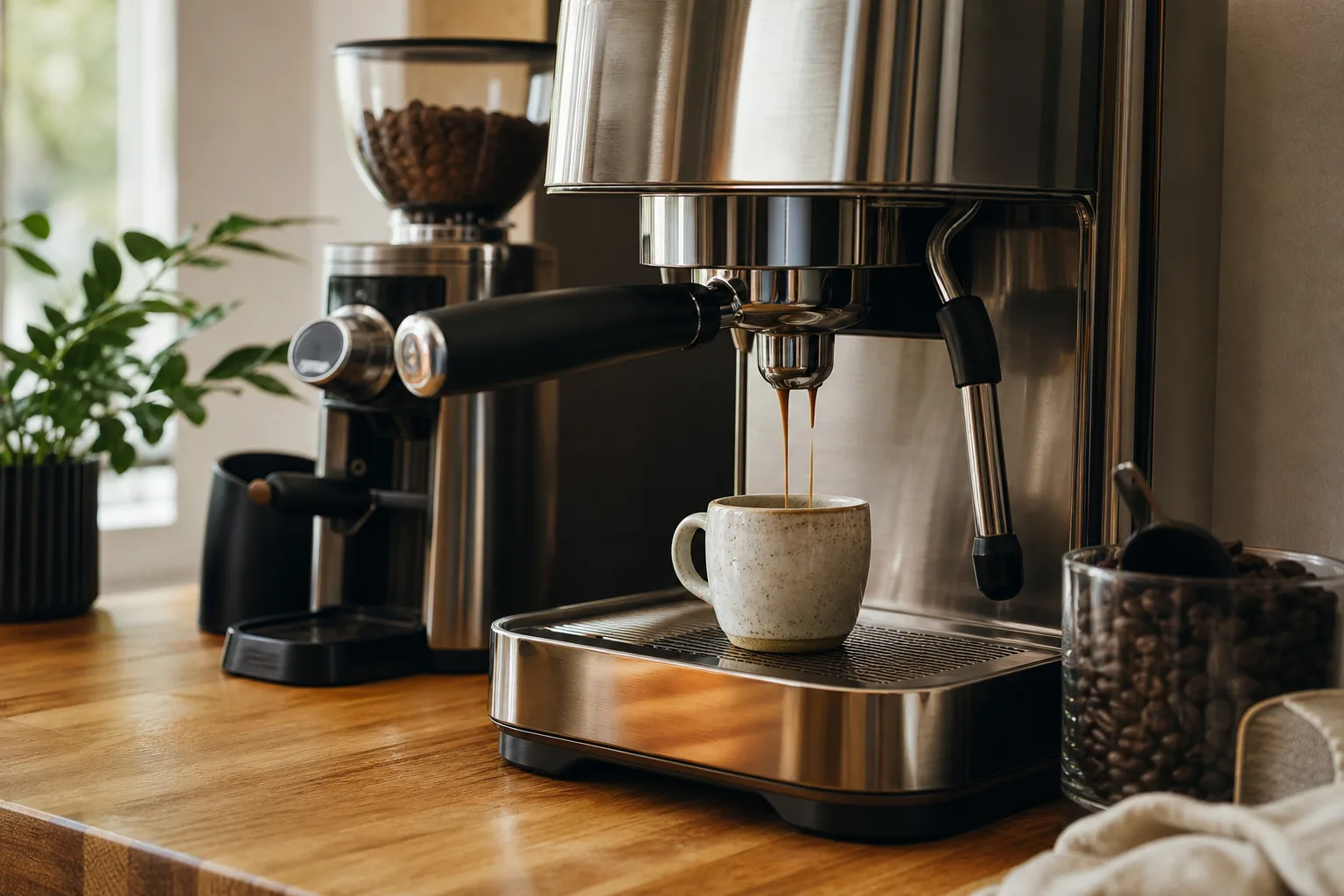
- Black Friday espresso deals now span entry-level manual machines, compact grinder-equipped models, and premium automated systems for serious home coffee drinkers.
- The smartest Black Friday espresso deals match a buyer’s routine, not a feature checklist packed with cold brew modes and app-adjacent gimmicks.
- Early discounts include notable savings on De’Longhi, Fellow, Diletta, Meraki, Ninja, and Nespresso machines.
- A machine’s grinder, milk system, counter space, cleaning demands, and repair prospects matter more than its discount percentage.
Table of Contents
Black Friday espresso deals are really a test of your coffee habits
Black Friday espresso deals have arrived early, but the real story isn’t a temporary price cut on countertop coffee gear. The category now stretches from sub-$100 pod machines to highly configurable prosumer hardware that once belonged mostly in cafés and obsessive home setups. That breadth is useful, but it also makes a deal page a terrible place to make a rushed decision.
As WIRED reported, promotions are currently touching machines from Diletta, Fellow, De’Longhi, Meraki, Ninja and Nespresso, alongside coffee subscriptions and accessories. The sale pricing is real; the question is whether the machine underneath it belongs in your kitchen six months from now, once the novelty has worn off and somebody has to clean the milk wand.
Espresso makers are peculiar consumer technology. A phone is designed to disappear into a daily routine. An espresso machine asks you to build a small ritual around it: beans, grinding, dialing in, purging, wiping, descaling. For plenty of people, that’s the attraction. For everyone else, it’s a 20-pound guilt object next to the toaster.
The cheap end is more capable than it used to be
Among the more practical Black Friday espresso deals, De’Longhi’s Classic deserves attention because it addresses what many people actually need: basic espresso and milk drinks without turning breakfast into a hobby project. The machine has a pressure gauge, a 15-bar pump and an updated thermoblock heating system. Those specifications don’t automatically guarantee café-quality coffee — marketing departments adore bar figures — but they signal a useful level of feedback and heat management for an entry-level machine.
Under-$200 espresso machines now seem less disposable in concept, even if buyers should keep their expectations measured. The best Black Friday espresso deals in this range can produce satisfying shots with fresh beans and a decent grinder, but they won’t erase the learning curve. A pressurized basket may make pre-ground coffee more forgiving; it can’t turn stale supermarket grounds into a great cappuccino.
For buyers who prioritize convenience over craft, Nespresso’s Vertuo Pop+ Deluxe is discounted below $100. It has a larger 37-ounce side-mounted reservoir than the standard Pop+’s 25-ounce tank. That’s a sensible improvement if the machine is serving a household rather than one person. But pods remain a closed system with continuing capsule costs, and that trade-off should be stated plainly. A cheap machine that commits you to expensive consumables is a familiar technology-industry move, right up there with bargain printers and their ink cartridges.
Midrange machines reveal the real trade-offs
The most competitive part of the Black Friday espresso deals market is the assisted semiautomatic. These machines typically combine a burr grinder, shot presets and an approachable milk system, trying to split the difference between manual technique and push-button convenience. De’Longhi’s slim grinder-equipped model, for example, occupies roughly 12 inches of counter depth while promising consistent shots. That small footprint matters more than manufacturers sometimes admit. Counter space is product performance in a normal home.
WIRED’s reporting flagged its cold-brew setting as less convincing than the espresso function, and that’s exactly the kind of detail shoppers should take seriously. Coffee makers have entered their Swiss Army Knife phase: espresso, drip, iced coffee, cold foam, cold brew. Yet a machine doesn’t become a better espresso purchase because it can imitate three other appliances. I’d argue that a focused system with a good grinder and repeatable extraction is the better long-term buy.
Ninja’s Luxe Café Premiere lands in much the same territory, with an integrated grinder and a milk frother that can produce cold foam and accommodate plant-based milk. The company has built a business around adding modes until the control panel resembles a small aircraft cockpit. That can be useful for a beginner who wants guided results. Still, WIRED found its drip and cold-brew capabilities unpersuasive, so prospective buyers should treat those options as extras, not the reason to choose it.
For Black Friday espresso deals, the rule is simple: buy the function you’ll use before 8 a.m., not the one you imagine using during a productive Sunday reset.
Premium espresso is becoming more programmable
At the higher end, Fellow’s espresso entry points toward a genuine shift in what manufacturers think home users can handle. Its machine offers adjustable flow rates and pressure curves, controls historically associated with expensive enthusiast equipment. Former WIRED reviewer Matthew Korfhage described those tools as the province of the “richest and nerdiest of nerds.” That line gets at the tension perfectly. More control can uncover different flavors from the same coffee, but it can also produce more ways to make a bad shot before work.
For the right buyer, this matters. Programmable profiling lets users alter how water contacts the coffee puck over the course of extraction, potentially helping accommodate different roast levels and bean styles. Premium Black Friday espresso deals reward people who want to learn those variables; this is less a one-button upgrade than a better instrument. Fellow’s official product information offers a useful starting point, but buyers should still check whether they want to learn these variables or simply drink espresso.
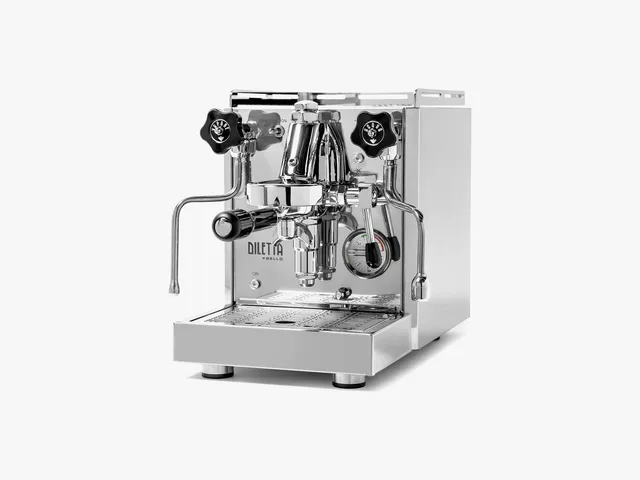
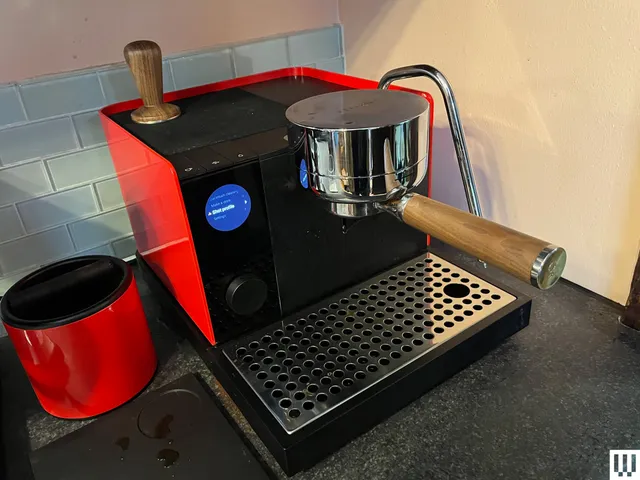
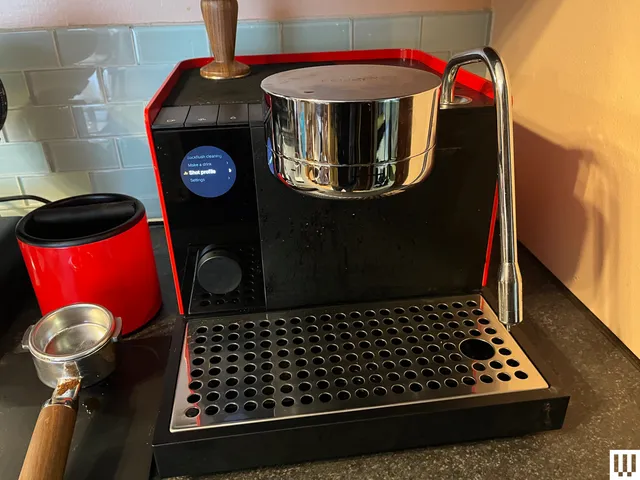
Seattle Coffee Gear’s Diletta range, all discounted through December 14 according to the sale reporting, speaks to a different appeal: classic Italian-built semiautomatics with a more traditional workflow. The Meraki, meanwhile, brings a dual-boiler configuration and a notably theatrical design. Korfhage called it a “steampunk gasworks of a thing,” which is vivid and, frankly, a useful warning. A dual boiler can steam milk while pulling a shot, a major convenience for cappuccino drinkers, but owners will need to enjoy looking at the appliance every day.
The discounted super-automatic option is perhaps the clearest case for paying more to remove friction. It includes two swappable bean hoppers, which makes switching from regular coffee to afternoon decaf far easier than emptying a grinder. Its listed sale price of $915 for the Beige finish sits below four figures, though it remains a serious purchase. Super-automatics trade some shot-level control for repeatability and speed. Neither approach is morally superior; they serve different mornings.
How to separate a lasting bargain from a seasonal discount
Before checking out on any of these Black Friday espresso deals, make a short list of non-negotiables. Do you already own a quality grinder? Are milk drinks an occasional treat or the entire point? Can you tolerate a manual workflow? And where will the machine live? Those answers narrow the field faster than a dozen comparison charts.
- Start with beans and grinding. Fresh coffee and a consistent grinder influence espresso more than cosmetic trim or a long menu of drink presets.
- Price the whole setup. A manual machine may need a grinder, tamper, scale, knock box and milk pitcher. The sticker price is rarely the final number.
- Check maintenance before purchase. Removable brew components, water filters, cleaning cycles and descaling requirements vary widely, especially on super-automatics.
- Watch color and retailer restrictions. The lowest advertised price may apply only to one finish, as with the Beige super-automatic, or may end before the broader Black Friday weekend.
There’s also no shame in buying coffee rather than machinery. Atlas Coffee Club is promoting a quarterly gift plan of three globally sourced bags every three months for $59, with roast choices including espresso and Nespresso-compatible pods. Good beans won’t rescue every shot, but bad beans will sink even very expensive hardware.
The best Black Friday espresso deals don’t prove that everyone should bring a café home. They show how sharply the market has segmented: pods for speed, semiautomatics for ritual, automatics for convenience, programmable systems for experimentation. As more brands chase every category at once, the winners will be the machines that make one clear promise and keep it — preferably before the first meeting of the day.
Frequently Asked Questions
When do Black Friday espresso deals usually begin?
Retailers increasingly begin promotions well before Black Friday itself, often in November. The current sales window runs through Thanksgiving week and, for some brands such as Diletta through Seattle Coffee Gear, into mid-December. Prices and color-specific discounts can change quickly.
Are Black Friday espresso deals better for beginners or enthusiasts?
There are options for both, but the best purchase depends on how much control a buyer wants. Beginners may prefer a pod machine, super-automatic system, or assisted semiautomatic, while enthusiasts can get more value from machines with adjustable pressure, flow, and steaming controls.
Do I need a built-in grinder for home espresso?
No, but espresso requires a consistent fine grind, so a capable burr grinder is essential somewhere in the setup. A built-in grinder saves counter space and simplifies buying, while a separate grinder can be upgraded independently and may offer more control.
Is a dual-boiler espresso machine worth the extra cost?
A dual-boiler machine is most useful for people who regularly make milk drinks because it can brew espresso and steam milk at the same time. For one or two morning shots, a less expensive thermoblock or single-boiler machine may be the more sensible choice.