

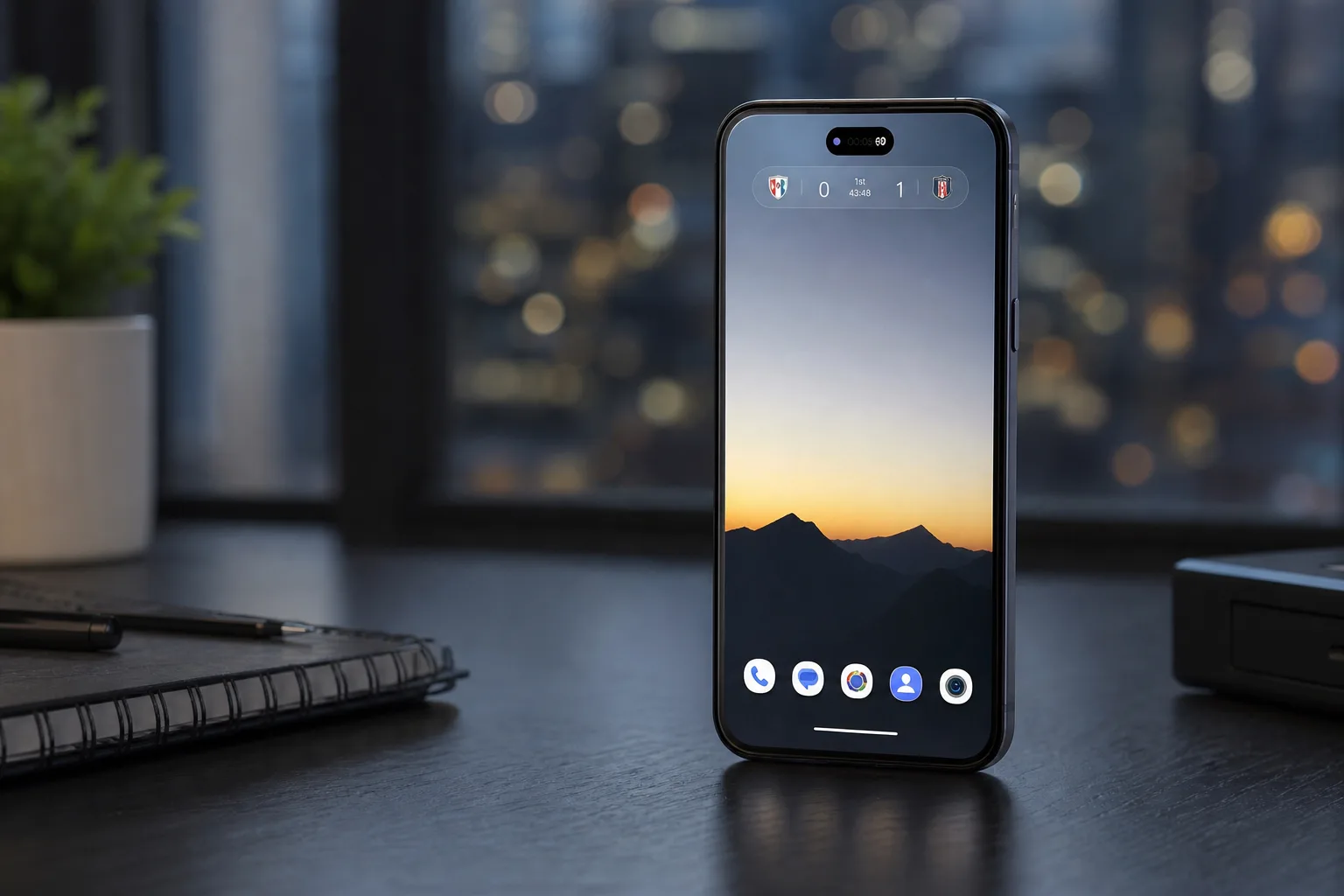
- Samsung Moment Effects reportedly puts live app activity around the Galaxy S27 selfie-camera cutout, borrowing Apple’s Dynamic Island concept.
- Samsung Moment Effects could use Android Live Notifications, giving the feature a broader app foundation than many earlier Android imitations.
- A leaked interface appears to include Google Sports support and swiping between several active activities.
- The feature is rumored for One UI 9.5, which may arrive alongside Samsung’s Galaxy S27 series.
Table of Contents
Samsung Moment Effects may finally make the idea useful
The best thing about Samsung Moment Effects, if the latest leak proves accurate, is that Samsung appears to understand the distinction between copying a shape and copying a feature. Plenty of Android phone makers have turned a camera cutout into a tiny animated notification strip since Apple introduced the Dynamic Island. Most stopped there. Samsung’s alleged version may actually connect that space to Android’s existing live-activity plumbing.
According to 9to5Google, leaked video and images shared by SamMobile point to a new Galaxy interface element called ‘Moment Effects.’ It reportedly could arrive with One UI 9.5 and the Galaxy S27 family early next year. The visuals show activity cards expanding around the front camera opening, with users apparently able to swipe between ongoing tasks.
That sounds familiar because it is. Apple turned the Dynamic Island into a prominent part of its front design, turning what could have been an awkward hardware compromise into a place for music controls, navigation directions, calls, timers and other changing information. Samsung would be borrowing the visual language fairly openly. Frankly, that part is no longer interesting. The question is whether it can make the space earn its place on screen.
Why Samsung Moment Effects could be different
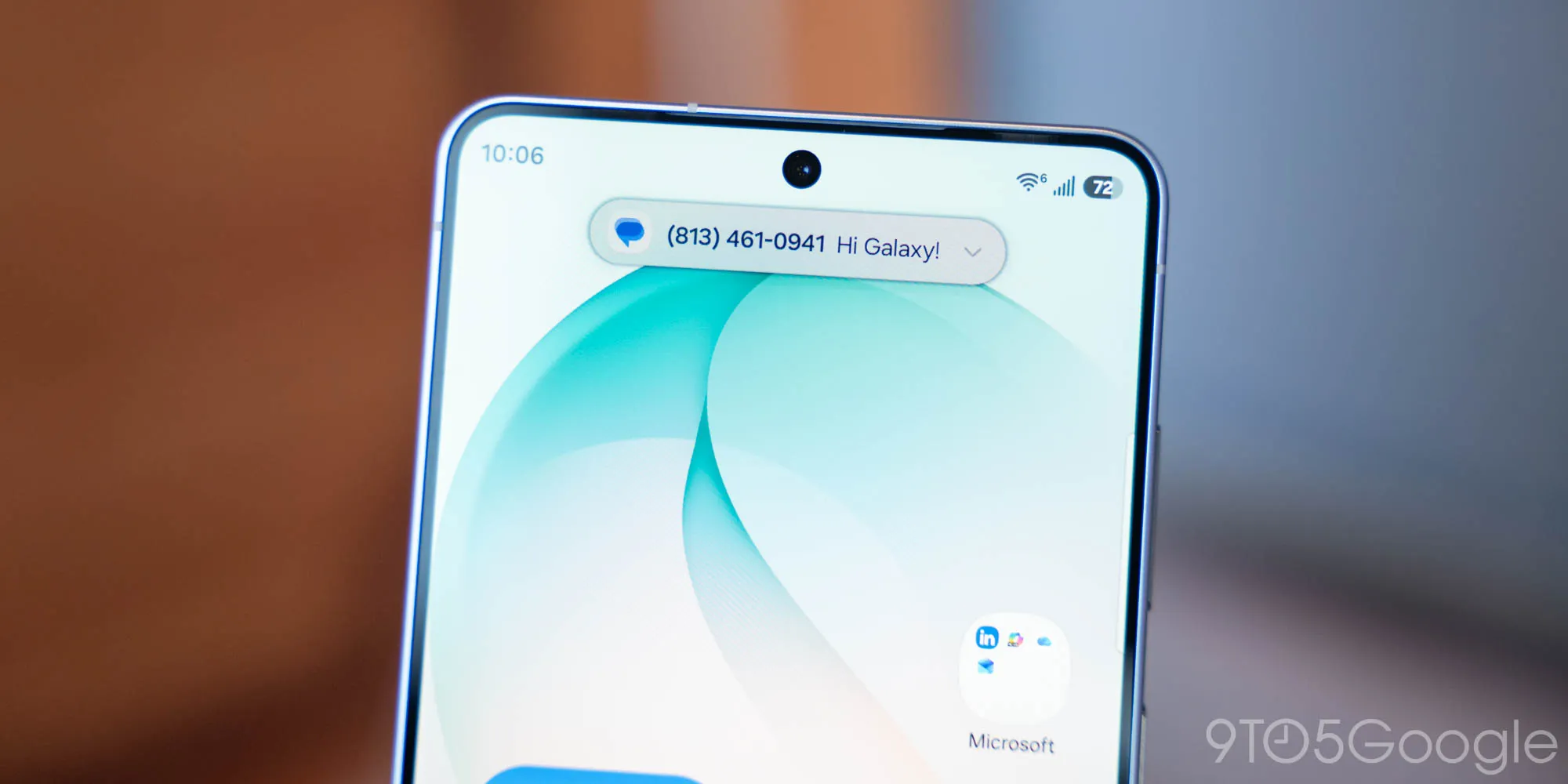
Android already has much of the machinery required for this kind of interface. Live Notifications can keep an active status visible beyond a conventional notification shade: think a food delivery approaching, a ride arriving, a workout in progress or a sports score changing. For Samsung Moment Effects, that foundation could make those alerts easier to glance at without forcing people to pull down the shade every few minutes.
The leak reportedly references Google Sports integration, which is a promising early signal. Live scores are exactly the sort of information that works in a compact persistent widget: important for a few seconds, occasionally urgent, and rarely deserving of a full app launch. If your team scores while you are answering an email, you want the score—not an invitation to disappear into a feed.
Samsung Moment Effects also seems positioned to handle more than one active task at a time. That matters. The camera area is tiny, and a system that can only show whichever app last shouted loudest becomes another notification annoyance. Apple’s approach lets people move among activities; Samsung’s reported swipe gesture suggests a similar answer. The interaction makes sense, provided the software does not turn every background process into a blinking demand for attention.
Samsung has already spent years refining notification controls, lock-screen widgets and its own One UI visual identity. The company does not need to pretend it invented the Dynamic Island. It needs to offer a version that respects Android’s flexibility while remaining legible at a glance. That is a much harder job than drawing a pill around a punch-hole camera.
Android’s copycat phase has mostly been shallow
The Android industry’s first wave of Dynamic Island clones was, to put it kindly, uneven. Several brands shipped features that looked persuasive in marketing screenshots but were mainly limited to timers, charging animations and a few music apps. Third-party support was often thin, and the feature could feel like a decorative overlay rather than part of the operating system.
That limitation was not wholly the fault of phone makers. Apple controls iOS hardware, software conventions and the app ecosystem tightly enough to make a single prominent interface area predictable. Android has to accommodate a huge range of display cutouts, skins, notification behaviors and app implementations. A developer building for Samsung cannot assume every Android user has a pill-shaped area waiting at the top of the display.
Still, Samsung has advantages that smaller Android brands do not. Its Galaxy phones ship in enormous numbers, it builds the software layer itself, and it has longstanding relationships with Google and major app developers. If Samsung Moment Effects draws from system-level Live Notifications instead of asking developers to support yet another proprietary animation system, it could arrive with a meaningful catalog of compatible experiences rather than a short demo reel.
Google has been moving Android toward richer ongoing notifications for years, and its developer documentation lays out how apps can present time-sensitive activity through Android’s live update notification tools. That framework could give Samsung Moment Effects a more immediate, more visually coherent home on Galaxy hardware.
The Galaxy S27 timing makes sense
A One UI 9.5 debut alongside the Galaxy S27 would be logical. Samsung traditionally uses its flagship launches to introduce software flourishes that help distinguish new hardware, even when older devices eventually receive portions of the update. A camera-adjacent live-activity interface is especially convenient for a launch event: easy to demonstrate, easy to understand, and more memorable than another slide about background optimizations.
But it should not be treated as a reason to upgrade by itself. A persistent interface element can quickly become visual clutter if it displays too often, handles poorly, or fails to work with the apps people actually use. The success of Samsung Moment Effects will come down to mundane details: which apps are supported, whether users can disable categories, how it behaves with music and maps running together, and whether it works consistently on Galaxy models with different camera designs.
There is also the matter of Samsung’s broader software strategy. One UI has often been at its best when Samsung takes a familiar Android capability and makes it easier to spot or faster to use. Its multitasking tools and DeX are examples of features built around a clear practical use, not merely a visual trick. If Moment Effects becomes a gateway to useful live information, it fits that tradition. If it is mostly an elaborate charging animation, it will join a very crowded graveyard of Android flourishes.
The bigger test is developer support
For now, this remains a leak, not a Samsung announcement, and the company could change the name, scope or release timing before One UI 9.5 ships. The details matter more than the branding until then. Yet the reported direction is more credible than another generic Dynamic Island clone because it appears rooted in the notification capabilities Android already has.
Samsung Moment Effects could give Galaxy users a cleaner way to keep track of a timer, delivery, score or route without constantly abandoning what they are doing. That is a small quality-of-life gain, but smartphones are built from hundreds of those tiny moments. Samsung’s real challenge is persuading developers and users that the area around a camera is useful real estate, not just borrowed iPhone theater.