


- Starlink pricing has fallen from its 2020 beta rate, with US residential service now starting at $55 monthly in eligible areas.
- Today’s Starlink pricing depends heavily on location, speed tier, promotional discounts and whether customers rent or purchase the dish.
- The cheapest plan removes much of the old upfront barrier, though it also caps speeds at 100 Mbps.
- For rural households without fiber or dependable cellular broadband, availability remains Starlink’s central selling point.
Table of Contents
Starlink pricing has changed more than the headline suggests
The headline about Starlink pricing in 2026 is the $55-a-month entry plan. The more interesting story is how SpaceX has turned an expensive, slightly experimental bet into a more flexible product — while making the final bill harder to predict. As Engadget reported, Starlink’s public beta launched in 2020 with a $499 hardware kit and a $99 monthly subscription. Before shipping and taxes, a household needed $598 just to get connected.
That was a serious ask for a service called the ‘Better Than Nothing Beta.’ SpaceX openly warned early subscribers to expect download speeds of 50Mbps to 150Mbps, latency of 20ms to 40ms and occasional periods with no connection at all. The name was unusually candid for the broadband business, where companies usually try to make a weak service sound like a lifestyle upgrade.
But the original proposition made sense for a particular customer: someone outside the footprint of fiber and cable, tired of pokey DSL or a cellular hotspot that became unusable every evening. In that setting, paying nearly $600 to take a chance on low-Earth-orbit internet was less an indulgence than an infrastructure tax.
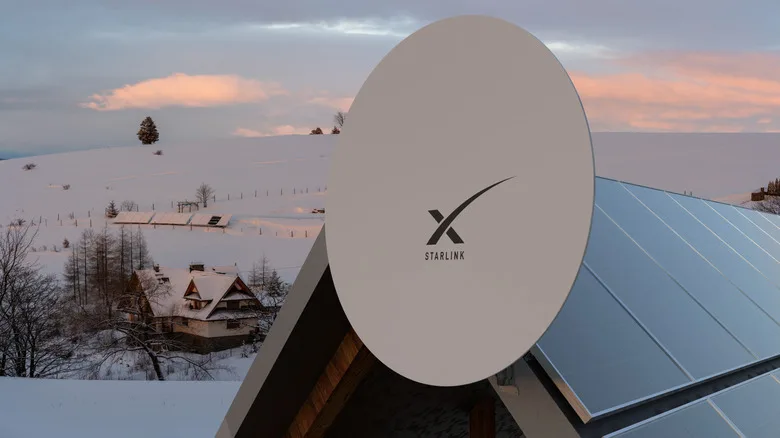
Six years later, the barrier to entry is lower. Starlink now lists Residential 100Mbps at $55 monthly, Residential 200Mbps at $85, and Residential Max at $130, with the latter offering higher priority and advertised speeds of 400Mbps or more where network conditions permit. All three include unlimited data. That tiering is a major departure from the beta-era one-size-fits-all offer, and it reveals where SpaceX sees the business going: not as a novelty for the disconnected, but as a segmented broadband provider.
The old upfront dish cost is no longer unavoidable
In 2020, buying the dish was mandatory. The box included Starlink’s original round antenna, a Wi-Fi router and a basic tripod, and it belonged to the subscriber once paid for. Today, Starlink pricing can include hardware rental in selected regions, sometimes with no upfront equipment charge. That changes the decision more than the headline suggests. A $499 purchase can stop a household from trying a service even when the monthly fee is manageable.
Renting shifts the calculation from ownership to access. SpaceX reportedly introduced a $10 monthly equipment rental charge in June 2026, though some later new orders had the fee waived. The fine print is familiar to anyone who has rented a cable modem: Starlink retains ownership, and customers have 30 days after cancelling to send the kit back or face the retail replacement cost.

There is a catch. Rental lowers the initial pain, but it can become the more expensive route over a long subscription. More importantly, it gives SpaceX more control over the customer relationship. Hardware ownership was once a defining part of the early Starlink deal; now it is another variable in a menu of offers.
That $55 headline leaves out much of what makes Starlink pricing messy. The company raised residential rates again in May 2026, adding $5 to its 100Mbps and 200Mbps tiers and $10 to Residential Max. Then it made further location-specific changes in October, with some Max customers reportedly seeing bills climb to $156 while others received reductions. SpaceX has also run promotions offering some new subscribers discounts of up to 50 percent, in certain cases for as long as service stays active.
A broadband plan built around local capacity
Traditional broadband pricing is already a maze of introductory rates, equipment fees and regional monopolies. Starlink has adopted its own version of that playbook, except capacity is governed by the number of satellites overhead, gateway infrastructure and how many nearby households are competing for the network. Two people buying the same plan can therefore have noticeably different Starlink pricing based on their address.
That approach is commercially rational. Satellite capacity is finite, and SpaceX needs an incentive to pull customers toward less congested areas or lower-demand service periods. Still, it makes comparison shopping difficult. A discounted offer is useful only if a customer understands when it ends, what their local standard rate will be, and whether changing plans will void the discount. Broadband bills have enough traps without turning an address lookup into a small actuarial exercise.
The speed caps on the two cheaper tiers are also revealing. A 100Mbps connection is plenty for a typical home streaming video, handling video calls and downloading game updates, assuming the connection remains consistent. Yet fixed caps let Starlink protect capacity while reserving the best performance for customers willing to pay $130 or more. That is standard network management, frankly, but it means the service is moving further from its original egalitarian pitch.

Where Starlink still makes the strongest case
For people with fiber, Starlink pricing may still look hard to justify. A wired connection can offer lower latency, steadier speeds and, frequently, a better monthly deal. Fixed wireless 5G has also become a serious alternative in places served by T-Mobile, Verizon or AT&T. Satellite internet does not automatically win just because the dish looks futuristic.
Availability is the point. Starlink can reach a cabin, farm, worksite or rural home long before a fiber crew has any economic reason to arrive. The $55 plan makes that option less financially forbidding than the 2020 beta, even if local rates can rise. For mobile users, Starlink’s Roam package starts at $55 for 100GB of high-speed data, while Roam Unlimited costs $175 monthly — prices that make sense only if portability is genuinely valuable.
The bigger question is whether SpaceX can preserve that value as more subscribers join. Lower Starlink pricing attracts customers; more customers put pressure on capacity; pressure invites higher rates and stricter plan separation. That is the familiar broadband trap, and Starlink is not exempt from it. Starlink has made satellite internet more attainable, but the next test is whether it can avoid becoming the very sort of confusing, unevenly priced utility it was supposed to disrupt.
Frequently Asked Questions
What does Starlink pricing include?
The monthly charge covers the selected internet service tier and unlimited data on residential plans. Hardware may be bought or rented depending on the market and offer available. Rental customers must return the complete kit within 30 days after cancellation or pay its retail replacement price.
Why does Starlink cost different amounts by location?
SpaceX adjusts rates and promotions according to local network capacity and demand. Areas with spare capacity may receive lower monthly rates or limited-time discounts, while areas with limited capacity can cost more. Customers can end up paying very different bills for the same satellite internet service.
Is Starlink cheaper than cable or fiber internet?
Often, no. Starlink can be more expensive than cable or fiber internet, but its value depends on availability, particularly for customers without reliable broadband options.