

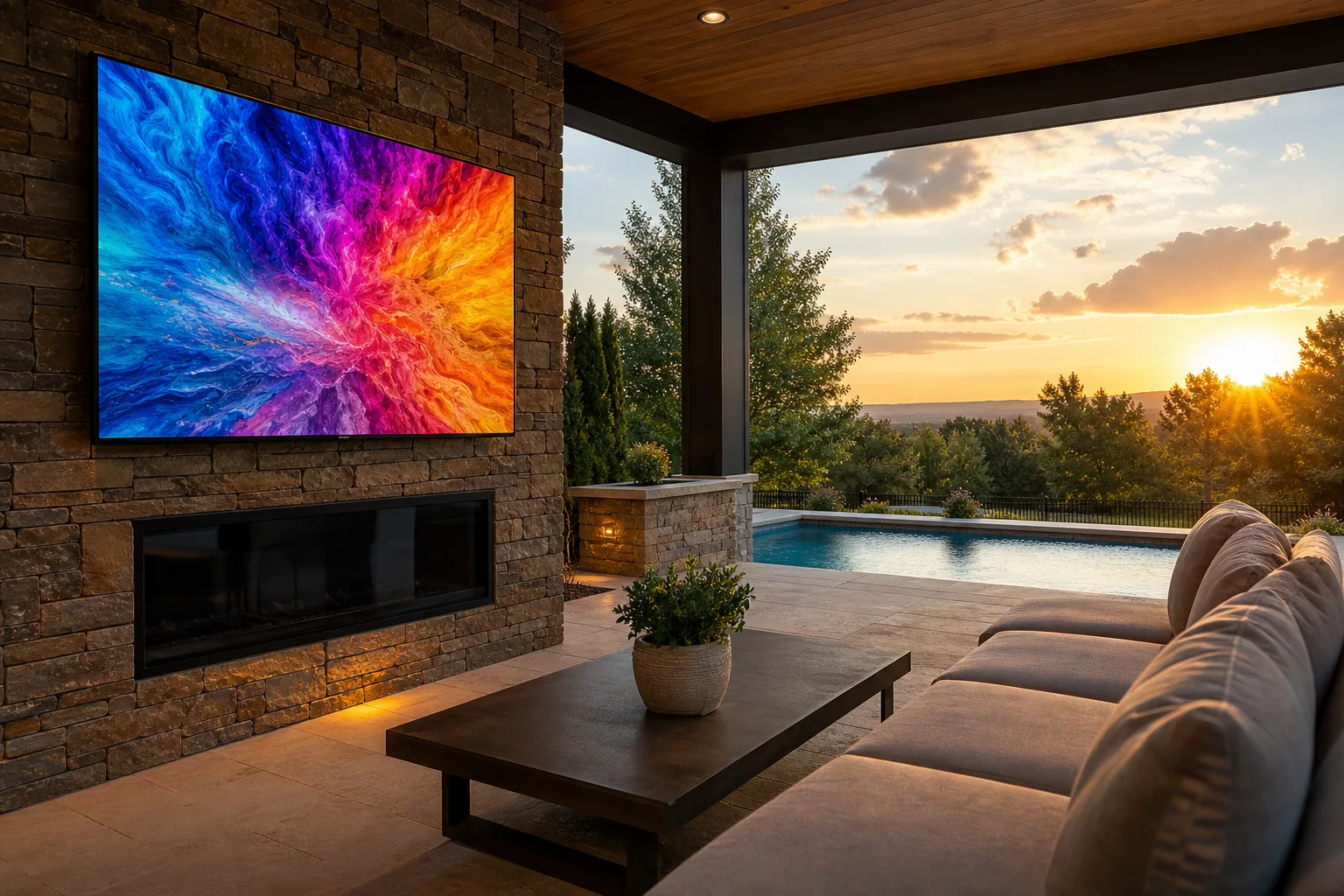
- The Sylvox outdoor TV sale highlights why brightness, weather protection, and installation matter more than a giant screen discount.
- A Sylvox outdoor TV sale can suit patio buyers, but poolside and full-sun installations require much closer scrutiny of display specifications.
- Outdoor televisions cost more because their enclosures, cooling systems, and brightness targets address conditions ordinary indoor TVs were not built to survive.
- Buyers should verify warranty coverage, mounting hardware, power access, and glare conditions before treating any outdoor screen promotion as a bargain.
Table of Contents
Sylvox outdoor TV sale: the discount is only half the story
An outdoor television is one of those products that sounds frivolous until you picture a summer match on the patio, a movie night by the pool, or a gaming setup that does not require dragging a living-room screen through a sliding door. The Sylvox outdoor TV sale puts that category back in view, with promotions on weatherproof 4K sets intended for patios, decks, pools, and brighter outdoor spaces.
This story was first reported by Android Authority.
The sale covers weatherproof 4K TVs for patios, pools, and decks, but the category label does not tell you whether a particular model belongs in your yard. Anyone considering a Sylvox outdoor TV sale should treat the location as part of the product decision. Outdoor TV shopping is not really about picking the biggest panel your budget permits. It is about matching a display to a hostile little patch of the world: glare, heat, moisture, dust, bugs, wind, and the occasional wildly optimistic homeowner with a pressure washer.
Frankly, the smart question is not whether a sale price is good. It is whether the screen is designed for the exact spot where you plan to hang it.
Why an outdoor TV costs more than its indoor cousin
A conventional 4K television can look like a bargain next to a purpose-built outdoor model. That price gap is real, and so is the engineering behind it. Outdoor televisions generally need sealed or protected housings, tougher materials around ports and controls, thermal management for warm weather, and a panel bright enough to remain usable in daylight.
Indoor televisions are designed around a fairly forgiving assumption: climate-controlled rooms with limited ambient light. Put one outside and those assumptions collapse. Sunlight washes out the image. Overnight moisture can work its way into places it should not. Heat can become an issue even on a day that feels merely pleasant to a human being. A cheap indoor set under an awning may be a perfectly understandable experiment, but it is not equivalent to buying equipment rated for the job.
That makes total ownership cost the right way to read a Sylvox outdoor TV sale. The television itself is only the beginning. Buyers may need a weather-rated mount, a protected power arrangement, cable management, a sound solution, and perhaps a streaming device that also has somewhere safe to live. If the screen will sit near a pool, careful planning becomes even less optional.
Warranty coverage deserves its own check. Manufacturers often draw firm boundaries around outdoor use for indoor models. Before anyone turns a discounted living-room TV into a backyard fixture, read the warranty rather than assuming an awning counts as weatherproofing. It may not.
Covered patio, partial sun, or full sun?
Outdoor TV brands frequently divide their lineups by viewing environment, and buyers should take those labels seriously. A covered-patio TV is for a place with meaningful protection from direct rain and persistent direct sunlight. Think screened porch, roofed terrace, or deck with deep shade. These are the easiest conditions, though reflections from bright pavement, water, or white walls can still ruin a picture.
Partial-sun products occupy the murkier middle ground. They are meant for areas that get some direct daylight but are not exposed all day long. This is where homeowners can get caught out, because a location that looks shaded at noon may be blasted by low evening sun precisely when friends arrive for a game.
Full-sun models are the specialist option. They aim to overcome much harsher ambient light and tend to command the steepest prices. The bigger question is whether a buyer truly needs one. If the screen can be moved to a shaded wall, placed under a pergola, or positioned away from direct afternoon glare, spending more on a full-sun panel may be unnecessary. Architecture can be cheaper than specifications.
The Sylvox outdoor TV sale is potentially most useful for shoppers who have already done that location homework. Measure the wall. Check the path of the sun. Work out where electricity and source devices will go. Then shop screen size and price. Doing this in reverse is how people end up with a very expensive black rectangle that is only watchable for two hours a day.
That same location check should come before comparing models in a Sylvox outdoor TV sale, especially when a patio receives changing light throughout the day.
Gaming outdoors has a different set of trade-offs
A backyard console setup can be a great social space, especially for sports games, racing titles, or party games. But gaming claims deserve the same skepticism buyers bring to every television category.
Look beyond the word ‘gaming’ and check the actual port standards, supported refresh rates, input-lag claims, and whether the intended console can use those features. Modern PlayStation and Xbox systems can benefit from features such as 4K at higher refresh rates, variable refresh rate support, and automatic low-latency modes, but the value of those extras depends on the particular television and game. A bright outdoor environment can also make subtle visual detail harder to see, no matter how impressive the specification sheet appears.
Audio is another practical wrinkle. Built-in TV speakers are rarely the star of a setup, and outdoor spaces are acoustically unforgiving. Traffic, wind, pool pumps, and conversation all compete with dialogue. A soundbar or outdoor-rated speaker system may be the real upgrade, although that adds both cost and installation complexity.
Outdoor gaming can work well, but the Sylvox outdoor TV sale is not a one-box solution. The display may be the centerpiece, but it is still part of a larger system.
What to verify before checkout
There are a few unglamorous details that separate a smart purchase from a costly return. First, check the weather-protection rating and exactly what it covers. Weather resistance is not a universal promise that a product can endure every storm, temperature, or installation method. Read the manufacturer’s documentation for the model in question, along with NEMA’s enclosure guidance where relevant.
Second, examine mounting compatibility and weight. Outdoor walls are not always simple stud walls, and masonry, siding, and pergola beams can require different hardware and professional help. A secure installation is not merely about avoiding embarrassment when the wind picks up.
Third, consider software longevity. Television makers increasingly use proprietary smart-TV platforms, while streaming hardware from Roku, Apple, Google, Amazon, and others changes on its own cycle. An accessible HDMI port and dependable Wi-Fi or wired networking can matter more over several years than whichever apps happen to be preloaded today.
Before completing a Sylvox outdoor TV sale purchase, let the location and light exposure make the call. It sounds obvious, yet shoppers routinely ignore both in favor of screen size and sale banners.
A niche category is becoming more practical
The appeal of an outdoor screen has grown as streaming, wireless networking, and console gaming have made entertainment more portable. But purpose-built outdoor TVs remain a niche because they are expensive, installation-heavy, and only as good as the space around them. A large screen mounted in the wrong place is like buying patio furniture before checking whether the balcony has a roof.
If the discounts in the Sylvox outdoor TV sale are substantial, they could bring a specialized category within reach for buyers already committed to a patio or poolside setup. Still, the best deal may be the model that is modestly sized, correctly rated, and installed where it can avoid the worst of the weather and glare. Outdoor television is becoming less of a luxury oddity, but it will never be as plug-and-play as moving a screen from one room to another. That inconvenience is also the point: the backyard is not a living room, and the hardware has to respect that.
Frequently Asked Questions
What should buyers check during a Sylvox outdoor TV sale?
Start with where the television will live: a shaded porch, exposed wall, pool area, or covered deck. Then compare brightness, weather rating, operating temperature range, warranty language, inputs, and the cost of a compatible mount. The discounted sticker price is only one part of an outdoor installation.
Can a regular indoor TV be used outside under a covered patio?
It may work temporarily in a dry, enclosed area, but indoor televisions are not designed for humidity, insects, dust, rain, heat swings, or prolonged bright ambient light. A covered patio reduces exposure; it does not automatically make an indoor TV suitable or preserve its warranty.
How bright should an outdoor TV be for direct sunlight?
There is no single brightness figure that solves every installation because screen angle, reflections, shade, and the sun’s position all matter. For direct-sun locations, buyers should seek a model expressly sold for full-sun viewing and assess the site during the brightest part of the day.