

Blade Runner 2099 has a difficult assignment: return viewers to one of science fiction’s most influential cities without treating that city as an expensive screensaver. Amazon’s forthcoming Prime Video series has Michelle Yeoh and Hunter Schafer at its center, an intriguing pairing that suggests the franchise may have found a reason to exist beyond nostalgia for rain-soaked Los Angeles.
The reported plan is a full-season drop on November 25, 2026. As Space reported, all eight episodes are expected to land on Prime Video at launch in the US. That is a notably different proposition from a weekly prestige-TV rollout: Amazon is asking viewers to spend a holiday week inside a bleak future where the human species is losing its grip on its own city. Cheerful stuff.
- Blade Runner 2099 is reportedly scheduled to debut all eight episodes on Prime Video on November 25, 2026.
- Blade Runner 2099 pairs Michelle Yeoh’s aging replicant investigator with Hunter Schafer’s human insurgent working undercover.
- The series has to honor Ridley Scott’s visual legacy without mistaking neon rain and flying cars for meaningful storytelling.
- Amazon’s all-at-once release could make the limited series a substantial holiday streaming bet for Prime Video.
Table of Contents
Blade Runner 2099 brings a survival story to Prime Video
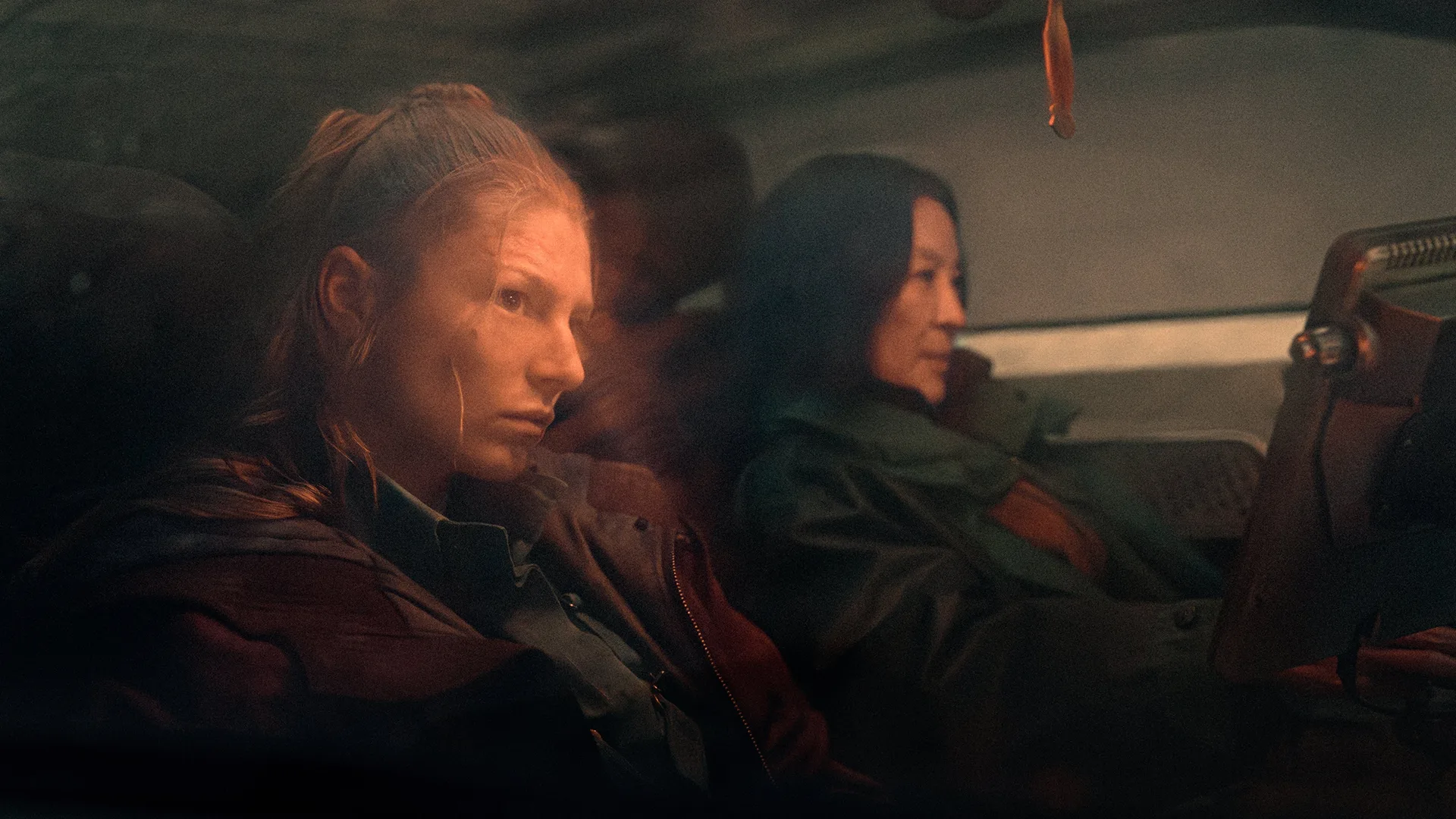
According to the available plot outline, Blade Runner 2099 takes place in a Los Angeles largely controlled by replicants, with human survivors pushed into isolated resistance pockets. Schafer plays Cora, an insurgent who infiltrates the other side by posing as a replicant. Her assignment brings her into contact with Olwen, played by Yeoh: a replicant Blade Runner said to be approaching the end of her operational life.
The two are sent after a runaway, but the hunt exposes a secret that could destabilize the city. That skeletal premise is familiar territory for the property, of course. Blade Runner has always used detective-story machinery to ask whether corporations, states and individuals get to decide who counts as human. The promising wrinkle here is that Cora’s deception apparently runs both ways. She has something to hide from Olwen, while Olwen herself may be less straightforward than her hard-bitten Blade Runner role initially suggests.
That setup gives Blade Runner 2099 a more intimate engine than a simple sequel built around bigger cityscapes and louder action. Yeoh has repeatedly shown she can bring authority and unexpected vulnerability to genre roles, while Schafer has become a compelling screen presence capable of playing ambiguity without flattening it into affectation. If the scripts give both characters room to collide rather than merely trade exposition, the series could earn its place in this universe.
Why this franchise is harder to revive than it looks
The original 1982 film, directed by Ridley Scott and adapted loosely from Philip K. Dick’s Do Androids Dream of Electric Sheep?, did not become enduring because it had neon advertisements and off-world colonies. It worked because its future was grubby, compromised and emotionally uncertain. Harrison Ford’s Rick Deckard was not a shiny hero; Rutger Hauer’s Roy Batty was not a disposable villain. The whole machine ran on doubt.
Denis Villeneuve’s 2017 follow-up, Blade Runner 2049, understood that tension remarkably well, even if its box-office performance demonstrated the commercial limits of very expensive, very patient adult science fiction. It expanded the world while preserving its melancholy. The animated Blade Runner: Black Lotus, meanwhile, showed that the brand could travel into television, although the format alone never guaranteed the same cultural pull.
That is the challenge facing Blade Runner 2099. Production design is part of the deal, and early promotional material reportedly includes the expected aerial traffic, towering advertising and industrial gloom. Fine. Audiences should get the future they came for. But the franchise has been imitated so relentlessly that the visual vocabulary is now almost a default setting for any story about corporate dystopia. A few giant billboards cannot do the philosophical heavy lifting.
I’d argue the series needs to make its replicant conflict concrete: who is fed, housed, policed and discarded in this version of Los Angeles? The franchise’s questions about manufactured labor and personhood land differently in an era when companies are openly selling automation as a replacement for human work, while generative AI has reignited arguments about authorship, consent and imitation. The show does not need to turn into a lecture about chatbots. It does need to recognize that the old anxieties are no longer speculative in quite the same way.
The people behind Blade Runner 2099 matter as much as the setting
Silka Luisa is serving as showrunner, with Jonathan van Tulleken directing. That setup is more reassuring than another project assembled solely around an intellectual-property logo. Television lives or dies by its showrunner’s ability to sustain character and momentum across hours, particularly when the premise is deliberately opaque. A Blade Runner story without real emotional stakes quickly becomes the audiovisual equivalent of a luxury perfume advert.
Yeoh and Schafer lead an ensemble that includes Dimitri Abold, Lewis Gribben, Katelyn Rose Downey, Daniel Rigby, Johnny Harris, Sheila Atim, Matthew Needham, Tom Burke and Maurizio Lombardi. Amazon MGM Studios, Alcon Entertainment, Scott Free Productions and Sony Pictures Television are among the production partners. That is a formidable corporate lineup, though big names on a production slate do not automatically settle the question that matters: what does this particular story have to say?
Scott Free’s involvement naturally links the show back to Ridley Scott’s original film, while Alcon has been the steward of the screen franchise for years. The official home for its eventual release is Prime Video, which gives Amazon another recognizable genre title to place alongside its broader push for appointment viewing. The company has learned from The Lord of the Rings: The Rings of Power and Fallout that familiar worlds can draw massive attention, but those shows also reveal how differently viewers react when an adaptation understands its source’s core appeal.
A binge release changes the stakes
Releasing the entire eight-episode run at once gives Blade Runner 2099 a chance to function like an unusually long film, which may suit a mystery built around Cora and Olwen’s uneasy partnership. It also creates a risk. Weekly episodes let a series build conversation, speculation and momentum over two months. A holiday-season binge can dominate discussion for a weekend, then vanish beneath the next streaming release.
Amazon may be betting that the established name and a pair of high-profile leads are enough to cut through. If the reported November 25 date holds, the timing places the show directly in the crowded year-end entertainment window, when viewers have more downtime but every platform is chasing their attention. Blade Runner 2099 will not win because it looks like Blade Runner. It will win only if it makes a 44-year-old future feel uncomfortably close to the present.