

- Black Friday deals now arrive weeks early, so price history matters more than countdown timers and retail pressure.
- The best Black Friday deals tend to hit premium phones, laptops, TVs, headphones, and repairable devices with unusually deep markdowns.
- Buy accessories and established low-price items early, but consider waiting on flagship hardware, where retailers may still cut prices further.
- Before treating a big percentage discount as meaningful, compare model numbers, return policies, and historical prices.
Table of Contents
Black Friday deals have become a month-long pricing test
The old Black Friday ritual was simple: wake up early, accept a questionable queue outside a big-box store, and hope the advertised television had not vanished at 6:03 a.m. Black Friday deals now work very differently. They begin before November is properly underway, continue through Thanksgiving, and often blur into Cyber Monday. That is more convenient, but it also hands retailers a useful new tool: urgency without a clear finish line.
As WIRED reported in its 2026 roundup, the early wave already spans Apple accessories, Google phones, Samsung foldables, OLED televisions, laptops, headphones, kitchen gear and even robot lawn mowers. The important part is not the sheer number of discounts. There always are plenty. What matters is that a few price cuts are substantial enough to make buying now reasonable, before the calendar reaches its traditional main event.
Still, nobody should confuse a retailer’s red sale badge with evidence of a bargain. A discount is only meaningful against the price an item actually sells for, not the inflated list price printed beside it. Black Friday deals increasingly resemble airline tickets: the displayed number is less useful than knowing what it cost last week, last month, and during the previous sale cycle.
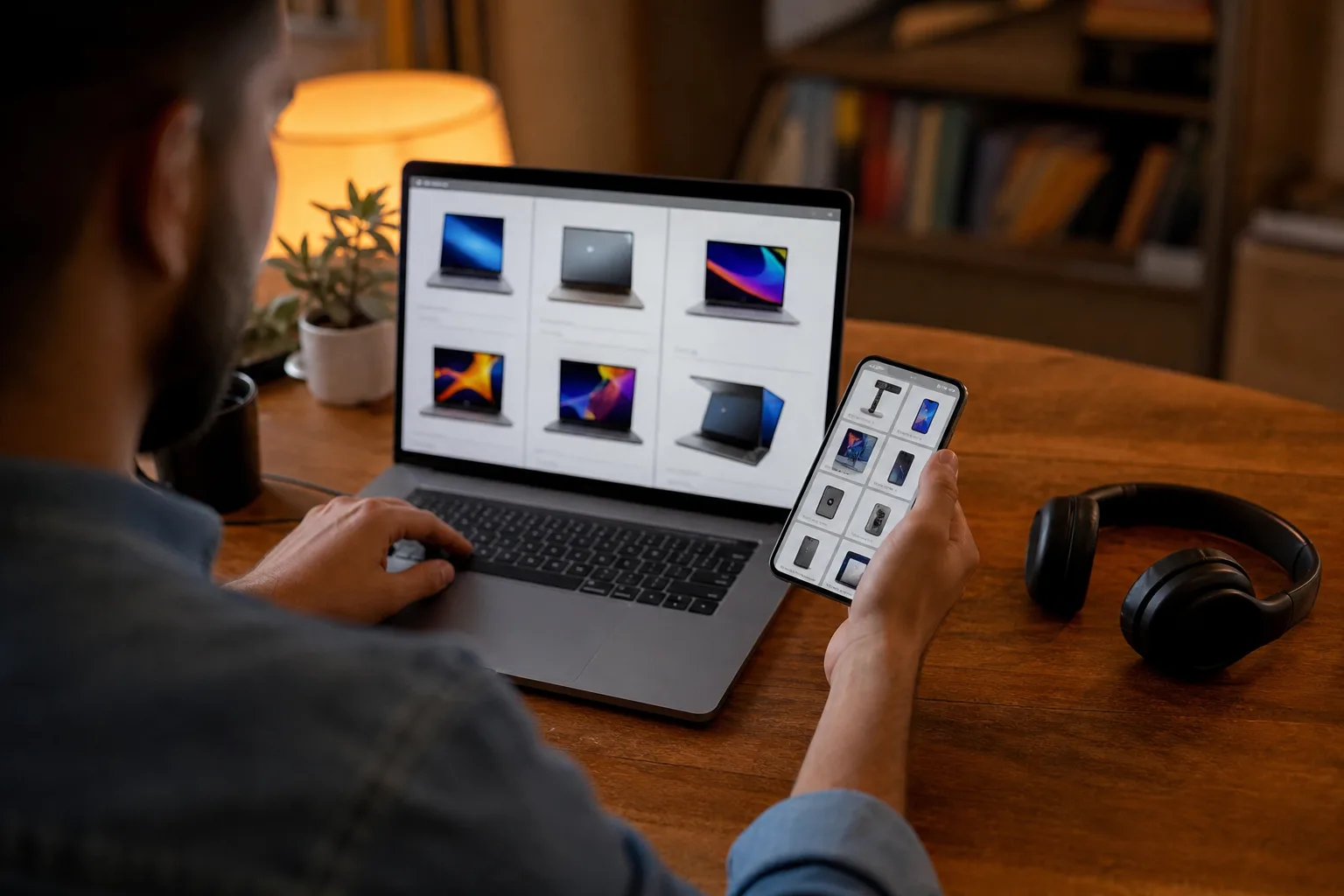
A laptop, tablet and other consumer electronics sit arranged on a work desk because this season’s discounts cover far more than one product category.

The headline Black Friday deals are concentrated in expensive hardware
The most consequential markdowns are attached to products that normally require a little financial self-justification. WIRED highlighted the Google Pixel 11 Pro XL at $899, or $400 off, alongside Samsung’s Galaxy Z Fold8 with a $350 reduction. Those figures matter because premium smartphones have become stubbornly expensive, while annual improvements are often incremental. A four-figure phone becomes easier to defend when the discount pays for a carrier bill or a set of earbuds.
Google’s Pixel range has long competed on camera processing, clean Android software and the company’s growing pile of AI features. Samsung, meanwhile, remains the foldable market’s most established mainstream player. The Z Fold8’s appeal is obvious on paper: a 5.5-inch outer screen and a 7.7-inch internal display promise a phone that can turn into a pocketable small tablet. But foldables remain a purchase for people who will genuinely use that larger workspace, not merely admire the engineering in a product video.
There is another phone in this batch that deserves attention for a different reason. The Fairphone Gen 6+ has reportedly received its first discount, bringing a rare bit of price relief to a device built around repairability, modularity and long-term ownership. Fairphone’s broader argument is that smartphones should not be treated like disposable fashion. Its published impact work describes the Fairphone as ethically made, relatively environmentally friendly, responsibly made and designed to last, though no electronics supply chain is magically clean. A sale does not make the handset cheap, necessarily, but it narrows the financial gap between buying responsibly and buying whatever is most aggressively promoted.
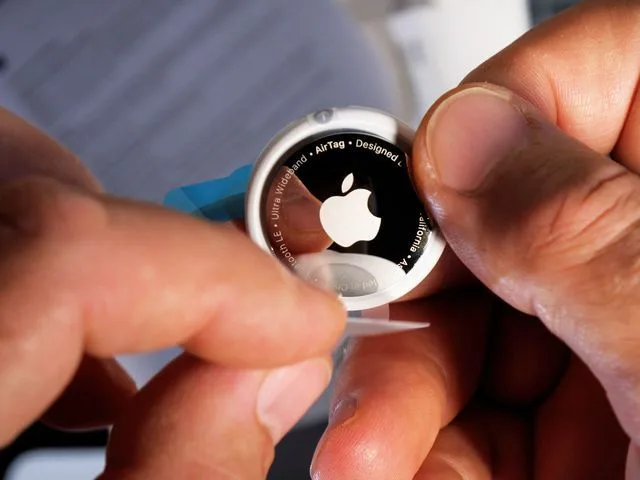
Apple’s AirTags are among the least glamorous entries in the Black Friday deals rush, yet they are also among the easiest to assess. A tracker for keys, luggage or a bicycle either saves you a frantic afternoon or quietly sits in a drawer. For iPhone users, Apple’s Find My network remains a practical advantage. An AirTag’s replaceable battery should last about a year. Do not use one to track people; the technology is useful precisely because it has also demanded stronger anti-stalking safeguards.
Apple’s small Bluetooth tracker is a familiar holiday purchase because it works best as low-cost insurance for items people routinely misplace.
Headphones, TVs and laptops are where price history matters most
Headphones are a classic example of why shoppers should take a breath. WIRED’s list includes Apple’s AirPods Pro 3 at $149, the AirPods Max 2 at $130 off, Sony’s WH-1000XM6 and Bose’s QuietComfort Headphones second generation. Those are credible names, and active noise cancellation remains one of the few consumer-tech features that can noticeably improve a daily commute or a noisy office. But this category is also famous for rolling discounts. Unless a price is a documented low, waiting a few days is not reckless.
Televisions are even more complicated. The LG C6 OLED TV at $1,350, listed as $1,350 off, is the sort of headline price that makes people open another browser tab immediately. OLED has earned its reputation for contrast and deep blacks, and LG has been a central player in the segment for years. Yet TV model names, panel sizes and regional variants can turn comparison shopping into a minor administrative chore. Check the exact screen size, confirm whether the retailer is selling the current model, and budget for delivery, mounting or a soundbar if those are part of the plan.
The Dell XPS 13 at $550, down $200, offers a less dramatic but perhaps more useful lesson. Small laptops are purchased for ordinary life: writing, travel, classes, spreadsheets, video calls and an alarming number of browser tabs. A $200 cut is meaningful if the configuration has enough memory and storage for several years. It is a poor deal if the machine is cheaply configured and forces an earlier replacement. Black Friday deals reward people who read specifications, which is not exciting advice but remains painfully true.
What shoppers should buy now, and what they should leave in the cart
I would put accessories, mature headphones and products with historically steady pricing in the “buy when the price is right” category. AirTags, phone stands, MagSafe wallets, power banks and coffee makers are not likely to receive a surprise architectural breakthrough next Tuesday. If a retailer has a good return policy and the price is near a proven low, there is little glory in waiting solely for a possible extra five dollars.
New flagship hardware deserves a stricter standard. Phones, laptops and high-end televisions are exactly where retailers can add gift cards, bundles or sharper cuts as competition intensifies. It is also where a misleading comparison hurts most. Check price-tracking tools, read return terms, and make sure a seller is not clearing an older model under a familiar family name. The best Black Friday deals are not good merely because the original price is fictional.
The broader shift is that Black Friday deals are no longer a single retail holiday. They are a long-running negotiation between consumers armed with price history and sellers hoping we are too tired to check it. The shoppers who win will not be the ones who click fastest. They will be the ones who know the product they need, the maximum they are willing to pay, and when a “limited-time” offer is just another Tuesday in November.
Frequently Asked Questions
When should I buy Black Friday deals instead of waiting for Cyber Monday?
Buy when a product reaches a verified low price and the retailer offers price protection or an easy return window. Cyber Monday can bring fresh offers, especially on online-only accessories, but waiting is risky when stock is limited or a discount is already unusually deep.
How can I tell whether a Black Friday deal is real?
Compare the sale price with several retailers and check the product’s longer price history through a reputable tracker. Also confirm the exact model number, because retailers sometimes discount older configurations while displaying a newer product family prominently.
Are early holiday technology discounts usually worth buying?
They can be, particularly for products that rarely change price or are nearing the end of their retail cycle. Brand-new flagship phones, TVs, and laptops deserve more caution: deeper cuts or bundles may arrive closer to Black Friday or Cyber Monday.