

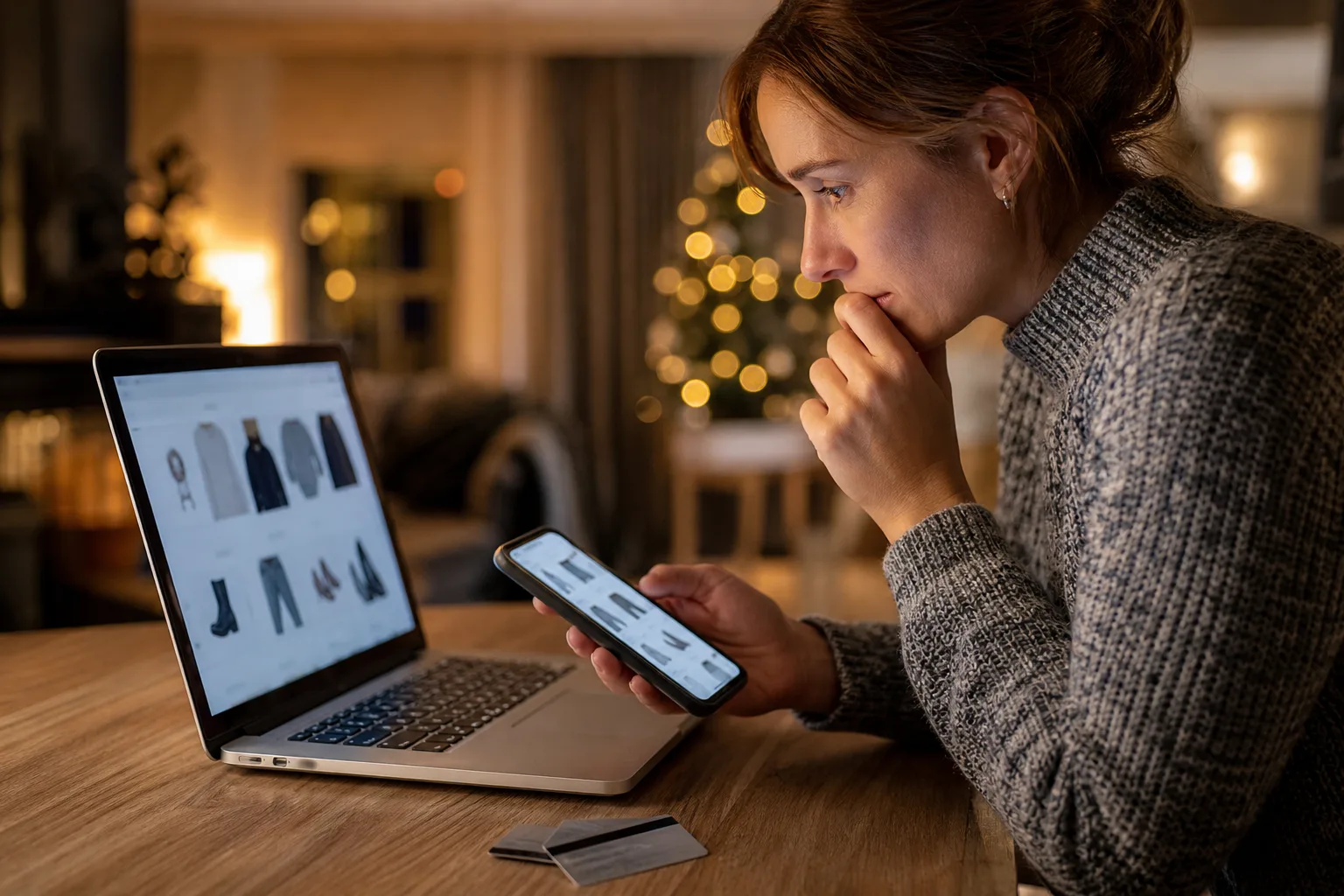
- Black Friday scams thrive on urgency, with fake countdowns and implausible discounts designed to rush shoppers past basic checks.
- Avoid Black Friday scams by verifying web addresses, retailer identities, seller feedback and the real market price before paying.
- Credit cards and established payment platforms offer more recourse than irreversible payment methods when a seller disappears.
- A VPN can help on unsafe public Wi-Fi, but it cannot verify whether a retailer or marketplace seller is legitimate.
Table of Contents
Black Friday scams work because urgency works
The most effective Black Friday scams don’t usually arrive with a cartoon villain attached. They look like the deal you were already hoping to find: a camera at half price, a premium charger for pocket change, or a smart telescope marked down so aggressively that common sense briefly leaves the room. Holiday shopping has always rewarded speed, and fraudsters have built an entire business model around exploiting that reflex.
As Space reported in its seasonal scam-spotting guide, the risk spans everything from telescopes and cameras to Lego sets, streaming subscriptions and drones. That breadth matters. Criminals don’t need to invent a new kind of fraud every November; they simply wrap old tricks around whatever people are searching for.
The bigger question is why these schemes remain so durable. Part of it is the bargain-hunting mindset. A limited-time banner, a ticking clock and a claimed 70% discount create the digital equivalent of somebody shouting “last train!” at a station. You stop evaluating and start moving. That’s exactly the moment a fraudulent checkout page wants.
How to spot Black Friday scams before you pay
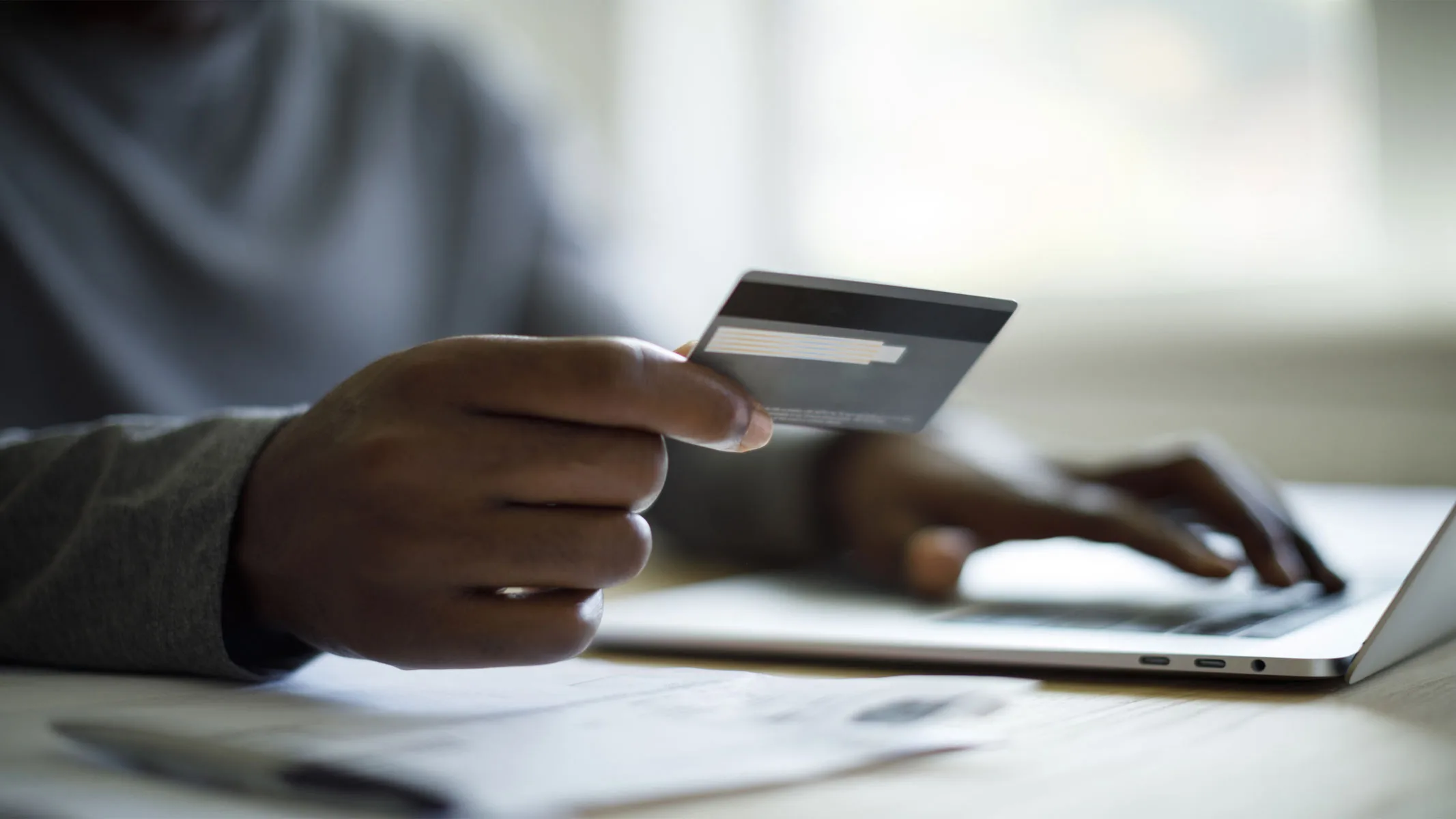
Start with the boring detail that saves money: the address bar. Look carefully at the domain, not merely the retailer logo at the top of the page. A fake store might use a swapped letter, an extra word, or a legitimate brand name buried in a longer web address. Search ads and social posts can lead to lookalike domains, so a polished landing page proves very little.
The online shopping guidance boils down to the same practical advice: research unfamiliar sellers, check complaints and understand return terms before handing over payment information.
These simple checks can expose many Black Friday scams before a payment page gets your details.
Several warning signs deserve an immediate pause:
- A price far below every established retailer’s offer, particularly for popular electronics or branded gear.
- A countdown timer that resets when the page refreshes or claims an item will disappear in minutes.
- Product descriptions full of strange phrasing, misspellings or copied marketing text.
- Missing contact information, vague return policies or an address that does not correspond to a real business.
- Payment demands involving bank transfers, cryptocurrency, gift cards or direct person-to-person payment apps.
None of these clues alone proves fraud. A young retailer may have a clumsy website; a legitimate clearance sale may be unusually steep. But several together are the online-shopping equivalent of a restaurant with a handwritten menu, locked front door and no customers. You don’t need to solve the mystery. You can leave.
Marketplace listings need a second look
Large retailers and marketplaces lower the odds of trouble, but they do not remove them. Amazon, Walmart, eBay and other platforms host third-party sellers alongside their own inventory. That can be perfectly legitimate, and plenty of small businesses depend on those systems. Still, shoppers should identify who is actually selling and shipping the item, rather than assuming the marketplace itself is the merchant.
For Black Friday scams, seller feedback is useful only when read with a little skepticism. Look for recent reviews, recurring complaints about non-delivery or counterfeit products, and a history that makes sense for the category. A seller that appeared last month and suddenly has hundreds of five-star reviews for unrelated products deserves extra attention. Review manipulation is cheap; trust should not be.
Counterfeits create a separate but related headache. Off-brand building sets are not inherently deceptive, for example, but a listing designed to resemble Lego while hiding the actual manufacturer is another matter. The same applies to storage cards, charging bricks, batteries and optical equipment. Cheap counterfeit electronics can be more than disappointing: poorly made power accessories can introduce genuine safety concerns.
Compare model numbers, photos and specifications with the manufacturer’s own product page. If a listing’s capacity, sensor size, battery rating or included accessories do not line up, assume the seller is either careless or trying to confuse you. Frankly, neither is a great reason to buy.
Use payment protections, then keep the receipts
When a shop is unfamiliar but appears credible, payment choice can limit the damage. Credit cards generally provide dispute pathways that cash-equivalent methods do not. Debit-card protections may vary by bank and jurisdiction, while wire transfers, crypto payments and gift cards are popular with scammers because reversing them can be difficult or impossible.
That does not make card payments magic. Black Friday scams can still leave buyers arguing with merchants, banks and marketplace support teams for weeks. Save the listing, advertised price, confirmation email, delivery estimate and return policy. Screenshots may sound fussy until a merchant quietly edits a page after taking payment.
Keeping those records is especially useful when Black Friday scams involve listings that change after checkout.
Passwords and multi-factor authentication matter here too. A compromised retail account can expose saved addresses, purchase histories and stored payment methods. Use a unique password for major shopping accounts, enable multi-factor authentication where it is offered, and remove saved card details from sites you no longer use.
A VPN is not a fraud detector
Security software is often marketed as a holiday-shopping cure-all. It isn’t. A VPN can be sensible when you are making a purchase on public Wi-Fi because it encrypts traffic between your device and the VPN service. But it cannot tell you whether an offer is real, whether a seller will ship the item or whether a product is counterfeit.
Antivirus tools, browser warnings and password managers have the same limitation: they add protection, but they do not vouch for a seller. Avoiding Black Friday scams still comes down to a few unglamorous habits. Slow down, compare the offer, identify the seller and ask whether the price makes economic sense. Retailers discount inventory; they do not normally hand out $400 hardware for the price of dinner.
That may sound less exciting than chasing the next flash sale. It is also how shoppers keep a genuine bargain from becoming an expensive lesson. As retailers make holiday checkout ever faster, the industry’s real security test is whether it can make a two-minute pause feel as normal as one-click buying.
Frequently Asked Questions
How can I avoid Black Friday scams when shopping on marketplaces?
Check whether the item is sold and shipped by the retailer or by a third-party merchant, then read recent seller feedback and review the return policy. A marketplace listing is not automatically fraudulent, but the platform’s familiar branding should not replace basic scrutiny.
Does the padlock icon mean an online store is legitimate?
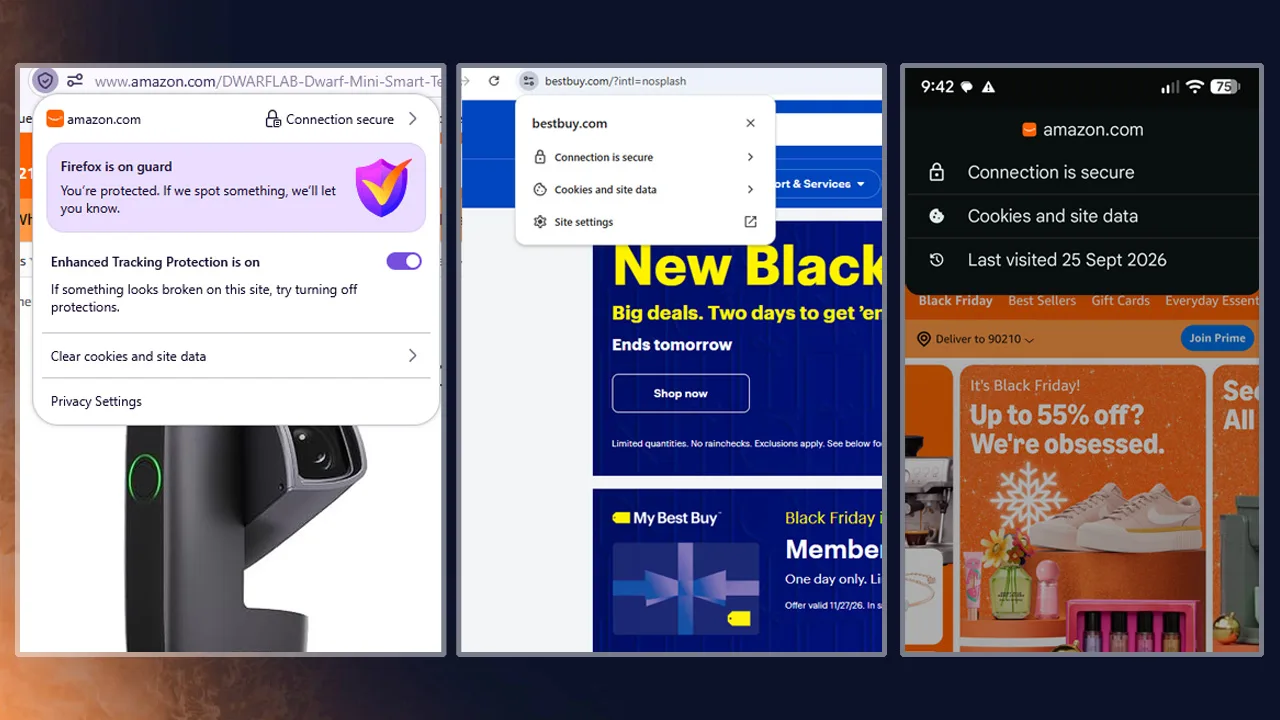
No. A padlock or secure-connection indicator means the connection between your browser and the site is encrypted. Scam sites can use HTTPS too, so shoppers still need to inspect the web address, company details, pricing and payment options.
What payment method is safest for an unfamiliar online store?
A credit card is generally a better choice than bank transfer, wire payment, cryptocurrency or gift cards because card issuers may offer dispute procedures for fraudulent transactions. Keep order confirmations, product pages and correspondence if a purchase goes wrong.
Can a VPN protect me from fake shopping websites?
A VPN can reduce exposure on untrusted public Wi-Fi by encrypting traffic to the VPN provider, but it cannot determine whether a shop is honest or whether goods are genuine. Website and seller verification remain the essential protections.