

Table of Contents
Bezos Backs Slate Auto: A New Player in the EV Market
Electric-vehicle startups have rarely lacked ambition. What they have often lacked is a product that makes sense for buyers who cannot treat a new vehicle as a luxury purchase. Slate Auto is betting that the opening is not another expensive, technology-heavy EV, but a stripped-back electric pickup aimed at a far broader audience.
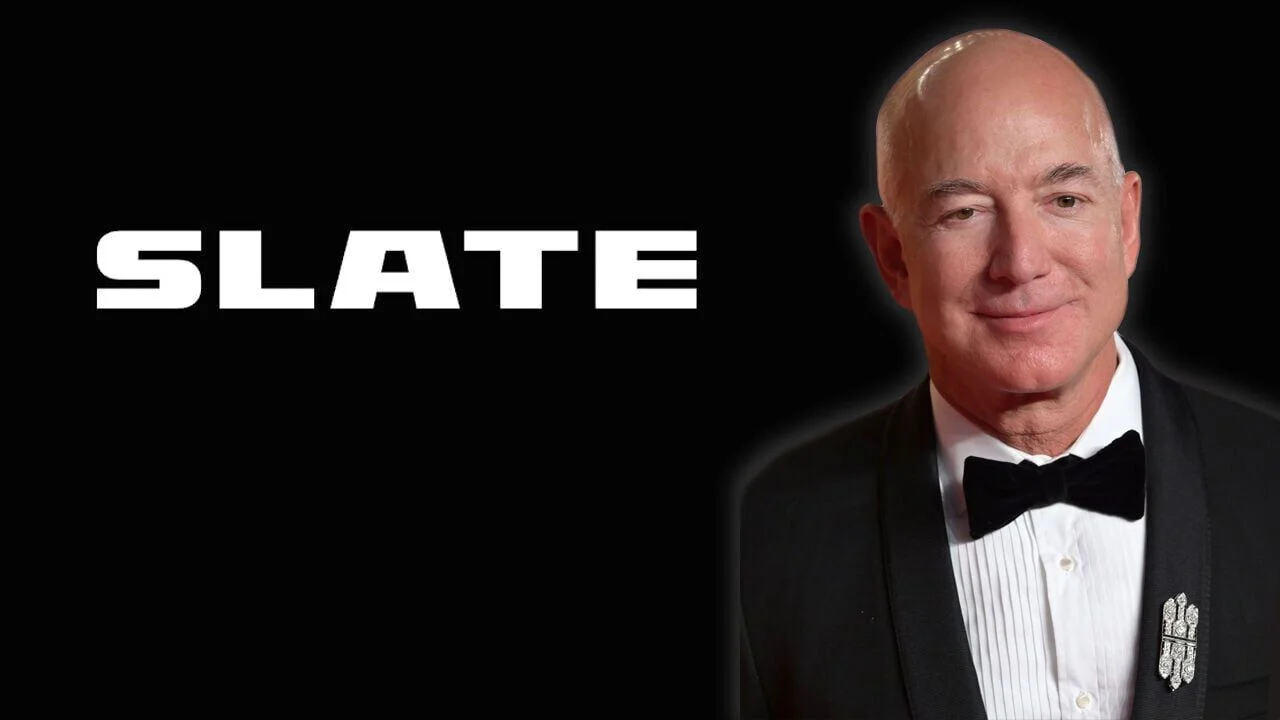
Jeff Bezos is investing in the Michigan-based startup, which is based in Troy and is developing a two-seat electric pickup truck priced around $25,000. Slate Auto operates under the umbrella of Re:Build Manufacturing, co-founded by former Amazon executive Jeff Wilke. The company has secured at least $111 million in Series A funding, with Bezos among the investors. Other notable backers include Mark Walter, owner of the LA Dodgers, and Thomas Tull, a lead investor in Re:Build Manufacturing.
Those names matter because automotive manufacturing is unforgiving. A promising design and a well-funded early round can get a company to prototypes, staffing and supplier conversations. Turning that into vehicles customers can buy, service and keep on the road is the much harder part. Slate’s financial backing gives it more room to pursue that task than many young EV companies have had, but it does not remove the basic challenge: making a low-priced vehicle while managing the cost and complexity of electric propulsion.
The planned $25,000 pickup is the clearest signal of Slate Auto’s intent. The company plans to rival Tesla’s strategy, but it is doing so from a different starting point than the high-end approach that has shaped much of the modern EV market. Many startups have used expensive models to establish a brand, partly because higher prices can leave more room for costly batteries, software and early production inefficiencies. Slate is targeting entry-level consumers instead.
That is a more difficult path, but potentially a more meaningful one. Affordability remains one of the central questions around EV adoption. Plenty of drivers may be interested in electric transportation in principle, yet still find the available choices too expensive, too elaborate or too far removed from the practical vehicles they already use. A basic electric pickup could appeal to buyers who value utility over status, provided Slate can make the final product live up to its price promise.
Targeting Affordability and Customization
Slate Auto’s stated approach draws inspiration from historical models such as the Ford Model T and Volkswagen Beetle. The comparison is not really about recreating those vehicles. It is about the idea of a simple, recognizable product that can serve as a platform rather than a finished statement of identity. The Model T and Beetle became cultural fixtures in part because they were accessible and adaptable in the eyes of their owners. Slate appears to want a similar relationship with its customers.
Its trademark filing for the phrase “WE BUILT IT. YOU MAKE IT,” points directly at that ambition. Rather than making every truck a highly specified product at the point of sale, the company plans to supplement vehicle sales with accessories and apparel that let owners personalize their vehicles over time. That could give buyers a lower entry point while allowing them to decide later which additions are actually useful.
There is also a commercial logic behind the pitch. Accessories can produce revenue after the initial vehicle sale, while giving customers a reason to stay connected to a brand. Harley-Davidson and Stellantis have successfully leveraged ancillary products to enhance customer engagement and revenue, and Slate is clearly looking to adapt that kind of model for its own purposes. Apparel may sound peripheral next to a pickup truck, but it fits the broader effort to turn ownership into participation rather than a one-time transaction.
The usefulness of that strategy will depend on whether customization feels genuinely practical. Buyers are unlikely to care about a lifestyle pitch if the underlying truck fails to meet ordinary expectations around durability, convenience and ownership costs. But if Slate can keep the base vehicle straightforward and make customization optional, the company could avoid forcing customers to pay upfront for features they do not want.
Job listings suggest Slate is also developing “Slate University,” an initiative aimed at educating customers on vehicle maintenance and customization options. That is an unusually hands-on idea for a newer vehicle brand. Modern vehicles can leave owners feeling locked out of even basic decisions about upkeep or modification. An education program could help Slate make its customization message credible, especially if the company wants owners to see the truck as something they can understand rather than simply operate.
Production Plans and the Execution Test
Slate Auto aims to commence production by late 2026, potentially at a facility near Indianapolis, Indiana. The company has not disclosed whether it will build a new factory or repurpose an existing one. That distinction is not a minor detail. A new facility offers more freedom to shape a manufacturing operation around a particular vehicle, while an existing site may offer a faster route to production. Either way, the decision will say a great deal about how Slate plans to balance cost, speed and control.
The company has quietly assembled talent from Ford, General Motors, Stellantis and Harley-Davidson. That recruitment matters because the automotive business is built on institutional knowledge: how to manage suppliers, plan production, engineer parts for real-world use and address issues once vehicles reach customers. Slate’s CEO, Christine Barman, brings over two decades of experience from Chrysler, where she worked on models including the Chrysler 300 and Jeep Cherokee.
Experience does not guarantee success, especially for a startup, but it is more valuable than the familiar pattern of treating carmaking like a software problem with wheels attached. Slate’s leadership and hiring suggest an understanding that this is an industrial undertaking first. The company will still need to prove that its team can translate established-industry experience into a lean new operation without inheriting the cost structure of the companies it hopes to challenge.
Its planned production timing places Slate Auto in a period of significant transformation for the automotive industry. Established manufacturers and startups alike are navigating the shift toward electric vehicles, and there is no shortage of uncertainty around what buyers will actually choose when price, utility and charging needs collide. The market has room for experimentation, but it has little patience for vague promises.
That makes Slate’s proposition unusually clear. A two-seat electric pickup around $25,000 is not trying to win on excess. It is trying to make an argument for restraint: fewer assumptions about what buyers need, a lower-priced starting point, and room for owners to shape the vehicle later. If Slate Auto can reach production by late 2026 and deliver on that idea, it could address a segment that remains underserved by current EV offerings. If it cannot, the project will join a long list of reminders that building an affordable vehicle is among the toughest challenges in the industry.
Stay Updated: Tech News – Money Talks

