

Table of Contents
What is Sora?
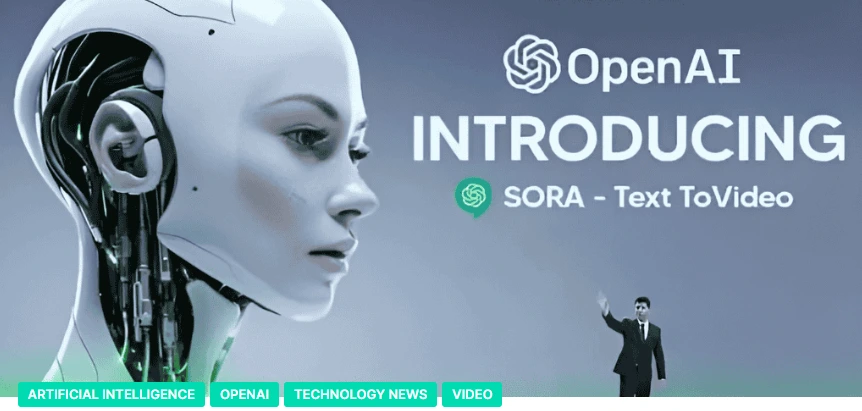
Sora is OpenAI’s AI video generator, designed to turn written prompts into realistic animated videos. The basic appeal is easy to understand: rather than beginning with a camera, stock footage library, animation timeline, or a folder of pre-made assets, a user describes a scene and asks the system to generate it.
That changes the starting point for video work. Traditional production tools are powerful, but they generally assume that someone has already filmed, illustrated, modelled, edited, or licensed the material that will appear on screen. Sora instead creates unique content from scratch. A prompt can become the basis for a visual sequence without relying on pre-existing templates or assets.
The promise is not simply that software can produce moving images. Sora is intended to mimic real-world motion and interactions, producing video outputs tailored to a particular prompt or creative need. That distinction matters because video is less forgiving than a still image: movement, timing, objects and environments all need to make sense from one moment to the next. A video generator that can create convincing scenes gives creators a different kind of sketchpad—one where an idea can be tested visually before the larger production process begins.
That does not make conventional filmmaking, animation, or editing obsolete. A text prompt is still an instruction, not a finished creative strategy. Someone must decide what story to tell, who the audience is, what should be shown, and whether the result communicates clearly. But Sora moves part of the work that once required specialist tools and substantial preparation closer to the point where an idea is first written down.
Check Out similar Article of OpenAI’s New ‘Strawberry’ AI Set to Revolutionize Reasoning-Powered Responses – SquaredTech
Key Features of Sora
- Text-to-Video Capability: Users can type a simple prompt, and the AI generates a complete animated video. This is the feature that makes Sora approachable beyond established video teams. The first interface is language rather than a technical editing workspace.
- Custom Content Creation: Videos are built from scratch without relying on pre-existing templates or assets. For creators, that creates room for concepts that may not be readily available in a stock library or easy to stage in the real world.
- Safety Measures: Sora includes a safety-first design, embedding watermarks in generated content to ensure authenticity and prevent misuse. That is an essential part of the proposition, not a footnote. As generated video becomes more persuasive, viewers and publishers need ways to distinguish synthetic material from ordinary footage.
These features make Sora a powerful tool for creating unique and engaging video content. The useful phrase here is “tool,” rather than replacement. Sora can accelerate visual experimentation, but it cannot settle questions of taste, accuracy, brand judgment, or editorial responsibility. Those decisions remain with the people using it.
The safety element also speaks to a larger tension around AI video. The same ability to create compelling material quickly can be used to clarify an idea or to confuse an audience. Watermarks are intended to support authenticity, but responsible use also depends on clear disclosure, sensible review, and care around what a generated scene implies. For marketers, educators, and filmmakers alike, speed should not become an excuse to skip that judgment.
Check Out similar Article of Google’s Veo AI Brings 1080p Magic to Businesses: New Video AI Model. – SquaredTech
Practical Applications
Sora’s versatility allows it to serve several kinds of creative work, although the value will look different in each setting. Its most immediate strength may be in the early stages of production, where teams need to make an abstract idea visible before committing significant time and resources.
- Marketers: Marketers can develop customized and creative ad videos aimed at specific audiences. Instead of treating every campaign idea as a full production commitment, they can explore possible visual directions and refine the message. The important advantage is not merely volume; it is the ability to make a concept tangible quickly enough to evaluate whether it deserves to go further.
- Educators: Educators can simplify complex topics by turning lessons into engaging visual experiences. A written explanation is often enough for some learners, but visualising a process, situation, or interaction can make an unfamiliar subject easier to follow. The best use is likely to support a lesson’s purpose, rather than use animation simply because it is available.
- Filmmakers: Filmmakers can prototype ideas quickly and efficiently, reducing the time and resources required for traditional video production. Storyboards and early visual tests have long been central to filmmaking; a text-to-video system offers another way to explore mood, motion, staging, and narrative possibilities before a conventional shoot or more involved animation work.
These uses share a common theme: Sora lowers the friction between concept and example. That can be especially useful when a team needs something more revealing than a written brief but is not yet ready for a full-scale production. A generated sequence can expose whether an idea is visually legible, emotionally appropriate, or simply worth pursuing.
There are limits to that convenience. Video used in an advertisement, classroom, or film carries different expectations, and creators need to assess generated material in context. An engaging image is not automatically an effective lesson. A quick prototype is not automatically a workable final scene. The technology can shorten a process, but it does not eliminate the need to review output carefully and apply human direction.
Why Sora Matters
Sora is expected to reshape content creation across industries by making video production faster and more accessible. Its significance lies in the broadening of who can begin working with video ideas. People who have a story, lesson, campaign, or prototype in mind may be able to express it visually without first assembling the traditional ingredients of production.
That opens creative possibilities, but it also raises the standard for thoughtful use. When producing a video becomes easier, the differentiator is less likely to be access to software alone and more likely to be clarity of purpose. Audiences still respond to useful explanations, memorable stories, and material that feels suited to its setting. Sora can help create the visual form; it does not decide what is worth saying.
For storytelling, the opportunity is to test scenes and concepts that might otherwise remain trapped in notes or pitch documents. For marketing campaigns, the appeal is faster exploration of customized creative ideas. For education delivery, the potential is to make difficult material more visual and engaging. In all three cases, the strongest results will come from pairing the system’s speed with editorial discipline.
OpenAI aims to provide updates as Sora continues to evolve, with the stated promise of redefining how people create and share video content. That evolution will matter because AI video is not a settled category. Expectations around realism, authenticity, creative ownership, and responsible publishing will continue to shape how these tools are used.
Sora’s ability to transform text prompts into realistic videos marks a significant advancement in AI technology. Its applications in marketing, education, and filmmaking point to a practical future in which content creation can be streamlined without reducing creativity to automation. OpenAI is positioning Sora as part of the future of video production; the more meaningful question for users is how they apply that capability with intention.
Stay Updated: Artificial Intelligence

