

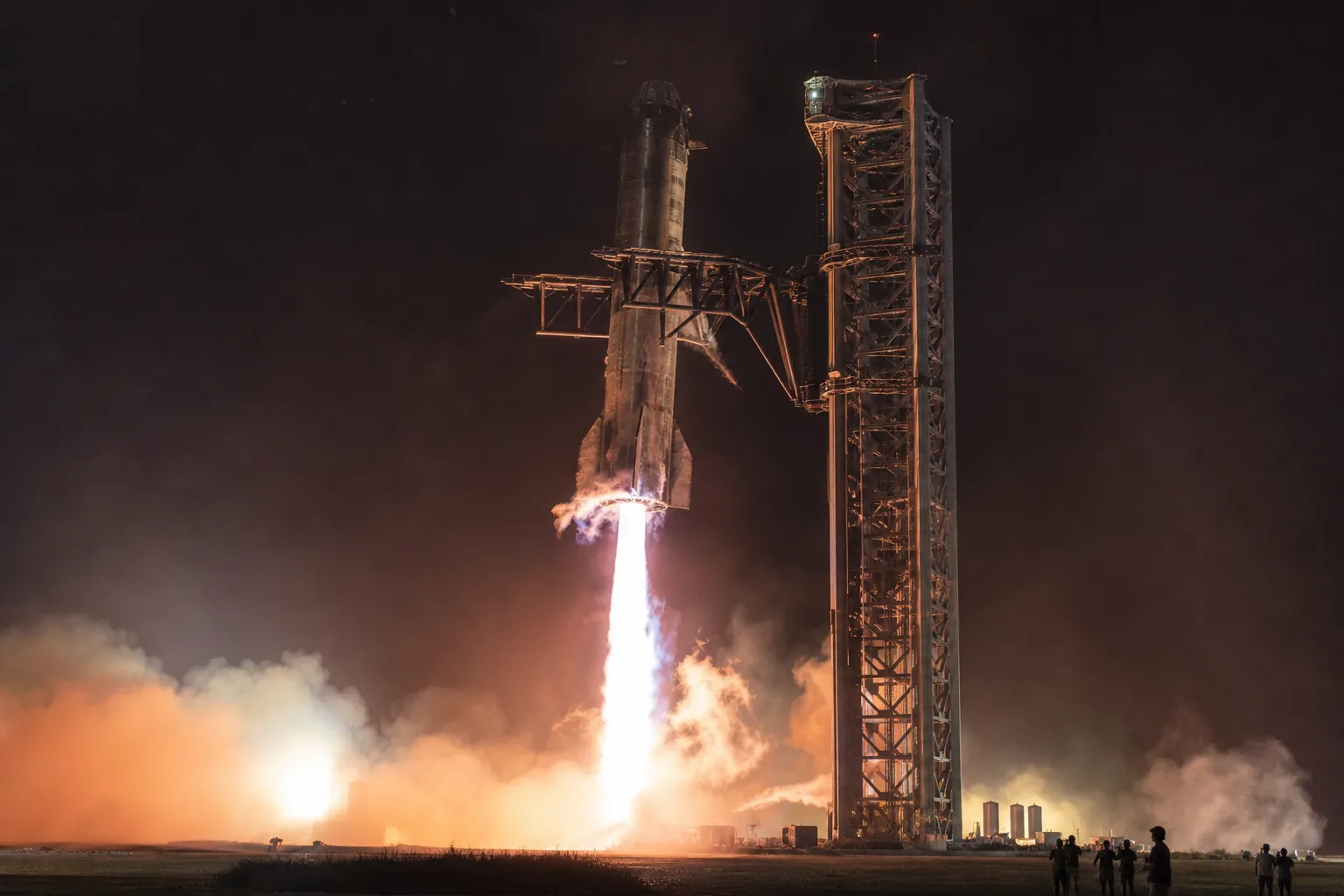
Starship Flight 15 gave SpaceX the kind of footage that can make an engineering milestone look almost absurdly simple: a spacecraft descending from the edge of space and settling into the launch tower’s arms. But the polished ending hides a much messier reality. Catching a Ship is a major step. Turning it around quickly enough to make Starship economically useful is the far harder job.
After lifting off from SpaceX’s Starbase facility in South Texas on November 13, the Ship upper stage returned roughly 22.5 hours later and was secured by the tower’s giant mechanical arms. The Super Heavy booster was meant to complete the same trick, but SpaceX diverted it to a controlled splashdown in the Gulf of Mexico after a low-propellant warning. That decision may have disappointed viewers hoping for the full double-catch spectacle, but it was the right call. You do not gamble a launch tower, ground crew, and vehicle production line to save a clip for social media.
- Starship Flight 15 achieved the first tower catch of a returning Ship upper stage after a 22.5-hour mission.
- Starship Flight 15 showed recovery progress, but SpaceX must still prove rapid refurbishment and routine reuse of both stages.
- Orbital transfer of cryogenic methane and oxygen remains the mission-critical technology behind Starship’s lunar and Mars ambitions.
- NASA’s Artemis IV schedule puts pressure on SpaceX to turn striking test milestones into a dependable crewed lunar lander.
Table of Contents
Starship Flight 15 proves the Ship catch can work
SpaceX had previously caught Super Heavy boosters at Starbase, but this was the first successful capture of Ship, the upper stage that will eventually haul satellites, propellant, cargo and, if NASA’s plans survive the usual schedule wrestling match, astronauts. Ship returns from much higher altitude and at considerably greater speed than its booster. Its entry profile, thermal exposure and landing burn make the maneuver less like parking a car and more like catching a falling piano with a forklift.
During the landing webcast, SpaceX spokesperson Dan Huot called the feat “the holy grail of spaceflight,” adding: “We caught a Starship, and now everything changes.” That’s a dramatic line, as SpaceX lines tend to be. Still, the underlying point is fair. The tower-catch concept is central to the company’s wager that Starship can avoid the slow, infrastructure-heavy recovery process that limits other launch systems.
Instead of deploying landing legs, landing on a pad, moving the vehicle, inspecting it, and eventually lifting it back into place, SpaceX wants the tower itself to catch the vehicle and place it directly onto a mount for inspection and reflights. On paper, it could reduce turnaround time, vehicle mass and ground handling. On a real launch schedule, it has to work repeatedly, in wind, under time pressure, with engines that have already survived a punishing flight.
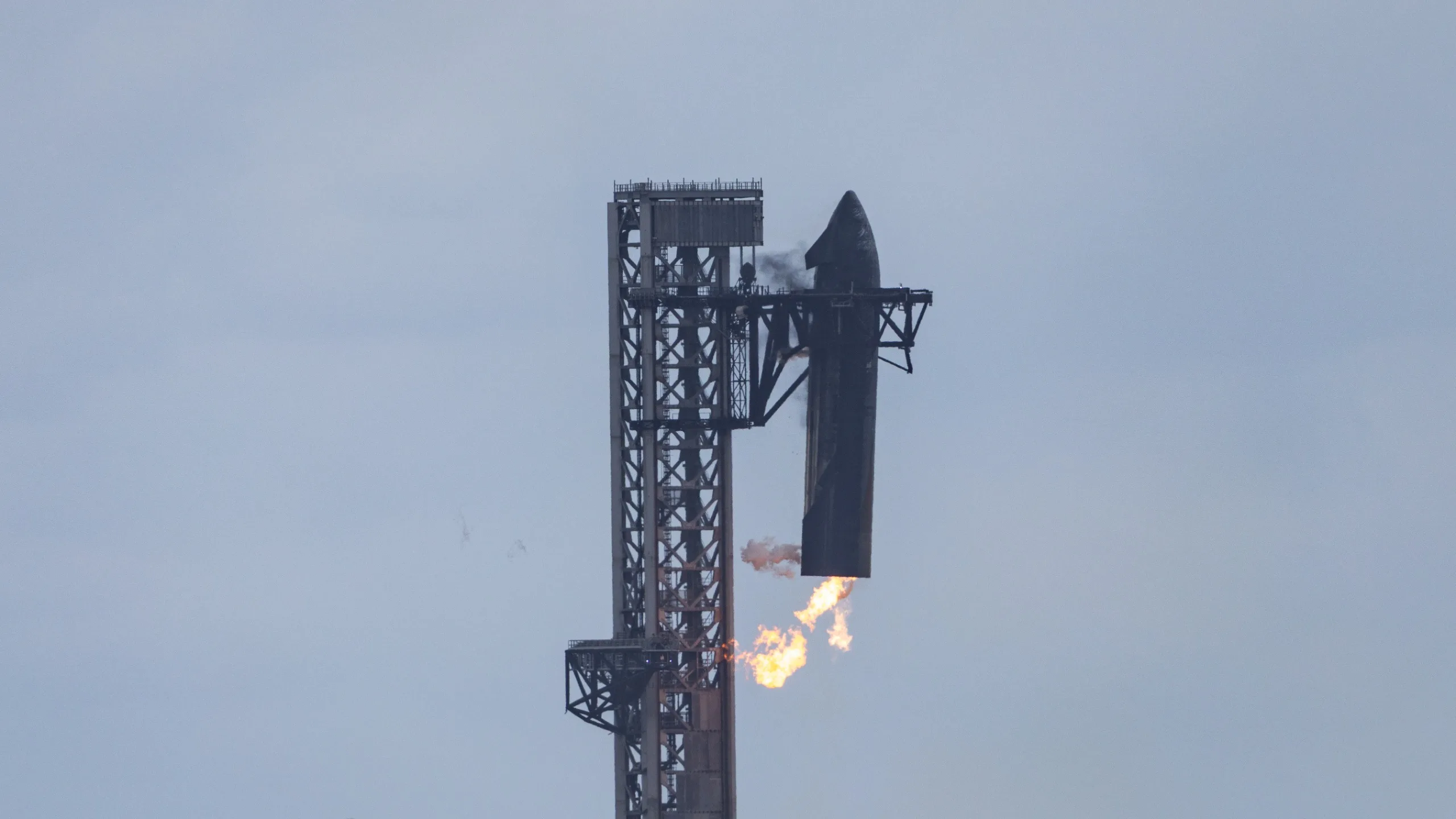
The catch looked definitive on the webcast, but it settles only one question. One catch proves the guidance, hardware and procedures can come together. For Starship Flight 15, the next test is whether that result can be repeated without turning each recovery into a bespoke engineering campaign. A transportation system needs catches that become boring. Falcon 9 landings used to feel like magic; now they are mostly a line item on a launch recap. Starship needs to get there, and its much larger size means it has a longer way to travel.
Recovery is only useful if Starship can fly again soon
SpaceX has reflown Super Heavy boosters, but not on anything close to an airline-like turnaround. Booster 14 flew in January 2025 and again in May that year, while Booster 15 launched in March 2025 and returned to flight in October. Those are meaningful reuse demonstrations, not evidence of high-tempo operations. Ship, meanwhile, had not been recovered intact before this mission, so Starship Flight 15 opens the door to its first reuse rather than proving it.
This is the point where the company’s grand numbers meet the stubbornness of hardware. Elon Musk has said SpaceX is aiming for 10,000 Starship launches a year by 2030. That is more than one launch an hour, every hour, on average. Frankly, that target reads less like a forecast than a forcing function: a way of telling the organization that conventional rocket operations are unacceptable for the scale of deployment SpaceX has in mind.
The immediate business case is SpaceX’s own satellite ambitions. Its current Starlink network has roughly 11,000 satellites in low Earth orbit, already the largest constellation ever assembled. SpaceX has discussed a next-generation Starlink V3 constellation of 100,000 satellites, along with the far more speculative Starmind concept, an orbital AI data-center network potentially involving one million spacecraft. Whether those exact figures materialize is anybody’s guess. The important part is simpler: SpaceX sees abundant launch capacity as the engine for its next businesses, which is why Starship Flight 15 matters beyond the spectacle of the catch.
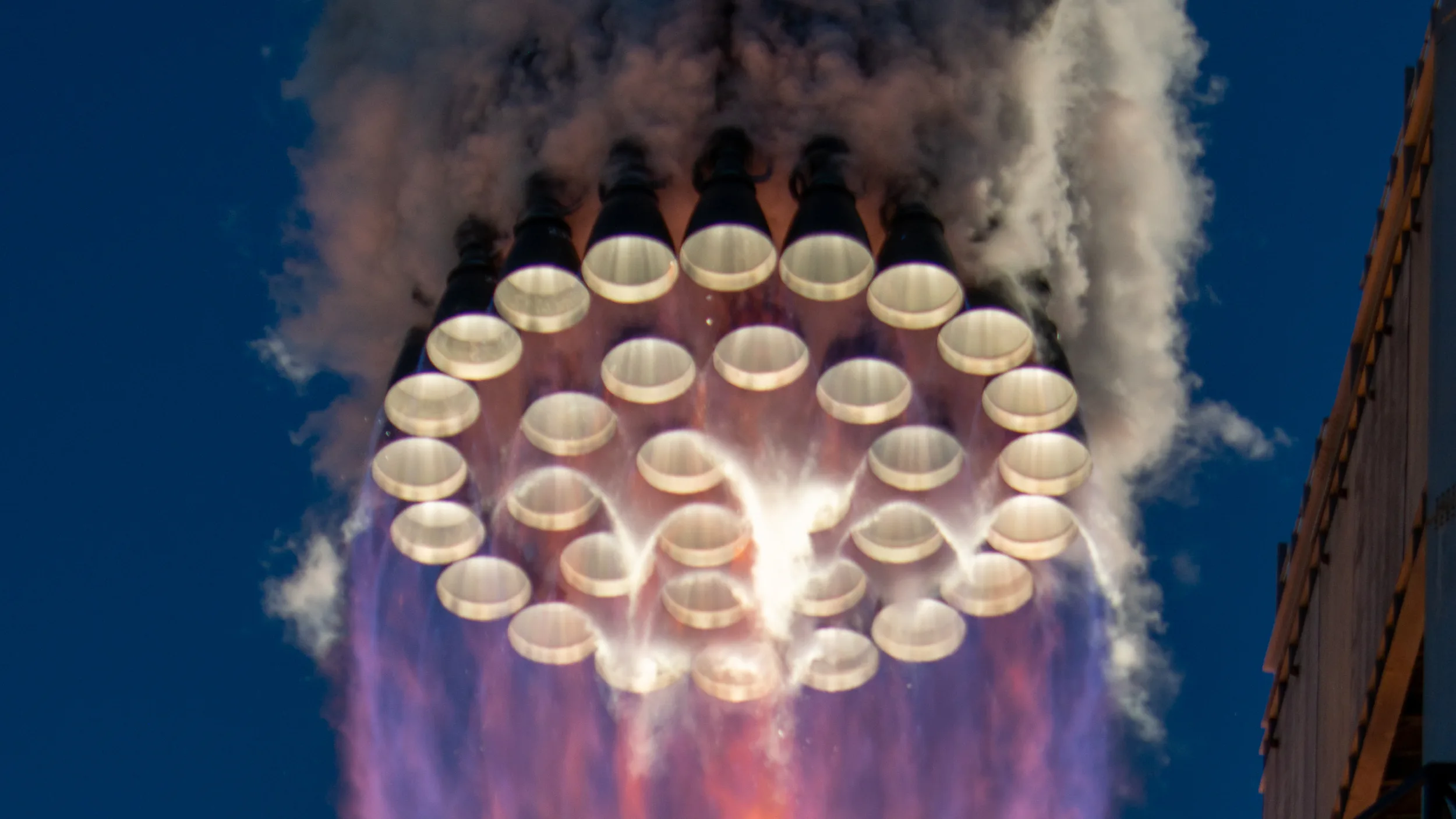
That makes the next phase after Starship Flight 15 less cinematic but more revealing. SpaceX needs to inspect the recovered Ship closely: its heat shield, flaps, plumbing, engines, tanks and structural attachment points. Then it needs to fly it again. A vehicle that survives one return only to spend six months in refurbishment is an impressive prototype. It is not yet a reusable rocket in the Falcon 9 sense.
The moon mission still hinges on an unproven gas station in orbit
For all the attention paid to tower catches, the toughest Starship test may happen hundreds of kilometers above Earth. The lunar lander version of Ship needs orbital propellant transfer. A depot Starship would be filled by tanker Ships, then transfer liquid oxygen and liquid methane to a spacecraft headed beyond low Earth orbit.
That sounds straightforward until you remember the fluids involved are cryogenic, the tanks are floating in microgravity, and the quantities dwarf anything demonstrated in orbit so far. SpaceX must manage fluid settling, pressure, heat leakage, docking operations and transfer reliability. A gas station on Earth can tolerate a pump failure. A lunar mission cannot simply pull over and wait for roadside assistance.
Estimates for the number of tanker launches needed for a single deep-space departure vary widely. Outside analysts have suggested as many as 22, while Musk has mentioned six to eight. The final number will depend on performance margins, mission design, transfer efficiency and how much usable propellant reaches orbit. Either way, Starship Flight 15 does not reduce the basic challenge: a Moon-bound Ship may require a small campaign of supporting launches before it even begins its actual mission. Starship Flight 15 therefore changes none of the underlying orbital-refueling math.
NASA has selected Starship as the human landing system for Artemis missions, with Artemis IV currently targeting a lunar south-pole landing in 2028. The agency has said SpaceX is progressing on “Cabin 1,” a full-scale ground test article for Starship’s crew cabin, and expects construction to finish by the end of the year. You can follow NASA’s broader Artemis program plans, but the dependency chain is clear: cabin development, life-support systems, orbital refueling, long-duration operations and lunar landing performance all have to come together.
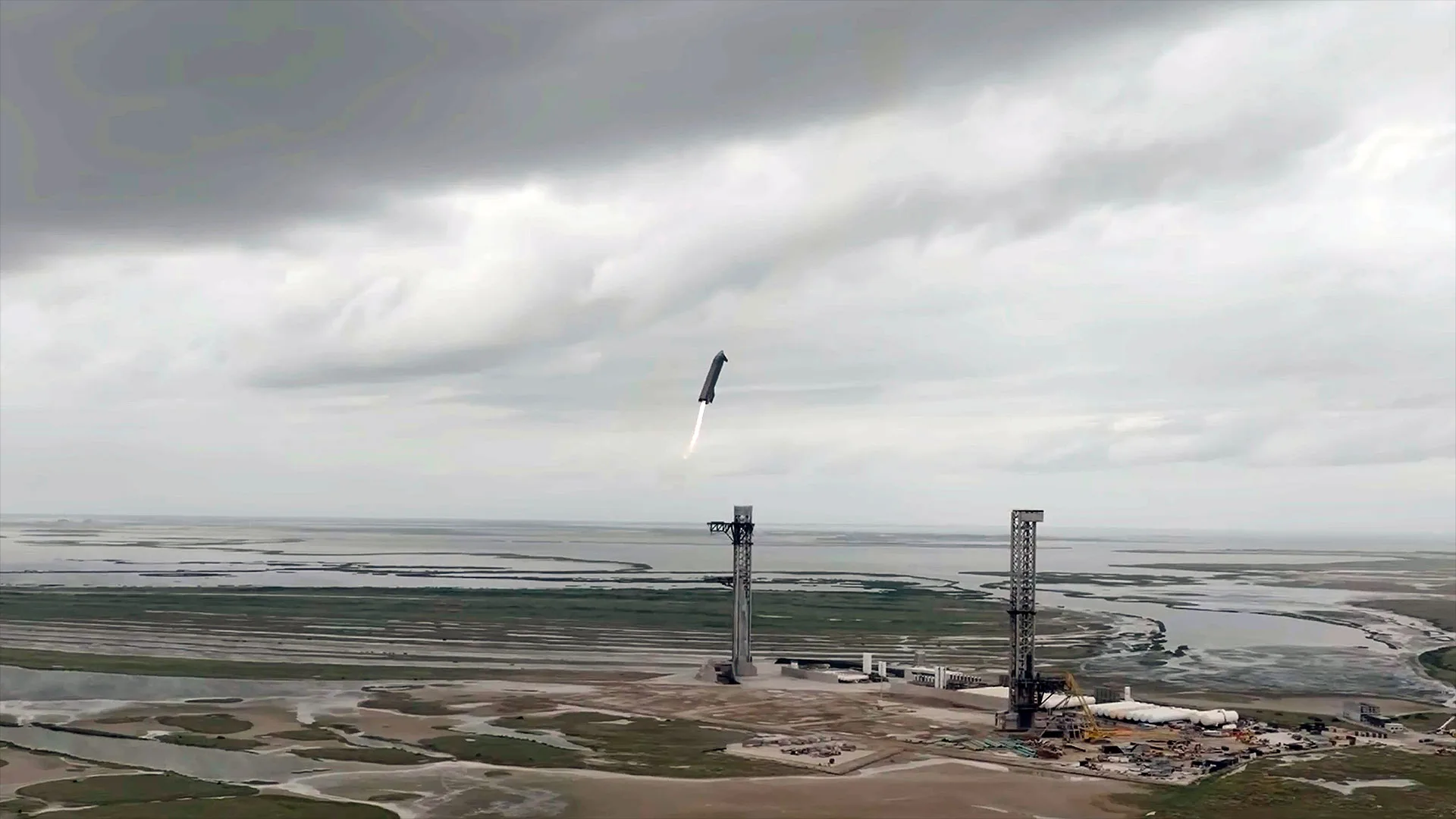
SpaceX has momentum, but its schedule has no room for complacency
There is a competitive angle here too. NASA has also contracted Blue Origin for lunar lander work through its Blue Moon program. SpaceX remains ahead in launch cadence and flight-test experience, but NASA does not award these contracts as trophies. It needs a lander that is safe, certifiable and available when an Artemis crew is ready to fly.
My read is that Starship Flight 15 was genuinely important because it retired a risk SpaceX could only study on paper and in simulations. The company now knows a Ship can execute the full return sequence and meet the tower precisely enough to be caught. That is not a minor achievement. But it is one component in a system whose hardest requirements still involve repeatability, orbital logistics and human safety. The real measure of Starship Flight 15 will be how quickly SpaceX turns that knowledge into routine operations.
The next few flights will tell us whether SpaceX has built a spectacular demonstration vehicle or the early version of a launch system that can reshape access to orbit. The difference will not be decided by another beautiful catch. It will be decided by how quickly the caught Ship flies again—and whether SpaceX can learn to move propellant around space with the same confidence it now brings to moving rockets around a tower.
Frequently Asked Questions
What did Starship Flight 15 accomplish?
Starship Flight 15 marked the first time SpaceX caught a returning Ship upper stage with the launch tower’s mechanical arms. The Super Heavy booster did not attempt its planned tower catch after a low-fuel alert and instead splashed down in the Gulf of Mexico.
Why does Starship need orbital refueling?
A Starship headed for the Moon or farther cannot realistically leave Earth with all the propellant it needs. SpaceX plans to refill a destination-bound Ship in low Earth orbit using tanker versions of Starship that carry liquid methane and liquid oxygen.
When will Starship support NASA’s Artemis moon program?
NASA currently plans to use a Starship-derived lunar lander on Artemis IV, targeted for 2028. SpaceX still needs to complete crew-cabin work and demonstrate in-space propellant transfer.