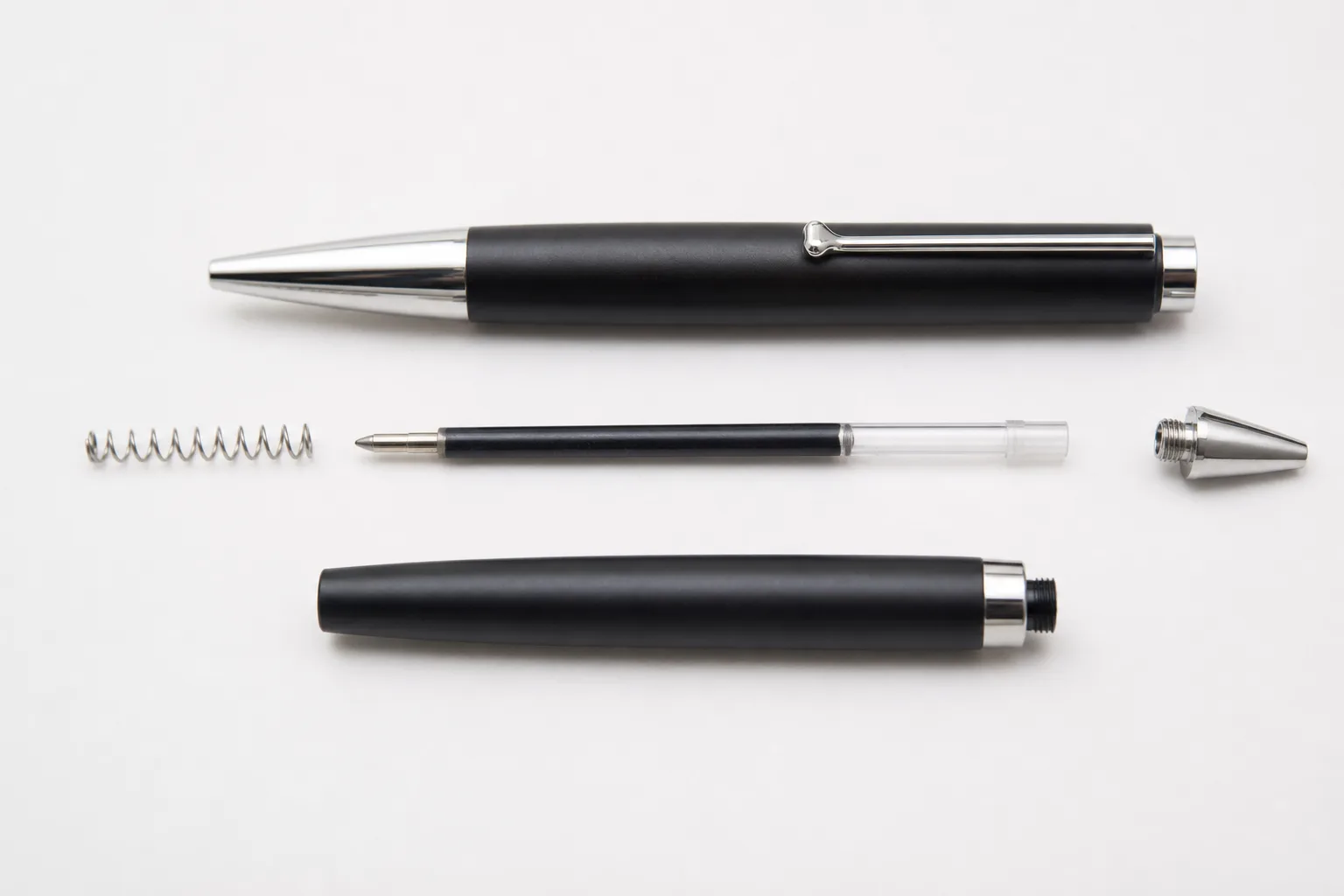
- Mechanical Pencil is a beautifully illustrated site dedicated to everyday engineering hidden inside familiar objects.
- The site breaks down everyday engineering in objects like Zippo lighters, clicky pens, and Pez dispensers.
- Creator uses original hand-drawn illustrations rather than photos or video to explain how mechanisms work.
- It’s a rare example of engineering education that’s genuinely fun, accessible, and visually compelling.
Table of Contents
The Everyday Engineering We Walk Past Without Noticing
There’s a quiet kind of everyday engineering happening in your pocket right now. The ballpoint pen you clicked absentmindedly during your last meeting. The lighter that snaps open with that satisfying flick. The Pez dispenser your kid won’t stop fiddling with. We interact with dozens of mechanical objects every single day and almost never stop to ask: how does that actually work?
A website called Mechanical Pencil is built entirely around that question. It’s a passion project featuring illustrated teardowns of common household objects — the kind of patient, curiosity-driven content that the internet used to be full of and increasingly isn’t. The site’s creator breaks open the everyday engineering inside familiar products and explains it through detailed, hand-drawn-style illustrations that are clear without being clinical.
It went quietly viral on Hacker News recently, and honestly, it’s not hard to see why.
What Mechanical Pencil Actually Does
The premise is simple. Pick an object — a clicky retractable pen, a Zippo lighter, a Pez dispenser — and pull it apart visually. Show what’s inside. Explain what each piece does. Make it make sense to someone who has never studied engineering a day in their life.
What separates this from a Wikipedia diagram or a dry patent drawing is the craft behind the illustrations. The images feel approachable. They guide your eye deliberately. You’re not staring at a 3D CAD render or squinting at a microscopic exploded-view schematic. The everyday engineering concepts are presented with the visual warmth of something a gifted teacher might sketch on a whiteboard in real time.
Take the clicky pen. Most people have some vague notion that there’s a spring in there somewhere. But the specific mechanism — typically a ratchet-style cam system where a rotating collar with angled teeth locks and releases the cartridge each time you press — is genuinely clever. It’s a small masterpiece of mechanical problem-solving. You push, it clicks down and locks. You push again, the cam rotates, the lock releases, the spring pushes the cartridge back up. No electronics. No batteries. Just geometry doing its job.
The Zippo lighter is another good one. That distinctive flip-open action isn’t accidental — the lid is deliberately weighted and the hinge is precisely tensioned so the top swings to exactly 135 degrees and stays there. The flint wheel, the wick, the felt packing soaked in lighter fluid — it’s a tiny system with interdependent parts, and once you see it laid out, you appreciate why the design has barely changed since George Blaisdell introduced it in 1933. Good everyday engineering tends to be durable.
Why This Kind of Content Matters More Than Ever
We’re living through a strange moment in technology where the objects around us are becoming increasingly opaque. Your smartphone is a sealed slab of glass. Your laptop’s battery is glued in place. Your smart speaker is a cylinder with no user-serviceable parts. The right-to-repair movement has been fighting this trend for years, arguing — rightly — that when people can’t open things up and understand them, they lose agency over the technology they depend on.
Sites like Mechanical Pencil push gently against that trend. They don’t need to be political about it. They just remind you that objects have insides, that those insides are interesting, and that understanding them is within reach. That’s a quietly radical act in an era of black-box everything.
There’s also something to be said about how this kind of everyday engineering education reaches people who would never pick up a mechanical engineering textbook. The barrier to entry here is basically zero. You don’t need background knowledge. You just need to be curious about why something clicks when you press it.
The Lost Art of the Illustrated Explainer
It’s worth thinking about the format choice here too. Video explainers are everywhere — YouTube has thousands of teardown channels, from the meticulous destruction tests at JerryRigEverything to the more educational content from channels like Practical Engineering. But illustrations have something video doesn’t: stillness. You can stare at a diagram. You can trace the path of a mechanism with your finger. You can come back to the same image three times and notice something new each time.
The illustrated teardown is actually one of the oldest forms of technical communication. Engineering drawings, anatomical sketches, architectural cross-sections — humans have been cutting away the surface of things to show what’s inside for centuries. Leonardo da Vinci was doing illustrated mechanical teardowns in the 1490s. What Mechanical Pencil’s creator is doing sits squarely in that tradition, updated for a browser tab.
Everyday Engineering Hidden in Plain Sight
The objects featured on the site aren’t chosen randomly. They’re things that have a story to tell mechanically — products where the design solution is elegant enough to be worth explaining. A Pez dispenser might seem trivial, but the spring-loaded magazine mechanism that feeds candy upward one piece at a time is a miniaturised version of the same basic logic used in firearm magazines and industrial parts feeders. Everyday engineering scales in surprising directions.
That’s the deeper point the site keeps making without ever stating it directly: the mechanical principles in your junk drawer are the same ones underpinning serious industrial machinery. Springs, cams, levers, ratchets, latches — these are not primitive technologies we’ve moved beyond. They’re everywhere, doing real work, mostly invisible.
Who’s Behind It?
The creator hasn’t made their identity a central part of the site’s identity, which is refreshing. The work is the point. There’s a sign-up form for updates when new illustrated teardowns are published, and the community response on Hacker News suggests a genuine audience hungry for more. Comments ranged from engineers appreciating the accuracy of the depictions to non-technical readers expressing the specific joy of finally understanding something they’d wondered about for years.
That’s a hard thing to achieve. Technical accuracy and genuine accessibility almost always trade off against each other. Most educational content either oversimplifies to the point of being useless or assumes too much background knowledge to reach a broad audience. Mechanical Pencil threads that needle more often than not.
What This Signals for Engineering Education
The viral moment on Hacker News points to something broader. There’s a real appetite for everyday engineering content that’s both honest about how things work and doesn’t require a degree to follow. Khan Academy built an empire on this idea in mathematics. Kurzgesagt does it for science at a cosmic scale. But the mechanical, physical, tactile world — the world of springs and hinges and carefully machined tolerances — gets comparatively little of this treatment.
That’s a gap worth filling. As consumer hardware gets more locked down and disposable, as fewer people grow up around workshops and garages where things get taken apart and reassembled, this kind of illustrated everyday engineering becomes more than entertainment. It becomes a form of literacy. Understanding that the objects around you were designed by someone, that they embody decisions and trade-offs, that they can be understood — that’s a perspective that changes how you move through the world.
Mechanical Pencil won’t fix the right-to-repair problem or reverse the trend toward sealed, unrepairable devices. But it does something arguably more foundational: it makes you look twice at the pen in your hand and wonder, genuinely wonder, what’s going on inside it. More of that, please.