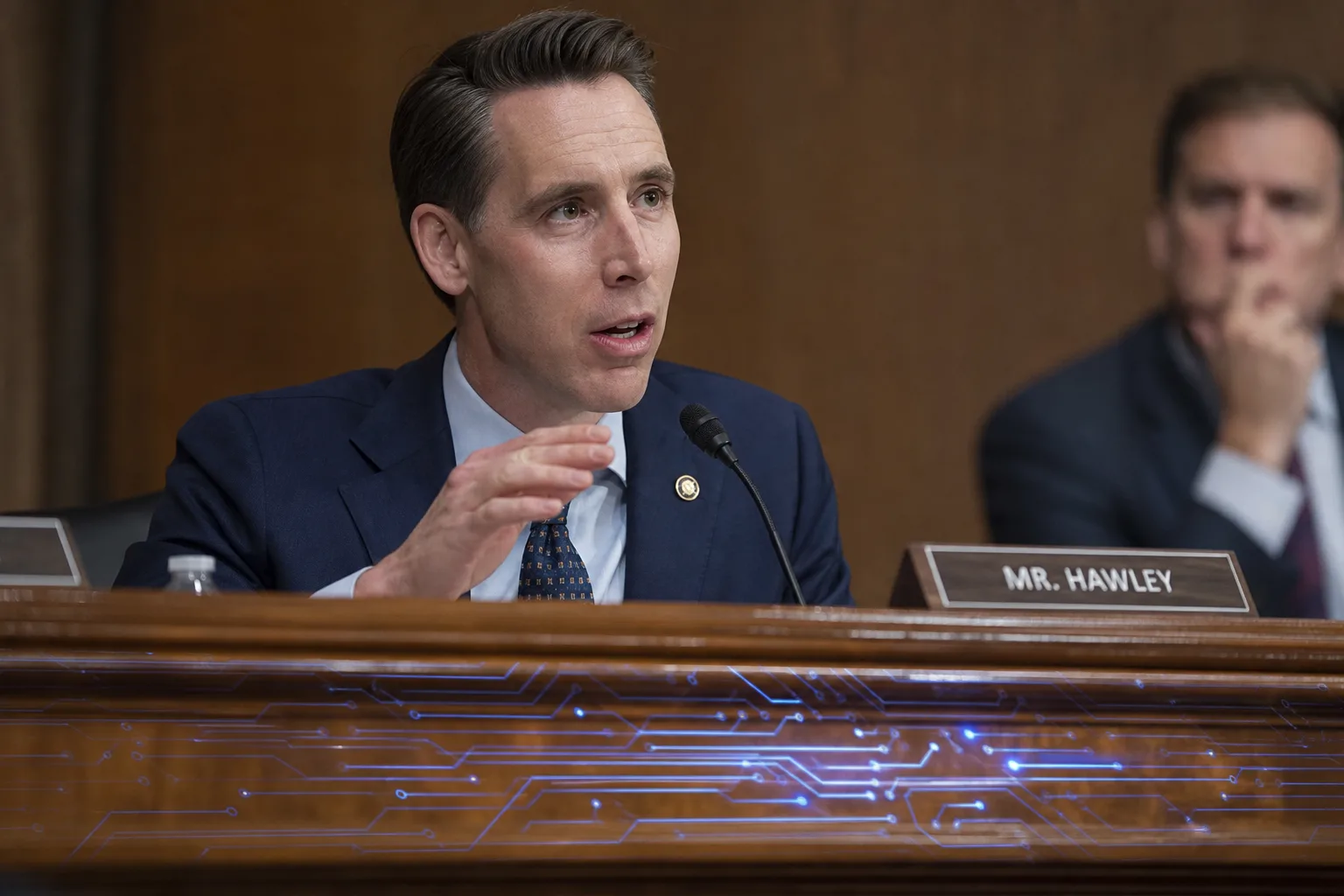
- Rep. Greg Casar’s AI tax on automation would make companies pay when machines replace human workers.
- The proposed AI tax on automation aims to fund retraining programs and income support for displaced employees.
- Casar’s proposal reflects a growing push in Congress to hold tech companies financially accountable for job losses.
- Critics argue taxing automation could slow innovation, but supporters say workers can’t wait for the market to self-correct.
Table of Contents
A Congressman Wants Big Tech to Pay for the Jobs AI Kills
Texas Rep. Greg Casar is putting a number on something most politicians have only vaguely gestured at: the cost of AI-driven job displacement. His proposed AI tax on automation would require companies to contribute financially when they replace human workers with artificial intelligence systems — effectively turning the productivity gains of machine labor into a funding source for the workers left behind. It’s a blunt instrument, and that’s partly the point.
The proposal comes at a moment when the conversation about AI and employment has shifted from theoretical anxiety to documented disruption. Across industries — from customer service and logistics to legal research and financial analysis — companies are openly discussing the headcount reductions that AI tools are enabling. Casar’s bill is one of the first concrete legislative attempts in the U.S. to put a price tag on that disruption. An AI tax on automation would mark a significant shift in how Congress approaches the economic fallout from machine-driven efficiency gains.
What the AI Tax on Automation Actually Proposes
The core idea is straightforward: when a business deploys AI in a way that displaces workers, it should pay into a fund that supports those workers. That fund could then finance job retraining programs, extended unemployment benefits, wage subsidies, or direct income support — the specifics of disbursement are still being debated, but the funding mechanism itself is the headline.
Casar, who represents a district that includes parts of Austin and San Antonio, has been vocal about labor rights throughout his time in Congress. His push for an AI tax on automation fits squarely within a broader political agenda focused on worker protections in a rapidly changing economy. Austin, notably, sits at the intersection of a booming tech sector and a significant service-worker population — people whose jobs are arguably most exposed to automation in the near term.
The proposal draws on a concept that’s been floating around policy circles for years. Back in 2017, Bill Gates famously floated the idea of taxing robots, arguing that if a human worker performing a task generates income tax, a robot doing the same job should generate comparable revenue for public services. Casar’s approach updates that logic for the generative AI era, where the displacement is less about physical robots on factory floors and more about software quietly absorbing white-collar and service tasks. Framing it as an AI tax on automation rather than a robot tax reflects exactly that evolution in how displacement actually happens today.
Why This Matters Beyond One Congressman’s Bill
Let’s be clear: this specific bill, in its current form, faces significant headwinds. The Republican-controlled House is not exactly hungry for new corporate taxes, and even among Democrats there’s disagreement about whether taxing innovation is the right response to automation anxiety. But the proposal’s political viability in the short term almost isn’t the point.
What Casar is doing — and what makes this worth paying attention to — is forcing a public accounting of who actually benefits from AI adoption and who absorbs the costs. Right now, that calculus is heavily tilted. Companies that deploy AI capture the efficiency gains directly and immediately. Workers who lose jobs to those systems face a labor market that hasn’t yet built meaningful infrastructure to absorb them. The AI tax on automation is, at its core, an argument that this imbalance needs correction at the policy level, not just the market level.
That argument is gaining traction globally. The International Labour Organization’s 2024 report on AI and jobs found that generative AI is likely to affect 40% of global employment, with clerical and administrative roles facing the sharpest near-term exposure. The ILO stopped short of predicting mass unemployment but was explicit that policy intervention would be needed to manage the transition. An AI tax on automation is exactly the kind of intervention that report was gesturing toward.
The Industry Pushback — and Why It’s Only Partly Right
Tech companies and their lobbyists will argue, predictably, that taxing AI deployment punishes innovation and disadvantages American firms competing against less-regulated international rivals. It’s not a frivolous argument. If U.S. companies face a cost that Chinese or European competitors don’t, there’s a real competitive dimension worth examining.
But the counterargument is equally valid: the absence of any redistribution mechanism doesn’t make the disruption go away, it just means the public sector — through unemployment insurance, Medicaid, food assistance — eventually absorbs the cost anyway. The question isn’t whether society pays for automation-driven displacement. It’s whether the companies generating the gains contribute to that bill or whether it falls entirely on taxpayers and displaced workers themselves. Proponents of an AI tax on automation argue that framing this as a burden on innovation misses that point entirely.
There’s also the question of what “discouraging innovation” actually means in practice. Corporate investment in AI right now is being driven by projected cost savings at a scale that a modest tax is unlikely to meaningfully offset. Microsoft, Google, Amazon, and Meta have collectively committed hundreds of billions to AI infrastructure over the next several years. A per-displacement levy isn’t going to stop that train. What it might do is give legislators a mechanism to channel some of those efficiency gains back into workforce resilience.
The Bigger Picture: AI Policy Is Finally Getting Specific
For the past two years, U.S. AI policy has been largely about safety, rights, and existential risk — important topics, but ones that don’t directly address the economic anxiety most working Americans actually feel about AI. Casar’s AI tax on automation proposal is notable because it’s concrete. It’s not about hypothetical superintelligence or deepfake regulations. It’s about the Amazon warehouse worker whose shift hours just got cut because a routing algorithm got smarter, or the paralegal whose firm just licensed an AI contract-review tool.
That specificity might be its greatest political asset — and its greatest target. Once you propose actual numbers, actual mechanisms, and actual company obligations, you invite detailed opposition. But you also invite serious negotiation, which is how policy actually moves.
Several states, including California and New York, are already exploring their own versions of automation impact fees and worker transition funds. Federal legislation would create consistency and prevent a patchwork of state-level rules that companies would simply route around. Whether Casar’s bill advances or not, it’s adding pressure on Congress to produce something coherent on AI and labor before the 2026 midterms — a timeline that suddenly feels very short given how fast deployment is accelerating.
The deeper issue is one of timing. AI capabilities are moving faster than any legislative process can match. Every month of inaction is a month in which the workforce transition is happening without a safety net. Casar’s bet is that making the cost visible — literally putting a tax line on it — is the fastest way to generate the political will to act. He might be right about that, even if the specific mechanism gets revised beyond recognition before anything passes. What matters is that the AI tax on automation debate is now happening in legislative chambers rather than just policy white papers, and that shift alone changes what’s politically possible.