

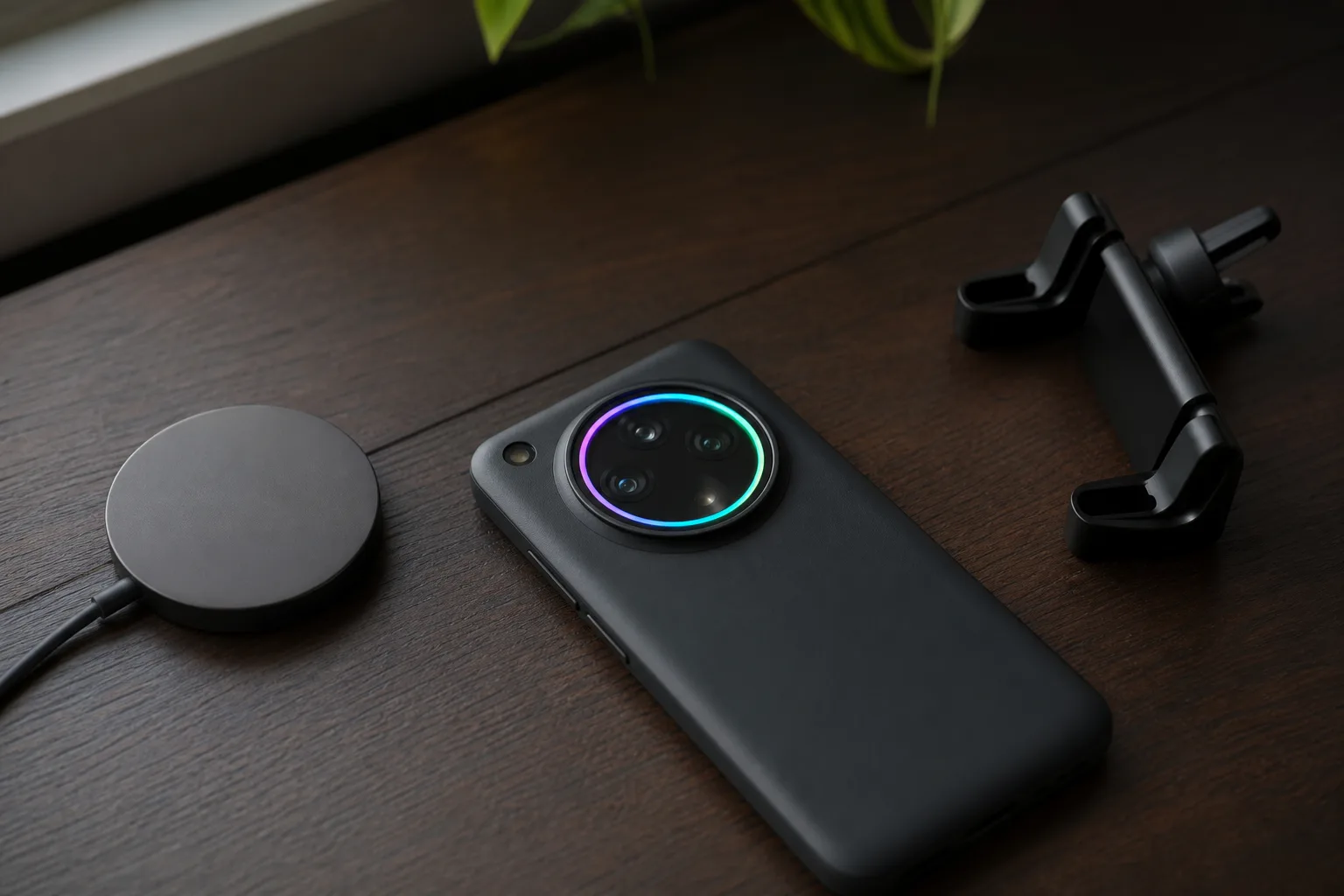
- My Pixel 11 wishlist starts with one request: make Pixel Glow useful instead of turning it into another decorative notification light.
- The same Pixel 11 wishlist also asks for a proper AI off switch and a much wider range of Pixelsnap magnetic accessories.
- If Google really removes the Pixel thermometer, it will be swapping a genuinely practical sensor for a feature that still has something to prove.
- Silicon-carbon batteries could give future Pixels the endurance Google needs without making them heavier slabs.
Table of Contents
The Pixel 11 wishlist starts with one demand: fewer gimmicks
Google’s Pixel phones have always been at their best when they solve small, irritating problems with a bit of quiet cleverness. Call screening. Now Playing. Camera processing that can rescue a dim restaurant photo without requiring a photography degree. That’s why my Pixel 11 wishlist is less interested in a flashy spec-sheet duel with Samsung and more interested in whether Google still remembers what made Pixel distinct.
The company is expected to unveil its next hardware crop on August 12, including the Pixel 11 line, a redesigned foldable and the Pixel Watch 5. The rumor drawing the most attention is called Pixel Glow: a multicolored rear light, apparently circular and located where the flashlight hardware sits today. It could look great. But Google has a long history of introducing hardware flourishes that feel a little undercooked, then moving on before they become part of anyone’s daily routine.
Remember Soli radar on the Pixel 4? The phone could sense a hand moving toward it, which was neat in precisely the way a mall kiosk demo is neat. Then it vanished. Pixel Glow needs to avoid that fate.
Pixel Glow has to earn its place
If the leaked design is accurate, Pixel Glow could be a genuinely useful way to reduce compulsive screen-checking. A color or pattern could tell you whether a notification is from a close contact, whether a timer has ended, or whether the car outside is actually your rideshare. That’s a better proposition than another lock-screen animation designed to make you pick the phone up again.
My Pixel 11 wishlist for Glow is fairly demanding. Let it show charging progress from across a room. Let it act as a camera countdown visible to everyone in a group photo. Tie it into Android’s At a Glance information for deliveries, travel alerts and ride pickups. Give it a subtle fill-light mode for close-up photos. And, crucially, provide granular controls. Nobody needs their bedside table pulsing blue because a retailer has emailed a coupon at 2 a.m.
Google could look to the old notification LEDs on Android phones, or Nothing’s Glyph interface, for the basic lesson here: lights work when they communicate at a glance. They become exhausting when every app treats them like a miniature Times Square billboard. Pixel Glow should convey priority, not merely activity.
There’s an awkward wrinkle, though. Reports suggest Google may remove the thermometer introduced on the Pixel 8 Pro to accommodate the new lighting hardware. That would be a strange trade. The temperature sensor is a niche feature, yes, but it is concrete, understandable and occasionally very handy for checking whether a child or family member may have a fever. A colored ring is only an upgrade if it earns more use than the sensor it replaces. That trade-off is central to this Pixel 11 wishlist.
The Pixel 11 wishlist needs magnets and meaningful control
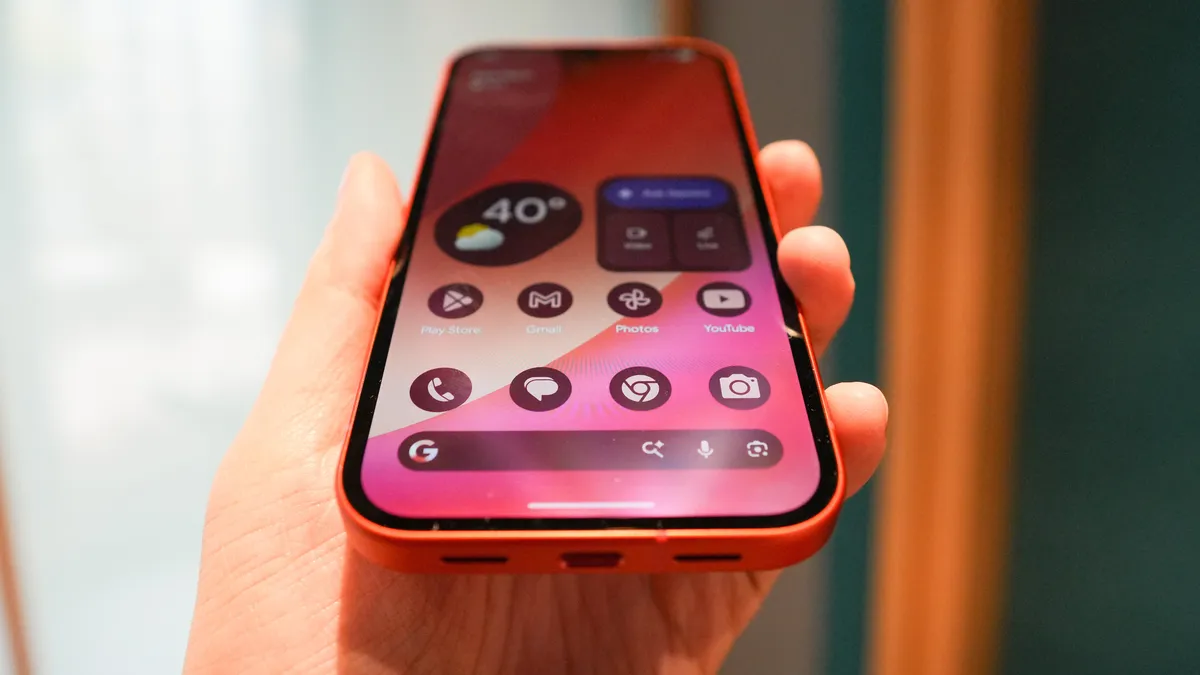
Google’s Pixelsnap system, introduced with the Pixel 10 lineup, was an overdue acknowledgment that Apple got something right with MagSafe. Magnets sound trivial until you use them every day: a car mount that doesn’t involve clamps, a bedside charger that lands in the right spot, a wallet that comes off when it needs to. It’s the smartphone equivalent of having hooks where you actually need hooks.
The problem is that a magnetic ring by itself is not an ecosystem. Google needs first-party Pixelsnap chargers, stands, car mounts, battery packs and perhaps a slim grip accessory. Better yet, it should publish a clear compatibility standard so reputable accessory makers can build around it without buyers playing a grim guessing game about alignment and charging speed. Apple’s accessory advantage wasn’t created by magnets alone; it came from consistency and volume. A broader accessory ecosystem remains an essential part of the Pixel 11 wishlist.
The other missing control is software-related. Google has pushed Gemini and other AI features throughout recent Pixels, and some are legitimately useful. Photo editing, Video Boost and conversational assistance have their moments. But not everyone wants generative tools threaded through every surface of a device they own.
A real AI off switch would be the most consumer-friendly move Google could make. Call it ‘Classic mode’ or ‘Local processing only,’ but make its purpose plain: disable optional generative and cloud-dependent AI features, limit background AI prompts, and preserve ordinary Android functions. Google already offers privacy settings scattered across accounts and apps; what it lacks is a single, legible choice. For a company trying to convince people that AI is helpful rather than inescapable, that choice would speak volumes.
There is a business argument too. Reduced cloud processing may ease battery drain and data concerns. More importantly, it would tell skeptical buyers that Google believes consent is a product feature, not an obstacle to be designed around.
Battery technology is the less glamorous Pixel 11 priority
The least photogenic item on this Pixel 11 wishlist may also matter most after six months of ownership: battery chemistry. Several Chinese phone makers, including OnePlus and Motorola, have moved toward silicon-carbon battery designs that can pack more capacity into the same physical space than conventional lithium-ion cells. Devices using this approach have reached capacities around 6,000mAh and beyond, while Google’s recent flagship ceiling has been roughly 5,100mAh.
Capacity is not the only measure of endurance, of course. Chip efficiency, modem behavior, display tuning and background software all matter. Google’s Tensor-based Pixels have improved, but battery life has too often felt like something users are asked to manage rather than trust. A larger cell would give Google more room to absorb the demands of bright displays, on-device models and 5G without making the phone thicker. For this Pixel 11 wishlist, that matters more than another marginal spec-sheet flourish.
Silicon-carbon chemistry is not a magical fix. It introduces sourcing, manufacturing and longevity questions, and the biggest phone brands tend to move carefully when battery safety is involved. They have good reason to: nobody in this industry has forgotten Samsung’s Galaxy Note 7 crisis. Still, the technology is already arriving in consumer phones, and Google cannot spend another cycle acting as if a 5,000mAh-class battery remains inherently premium.
Google has not confirmed the Pixel 11 specifications, Pixel Glow or the fate of the thermometer. That uncertainty matters. But the direction is clear enough: the company needs to make the next Pixel feel considered, not merely AI-coated. The best version of this Pixel 11 wishlist is a phone that gives people more useful signals, more accessory choice, more control over automation and enough battery to stop thinking about the charger before dinner.
Frankly, that would be more distinctive than any glowing circle.
For now, Google’s official hardware store offers the clearest view of its current Pixel and accessory strategy. August will show whether the company is ready to turn that strategy into something people can actually live with.
Frequently Asked Questions
When is Google expected to announce the Pixel 11?
Google has scheduled a Pixel hardware event for August 12, according to the source material. The company is expected to show the Pixel 11 family alongside a redesigned Fold and the Pixel Watch 5, though final product details remain unconfirmed until Google’s presentation.
What is Pixel Glow expected to do?
Leaks point to Pixel Glow as a multicolored circular rear light positioned in the current flashlight location. The source suggests it could be used for notifications and potentially for functions such as charging status, camera timers, delivery updates, or photo fill light.
Why does this Pixel 11 wishlist call for an AI kill switch?
An AI kill switch would give users a way to turn AI off entirely. The source suggests options such as local processing only or a classic mode, potentially as a privacy measure or a way to save battery life.

