

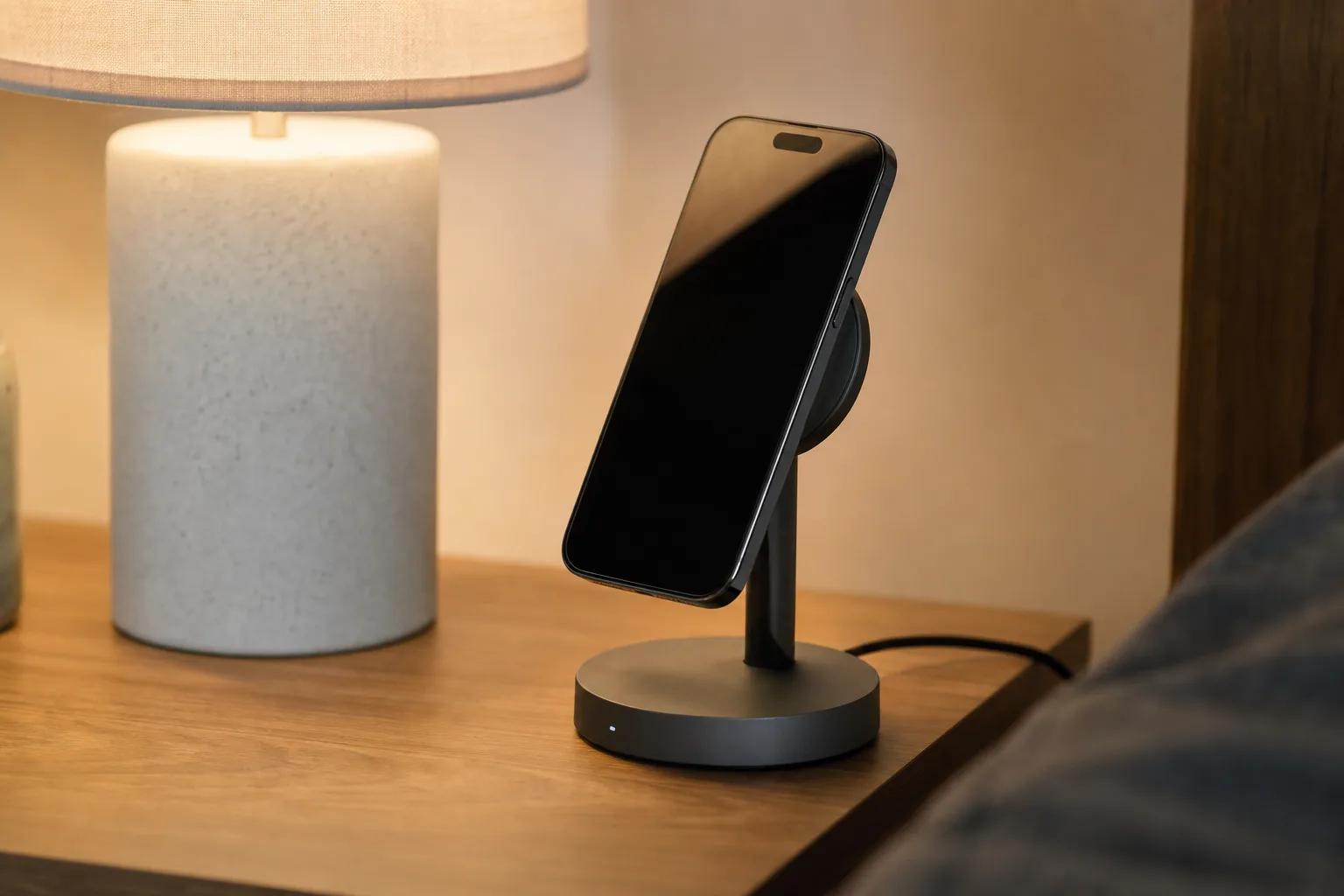
Picking the right charger sounds straightforward until you’re standing in front of a shelf full of pucks, pads, and stands, all claiming to be the best option for your iPhone. MagSafe wireless chargers have matured considerably since Apple first introduced the magnetic system with the iPhone 12 back in 2020 — and in 2026, the ecosystem is broader, faster, and genuinely more useful than most people realise.
- The best MagSafe wireless chargers now support Qi2, meaning they work with Android phones like the Google Pixel 10 series too.
- MagSafe wireless chargers running Qi2.2 can deliver up to 25 watts on the iPhone 17 series and Pixel 10 Pro XL.
- Qi2 certification is the key standard to look for when shopping for MagSafe wireless chargers — it guarantees magnetic alignment and fast charging compatibility.
- StandBy mode on iOS 17 and later turns your iPhone into a bedside display when placed on a landscape charging stand.
Table of Contents
What MagSafe Wireless Chargers Actually Are (and Why Qi2 Matters)
At its core, MagSafe is Apple’s accessory platform built around a ring of magnets embedded in the back of the iPhone. That ring does two things: it precisely centres a wireless charging coil for more efficient power transfer, and it gives third-party accessories — wallets, mounts, cases — a reliable way to attach to the phone. Apple integrated MagSafe into every iPhone from the 12 through to the 17, with one notable exclusion: the iPhone 16e doesn’t get the magnetic ring, which is a frustrating carve-out that limits its accessory compatibility.
Then there’s Qi2, the open standard that Apple helped the Wireless Power Consortium develop, and which is fast becoming the term you actually want to look for when shopping. Qi2 brings magnetic alignment and 15-watt fast charging to any device — not just iPhones. The Google Pixel 10 lineup (all models except the 10a) now supports Qi2 natively. Other Android phones can add it through a compatible case. That convergence is significant: it means a single, well-chosen charger can serve your entire household regardless of what phones people use. MagSafe wireless chargers built to the Qi2 standard are the obvious beneficiaries of that shift.
The latest development is Qi2.2 — also marketed as Qi2 25W — which pushes the charging ceiling to 25 watts for supported devices. Right now that means the iPhone 17 series and the Pixel 10 Pro XL. If you’re running either of those phones, MagSafe wireless chargers with Qi2.2 certification are worth seeking out specifically.
The MagSafe Wireless Chargers We Tested and How We Tested Them
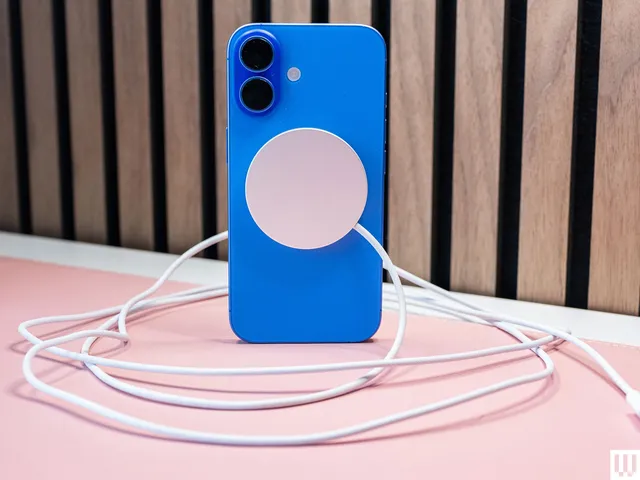
Every MagSafe wireless charger recommendation in this piece went through at least a week of real-world use — not a controlled lab environment, but on an actual nightstand and work desk. Testing covered an iPhone 16, an iPhone 12, and a Pixel 10 Pro XL, which gives a meaningful cross-section of Qi2 compatibility. Where possible, charging speeds were timed, magnet strength was assessed, and any extra charging pads or USB ports were put through their paces. That approach strips out spec-sheet flattery and surfaces the things that actually matter day to day: does it stay put? Does it run hot? Is the cable long enough to reach the wall without rearranging your furniture?
The market has genuinely improved. A year ago, the Anker MagGo Wireless Charger Pad was the top recommendation among MagSafe wireless chargers — a solid Qi2 puck with a durable aluminium body, a permanently attached five-foot USB-C cable, and a 15-watt output. It’s been nudged down the rankings by Apple’s own redesigned charger, but it remains one of the cleanest, most no-fuss options at just $26 if you don’t need a power adapter included.
Stands, Pads, and Convertible Chargers: Which Form Factor Is Right for You?
Form factor is one of the most consequential choices you’ll make, and it depends almost entirely on how you use your phone while it charges. A flat pad is simple and versatile — good for a bag or a work bag — but it doesn’t let you see or interact with your screen without picking the phone up. A stand, by contrast, props the phone up, which is where StandBy mode becomes genuinely compelling. MagSafe wireless chargers in stand form are the natural home for this feature.
Introduced with iOS 17, StandBy mode turns your iPhone into a bedside clock or widget dashboard when placed landscape on a MagSafe stand. On iPhones with an always-on display, it can persist through the night. You can cycle through clock faces, curated photo albums, or widget stacks showing calendar events, weather, and reminders. It’s a small feature that’s easy to dismiss until you actually use it — then it’s hard to go back to staring at a blank charging screen. Android users on Qi2 stands get something similar through the built-in screensaver settings: a digital or analogue clock, a Google Photos slideshow, or a Google Home dashboard for quick smart-home controls.
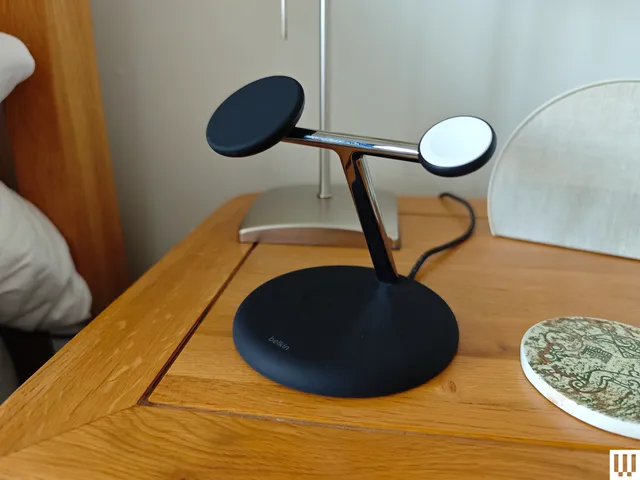
The Belkin BoostCharge Pro Convertible Magnetic Wireless Charging Stand ($55) is a good illustration of how to handle both use cases in one product. Its magnetic pad lies flat for standard Qi charging on older phones and tilts up as a stand for MagSafe iPhones in portrait or landscape mode. It charges at up to 15 watts, ships with a USB-C cable and a power supply — a detail worth flagging because more MagSafe wireless chargers than you’d expect arrive without one — and the hinge mechanism feels solid rather than something that’ll loosen after a month of nightstand use.
What Didn’t Quite Make the Cut (and Why It Still Matters)
A few chargers that were tested closely but didn’t earn a top-tier spot are worth discussing, because the reasons they fell short reveal something about what to look for in MagSafe wireless chargers.
The Mous Dual Charging Station ($100) is a striking piece of hardware — the kind of thing that looks intentional on a desk rather than purely utilitarian. But at that price point, its charging speeds are a disappointment: 15 watts on the primary MagSafe pad is fine, but the second Qi pad maxes out at 5 watts, which is barely faster than plugging into a laptop USB port. A separate Apple Watch charger add-on is available for $55 extra, which also caps at 5 watts and connects magnetically to the station. The total spend to fully kit it out gets uncomfortably high for specs that trail cheaper options.
The Casetify Magnetic Wireless Charger ($38) takes a different angle entirely: it sells on aesthetics, offering over 600 designs including cat art and sports-team graphics. That’s a genuinely differentiated pitch in a category where most chargers are black or white circles. Technically, though, it’s a Qi charger with MagSafe alignment rather than a Qi2 charger — meaning it tops out at 7.5 watts for MagSafe iPhones specifically, and up to 15 watts for other Qi devices. If design matters as much as speed, it’s a reasonable trade-off. If you want maximum charge rate, it’s not the right call.
The Broader Shift: MagSafe Wireless Chargers Are No Longer Just an iPhone Story
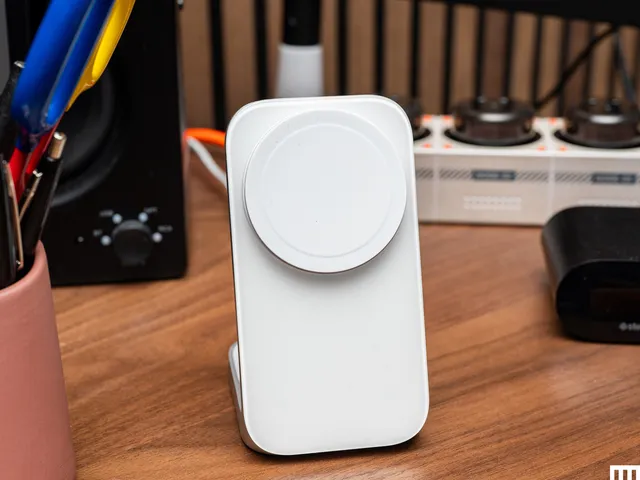
The most underappreciated development in this space over the past year isn’t faster wattage or smarter stands — it’s the ecosystem opening up. When Apple launched MagSafe with the iPhone 12, it was explicitly an Apple-first technology. The Qi2 standard changed that, and Google’s decision to build native Qi2 into the Pixel 10 lineup accelerates the trend. Samsung hasn’t announced native Qi2 support yet — its Galaxy phones still rely on their own wireless charging stack — but the direction of travel is clear.
What this means practically is that buying high-quality MagSafe wireless chargers in 2026 isn’t a bet on one platform anymore. It’s a purchase that’s increasingly likely to outlive your current phone, work with whatever your next phone is, and serve the other devices in your household. The $26 Anker pad or the $55 Belkin convertible stand aren’t just iPhone accessories. They’re becoming household infrastructure.
Qi2.2’s 25-watt ceiling is the next frontier, and if adoption follows the same pattern as Qi2 — where Apple helped establish the standard and the Android ecosystem gradually caught up — we should expect more phones to hit that tier within the next hardware cycle. Choosing MagSafe wireless chargers that support the latest standard now means you won’t need to replace them when your next phone can actually use the extra speed.
Frequently Asked Questions
What are the best MagSafe wireless chargers for everyday use?
The best MagSafe wireless chargers for everyday use are those that support Qi2 certification, deliver at least 15 watts, and work across multiple devices. Stands that support both portrait and landscape orientation are especially useful, since they enable StandBy mode on iPhones running iOS 17 or later.
Do MagSafe wireless chargers work with Android phones?
Yes — some Android phones, including the Google Pixel 10 series (excluding the 10a), natively support Qi2, which is fully compatible with MagSafe chargers. Other Android phones can gain magnetic charging by using a Qi2-compatible case, effectively adding MagSafe-style alignment without built-in support.
What is the difference between MagSafe and Qi2?
MagSafe is Apple’s proprietary accessory system, while Qi2 is an open standard developed with the Wireless Power Consortium that Apple helped shape. Both use a magnetic ring for alignment and can deliver up to 15 watts, but Qi2 is available across any device — not just iPhones — making it the more universal choice.
How fast do MagSafe wireless chargers charge an iPhone?
Standard MagSafe and Qi2 chargers top out at 15 watts for most iPhones. The newer Qi2.2 standard — supported by the iPhone 17 series and Pixel 10 Pro XL — pushes that ceiling to 25 watts, meaningfully cutting down the time needed to go from flat to full.
Is the iPhone 16e compatible with MagSafe wireless chargers?
No. Apple excluded the iPhone 16e from MagSafe support, and the source does not indicate it supports standard Qi wireless charging as an alternative. It is the sole exception within the otherwise MagSafe-compatible iPhone 12 through iPhone 17 lineup.

