A year ago, calling Verizon the best US carrier heading into 2026 would have earned you some serious side-eye from anyone who’s followed the industry. Big Red spent years being the carrier you used because you had to — the one with the broadest rural coverage but also the steepest bills and the most aggressive upsells. And yet, halfway through 2026, Verizon has somehow become the most defensible option among the big three postpaid players. AT&T and T-Mobile, the companies that spent years eating Verizon’s lunch on price and reputation, have both managed to stumble badly enough to hand the crown back.
- Verizon is the best US carrier for postpaid in 2026, thanks to its new Simplicity plan starting at $30 per line.
- The best US carrier title doesn’t go to AT&T or T-Mobile — both have weakened guarantees and raised effective costs in 2026.
- T-Mobile has eroded its customer-friendly reputation by killing legacy plans and dropping inclusive taxes and fees pricing.
- For most people, prepaid still beats any postpaid option — Verizon’s own Visible is a serious alternative to consider.
Table of Contents
Why AT&T and T-Mobile Have Lost the Plot
Let’s start with AT&T, because its 2026 strategy is the easier one to dismiss. The company has leaned hard into bundling — pairing its cellular plans with home broadband in an effort to lock customers into a broader AT&T ecosystem. That’s a reasonable play if you’re already an AT&T fiber customer, but it’s a terrible reason to choose a cellular plan. When AT&T rolled out updated core postpaid plans earlier this year, the response was underwhelming. They weren’t worse, exactly, but they weren’t better either — more of a lateral shuffle than a genuine improvement for new subscribers. Anyone seriously trying to identify the best US carrier for their needs should find AT&T’s 2026 lineup difficult to recommend on its own merits.
T-Mobile’s trajectory is more complicated and, honestly, more disappointing. The Un-carrier brand was built on a simple premise: stop doing the things that make people hate carriers. No contracts, transparent pricing, taxes and fees included. For a while, it worked spectacularly. T-Mobile’s subscriber growth from roughly 2012 through the early 2020s is one of the more compelling turnaround stories in American telecom. But somewhere between acquiring Sprint and crossing 100 million subscribers, something shifted. The scrappy challenger became the incumbent it once mocked.
The list of T-Mobile’s recent retreats is getting long. The company has progressively weakened its price-lock guarantees — the very promises that differentiated it from AT&T and Verizon for years. It moved away from all-inclusive taxes-and-fees pricing, meaning customers now face the same bill-shock surprises they once fled to T-Mobile to escape. And perhaps most significantly for loyal long-term customers, T-Mobile has been actively sunsetting legacy plans, pushing users onto newer, pricier tiers. That’s a direct hit to the people who stuck with the company through its scrappier years. It’s hard to argue T-Mobile deserves the best US carrier title when it’s retreating on the exact promises that made it worth choosing.
To be fair, T-Mobile hasn’t been entirely tone-deaf. Its Better Value Plan is genuinely competitive for families, and the carrier has introduced a couple of loyalty-focused options. But these feel like exceptions carved out to quiet criticism rather than a sign of a broader philosophical shift back toward the customer. For a new subscriber walking in off the street today, the standard T-Mobile postpaid experience is harder to justify than it was even two years ago. If you’re evaluating which is the best US carrier for a new postpaid line, T-Mobile’s current standard tiers simply don’t make a compelling case.
The Best US Carrier Case for Verizon’s Simplicity Plan
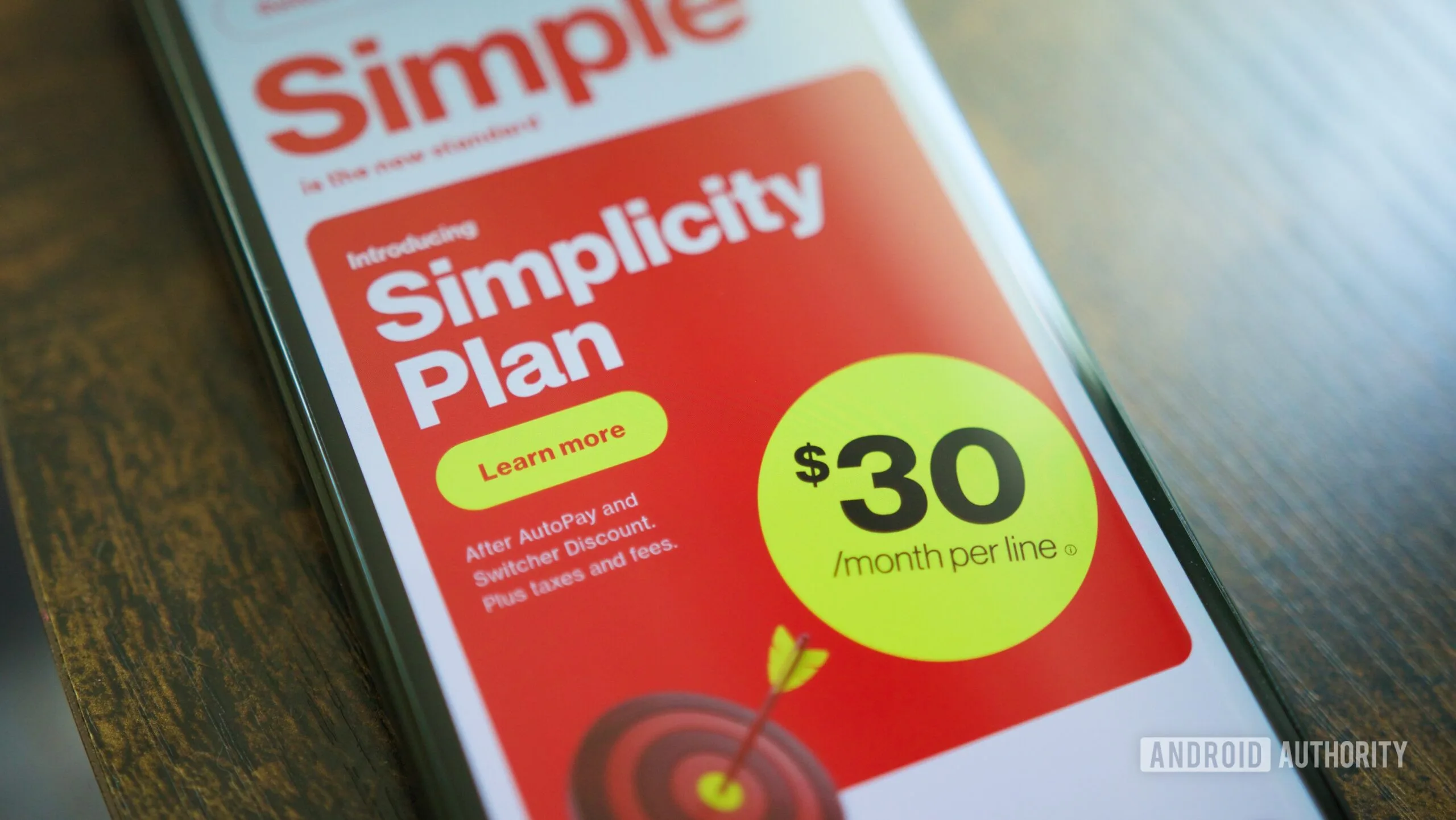
So where does that leave Verizon? In a strange position, actually. The company that for years competed primarily on network quality — and charged a premium for the privilege — is now doing something that looks almost uncomfortably like what T-Mobile used to do: competing on price. Verizon’s Simplicity plan is the clearest expression of that shift, and it’s the main reason the carrier deserves another look in 2026. For postpaid subscribers specifically, the best US carrier argument now runs squarely through Verizon’s updated pricing strategy.
The headline number is $30 per line per month for unlimited talk, text, and prioritized high-speed data. That rate applies whether you’re on one line or four, and it applies to switchers coming in from other carriers. Stay with Verizon and you’re paying $45 instead — still competitive, but noticeably higher. Taxes and fees are charged separately, which is worth factoring into your budgeting, but even with those added, Simplicity undercuts virtually every other postpaid option from a major carrier. That includes entry-level tiers from AT&T and T-Mobile that often come with deprioritized data.
There are real trade-offs, though, and they matter. Verizon Simplicity doesn’t include subsidized phones. You’re either bringing your own device or paying separately for financing. Verizon does offer upgrade add-ons that let you swap hardware once a year, but these cost extra and, over the long run, don’t typically save money versus buying outright. For anyone upgrading frequently, this is a meaningful gap compared to traditional postpaid plans. It’s also worth remembering that Verizon’s history with customers hasn’t always been spotless — the company has its own track record of quiet price hikes and fee additions that eroded trust over the years. Simplicity is a fresh start, but trust has to be rebuilt over time, not just announced. Calling Verizon the best US carrier comes with that asterisk firmly attached.
How Verizon Stacks Up Against Its Own Prepaid Competition
Here’s where the story gets genuinely interesting. When you compare Verizon Simplicity to AT&T and T-Mobile’s postpaid offerings, it looks strong. But zoom out and put it next to the prepaid market — including Verizon’s own Visible brand and MVNOs like US Mobile — and the picture becomes much murkier. Deciding which is the best US carrier gets considerably more complicated once prepaid enters the conversation.
Visible, which runs on Verizon’s network, offers plans that compete directly with what Simplicity charges, often with fewer strings attached. US Mobile gives users the ability to mix and match networks and plans in ways that no postpaid carrier currently matches. The MVNO market in the US has matured significantly over the past few years, to the point where the coverage and reliability gaps that once justified paying postpaid premiums have largely closed for most urban and suburban customers.
This is why the broader recommendation for most readers remains the same: prepaid wins. The value proposition is simply better. You’re not locked in, the prices are lower, and the networks underneath are often identical — because many MVNOs literally run on the same towers as the big three. If you’re on T-Mobile’s network via an MVNO, you’re getting T-Mobile coverage. Same goes for Verizon-based MVNOs. In that context, asking which is the best US carrier is really two separate questions — one for postpaid, one for the broader market including prepaid and MVNOs.
That said, some people are committed to postpaid — whether for corporate reimbursement, credit reasons, device financing preferences, or simply brand familiarity. For those users, the current postpaid landscape makes Verizon the least-bad option among the major carriers and the most credible best US carrier pick in the postpaid segment. ‘Least bad’ isn’t a ringing endorsement, but in a market where your alternatives are a company bundling broadband and a former disruptor that’s quietly walking back its own promises, it’s a meaningful distinction.
What This Says About the State of US Telecom
There’s a bigger story here about what’s happening to competition in American wireless. The US market has effectively consolidated to three major network operators, and without the Sprint wildcard or a credible fourth entrant, the competitive pressure that drove T-Mobile’s Un-carrier era has largely evaporated. When T-Mobile was fighting for survival, it innovated aggressively on pricing and customer experience. Now that it’s a dominant player with over 100 million subscribers, the incentive structure has changed. Growth at all costs becomes profitability and margin expansion. Shareholders win; customers feel the difference. The question of which company deserves the best US carrier label has become less about excellence and more about which carrier is making the fewest mistakes.
Verizon’s current push toward competitive pricing may itself be a response to subscriber pressure rather than a permanent philosophical commitment. The carrier lost ground during T-Mobile’s surge and is now fighting to win customers back. Whether that pricing discipline holds once Verizon recovers the subscribers it wants is a legitimate question. The company has raised rates before, and Simplicity’s terms — particularly the switcher-only discount — suggest it still prioritizes acquisition over retention.
The real pressure on all three carriers will ultimately come from outside the postpaid segment entirely. As MVNOs, eSIM flexibility, and global roaming options continue to improve, the traditional postpaid model looks increasingly like a legacy construct held together by habit and subsidized hardware. For now, Verizon has made the smartest moves of the big three to stay relevant in that shifting landscape and to hold on to the best US carrier designation among postpaid options. But the carriers that will genuinely matter in five years might be ones that haven’t needed a press release to prove they respect their customers.
Frequently Asked Questions
Which is the best US carrier for postpaid plans in 2026?
Verizon currently edges out AT&T and T-Mobile for postpaid service in 2026. Its Simplicity plan offers unlimited prioritized data for as little as $30 per line per month when switching from another carrier, making it the most competitive postpaid option among the big three right now.
What is the Verizon Simplicity plan and how much does it cost?
Verizon Simplicity is the company’s entry-level postpaid plan offering unlimited talk, text, and prioritized high-speed data. It costs $30 per line per month for switchers, or $45 per month for existing customers. It doesn’t include subsidized phones, but add-ons allow annual upgrades.
Why is T-Mobile no longer recommended for new postpaid customers?
T-Mobile has weakened its price guarantees and moved away from inclusive taxes-and-fees pricing in recent years. While its Better Value Plan is an exception, new customers on standard postpaid tiers get comparatively poor value for the price.
Is prepaid or postpaid better for most people in 2026?
Prepaid wins for the majority of users. Services like Verizon’s Visible, US Mobile, and other prepaid players offer competitive options at lower cost. Postpaid only makes sense for those who specifically want a carrier-direct plan.