Smartphone prices are climbing faster than the features justify, and buyers are starting to notice. A reader poll run by Android Authority — pulling in responses from over 2,000 people — asked a simple but revealing question: if you had to choose an older Android phone over a brand-new 2026 model, which one would you actually buy? The results are a snapshot of where consumer sentiment is heading as the annual upgrade cycle loses its grip.
- Older Android phones are gaining appeal in 2026 as rising flagship prices push buyers toward previous-generation devices.
- The Samsung Galaxy S25 topped a 2,000-reader poll on older Android phones with 28.8% of the vote.
- The Google Pixel 9a came in a close second at 25.6%, valued for being roughly $200 cheaper than the Galaxy S26.
- Reader comments challenged the poll itself — some argued the Galaxy S23 Ultra delivers 95% of a 2026 flagship for far less.
Table of Contents
The Poll That Put Older Android Phones to the Vote
The poll was tied to a feature covering five specific older Android phones that still make a strong case for themselves in 2026: the Samsung Galaxy S25, Google Pixel 9a, Samsung Galaxy A56 5G, Motorola Moto G Stylus 2025, and the Motorola Razr 2025. Each was framed as a smarter alternative to its current-year successor — not because they’re identical, but because the gap between generations has narrowed to the point where paying full price for a 2026 model is increasingly hard to justify.
With more than 2,000 readers casting votes, the results carry some genuine weight. This isn’t a casual straw poll — it’s a decent-sized sample of people who are actively thinking about Android purchases and care enough to weigh in.
Samsung and Google Lead the Pack
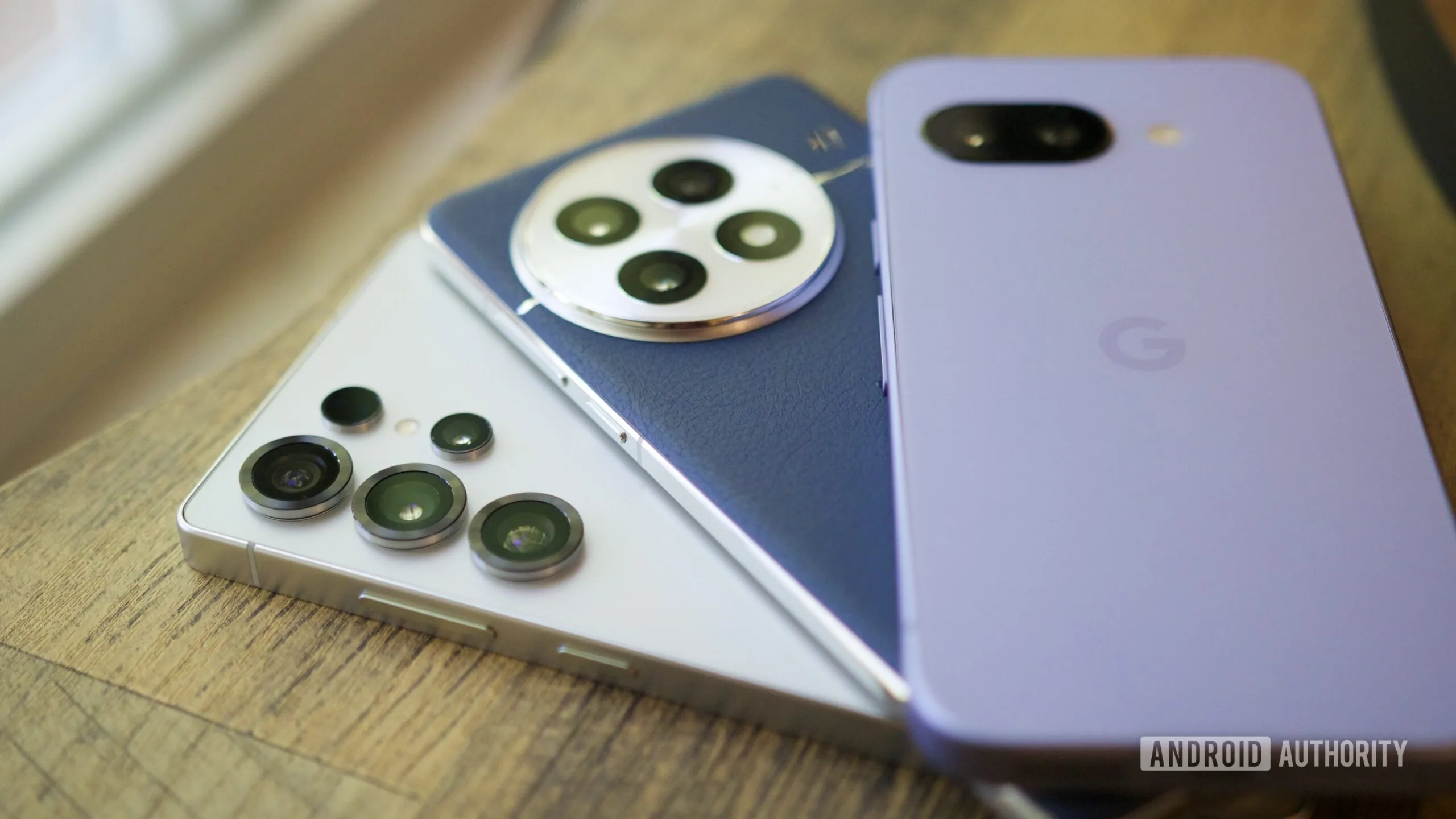
The Samsung Galaxy S25 came out on top with 28.8% of the vote. That’s not a landslide, but it’s a clear lead — and it makes intuitive sense. For anyone who was already eyeing the Galaxy S26, the S25 offers an experience that’s nearly indistinguishable on paper. Same design language, similar camera system, the same core Android experience with Samsung’s One UI on top. You’re essentially getting last year’s best for a meaningfully lower price. Among older Android phones, the S25 is the easiest recommendation for Samsung loyalists.
Close behind was the Google Pixel 9a at 25.6%. The Pixel 9a’s appeal is slightly different from the S25’s. Where the Galaxy S25 is an obvious substitute for Samsung loyalists, the Pixel 9a represents a different kind of value proposition entirely. It’s consistently ranked as one of the best mid-range Android phones you can buy, and sitting roughly $200 below the Galaxy S26 on Amazon at the time of writing makes it look even better. Interestingly, it’s also not dramatically cheaper than the Pixel 10a, which means buyers are spoiled for choice on the Google side of the market.
After those two, the numbers drop off. The Samsung Galaxy A56 5G pulled in 15.7%, the Moto G Stylus 2025 managed 14.6%, and the Razr 2025 trailed at 9.2%. A remaining 6% of readers said they’d choose something else entirely — and their write-in answers are arguably the most interesting part of the whole exercise.
The Foldable Problem Hasn’t Gone Away
The Motorola Razr 2025 finishing last deserves a closer look. This is a phone that received genuinely strong reviews — it’s stylish, compact when folded, and its pricing has become increasingly competitive as Motorola has pushed to make foldables accessible to a wider audience. And yet, when readers were given a free choice between older Android phones, fewer than one in ten picked it.
What that tells you is that form factor bias is still very real. Even when a foldable hits the right price point, a meaningful chunk of buyers aren’t ready to trade in the simplicity and durability of a traditional smartphone slab. Foldables still carry baggage — concerns about hinge longevity, thicker profiles, and the general feeling that they’re a ‘nice to have’ rather than a practical daily driver. Until that perception shifts more broadly, foldables will keep finishing at the bottom of polls like this one.
What the ‘Other’ Votes Reveal About the Market
The 6% of readers who picked something outside the curated list made some compelling arguments. One commenter, Aidanleon99, made the case for the Samsung Galaxy S23 Ultra, writing that it ‘does exactly what the average user needs for approximately 500 euros’ and that you can ‘get 95% of what the S26 does for a fraction of the cost.’ That’s a hard point to argue with — the S23 Ultra remains one of the most capable older Android phones ever made, and at secondhand prices in 2026 it’s an objectively strong buy.
Others went further off the beaten path. One reader picked up an HONOR Magic 6 Pro in ‘fab condition’ for around $350. Another bought a brand-new Sony Xperia 5 IV shipped from China for £323. These are the kinds of purchases that rarely show up in mainstream buying guides, but they reflect a savvy, price-conscious buyer segment that’s willing to do the research to get exceptional hardware at a sharp discount. Older Android phones from brands like Sony and HONOR increasingly fall into this category.
Perhaps the most pointed comment came from reader Rusty Harris, who cut straight to the heart of the whole conversation: ‘Unless you have damaged your old phone, you don’t need to be upgrading every flipping year.’ It’s blunt, but it’s increasingly hard to dismiss. In an era when flagship phones routinely receive four to six years of software updates — Samsung’s Galaxy S25 series is promised seven years of OS updates — the pressure to upgrade annually is almost entirely manufactured.
Rising Prices Are Reshaping How People Think About Upgrades
There’s a broader context here that explains why older Android phones are getting a second look in 2026 specifically. Flagship smartphone prices have been creeping upward for years, and the $1,000-plus benchmark that once felt shocking is now practically the entry point for a premium device. Meanwhile, the generational improvements between one year’s model and the next have become genuinely difficult to articulate to anyone who isn’t a camera nerd or a benchmark enthusiast.
Processors are faster, yes. Cameras have incremental upgrades. The display might be slightly brighter. But the everyday experience of using a Galaxy S25 versus a Galaxy S26 is, for most people, identical. That’s not a criticism of Samsung’s engineering — it’s actually a testament to how far mobile hardware has matured. The problem is that the marketing machine hasn’t caught up with that reality. Flagship launches are still treated as watershed moments, even when the delta between generations is a rounding error for typical users.
A few readers also pushed back on the poll’s framing itself, questioning whether the Galaxy S25 even qualifies as an ‘old’ phone yet — and honestly, that’s a fair point. The S25 launched less than 18 months ago. Calling it one of the older Android phones feels slightly like calling a 2024 Toyota Camry a classic. But that framing also carries its own argument: if the phone is new enough that it barely feels like a previous-generation device, why are you paying a premium for its successor at all?
The OnePlus 13 came up in the comments as a notable omission from the original list — and it’s a reasonable one. OnePlus has made a habit of offering near-flagship specs at prices that undercut Samsung and Google by a meaningful margin, and the 13 remains a strong contender among older Android phones for anyone who wants top-tier performance without the top-tier price tag.
What This Poll Actually Tells Us
At surface level, this is a story about which phones readers prefer. But dig a little deeper and it’s really a story about the changing psychology of smartphone ownership. The instinct to hold onto a device longer — or to buy deliberately into the previous generation — is no longer a niche behaviour associated with bargain hunters. It’s becoming mainstream thinking, and manufacturers are going to have to grapple with that shift.
The annual upgrade cycle was always somewhat artificial, sustained by carrier subsidy structures and carefully timed software feature rollouts. As those props erode — and as consumers become more aware of how little truly changes year to year — the market for older Android phones isn’t just a refuge for the budget-conscious. It’s becoming the rational choice for almost everyone. Older Android phones sitting one or two generations back now routinely offer the same core experience as their successors at a fraction of the cost. The real question for 2027 isn’t which phone will top the next poll like this — it’s whether the flagship launch event will still command the same attention when last year’s model is sitting right there, doing the same job, for hundreds less.
Frequently Asked Questions
Which older Android phones are worth buying instead of a 2026 model?
Based on a reader poll of over 2,000 people, the Samsung Galaxy S25 and Google Pixel 9a are the top picks. Both offer flagship-level experiences at noticeably lower prices than their 2026 successors, making them strong value choices right now.
How much cheaper is the Google Pixel 9a compared to the Galaxy S26?
At the time of the poll, the Pixel 9a was listed on Amazon at roughly $200 less than the Galaxy S26. That gap is significant, especially since the Pixel 9a also undercuts the newer Pixel 10a by only a small margin.
Why did the Motorola Razr 2025 finish last in the poll despite positive reviews?
The Razr 2025 received just 9.2% of the vote, suggesting that even as foldable prices drop, most buyers still prefer a traditional smartphone form factor over the flexibility — and complexity — of a folding device.
Is it worth buying a phone from two or three generations ago instead of a new one?
Several readers made a compelling case for it. One commenter pointed out the Samsung Galaxy S23 Ultra costs around 500 euros and delivers the vast majority of what a 2026 flagship can do, at a fraction of the price.