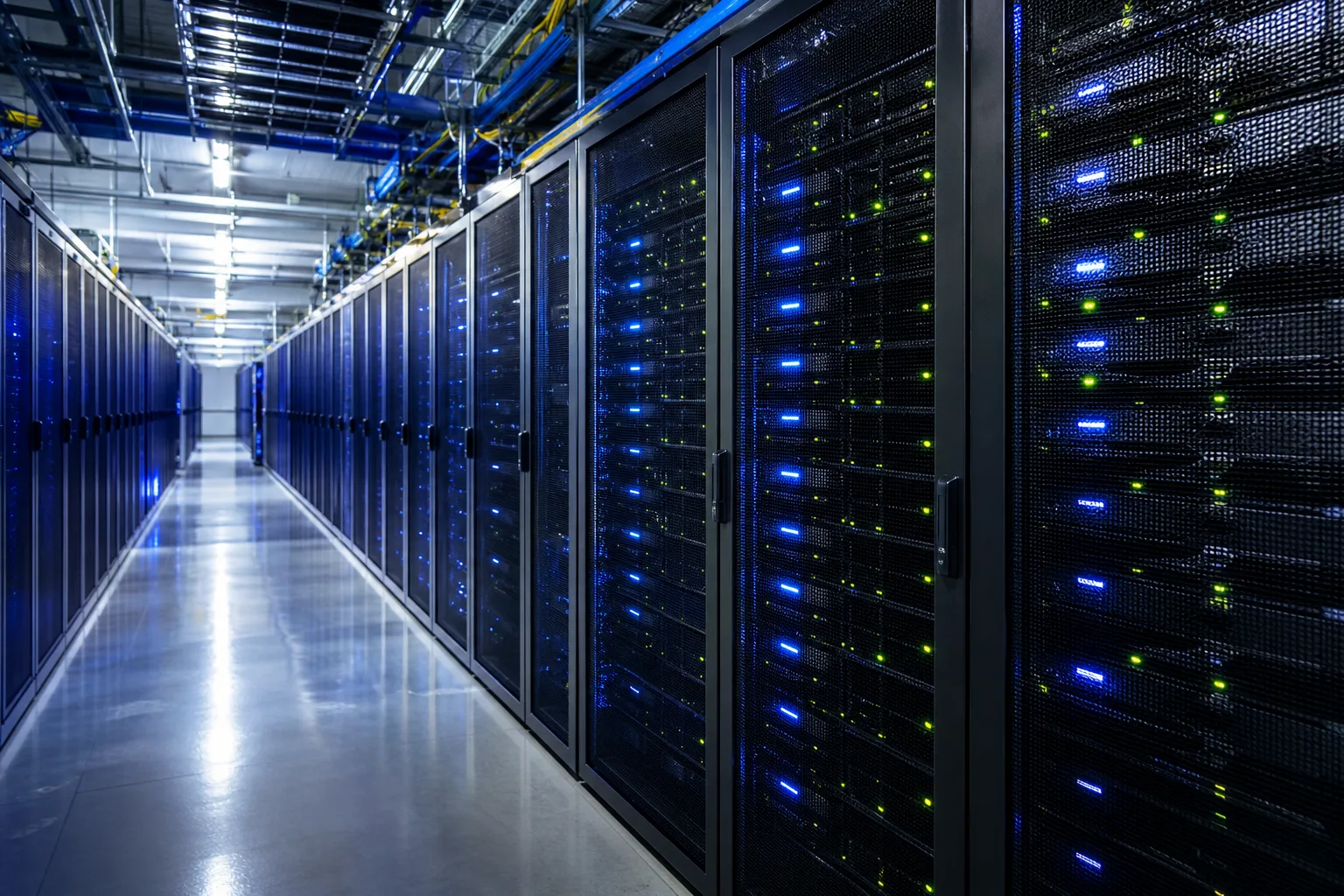
Meta AI compute is about to become a product you can buy. According to recent reporting, Meta is exploring plans to sell access to its vast AI computing infrastructure to outside businesses — a strategic pivot that sounds perfectly sensible until you notice the company is simultaneously committing roughly $10 billion to build even more data centers. So what exactly is going on here?
- Meta AI compute is set to be sold externally, marking a significant shift in how the company monetises its infrastructure.
- Meta is investing $10 billion in new data centers even as it plans to offer Meta AI compute to outside customers.
- Selling spare compute capacity could offset Meta’s massive AI infrastructure costs and open a new revenue stream.
- The move puts Meta in direct competition with AWS, Google Cloud, and Microsoft Azure in the AI cloud market.
Table of Contents
The Apparent Contradiction
On the surface, it looks like a paradox. If Meta has enough spare Meta AI compute capacity to sell to third parties, why pour billions more into expanding that capacity? Shouldn’t it be trimming, not building?
The answer lies in how the biggest tech companies think about infrastructure — not in months, but in years. The data centers Meta is announcing today won’t be operational until 2026 or 2027 at the earliest. Construction timelines are long, permitting is painful, and power procurement can take even longer. What looks like surplus capacity right now could easily be a critical bottleneck by the time those new facilities come online.
There’s also a business logic to running both plays at once. Selling compute today monetises assets that would otherwise sit underutilised, while building tomorrow’s capacity ensures Meta doesn’t get caught short as its own AI workloads — powering everything from the Meta AI assistant to recommendation algorithms across Facebook, Instagram, and WhatsApp — continue to scale aggressively.
Why Meta AI Compute Sales Make Strategic Sense
The clearest historical parallel here is Amazon Web Services. AWS didn’t start as a business idea — it started as Amazon’s internal infrastructure, built to support e-commerce operations. When engineers realised they had excess capacity and useful tooling, Amazon began offering it externally. Today, AWS generates substantial annual revenue and consistently delivers the highest operating margins in Amazon’s entire portfolio.
Meta isn’t in that position yet, but the template is obvious. The company has spent years building some of the most capable AI-specific infrastructure on the planet, including its own custom silicon — the Meta Training and Inference Accelerator, or MTIA — alongside vast clusters of Nvidia GPUs. If that hardware can generate revenue from external customers between Meta’s own training runs, the unit economics of the entire infrastructure program improve dramatically.
Selling Meta AI compute externally also gives the company useful market intelligence. Which industries are most hungry for AI compute right now? What workloads are enterprises struggling to run? That kind of signal is strategically valuable for a company still figuring out where AI fits into its long-term product and monetisation roadmap.
A New Competitive Front
Make no mistake: if Meta moves seriously into selling Meta AI compute, it’s entering a market already crowded with deep-pocketed rivals. Amazon Web Services, Google Cloud, and Microsoft Azure collectively dominate the cloud infrastructure market, and all three have been aggressively expanding their AI-specific offerings — from Nvidia H100 clusters to their own custom AI chips.
Meta’s potential differentiator isn’t price or breadth — it’s specialisation. The company has trained some of the world’s most widely used open-source AI models, including the Llama family, on this very infrastructure. There’s a credible argument that Meta’s hardware and software stack is unusually well-optimised for large language model training and inference workloads. For companies building on Llama or running similar architectures, access to Meta AI compute might carry real technical appeal beyond just cost-per-FLOP comparisons.
That said, becoming a credible cloud competitor requires far more than spare GPUs. It means building out customer-facing APIs, support infrastructure, billing systems, compliance certifications, and the kind of enterprise sales motion that Meta has never really needed to develop before. None of that is impossible, but none of it is trivial either.
The $10 Billion Question
Meta’s capital expenditure trajectory is staggering by any measure. The company has guided toward significantly higher total capex for 2025, a figure that would have seemed fantastical just a few years ago. The $10 billion data center investment is part of that broader commitment — and it reflects a genuine belief inside Menlo Park that AI infrastructure is the defining investment of this decade.
CEO Mark Zuckerberg has been unusually direct about this. He’s framed Meta AI compute investment not as a cost centre but as the foundation of Meta’s next growth phase, arguing that the companies that build the most capable infrastructure now will have structural advantages that are hard to overcome later. Whether that thesis proves correct is still very much an open question — but it’s clearly the bet Meta is making.
The risk, of course, is timing. If AI adoption among enterprises and developers doesn’t scale as fast as the hyperscalers are projecting, the industry could face a significant overcapacity problem in the late 2020s — driving down compute prices and squeezing margins. Meta, like its peers, is essentially making a multi-billion-dollar wager on demand curves it can’t fully see.
What This Means for the Broader AI Market
Meta entering the Meta AI compute sales market — even in a limited way — is good news for buyers. More supply from a well-resourced competitor puts pressure on AWS, Google, and Microsoft to stay competitive on pricing and keep innovating on the hardware side. It also potentially opens up access for smaller AI startups that currently face long waitlists and eye-watering prices for premium GPU access.
There’s a broader industry dynamic worth watching here too. The emergence of highly capable open-source models like Llama 3 has already started to shift enterprise AI strategies, with more companies opting to run their own fine-tuned models rather than pay per-token API fees to OpenAI or Anthropic. If those companies need serious compute to do that, and Meta is willing to sell it at competitive rates on hardware that’s already proven to run Llama workloads efficiently, the timing of this move is far from accidental.
The real question isn’t whether Meta can sell compute — it clearly can. The question is whether it has the organisational appetite and the enterprise DNA to build something that actually scales into a meaningful business, rather than a side project that gets quietly shelved when internal demand catches up with supply. Given the billions already committed, Meta has every incentive to make it work.
Frequently Asked Questions
Why is Meta planning to sell Meta AI compute to outside customers?
Meta has built enormous data center capacity to power its own AI ambitions. Selling that spare Meta AI compute to third parties lets the company offset infrastructure costs and generate a new revenue stream.
How much is Meta spending on AI infrastructure in 2025?
Meta has committed to spending roughly $10 billion on new data center construction in 2025, part of a broader capital expenditure push that could reach into the tens of billions for the full year.
Does selling AI compute mean Meta is becoming a cloud provider?
Effectively, yes — at least partially. By selling compute access externally, Meta would be competing directly with established hyperscalers, though it’s unclear whether it plans a full cloud platform or a more limited capacity-sales model.
Isn’t it contradictory to build more data centers while selling compute capacity?
Not necessarily. Building more capacity now locks in future supply, while current surplus earns revenue. If Meta’s internal AI workloads grow as projected, it will likely need every rack it’s building — today’s ‘surplus’ could be tomorrow’s bottleneck.