
OpenAI has quietly shipped another model — and this one’s generating real buzz. GPT-5.6 Sol landed this week, and the early verdict from developers who’ve been testing it internally is largely positive: a meaningful step up from GPT-5.5, strong enough to challenge Claude on most daily tasks, though it hasn’t quite dethroned Fable in the eyes of the people who’ve pushed all three hardest.
- GPT-5.6 Sol is OpenAI’s latest release, drawing strong early praise from developers who tested it before launch.
- Early testers say GPT-5.6 Sol outperforms GPT-5.5 significantly, especially for agentic tasks and sustained coding work.
- Benchmark data places GPT-5.6 Sol behind Fable but ahead of Claude, depending on the task category.
- One tester described GPT-5.6 Sol as a ‘Porsche’ — fast and capable for daily work, while calling Fable a ‘warp drive.’
Table of Contents
What GPT-5.6 Sol Actually Is
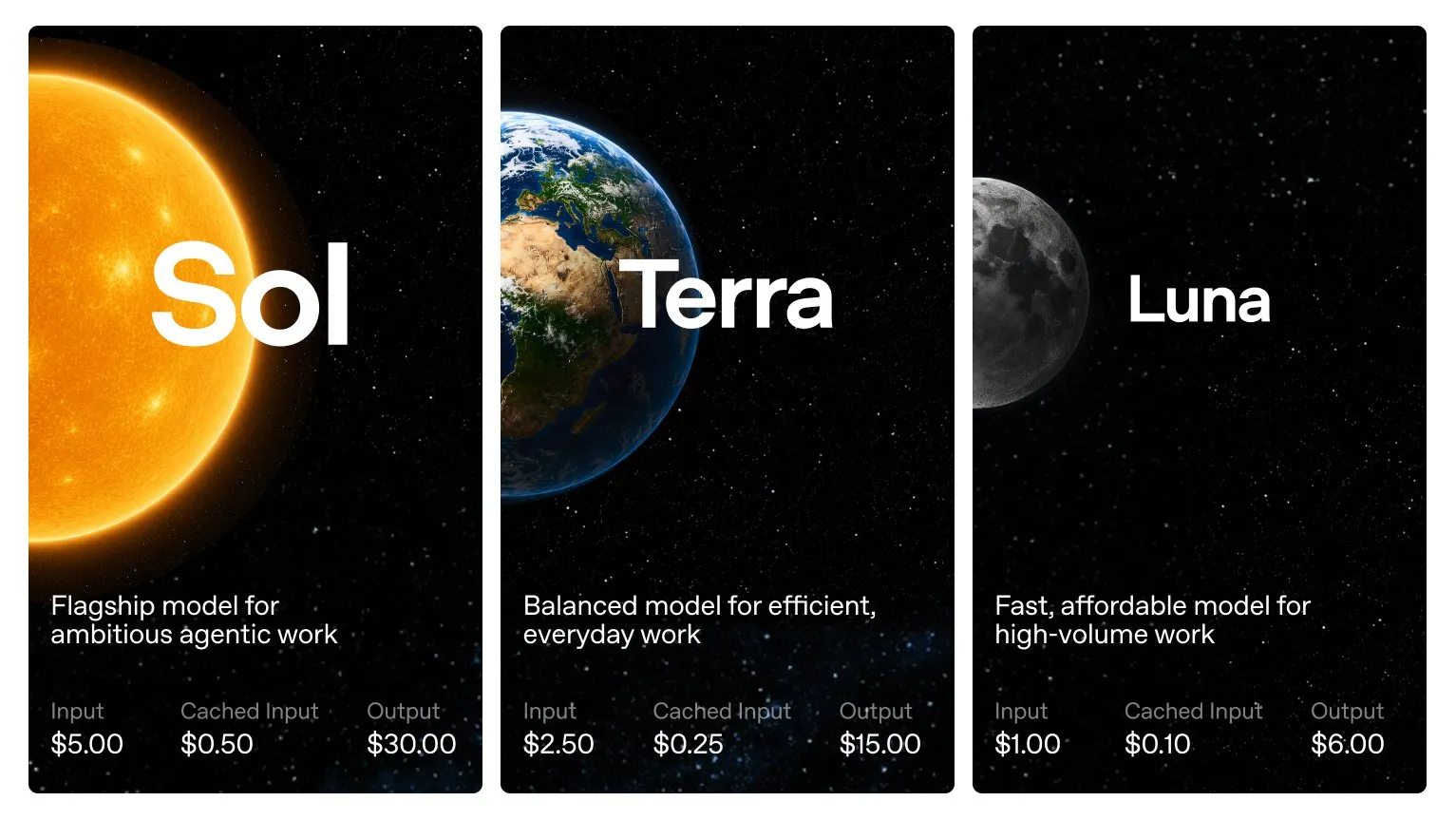
OpenAI hasn’t made a theatrical production out of this release. There was no splashy keynote, no countdown timer on the website. GPT-5.6 Sol appears to be a refined, production-grade model in the GPT-5 family — the ‘Sol’ designation likely indicating a specific variant optimised for sustained, agentic performance rather than raw benchmark numbers. Think of it as OpenAI quietly tightening the screws on a model line that was already competitive, rather than announcing something entirely new.
The timing matters. We’re deep in a period where the frontier AI labs — OpenAI, Anthropic, Google DeepMind, and a growing list of challengers — are shipping updates fast enough that model names feel like software version numbers. Keeping track of where any given model sits in the competitive hierarchy has become a genuine research project for the developers who rely on these tools professionally.
The Benchmark Picture
Benchmark data shared alongside early access has GPT-5.6 Sol placing competitively against Claude — Anthropic’s flagship — while sitting behind Fable 5 in the rankings that matter most to power users. That’s roughly consistent with what the testers are saying in practice. OpenAI’s research page has historically been where the company publishes its evaluations, and the pattern here holds: strong across general capability, particularly impressive on tasks requiring extended context and multi-step reasoning.
The key number that will interest most developers is the gap between GPT-5.6 Sol and its direct predecessor. Fixing what was broken in GPT-5.5 might sound like a low bar, but in practice, model regressions between minor versions are a real and frustrating problem. If OpenAI has genuinely addressed the reliability issues that plagued GPT-5.5, that’s worth more to a production engineering team than any benchmark point gain.
What Early Testers Are Saying
The developers who got early access have been candid, and their framing is telling. Theo, known in developer circles as t3.gg, put it directly when the embargo apparently lifted on July 8th: ‘Apparently I’m allowed to talk about GPT-5.6 now? It’s a damn good model. Not quite as smart as Fable, but it is incredibly capable. Fixed all the problems I had with GPT-5.5. It is incredibly determined. Will run for a day without even using a /goal. It understands subagents.’
That last point deserves unpacking. The ability to run sustained agentic workflows — operating autonomously for extended periods, coordinating subagents, staying on task without constant human re-prompting — is increasingly the benchmark that actually matters for professional users. Chat performance is table stakes at this point. What separates models in real production environments is whether they can be trusted to execute long-horizon tasks without going off the rails.
Dan Shipper, of Every, brought a more product-oriented perspective. His team had been testing GPT-5.6 Sol internally for about a month, which gives their assessment real weight. His analogy was sharp: GPT-5.6 is like a Porsche, Fable is like a warp drive. GPT-5.6 is the best combination of power, speed, and performance for your day-to-day knowledge work and coding. Fable is a different beast.
The Porsche analogy is worth sitting with. A Porsche isn’t a compromise — it’s a premium, high-performance tool that works brilliantly for nearly everything you’d throw at it day-to-day. Calling Fable a ‘warp drive’ isn’t a knock on GPT-5.6 Sol; it’s a way of saying the two models occupy different categories of use case. If you need to get serious work done reliably and quickly, GPT-5.6 Sol is the choice. If you’re chasing the absolute frontier of what’s possible regardless of cost or latency, Fable may still have the edge.
GPT-5.6 Sol vs. the Competition: A Practical Read
Claude has long been the go-to recommendation for developers who prioritise reliability, instruction-following, and safety in production contexts. Anthropic has built a strong reputation there, and Claude’s performance on coding and writing tasks has been consistently competitive. But GPT-5.6 Sol appears to be directly challenging that positioning — particularly on the agentic side, where Claude has sometimes frustrated users with its more cautious approach to autonomous action.
Fable sits in a different conversation entirely. It’s OpenAI or Anthropic’s model isn’t really the question there — Fable is what happens when a lab optimises purely for capability ceiling, presumably at the cost of some latency or cost efficiency. For day-to-day developer work, running Fable on every query would be overkill in the same way that taking a warp drive to the corner shop is technically possible but probably not the right call.
The more interesting competitive dynamic is between GPT-5.6 Sol and GPT-5.5. OpenAI has a well-documented history of shipping models that introduce regressions — features or behaviours that worked well in a previous version quietly breaking or degrading in the next. The fact that multiple testers are independently flagging that GPT-5.6 Sol ‘fixed’ GPT-5.5 suggests the previous version had real, widely-felt issues. That kind of course correction matters as much as headline capability gains, especially for teams that have built workflows around OpenAI’s API.
The Bigger Picture for OpenAI’s Model Strategy
What GPT-5.6 Sol represents is OpenAI shipping faster and more iteratively than at any previous point in its history. The gap between major model releases has compressed dramatically — we’ve gone from waiting years between GPT generations to watching point releases land every few weeks. That pace creates real challenges for developers trying to maintain stable production systems, but it also means OpenAI can respond to competitive pressure much faster than it could two years ago.
Google DeepMind, Anthropic, and a wave of open-weight challengers aren’t standing still. The frontier is genuinely crowded now in a way it wasn’t when GPT-4 launched. OpenAI’s response — rapid iteration, specialised model variants, and the kind of tight developer feedback loops that produce releases like GPT-5.6 Sol — looks like a deliberate strategy to maintain relevance through velocity rather than periodic landmark announcements.
Whether that pace is sustainable, and whether it produces compounding improvements or just churn, will become clearer over the next few quarters. For now, the developer community seems genuinely pleased with what GPT-5.6 Sol delivers — which, in a market where every new model launch is greeted with healthy scepticism, is a meaningful signal on its own.