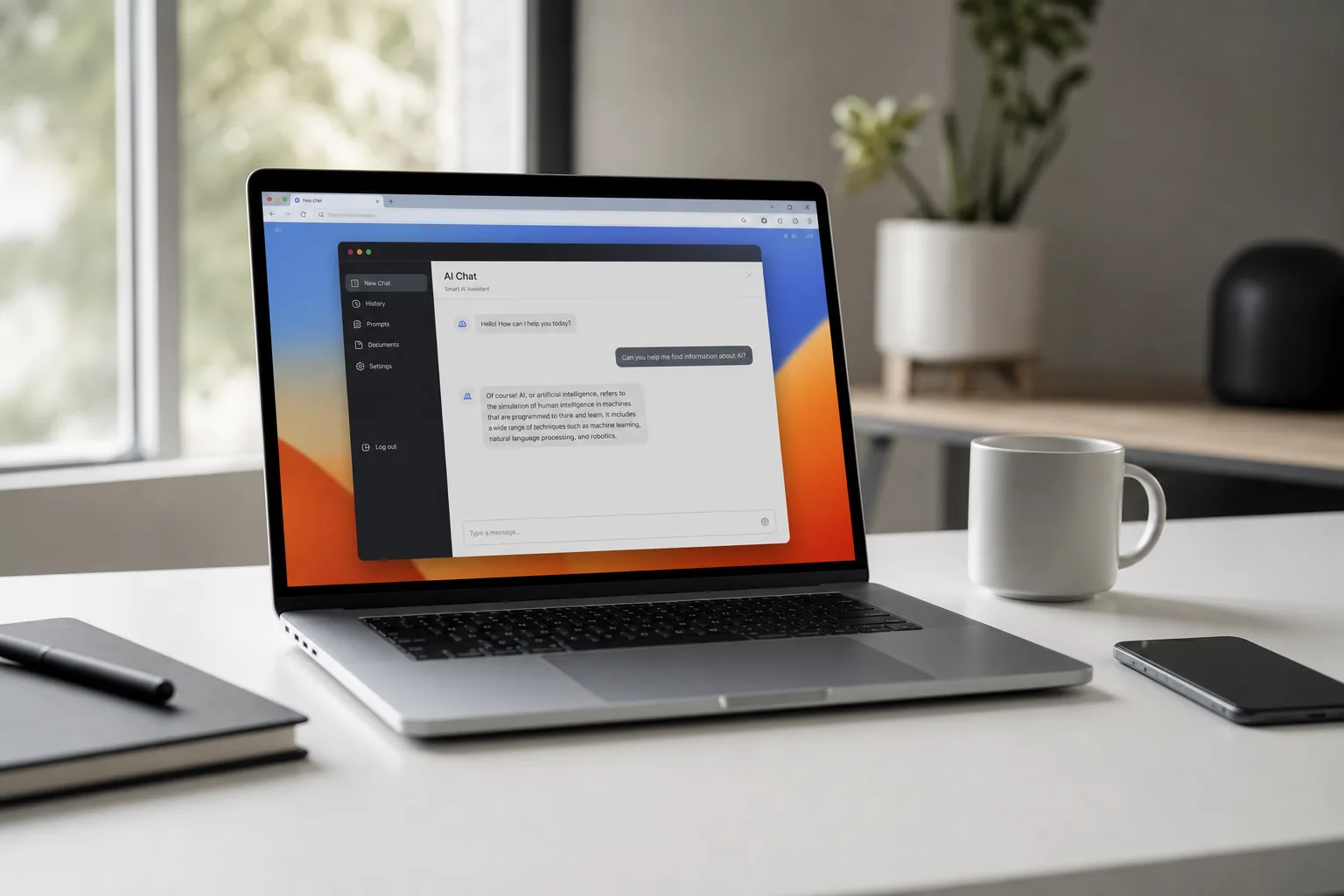
The ChatGPT Atlas browser is getting the axe. OpenAI confirmed this week that it’s sunsetting the agentic browser it launched with considerable fanfare back in October — less than ten months ago. Deprecation is set for August 9, and with it goes one of the more ambitious experiments in OpenAI’s consumer product line.
- The ChatGPT Atlas browser is shutting down on August 9 after less than a year in operation.
- OpenAI launched the ChatGPT Atlas browser in October, pitching it as a conversational way to browse the web.
- The closure was confirmed alongside a broader set of ChatGPT Work announcements, signalling a strategic shift.
- Atlas’s short lifespan raises real questions about whether AI-native browsers are a product users actually want.
Table of Contents
What the ChatGPT Atlas Browser Actually Was
When OpenAI introduced the ChatGPT Atlas browser last autumn, it framed the product around a single provocative question: ‘What if you could chat with your web browser?’ The pitch was that instead of clicking through tabs and search results like it’s 2010, you’d simply talk to your browser — tell it what you wanted, and let it do the navigating, summarising, and interacting on your behalf.
It was an agentic product in the truest sense. Rather than just answering questions about content you’d already found, the ChatGPT Atlas browser was meant to go out and do things — browse pages, extract information, fill forms, take actions. Think of it less like a chatbot and more like a browser that has read every instruction manual ever written and is actually paying attention to what you need.
On paper, it sounded compelling. The browser as an agent — not just a viewport — is a logical extension of where AI assistants are heading. OpenAI’s broader ChatGPT platform had already been building toward greater autonomy with features like web search and task execution. Atlas felt like the next step: make the browser itself intelligent, not just the tab you have open alongside it.
A Product That Didn’t Find Its Audience
Here’s the uncomfortable truth that Atlas’s closure forces us to confront: users didn’t bite. At least not enough of them. OpenAI wouldn’t be pulling the plug on a product this quickly if the engagement numbers were telling a good story.
There’s a pattern worth recognising here. The tech industry has been genuinely excited about AI agents for a couple of years now — the idea that software can autonomously complete multi-step tasks on your behalf. Startups have raised hundreds of millions chasing this vision. OpenAI itself has been aggressive in building out agent capabilities across ChatGPT. But excitement among developers and investors doesn’t automatically translate to habit-forming behaviour among everyday users.
The ChatGPT Atlas browser may have run directly into this problem. Browsing is an extraordinarily personal, habitual activity. People are deeply attached to Chrome, Safari, Firefox — not because those browsers are perfect, but because switching costs are brutal. Your extensions live there. Your saved passwords. Your history. Your muscle memory. Convincing someone to swap out their browser is hard enough without also asking them to fundamentally rethink how they navigate the web.
Add to that the fact that AI-powered browsing features are increasingly being bolted onto existing browsers — Microsoft has Copilot deeply embedded in Edge, Google’s AI Mode in Search is eating into the traditional browsing loop — and the ChatGPT Atlas browser was facing a crowded, entrenched market from day one.
The ChatGPT Work Pivot
OpenAI didn’t announce the Atlas closure in isolation. It came as part of a broader wave of ChatGPT Work-related announcements, which suggests this isn’t just a product failing quietly — it’s a deliberate reallocation of resources and focus.
ChatGPT Work is OpenAI’s push into enterprise and professional productivity, and it’s where the company sees serious revenue potential. Business subscriptions, team plans, API access for corporate deployments — that’s where the money is for now. Consumer experiments like the ChatGPT Atlas browser are presumably harder to justify when the enterprise side of the business is demanding attention and investment.
It’s also possible — likely, even — that some of what Atlas was trying to do is being absorbed into other parts of ChatGPT’s growing feature set. OpenAI has been shipping fast. The operator API, custom GPTs, memory features, and expanded tool-use capabilities mean that the specific value proposition of a standalone agentic browser gets murkier over time when the core product keeps expanding its reach.
What This Tells Us About AI Agent Products
The ChatGPT Atlas browser joining the technology graveyard this quickly is worth paying attention to — not as a failure of OpenAI specifically, but as a data point about where AI agent products actually succeed versus where they stall.
The agent products that seem to be gaining genuine traction share a few traits: they operate in clearly defined, high-stakes workflows (coding with GitHub Copilot, contract review in legal tech, data analysis in business intelligence tools), they integrate into tools people already use rather than asking users to adopt entirely new surfaces, and the time savings are obvious and immediate. A general-purpose agentic browser, by contrast, asks you to change everything about how you browse in exchange for benefits that — for most people — aren’t immediately obvious in day-to-day use.
That’s not to say the concept is dead. Browser automation and AI-driven web agents will absolutely play a role in how we interact with the internet over the next decade. Companies like Anthropic with its Computer Use capability, and various well-funded startups in the browser automation space, are continuing to push hard on this problem. But the winning approach may end up being invisible infrastructure — AI doing browser-level tasks in the background of productivity software — rather than a new browser people consciously choose to install and switch to.
OpenAI built something interesting with the ChatGPT Atlas browser. The question it asked — ‘what if you could chat with your web browser?’ — remains worth asking. It just turned out that answering it as a standalone consumer product was harder than the original pitch made it look. August 9 marks the end of that particular experiment. What OpenAI does with those learnings inside its broader agent strategy will be the more revealing story to watch.