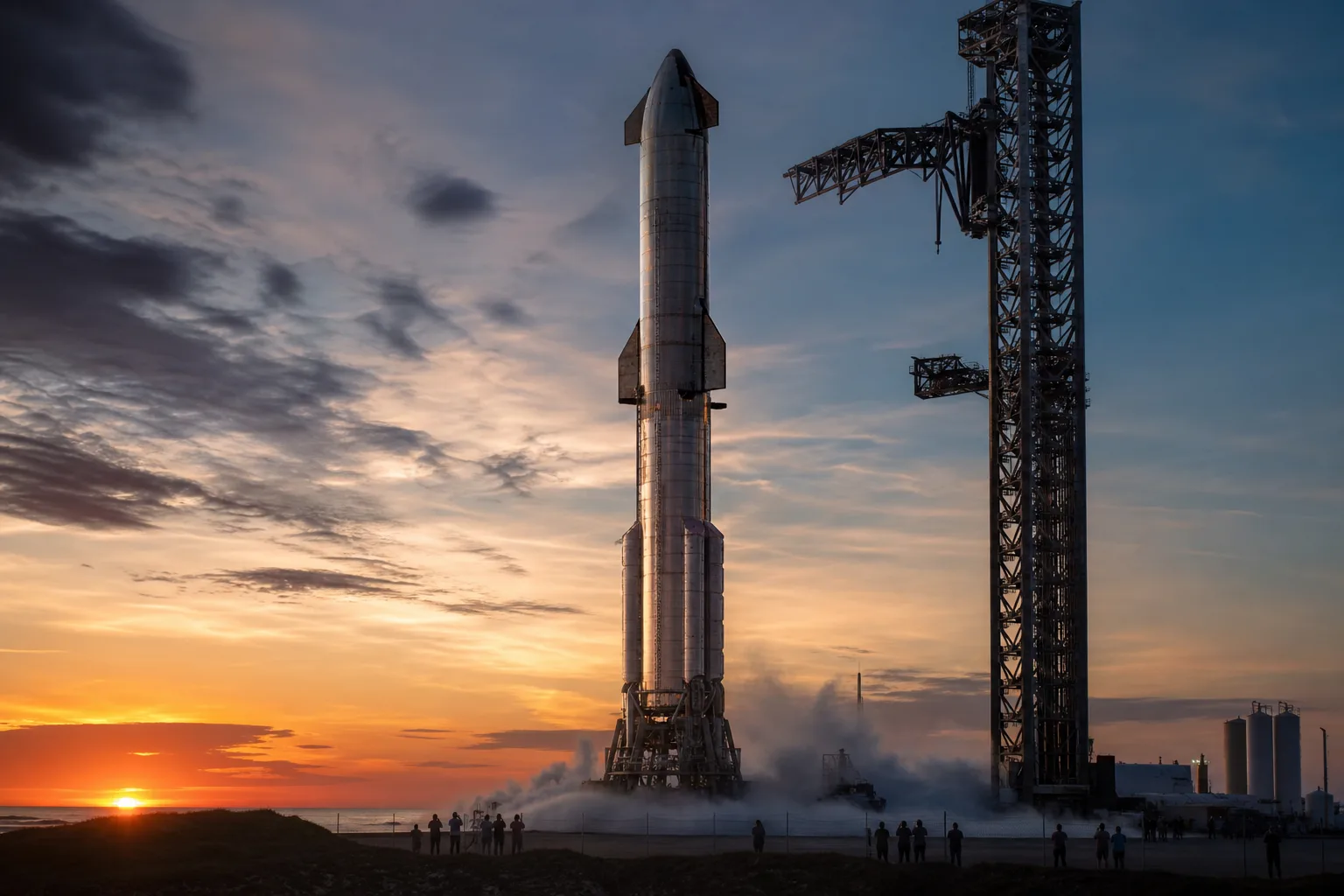
SpaceX stock was supposed to be the market’s cleanest expression of big-tech optimism: rockets, satellites, broadband, Mars, and Elon Musk’s knack for turning audacious engineering into a financial story. A month after its public debut, that story has become considerably less tidy. Shares briefly dropped below the company’s $135 IPO price on Wednesday before clawing back toward it, a sobering reversal from the rush above $200 in the days following the listing.
SpaceX is not suddenly a broken company. But public investors are starting to ask the question private markets were happy to postpone for years: how much of the valuation reflects a remarkable operating business today, and how much rests on a future that still needs to survive a lot of explosive hardware tests?
- SpaceX stock briefly fell below its $135 IPO price after retreating steadily from a post-listing peak above $200.
- A tiny public float has made SpaceX stock unusually volatile, amplifying every burst of enthusiasm and every moment of doubt.
- Thursday’s Starship flight will be the company’s first major technical and market test since its blockbuster June listing.
- The IPO’s reception matters beyond rockets because prospective public offerings from OpenAI and Anthropic are being closely watched.
Table of Contents
SpaceX stock meets the reality of public markets
SpaceX raised nearly $86 billion in its June 12 offering, one of the largest listings the technology sector has ever seen. The initial trading frenzy briefly placed its value in the same conversational neighborhood as Amazon and Microsoft. That was always a dizzying comparison. Amazon’s empire is built on enormous, measurable retail and cloud revenue; Microsoft sells software subscriptions and cloud capacity at industrial scale. SpaceX has a powerful launch business and a rapidly expanding Starlink network, but its largest ambitions remain capital-intensive bets whose timelines are anything but predictable.
The decline in SpaceX stock has been fairly consistent since that early spike. Wednesday’s move beneath $133 matters mostly as a psychological marker, not because $135 is sacred. IPO prices are negotiated reference points, not laws of physics. Still, slipping under that line tells the first-wave buyers that the market is no longer willing to pay any price simply to own a piece of Musk’s space company.
It also arrives during a broader cooling period for high-expectation technology names. When investors get nervous, companies priced on distant cash flows tend to suffer first. SpaceX is, in some respects, the ultimate distant-cash-flow proposition. Starlink is a tangible global communications business. Starship, by contrast, is the machine that could lower launch costs, deploy larger satellite fleets, support NASA missions and eventually make Musk’s Mars rhetoric less theoretical. That single vehicle carries a frankly enormous amount of the equity story.
A 4% float can turn ordinary trading into a spectacle
There is a structural reason the price action looks so dramatic. Only about 4% of SpaceX shares are available to trade on Nasdaq. That limited float means a comparatively small pool of stock is trying to absorb demand from institutions, retail investors, index funds, Musk loyalists, short sellers and traders who simply want in on the most talked-about IPO of the year.
Think of it like trying to buy tickets for a stadium concert when only one entrance is open. Even a manageable crowd can create chaos at the gate. With so few shares circulating, SpaceX stock can swing sharply without every move representing a meaningful change in the company’s underlying performance.
The same thin float that helped send the shares past $200 can magnify the retreat, too. The surge likely overstated investor excitement, just as the current slide may overstate the gloom. Still, low-float volatility is not a free pass. Public companies eventually have to earn investor confidence through recurring disclosures, execution and financial results. The company’s bonds have reportedly weakened too, suggesting the market’s reassessment is not limited to traders chasing a volatile ticker.
My read is that investors are now confronting an awkward but healthy distinction: SpaceX is already a formidable business, while the version of SpaceX implied by its peak trading price is a much bigger wager. Public markets tend to force that distinction faster than private fundraising rounds do.
Starship is the next live test for SpaceX stock
That makes Thursday’s Starship flight unusually consequential. It will be the first test of the giant rocket system since the company’s IPO and the first since a booster failure in May. SpaceX is again planning a mission profile in which neither the booster nor upper stage is recovered; both are expected to conduct simulated landing maneuvers over the Gulf of Mexico and ultimately be lost.
To outsiders, planned destruction sounds absurdly wasteful. To SpaceX, it is part of the development method: fly hardware, gather data, fix what breaks, and fly again. The company has used versions of that approach for years, and it helped turn Falcon 9 reuse from an improbable experiment into routine infrastructure. But Starship is larger, more complicated and more central to future plans than any previous vehicle. Failures that might once have been judged purely as engineering milestones now land directly on a public-company balance sheet and a real-time chart.
Investors should be careful not to read a nominally successful flight as an immediate reason for SpaceX stock to soar, or a partial failure as proof that the program is doomed. Rocket development does not progress in straight lines. A test can end in a fireball and still answer the exact technical question engineers needed answered. Conversely, a visually smooth flight can hide difficult production or reliability problems that only emerge later.
The key issue is whether the company demonstrates measurable progress: cleaner engine performance, better stage separation, more controlled reentry behavior and evidence that its eventual recovery architecture is becoming viable. Full and rapid reuse remains aspirational. Until that becomes routine rather than aspirational, investors are valuing a promise with an unusually high price tag.
The IPO is a readout for the rest of tech
Wall Street is watching this closely for a second reason. SpaceX’s listing has become an early referendum on whether investors still have the appetite for giant, narrative-heavy technology IPOs. OpenAI and Anthropic have both reportedly made confidential filings, and neither company can ignore what happens when a high-profile, richly priced business meets daily public trading.
The comparison is imperfect. AI companies sell software and compute access, while SpaceX launches payloads and operates satellite networks. But both are being valued partly on claims about what their platforms may enable years from now. If SpaceX stock settles into a sustained slump, boards and bankers preparing the next wave of mega-IPOs may need to rethink pricing, share supply and how much optimism they can reasonably ask public investors to finance.
SpaceX still has advantages few companies can match: deep government relationships, a launch cadence competitors struggle to approach, Starlink’s global footprint and a founder who can command attention like almost nobody else in business. Readers can check the company’s latest mission material at SpaceX’s official launches page. But attention is a volatile asset, as the past month has made plain.
For now, the most honest verdict is that SpaceX stock is transitioning from a cultural event into a security investors have to evaluate on execution. Thursday’s launch will not settle that debate. It may, however, show whether the market is prepared to keep paying today for a rocket company built around tomorrow.