

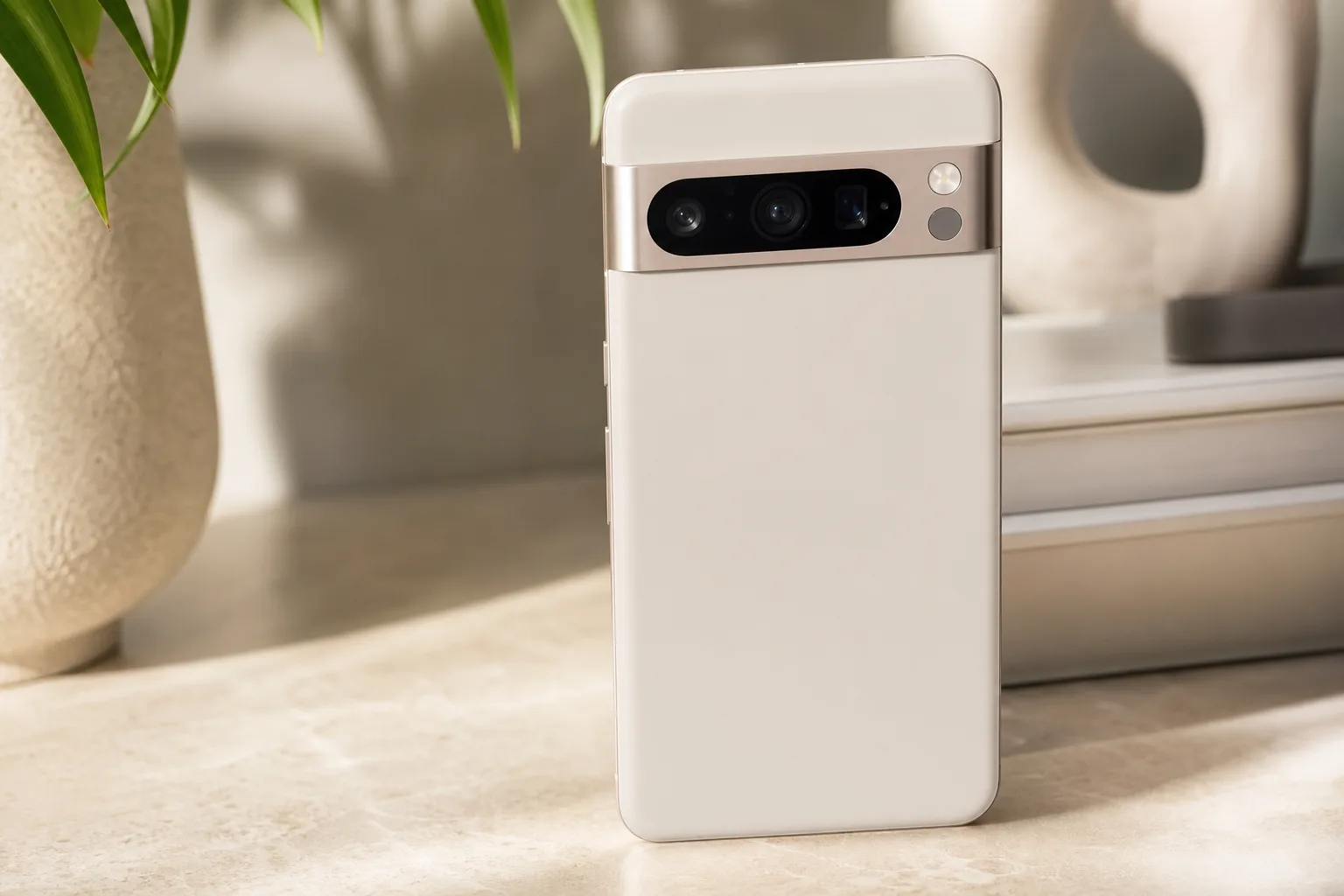
- A Google Fi webpage briefly displayed the Pixel 11 Pro, giving recent design leaks much stronger credibility ahead of its expected August debut.
- The Pixel 11 Pro appears in a warm Dune finish and retains Google’s familiar horizontal camera-bar design language.
- Reports point to potential European price increases of roughly €100, though US pricing remains unconfirmed.
- Google Fi promotional language suggests carrier discounts may soften the cost of a Pixel 11 Pro XL for qualifying customers.
Table of Contents
Pixel 11 Pro images now have a Google-sized paper trail
Phone leaks are usually a messy business: a blurry factory photo here, a retailer listing there, and a dozen dubious renders filling the gaps. The Pixel 11 Pro has now cleared a more meaningful bar. An image apparently published early on Google Fi’s own website has surfaced, backing up the design that recently appeared in an Amazon leak.
That matters because Google Fi is not some anonymous accessory seller with a guessed-at product photo. It is Google’s wireless service, and its marketing materials ordinarily come through the same internal launch machinery that supplies the company’s store, retail partners, and carrier promotions. A premature page is still a mistake, not a formal announcement, but it is about as close to visual confirmation as a pre-launch leak gets.
Droid Life preserved the Google Fi image before it disappeared. The device shown looks materially identical to the previously leaked handset: the same familiar Pixel silhouette, the same raised rear camera treatment, and the same sandy beige finish reportedly called Dune.
My read is that Google has little interest in blowing up the Pixel formula this year. And frankly, that is not automatically a bad thing. Pixel hardware has spent several generations settling into an identity that is recognizably its own, after years in which Google phones could feel like experimental reference devices that happened to be sold to the public.
The design looks familiar, but Dune could do real work
The leaked Pixel 11 Pro appears to retain Google’s familiar horizontal camera-bar design language. That choice may disappoint anyone hoping for a dramatic overhaul, but the camera bar is doing the practical job a signature design element should do: you can spot it from across a table. In a smartphone market dominated by black glass rectangles and vaguely similar camera islands, recognizability has value.
Dune is the more interesting part of the image. The warm, muted gold-beige color reads less like a loud seasonal finish and more like a premium neutral — closer to a well-worn leather notebook than a neon sneaker. It also fits Google’s recent preference for earthy, softer hardware colors. If the real-world finish matches the marketing image, it could be the standout option in the range.
There is one wrinkle. Google Fi’s promotional wording reportedly refers to the larger Pixel 11 Pro XL, but the pictured phone is believed to be the standard Pro model. Droid Life points to microphone placement as the giveaway. It is a tiny detail, admittedly, yet precisely the sort of tiny detail that separates an actual product asset from a generic mock-up.
Only one phone has appeared so far. There is no comparable Google Fi imagery for the regular Pixel 11, the Pixel 11 Pro XL, or the expected Pixel 11 Pro Fold. That absence probably says more about which promotional page was accidentally made public first than about the products themselves. Still, the Pixel 11 Pro is now the visual anchor for the entire family.
Price may become the Pixel 11 Pro story that actually matters
A polished paint job and a confirmed camera-bar shape are nice, but pricing will decide whether Google’s next flagship feels competitive or merely expensive. Previous reporting from Europe has suggested the Pixel 11 lineup could rise by about €100. There is no confirmation that an equivalent increase will reach the United States, and direct currency conversion is a poor way to predict phone prices. Taxes, carrier arrangements, storage tiers, and regional sales strategies muddy the picture quickly.
Still, the possibility deserves attention. Google has steadily moved Pixels from value-conscious flagships toward the price territory occupied by Samsung’s Galaxy S Ultra models and Apple’s iPhone Pro lineup. That makes the sales pitch harder. Buyers will expect the Pixel 11 Pro to bring more than attractive software features and clever photo processing; they will want meaningful hardware gains, dependable battery life, and a Tensor chip that does not invite the same performance and thermal comparisons that have dogged earlier generations.
Google Fi may be preparing its own answer to sticker shock. Promotional copy associated with the early page reportedly advertises the Pixel 11 Pro XL for as little as $100. The catch is almost certainly buried in eligibility requirements — likely a new plan, a trade-in, bill credits, or some combination of all three. Wireless deals can turn a $1,000 phone into an apparently cheap monthly purchase, but readers should inspect the commitment terms as carefully as they inspect the spec sheet.
You can see how Google frames current offers on the official Google Fi website, though the company has not publicly announced the next Pixel generation or its launch promotions. Until it does, claims around exact pricing and discounts remain provisional.
Google’s August window is getting crowded
The Pixel 11 series is expected to arrive in August, continuing Google’s recent habit of announcing flagships ahead of Apple’s September iPhone cycle. That timing gives the company a clean stretch of attention, but it also leaves little room for surprise when product pages start escaping early. Remember when Google’s own marketing materials had a habit of revealing Pixel hardware before the keynote? Some traditions die hard.
What we still do not know is arguably more consequential than what the Google Fi image reveals. There are no confirmed specifications, no official word on cameras or Tensor performance, and no firm pricing. The Pixel 11 Pro image tells us Google’s industrial design is likely evolving rather than restarting. The August announcement needs to answer the harder question: what, beyond a new color and the usual AI promises, makes paying more for this Pixel feel justified?

