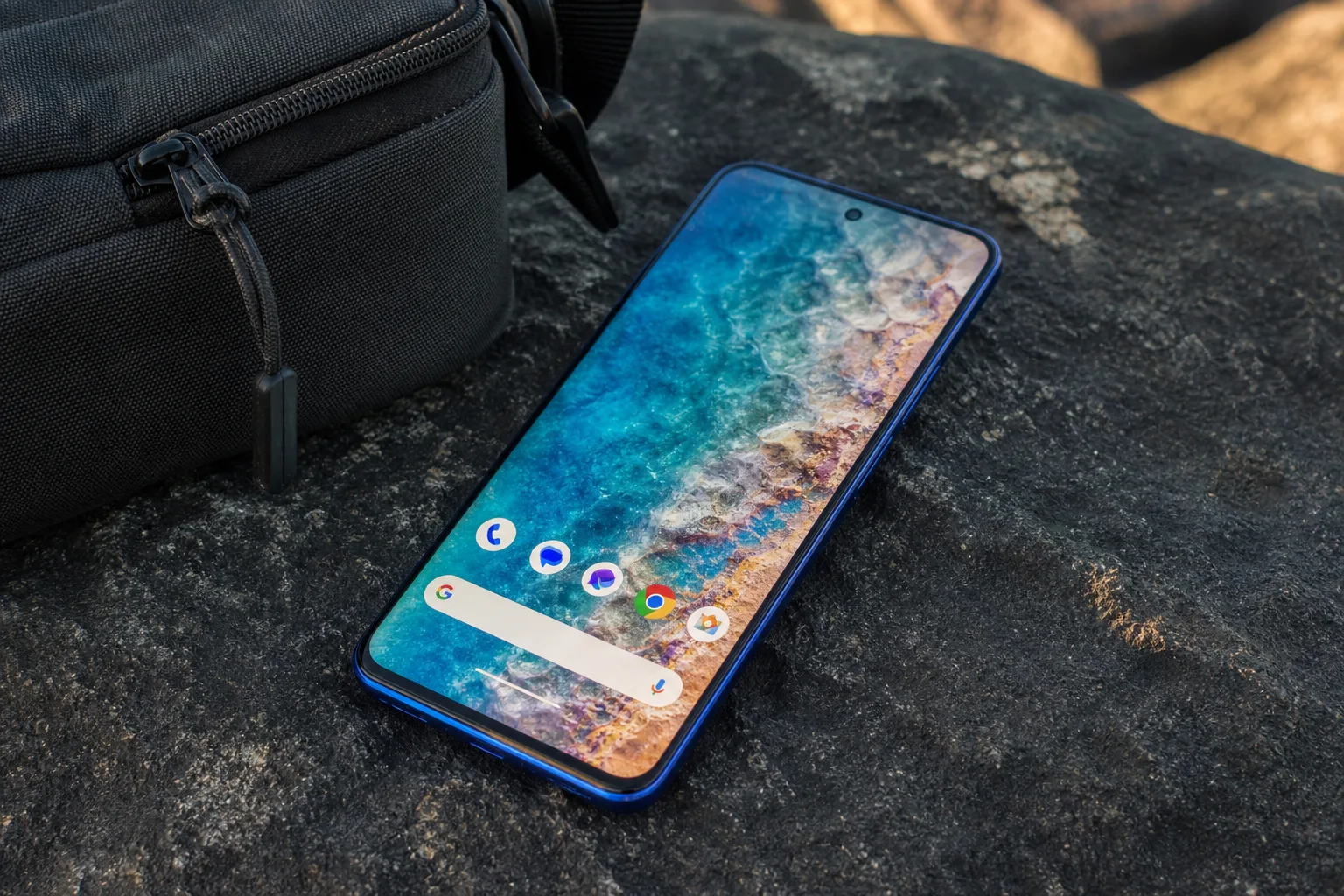
- At roughly $330, the Pixel 8 Pro offers unusually complete flagship hardware without the compromises common in new budget Android phones.
- The Pixel 8 Pro retains years of promised updates, a capable camera system and a 5x telephoto lens at used-market prices.
- Tensor G3 remains fine for everyday apps, but demanding mobile games and battery-sensitive buyers should compare alternatives carefully.
- Refurbished-phone condition, battery health and return policies matter as much as the headline price when shopping older flagships.
Table of Contents
The Pixel 8 Pro has aged into a different kind of bargain
The interesting thing about a Pixel 8 Pro at around $330 is not that it has suddenly become flawless. It hasn’t. Google’s flagship still carries the familiar Tensor caveats: it can run warm, it is not a gaming monster, and buying refurbished hardware always involves a little gamble. But at this price, the comparison has changed. You are no longer weighing it against the latest Galaxy Ultra or iPhone Pro. You are weighing it against new midrange phones that often cost the same while quietly cutting the parts that make a phone enjoyable for years.
The old Google flagship still has teeth here. A new $300-to-$400 Android handset can give you a respectable screen, a big battery, maybe even a flashy 120Hz refresh rate. What it usually cannot offer is a genuinely capable 5x telephoto camera, a QHD-class 6.7-inch panel, an IP68 rating, 12GB of RAM and a long update runway in one package. Those are flagship traits, and premium materials do not become less pleasant simply because a calendar page turns.
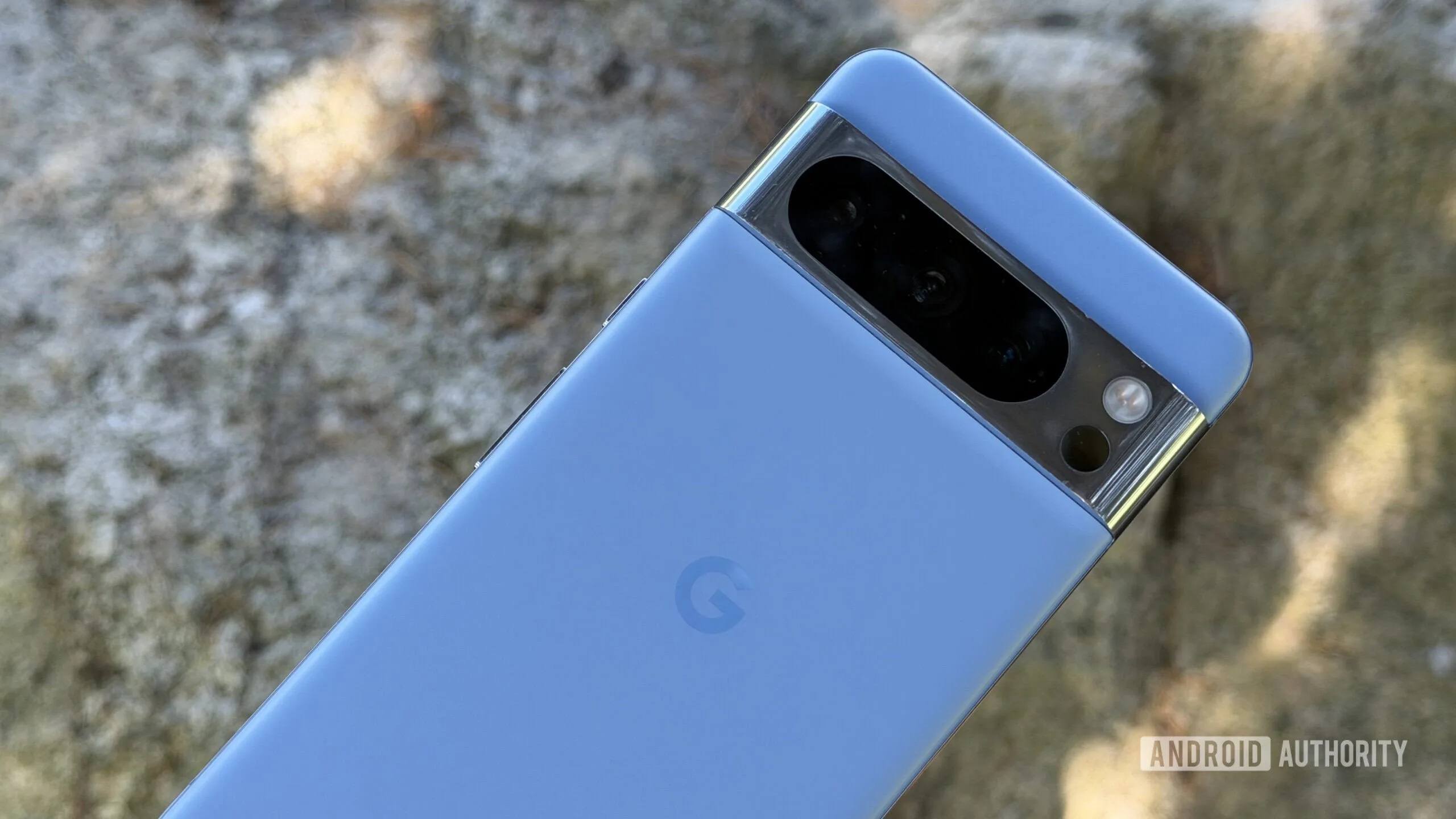
Google’s design has arguably held up better than some of its specs. The polished aluminum rails and curved rear glass make the phone more comfortable than its broad dimensions suggest. I also think the Pixel 8 Pro looks more distinctive than the increasingly iPhone-adjacent slabs crowding carrier stores. That horizontal camera bar remains practical, too: set it down on a desk and it does not wobble like a cheap café table.
The catch is condition. A $330 listing is likely refurbished or pre-owned, not a sealed handset waiting under bright retail lights. Buyers should treat the listing price as the start of the investigation, not the finish line. Check whether it is unlocked, read the grading terms, and prioritize a legitimate return period over saving another $20 from an anonymous marketplace seller. A worn battery or an invisible patch of OLED burn-in can turn a clever purchase into a nuisance remarkably quickly.
Why the Pixel 8 Pro still beats new midrange rivals
Display quality is one place where the Pixel 8 Pro pulls away from its price peers. Its Super Actua OLED panel has the brightness and resolution that make text, maps, streaming video and outdoor use feel properly premium. Plenty of cheaper devices look good in a spec-sheet comparison, but 1080p panels and lower peak brightness are where manufacturers commonly protect their margins. You notice the difference every day, not during the first ten minutes after unboxing.

The same argument applies to the camera stack. The Pixel’s main sensor remains excellent, but the 5x telephoto is the feature that changes how you shoot. It lets you frame a kid on a stage, a distant building detail or a pet doing something ridiculous across the yard without relying on the digital zoom that turns fur and leaves into watercolor smudges. Google’s processing is still particularly reliable in difficult light, where many budget phones produce soft images, muddy shadows and wildly optimistic colors.
A refurbished Pixel 8 Pro does not suddenly become a professional camera, and Google’s processing can occasionally overdo contrast or sharpen edges a little too eagerly. Still, this is an unusually flexible camera system at this price. Compare it with Motorola’s budget-oriented Moto G line, for example, and the difference after sunset is not subtle. The cheaper phone may list a large megapixel count; the Pixel is far more likely to return a photo worth keeping.
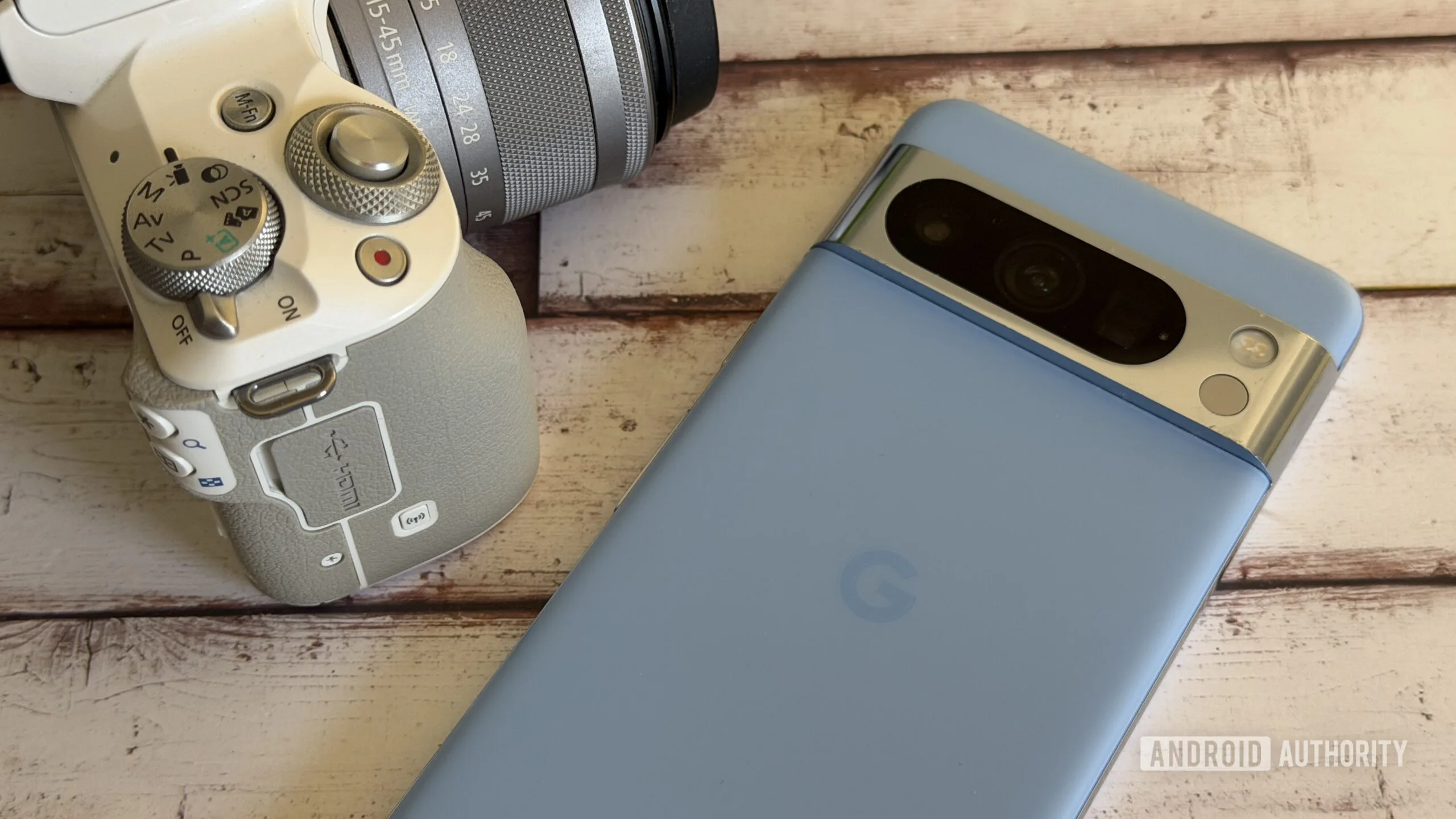
Then there are the boring but vital extras: wireless charging, water resistance, a fast fingerprint reader, solid haptics and a well-built chassis. These are easy features to dismiss in isolation. Together, they are why a former flagship can feel less like settling and more like refusing to pay the annual luxury-tax version of smartphone shopping.
Tensor G3 is adequate, not absolved
Let’s not rewrite history. Tensor G3 was never the performance leader of its generation. Qualcomm’s Snapdragon chips generally had a clearer advantage in sustained gaming and efficiency, and the chip’s reputation for heat did not materialize from thin air. If your idea of downtime is extended sessions of Genshin Impact, Call of Duty Mobile or the latest graphically heavy release, I would look for a Snapdragon-based alternative. Older Galaxy S24 models can be worth considering if their used prices are close enough.
For everyone else, the Pixel 8 Pro has enough headroom. Its 12GB of RAM helps with multitasking, and routine work such as messaging, maps, browser tabs, video calls, photos and social apps is comfortably handled. Frankly, this is the gap between benchmark culture and real life. Most people do not need a sports car to collect groceries; they need something that starts every morning and does not feel strained at highway speed.
Software may be the more persuasive reason to buy. Google’s official update policy gives the Pixel 8 Pro seven years of OS, security and Feature Drop support from launch. That means support stretching into 2030. At a time when some fresh budget Android phones still arrive with short, murky upgrade commitments, that is an enormous practical advantage. A cheap phone that becomes unsupported early is not cheap. It is a deferred expense.
The phone will not receive every new Gemini trick that Google reserves for newer silicon, and readers should not buy it expecting an AI showcase. But features that actually have everyday utility, including Call Screen, Recorder transcription, Magic Editor and Gemini Live, already cover plenty of ground. My read is that missing a few novelty features may even be a blessing. The industry has spent the last few years stuffing phones with AI demos; a good camera and a useful spam-call filter remain more valuable than a synthetic wallpaper generator.
Who should buy a Pixel 8 Pro, and who should move on
The Pixel 8 Pro makes the strongest case for someone who wants flagship fundamentals without a four-figure bill. It is especially good for mobile photographers, people keeping a phone for several years, and buyers who care about clean software and dependable call features. At approximately $330, it leaves enough budget for a quality case, charger and perhaps a battery replacement down the line if needed.
It is a weaker pick for competitive gamers, people who demand the longest possible battery life, or anyone uncomfortable with refurbished-device uncertainty. A newer midrange handset may bring a fresh battery and a full manufacturer warranty, which has real value. And if a used Galaxy S24 Ultra costs over $200 more in your area, the decision gets harder: Samsung’s larger device offers stronger raw performance and its own excellent camera credentials.
But the $330 figure is what makes this particular equation work. If the Pixel 8 Pro drifts toward $500, newer options and used premium rivals pile up fast. Near $330, though, it exposes a truth phone makers would rather avoid: last generation’s flagship hardware can be a more rational purchase than this year’s carefully rationed midrange model. We have seen this cycle before, and as new flagships keep creeping upward in price, it may become the smartest way to buy Android.
Frequently Asked Questions
Is the Pixel 8 Pro still worth buying in 2026?
Yes, especially at around $330. It still offers a high-quality display, versatile cameras, 12GB of RAM, and over four years of Android upgrades and security patches; however, it is not the best choice for hardcore gamers.
How long will the Pixel 8 Pro receive Android updates?
The Pixel 8 Pro still has over four years of Android upgrades and security patches remaining. This is a major advantage over many new mid-range Android phones.
What should I check before buying a refurbished Pixel phone?
The source does not provide a specific refurbished-phone inspection checklist. It notes that the Pixel 8 Pro has premium materials and an IP68 rating for dust and water resistance.