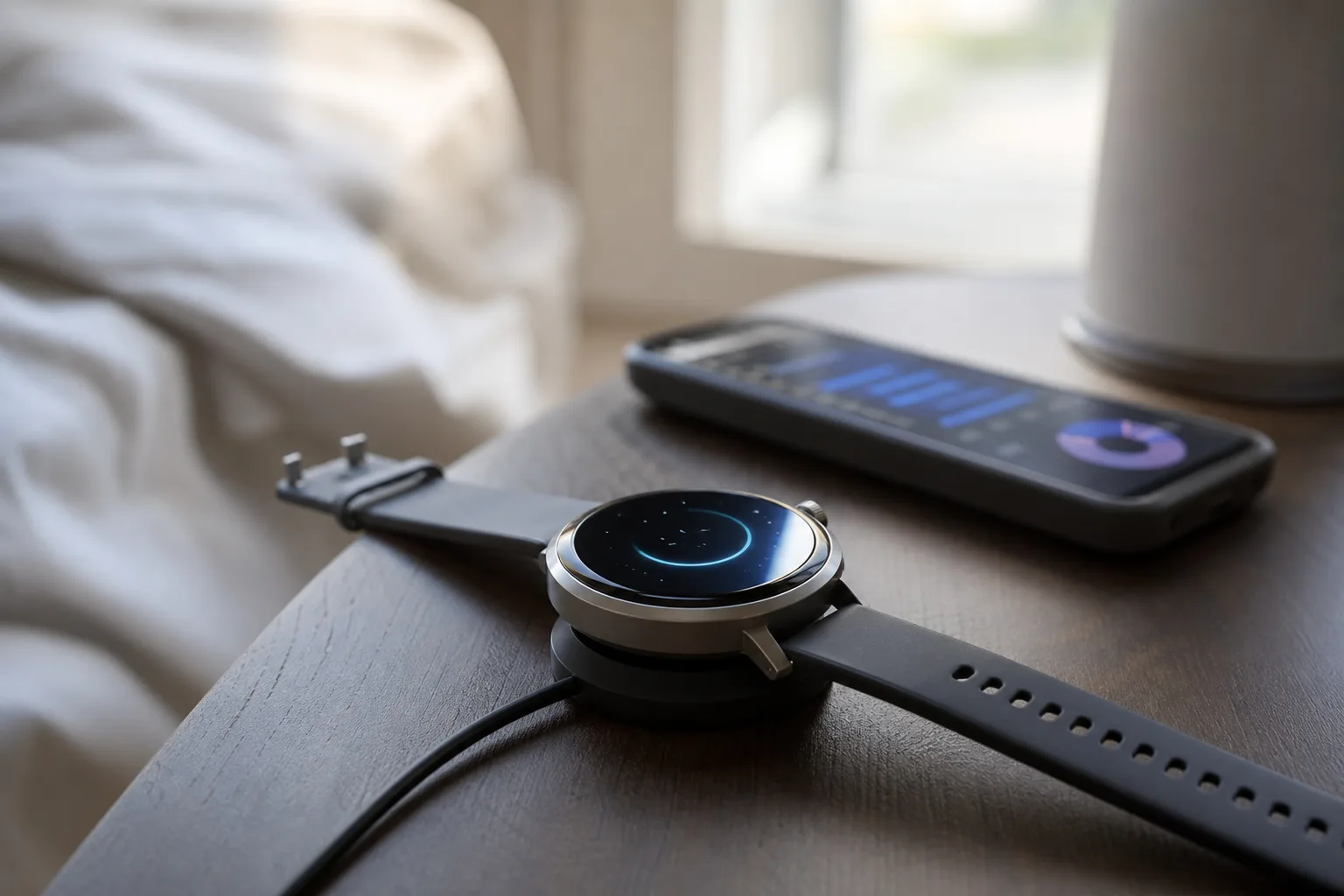
- The Galaxy Watch 9 needs longer real-world endurance after Galaxy Watch 8 owners reported battery life falling from roughly three days to two.
- Samsung has several plausible Galaxy Watch 9 battery options, from larger cells and silicon-carbon chemistry to more efficient software management.
- Wear OS watches face growing pressure from rivals that trade app flexibility for battery life measured in days, not charging sessions.
- Samsung should also stop reserving headline health tools for Galaxy phone owners if it wants its watch to compete across Android.
Table of Contents
The Galaxy Watch 9 has one job before anything else
The Galaxy Watch 9 can arrive with every AI coach, sleep score, and redesigned widget Samsung can fit on a tiny screen. But if it still needs a charger every other day, my read is that none of it will matter quite as much as Samsung hopes. A smartwatch is supposed to disappear into your routine. Once you’re planning showers, dinners, and overnight trips around a magnetic puck, it has failed a fairly basic usability test.
That’s the issue hanging over Samsung’s next wearable as the company prepares to unveil it at Galaxy Unpacked on July 22. The Galaxy Watch 8 has earned praise for its health and sleep-tracking ambitions, but owners have also described a frustrating pattern: software updates that appear to have reduced endurance from around three days to closer to 48 hours. Those results will vary by model, settings, LTE use, workouts, and wrist time, obviously. Still, the broader complaint is familiar to anyone who has lived with a modern Wear OS watch.
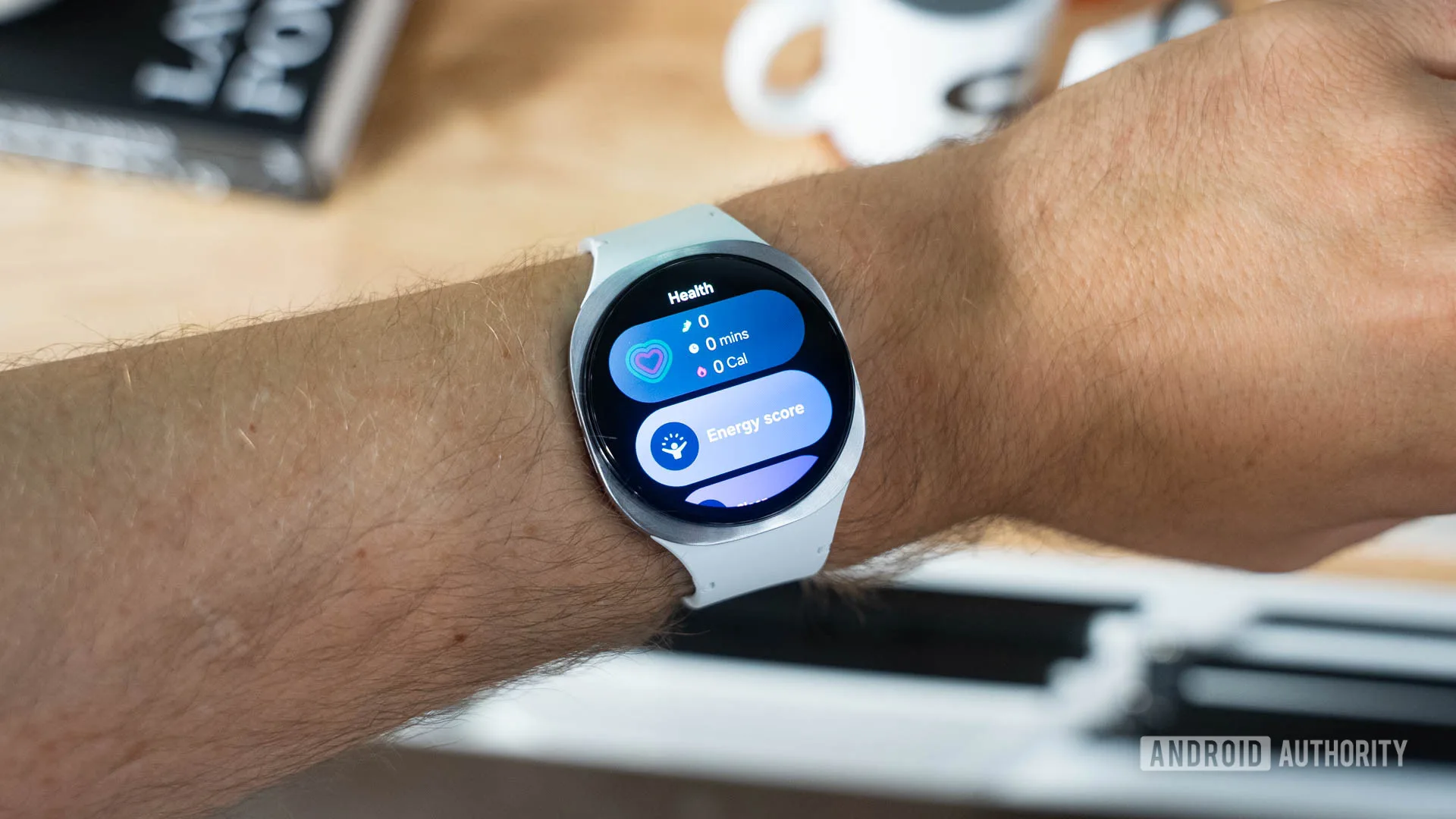
Samsung’s watches do a lot. They run third-party apps, handle notifications, take calls, track workouts, and increasingly try to interpret your body through overnight measurements. That flexibility has a power cost. Consumers, though, are no longer obliged to accept it as the natural order of things. The battery bar has moved, and Samsung is at risk of looking oddly conservative in the category it helped popularize.
Galaxy Watch 9 battery life matters more than another clever feature
Sleep tracking makes the battery problem especially aggravating. You wear a watch all day, exercise with it, perhaps stream music through it, then need it on your wrist overnight for the data that Samsung’s health platform increasingly treats as central. That leaves a narrow charging window. Miss it, and the watch may die in bed, taking an entire night of recovery, heart-rate, and sleep data with it.
A full recharge taking more than an hour turns the usual advice to charge while showering into a bit of a joke. Shower, get dressed, cook dinner, glance at the charger: the watch may still be sitting there. That’s not a catastrophic flaw, but consumer hardware rarely loses people through catastrophes. It loses them through a hundred small annoyances that make a product feel like another chore.
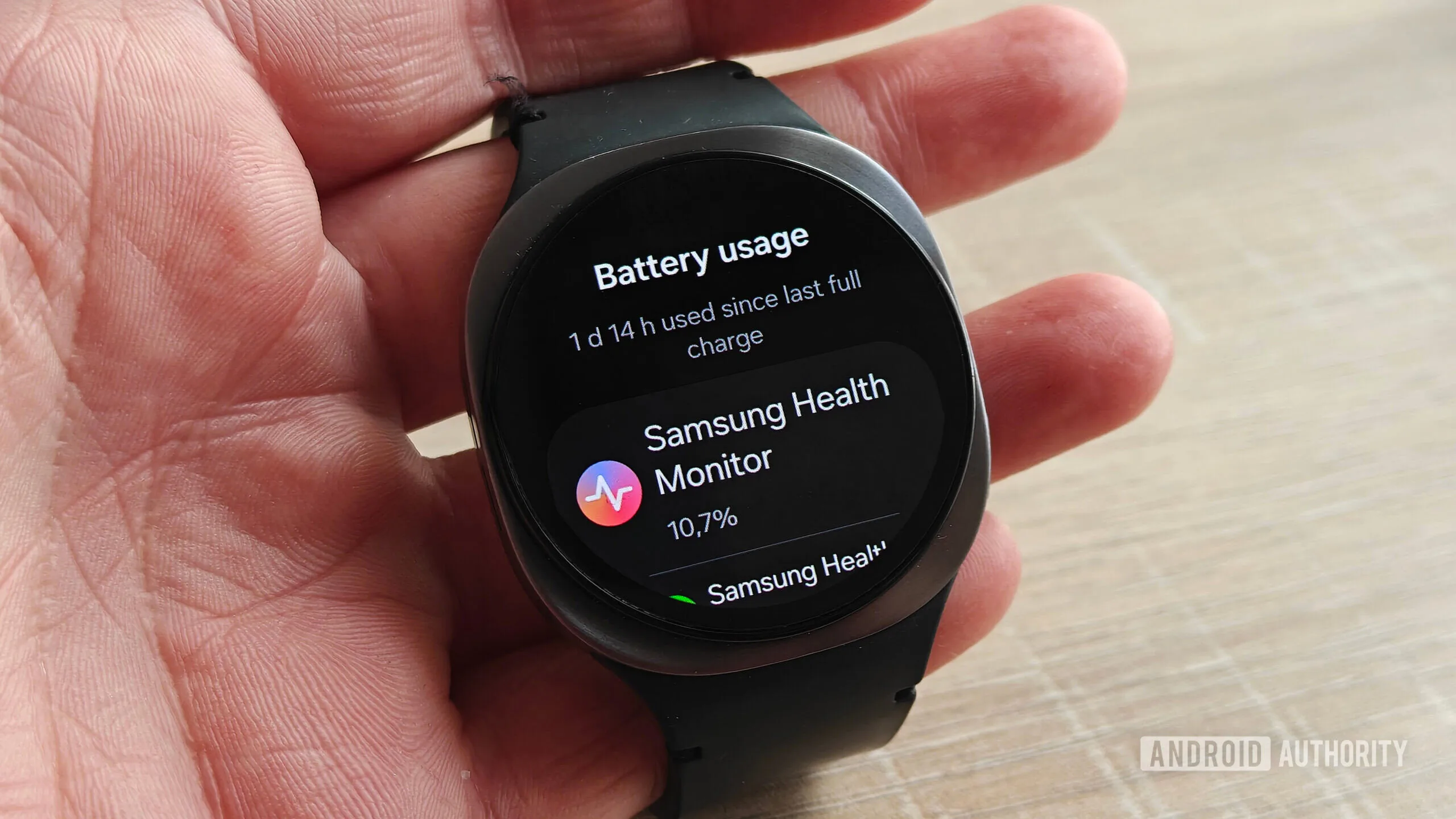
The concern became sharper after an earlier Galaxy Watch 8 update was linked by users to noticeably heavier drain. Reports pointed at different background culprits, including Samsung Health Monitor and Google Play, which makes the problem harder to diagnose from the outside. The lesson, however, is hard to miss. Software efficiency is not a footnote to smartwatch endurance; it can make or break the experience after the product has already been sold.
For the Galaxy Watch 9, Samsung should treat a reliable two full days as the floor, not the headline. Three days in ordinary use would be much more compelling. And the company needs to protect that result through updates. There is little value in a launch-day estimate if a later patch quietly turns the watch into a 36-hour device.
Samsung has real technical routes to a better result
There are no magic batteries, despite what gadget marketing sometimes suggests. Samsung can improve the Galaxy Watch 9 through a mix of the boring and the ambitious: a modestly larger cell, more aggressive background-task controls, display tuning, smarter sensor scheduling, and faster charging. All of those choices involve trade-offs in size, heat, price, and functionality. The competition makes one thing clear: the category is not stuck at two days.
OnePlus, for example, has used a dual-engine approach in its Watch line, assigning low-power tasks to a separate operating environment while reserving full Wear OS for moments that need it. The result is endurance measured in several days rather than a couple. Xiaomi has also pushed silicon-carbon battery technology into wearables, a chemistry that can pack more capacity into a constrained physical space. HONOR’s long-lasting watches offer the simpler, if less app-rich, alternative: use a proprietary operating system instead of Wear OS.
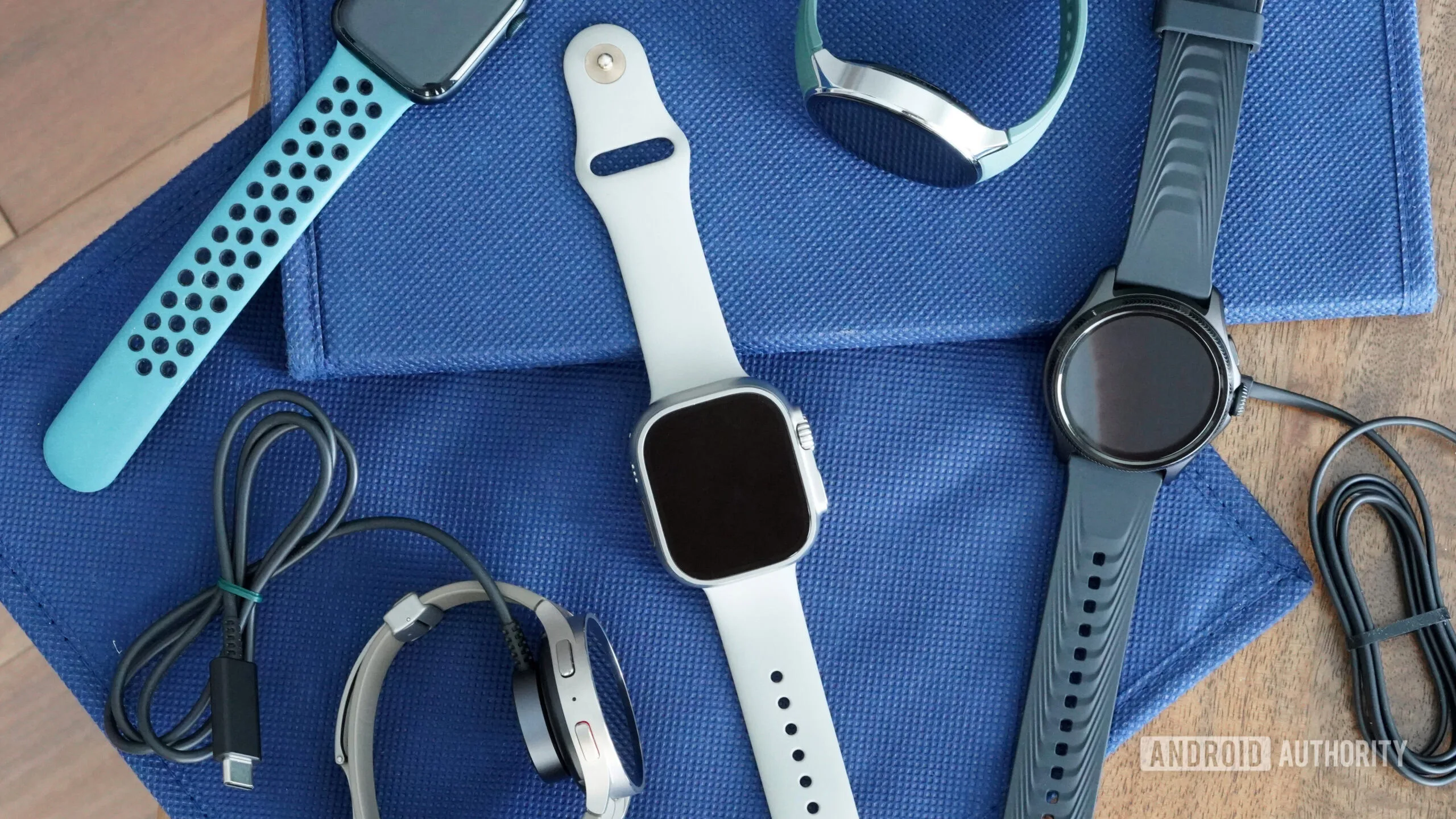
That comparison matters. A watch lasting two weeks while doing less is not automatically a better watch than a richly connected model lasting two days. It does, however, change what buyers expect. Fitbit’s newer lightweight wearables and traditional fitness trackers have long made a similar argument: health monitoring is more useful when you don’t have to interrupt it constantly to charge.
Samsung does not need to abandon Wear OS to make the Galaxy Watch 9 more practical. Frankly, it shouldn’t. Google’s platform remains one of the best reasons to choose a Galaxy Watch over a basic tracker. The better answer is to preserve that software advantage while borrowing the power discipline that competitors have taken more seriously. A silicon-carbon cell would be an intriguing hardware move; a more intelligently managed dual-mode system might have an even larger effect over time.
Health features should not come with a Galaxy phone tax
Battery life is the immediate complaint, but Samsung has another self-inflicted limitation to address. Several of its most marketable health features, including ECG readings, blood-pressure monitoring, irregular heart-rhythm notifications, and sleep-apnea detection in supported regions, are tied to using a Samsung phone. The fine print is especially irritating because these are precisely the functions that persuade health-conscious Android buyers to pay for a premium watch.
Certain health features are region- and device-locked and require a Galaxy smartphone. Regulatory constraints are real, particularly around blood-pressure and ECG functions. But the Galaxy-phone requirement is a business decision layered on top of that reality. A Pixel or OnePlus owner can buy the hardware and still find key software doors locked.
The Galaxy Watch 9 would be a stronger Android product if Samsung separated safety requirements from ecosystem lock-in. Google has generally positioned Wear OS as an Android-wide platform; Samsung’s watch should not feel like a membership card for its phone division. At minimum, the company should plainly explain which restrictions are legal requirements and which are strategic choices.
AI will be background noise unless Samsung fixes the basics
Samsung has teased new health insights and AI-assisted features for its next watch software, including tools intended to flag changes from a user’s personal baseline. That could be genuinely useful. A recovery system that recognizes exhaustion or illness is better than a cheery notification telling someone with a fever to chase an activity target. The Galaxy Watch 9 has an opportunity to make wellness tracking feel less like a nagging gym poster and more like a sensible long-term record.
AI is not the story until the hardware earns the right to support it. Every new sensor reading, coaching suggestion, and background analysis asks the battery to do more work. If Samsung announces a handful of flashy intelligence features without demonstrating a substantial endurance gain, it will feel like putting a better navigation system in a car with a smaller fuel tank.
That is the real test for the Galaxy Watch 9. Samsung doesn’t need to win the spec-sheet Olympics. It needs to make a watch people can wear through a normal week without repeatedly wondering whether it will survive the night. If it can do that while opening its health platform to more Android users, the next Galaxy Watch could finally feel less like a capable accessory and more like a dependable one.