Samsung appears ready to make the Galaxy Watch 9 more than its usual annual spec refresh. Leaked marketing material, circulated by veteran leaker Evan Blass ahead of Samsung’s July 22 Unpacked event, points to a Qualcomm-powered mainstream watch and a Galaxy Watch Ultra 2 with the sort of hardware upgrades that are easy to understand: much more battery capacity, a brighter screen, and a tougher build.
That last part matters. Smartwatch makers have become very good at adding wellness labels and AI-flavored scores; they’ve been less consistent about solving the daily annoyance of a watch that needs another charge before a weekend is over. If these slides are accurate, Samsung’s premium model is aiming squarely at that weak spot.
- The Galaxy Watch 9 leak points to Samsung adopting Qualcomm’s Snapdragon Wear Elite processor and three understated case color options.
- Galaxy Watch 9 health screens reportedly show sleep apnea detection, running coaching, vitals monitoring, Energy Score, and Sleep Score tools.
- Samsung’s Watch Ultra 2 could pair a larger 800mAh battery with a 5,000-nit display and titanium construction.
- The leaked IP69K rating suggests Samsung wants its premium outdoor watch to compete more directly on durability, not merely software.
Table of Contents
Galaxy Watch 9 reportedly moves to Snapdragon
The biggest claim around the standard Galaxy Watch 9 is its processor. The leak identifies Qualcomm’s Snapdragon Wear Elite platform, backing up earlier reporting that both new Samsung watches would use the same chip family. Samsung has historically used its own Exynos silicon in Galaxy Watches, so a Qualcomm switch would be a meaningful change rather than an invisible line on a spec sheet.
We don’t yet know the precise performance, efficiency, or software implications because Samsung has not announced the watches. But a new platform could matter most in the boring, valuable places: smoother interface transitions, faster app launches, more stable GPS tracking, and less battery loss when health tracking is running in the background. Those are the things owners notice after the launch-day novelty wears off.
The leaked Galaxy Watch 9 materials show three case finishes: Cream, Silver, and Graphite. Cream is the interesting one. It sounds like Samsung is continuing the softer, more fashion-conscious look it has brought to parts of its Galaxy lineup, while Graphite provides the safe option for people who don’t want their wristwear to look like a tiny piece of jewelry.
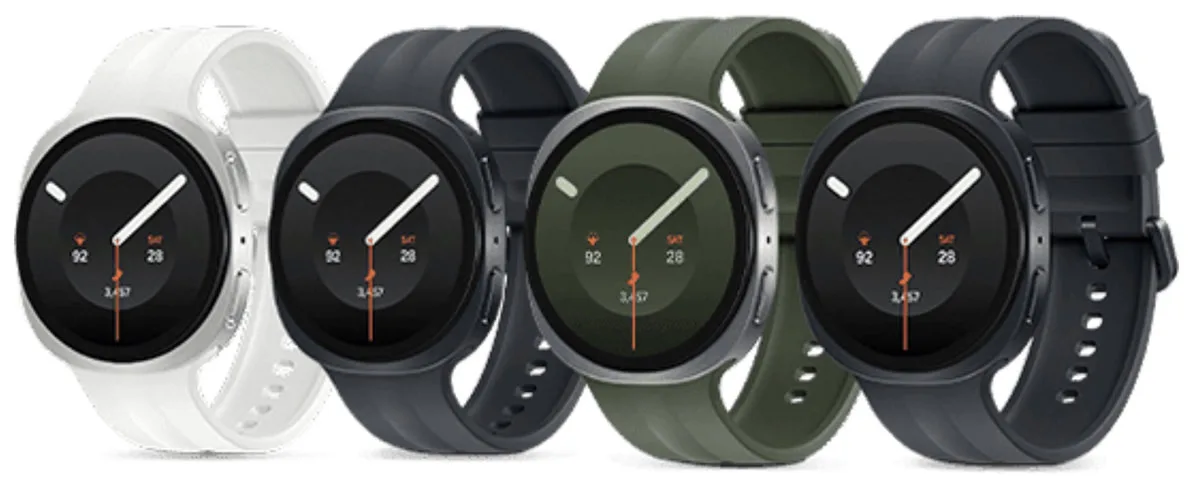
Band colors are also visible in the apparent promotional images, though accessories are generally the least dependable part of a pre-launch leak. Samsung has a long history of mixing cases and bands into a confusingly large retail menu, and I’d expect that to continue.
Galaxy Watch 9 health features look familiar, but useful
Samsung’s software pitch for the Galaxy Watch 9 looks built around health summaries rather than a single new sensor. The images reference Sleep Apnea detection, Energy Score, Sleep Score, Vitals, and a Running Coach. This is broadly the same direction the company has been heading: turn overnight data, activity records, and heart-rate readings into a simple answer about whether you should push through a workout or perhaps take the hint and rest.
That framing is sensible. Raw fitness data can feel like being handed a car’s diagnostic report when all you asked was whether you have enough fuel to get home. A running coach and daily readiness-style score can be genuinely helpful if the advice is consistent and transparent about how it reaches its conclusions.
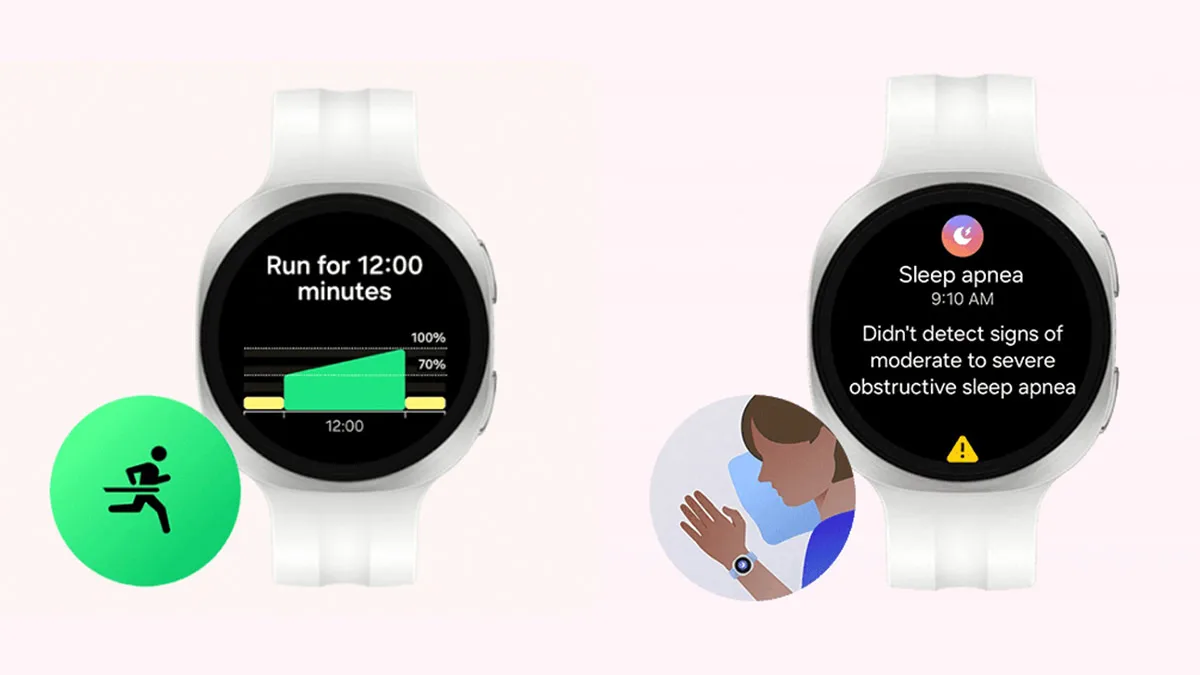
Still, health claims deserve a little restraint. Sleep apnea functions can be subject to regulatory approval and regional availability, and a consumer wearable is not a replacement for medical advice or a clinical diagnosis. Samsung should be explicit about where each tool works and what it can actually detect. The industry has learned, sometimes painfully, that a glossy health dashboard can create more confidence than the underlying data warrants.
For Samsung owners, integration remains a major advantage. Galaxy Watches work most naturally alongside Galaxy phones, Samsung Health, and the company’s broader Android ecosystem. That convenience is the actual competitive argument against Apple Watch for Android users, not another animated ring on a watch face.
Galaxy Watch Ultra 2 may finally tackle endurance
The more consequential hardware leak is about the Galaxy Watch Ultra 2. According to the marketing material, it will use a titanium case, measure 12% thinner than its predecessor, carry an 800mAh battery, and hit 5,000 nits of peak display brightness. For comparison, the first Galaxy Watch Ultra had a 590mAh battery and a display rated up to 3,000 nits.
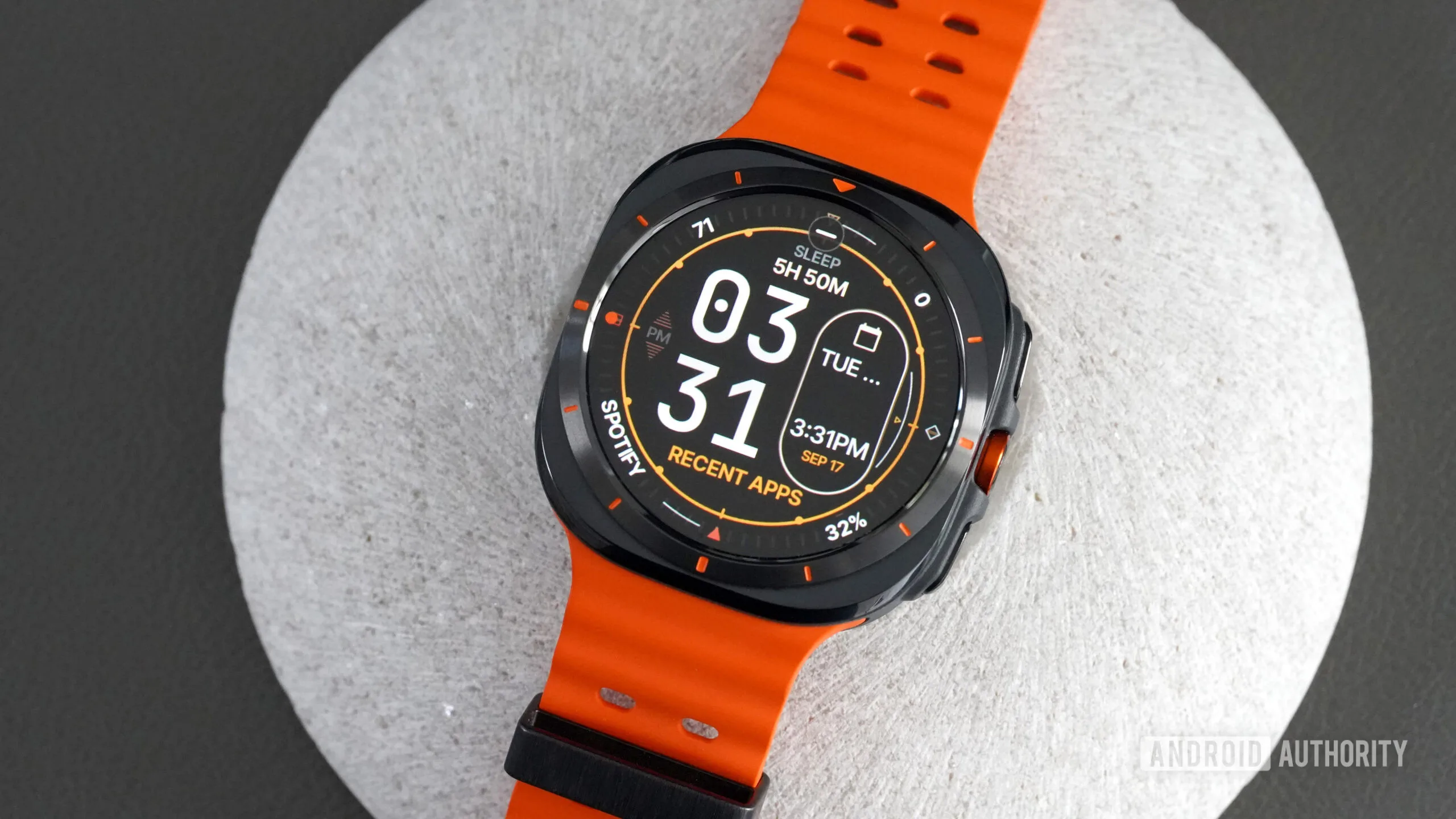
An 800mAh cell would represent a substantial capacity increase on paper. Battery life never scales perfectly with battery size, of course: a brighter screen, more demanding chip, GPS workouts, cellular connectivity, and always-on display settings can consume any advantage in a hurry. But the combination of a new processor and that capacity figure suggests Samsung understands that its Ultra model needs to earn the name with real endurance.
The 5,000-nit display claim is similarly ambitious. Peak brightness figures are usually measured in limited conditions rather than sustained all-day use, but the practical benefit is clear: maps, workout metrics, and notifications should remain legible in hard sunlight. Anyone who has tried to read a dim smartwatch screen halfway through a run knows why this is not a vanity spec.
Then there’s IP69K. The rating is designed around protection against dust and high-pressure, high-temperature water jets. It does not automatically tell buyers how the watch behaves in every swimming or diving scenario, so Samsung’s final water-resistance guidance will still matter. Yet paired with titanium, it signals a device designed to be knocked about rather than pampered.
Samsung’s real test is whether the upgrades show up in daily use
Leaks are not launch announcements, and marketing decks can omit plenty of caveats. Samsung’s official product pages on July 22 will need to settle pricing, regional availability, compatibility, charging speeds, and the precise capabilities of Snapdragon Wear Elite.
On paper, at least, the strategy hangs together. The standard Galaxy Watch 9 may get a platform change just when Wear OS watches need to feel less sluggish and less dependent on daily charging. The Ultra 2, meanwhile, looks as though it could be getting the one thing a premium adventure watch cannot fake: more physical headroom.
My read is that Samsung is trying to make its watch strategy less about matching Apple feature for feature and more about removing the compromises Android users have tolerated for too long. If the battery claim translates into meaningful real-world time off the charger, the Galaxy Watch Ultra 2 could be the product that makes that argument stick.