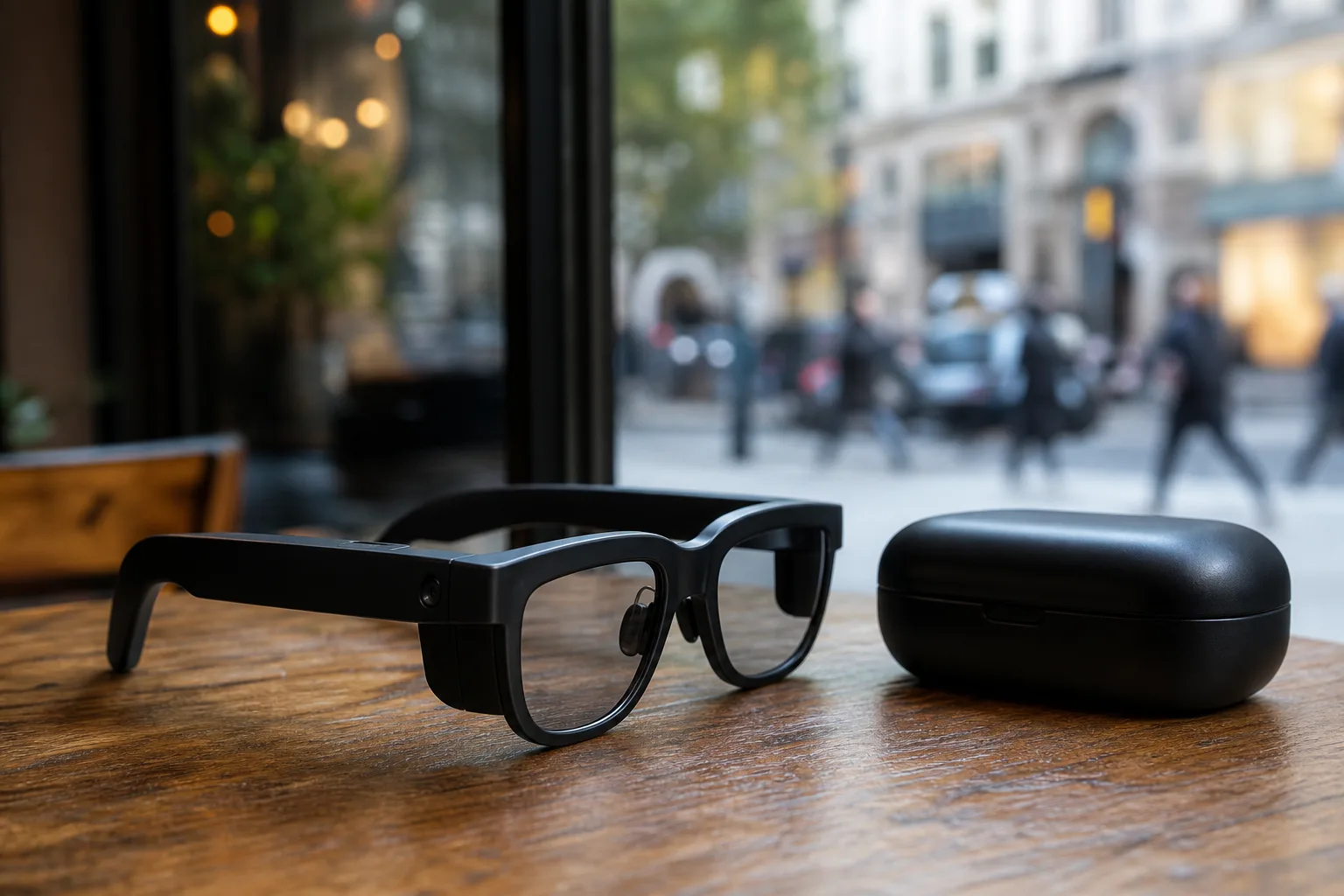
- Samsung Google smart glasses pair a camera, Gemini Live, and conventional eyewear styling in a direct challenge to Meta’s Ray-Ban line.
- The Samsung Google smart glasses privacy indicator must resist tampering, because public trust can disappear faster than any hardware feature gains traction.
- Google Meet demonstrations and visual AI assistance offer legitimate hands-free uses, from reading signs to identifying plants.
- Nine hours of stated battery life and seven case recharges suggest Samsung is targeting frequent use rather than occasional gadget novelty.
Table of Contents
Samsung Google smart glasses have a trust problem to solve
A camera on your face changes a room. That basic fact is hanging over the Samsung Google smart glasses, the AI eyewear Samsung previewed at its latest Unpacked event alongside Google, Qualcomm, Warby Parker, and Gentle Monster. The hardware may look like an ordinary pair of frames — especially the Warby Parker version — but everyone nearby knows the category is anything but ordinary.
For Samsung Google smart glasses, that social reality may matter as much as the underlying AI or camera hardware.
Meta proved there is a real market for camera glasses. Its Ray-Ban Meta products have become the rare wearable that people actually take out of the house: useful for quick photos, short video, music, calls, and asking an AI about what it can see. But Meta also inherited the awkward social baggage that comes with putting a discreet camera at eye level. Critics have taken to calling these products “perv glasses,” a deliberately abrasive label that gets at a reasonable fear: can bystanders tell when they are being recorded, and can they trust that signal?
My read is that Samsung and Google have a better chance than Meta of selling the AI part of this story. They do not, however, get to skip the creepy-camera part just because Gemini is involved.
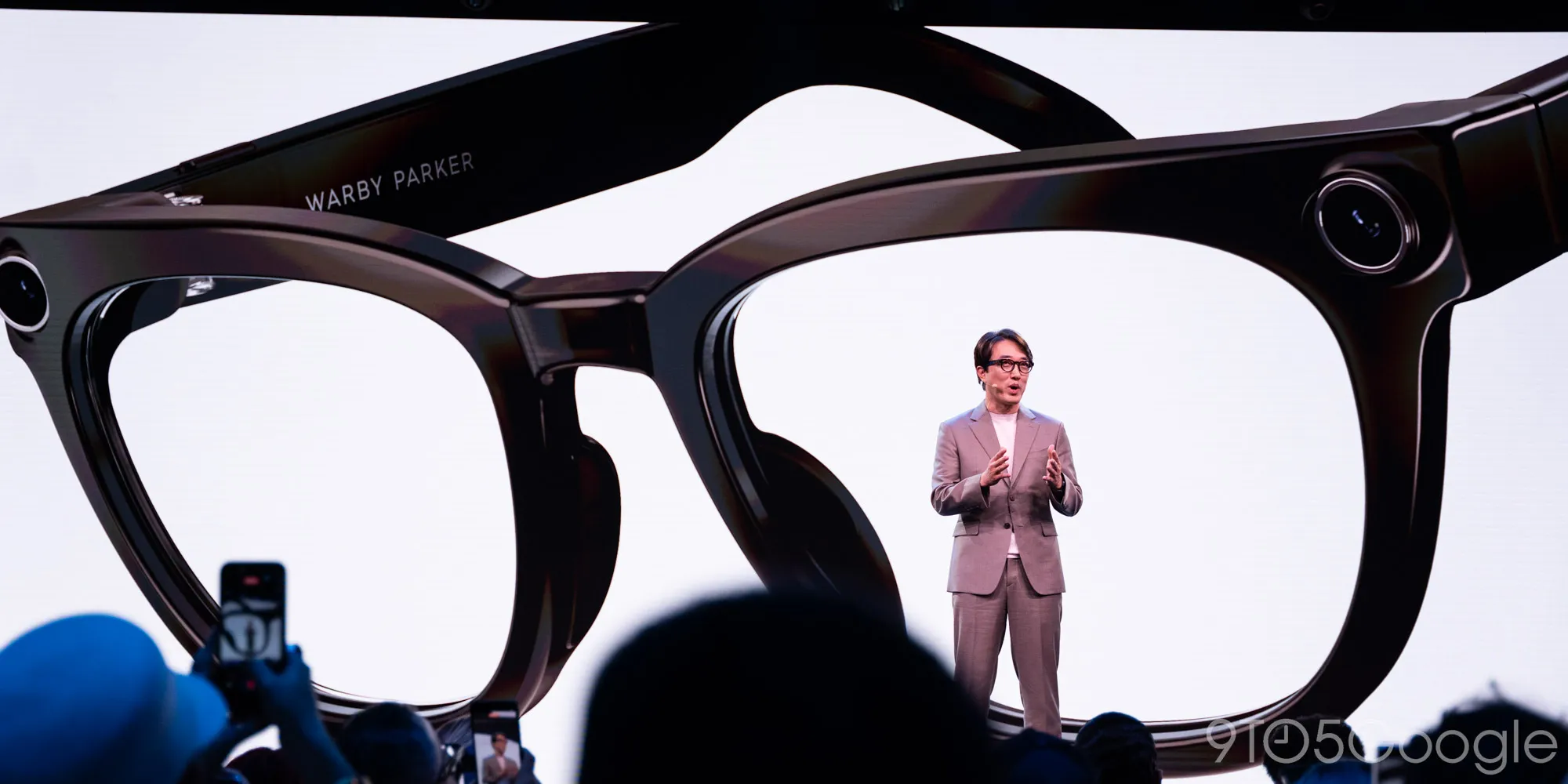
The companies have said the glasses are designed with a recording privacy light and protections against tampering. That is not a footnote. It is the product. A recording LED is only useful if it is bright, obvious, hard to disable, and treated as a non-negotiable hardware safety feature rather than decorative ambience. Meta recently pushed a mandatory update that disables recording on modified glasses when it detects hardware tampering, after a small but worrying market emerged for altered units with disabled indicator lights.
That episode should be required reading in Mountain View and Suwon. A product team can build a technically impressive camera and still lose the cultural argument because a handful of bad actors turn it into a surveillance accessory. Remember Google Glass? The original product was less capable than today’s camera glasses by a country mile, yet its public image was poisoned by the possibility of covert recording. The term “Glasshole” outlived the device.
Why Gemini could make the glasses useful
The most convincing pitch for Samsung Google smart glasses is not filming strangers. It is hands-free computing when a phone is inconvenient, distracting, or buried in a bag. Samsung’s demo reportedly included Google Meet use, allowing someone to show another participant what they are seeing. Think remote technical support, a walkthrough of an apartment, or an employee asking a colleague to inspect a piece of equipment without both people standing over it.
Gemini is the other piece. The glasses are expected to use Gemini Live for conversational visual assistance: reading information on a poster, answering questions about an object, or identifying a plant while you are outside. None of that is magic, and visual AI remains prone to confident mistakes. Ask it to interpret a legal notice, a medical label, or an unfamiliar species, and you should verify the answer. Still, the interaction model makes intuitive sense. Talking to an assistant while looking at the thing you mean is often simpler than opening a phone, framing a photo, typing a question, and hoping the app understands the context.
Google has spent the past two years trying to turn Gemini from a chatbot into a persistent assistant across Android, Search, and Workspace. Samsung Google smart glasses could be its most natural interface yet. Phones made us stare down at rectangles; voice-first glasses could, in theory, let people stay present in the physical world. That is the appeal, anyway. Whether people want to speak to an AI on a sidewalk is another matter. We have all seen someone barking into their earbuds at a grocery store. It can feel a bit like watching a one-person conference call escape its enclosure.
Meta has the lead, but not an unbreakable one
Samsung is entering an established race, not inventing a new category. Meta has years of retail distribution through EssilorLuxottica’s Ray-Ban network, a recognizable design language, and an enormous head start in learning how customers use face cameras. Apple is widely expected to have eyewear ambitions of its own, while Snap has been refining augmented-reality glasses for years, largely for developers and enthusiasts. Qualcomm’s presence in Samsung’s effort matters because low-power wearable computing is an unforgiving engineering exercise: heat, weight, battery life, microphones, cameras, radios, and on-device AI all compete for a tiny amount of space.
Samsung’s stated battery target — nine hours on the glasses, plus seven additional charges from the case — is respectable if it holds up under real-world camera and AI use. That arithmetic implies the case will matter as much as the frames. It also suggests the company is aiming for an accessory people wear throughout a day, not a gadget used for ten-minute demos. Battery figures are always optimistic until independent testing arrives, but this is at least the right target. Nobody wants to treat their glasses like a gaming laptop with a charger permanently nearby.
The fashion partnerships may be more consequential than the chip specifications. Warby Parker and Gentle Monster bring different aesthetics and retail credibility, and that could help the Samsung Google smart glasses avoid looking like a developer kit. Prescription compatibility, fit range, lens options, repair policies, and whether a person feels comfortable wearing them at dinner will matter far more than a benchmark chart.
The recording light must be a social contract
The hardest part of Samsung Google smart glasses will be winning acceptance from people who never buy them. A smartphone camera is visible because the user has to hold it up. A camera built into eyewear removes that obvious physical cue. That creates an asymmetry: the wearer gets convenience, while everyone else has to rely on the company’s indicator light and rules.
Samsung should go further than a basic LED. It should make the indicator large enough to see in daylight, publish clear technical details on how tamper detection works, respond aggressively to modification services, and make recording behavior understandable without an instruction manual. Google, for its part, should clearly explain where Gemini’s visual data goes, how long it is retained, and which features run locally versus in the cloud. Trust is built in boring details: defaults, disclosures, and enforcement.
Google already has a model for this kind of transparency. Its AI responsibility materials lay out broad principles, but consumer hardware needs product-specific answers, not principles framed for a keynote slide. If a bystander sees a light, what exactly does it mean? Is video being saved? Is audio being captured? Is imagery being sent to an AI service? Those distinctions matter.
Frankly, the companies should expect skepticism and design for it rather than act offended by it. If the Samsung Google smart glasses work as promised, they could make visual AI genuinely practical without forcing users to hold a phone between themselves and the world. But this category will not be judged only by what wearers can do. It will be judged by whether everyone around them feels they still have a reasonable expectation of not being quietly turned into content.