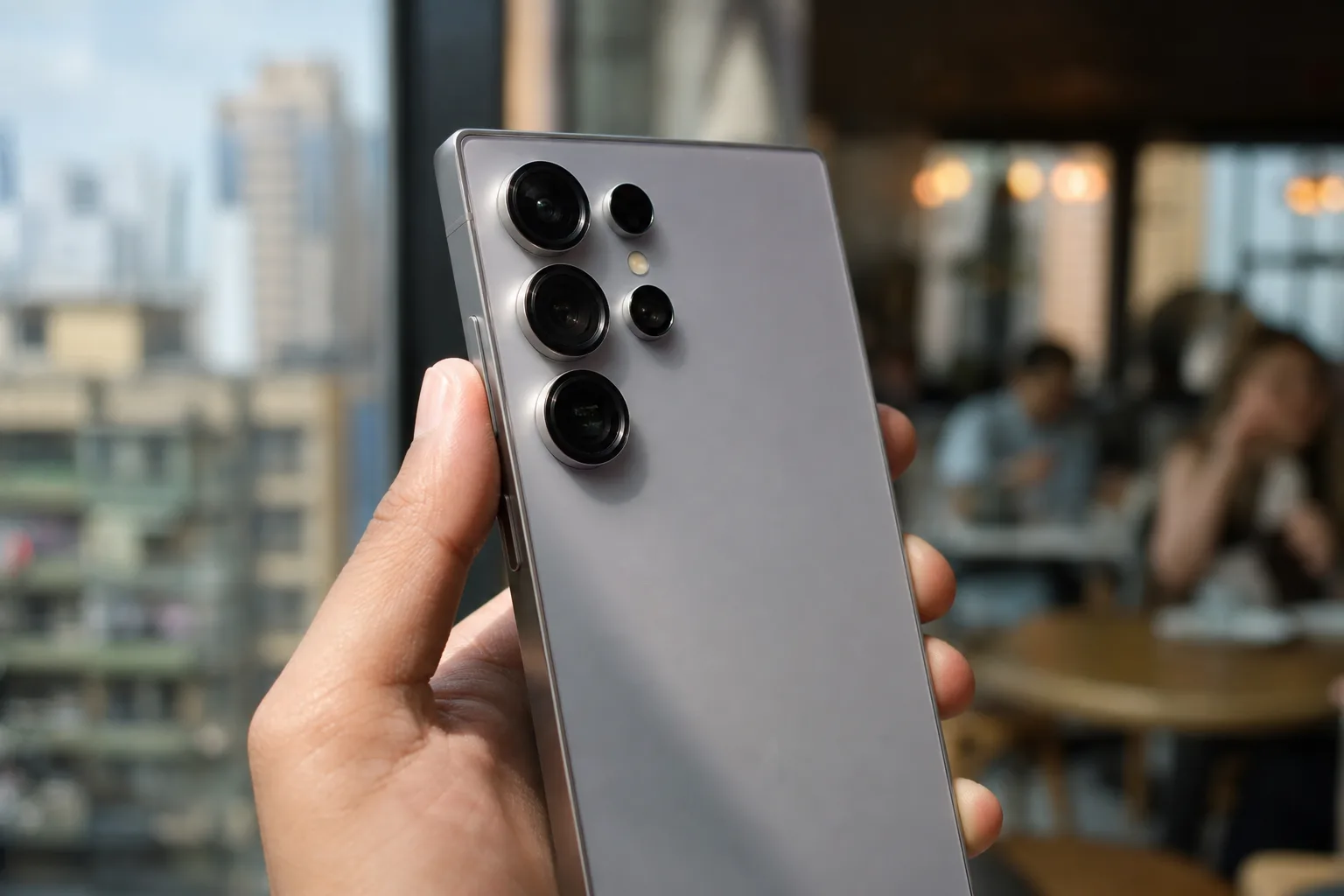
Samsung has spent years telling buyers that its in-house camera silicon belongs at the heart of its flagship phones. The Galaxy S27 camera may be where that story changes. A new report from Dutch outlet Galaxy Club says the standard Galaxy S27 and Galaxy S27 Plus could adopt a 50-megapixel Sony sensor for their primary cameras, rather than another Samsung ISOCELL component.
On paper, that sounds like an ordinary supplier swap. Smartphone camera specs have become a graveyard of numbers that look impressive in launch slides and mean little in a dim restaurant at 9 p.m. But Samsung’s reported move matters precisely because it would be unusual: its Galaxy S flagships have used Samsung-made main sensors since the Galaxy S22 generation. If the report holds, Samsung is admitting that vertical integration has limits — or, at minimum, that Sony has something it wants.
- The Galaxy S27 camera could use a Sony-made 50-megapixel main sensor, ending Samsung’s recent reliance on ISOCELL hardware.
- A Sony Galaxy S27 camera sensor would not guarantee better photos, but it could change Samsung’s imaging priorities and supply strategy.
- Galaxy S27 Pro and Ultra models are also rumored to receive a 50-megapixel ultrawide camera and 16-megapixel selfie camera.
- Samsung’s rumored Privacy Display feature may prove more contentious than the camera upgrades if it affects brightness, viewing angles, or comfort.
Table of Contents
Why the Galaxy S27 camera rumor matters
The headline number is not the interesting part. A 50-megapixel primary sensor will be routine territory in a 2027 flagship. What catches my eye is the alleged manufacturer. Sony has long been the dominant name in premium mobile image sensors, supplying parts to a broad list of rivals while Samsung has tried to build its ISOCELL brand into a credible alternative.
Samsung’s own sensor division is hardly an amateur operation. Its mobile image sensor business has delivered high-resolution components and clever pixel-binning designs for years. Yet the company’s best phones have sometimes been caught in a familiar Samsung problem: excellent hardware, inconsistent processing. Photos can look punchy and detailed one moment, then heavily sharpened or oddly exposed the next. Anyone who has compared a Galaxy shot with an iPhone or Pixel image knows the feeling.
A Sony sensor would not magically cure that. For the Galaxy S27 camera, sensor choice is only one ingredient in the photo pipeline; lens quality, autofocus, optical stabilization, image signal processing, and computational photography all pull their weight. Google has demonstrated that software can get extraordinary mileage from relatively conservative hardware. Apple has made a similar argument for years. Still, Sony components often give phone makers a strong baseline for dynamic range, autofocus behavior, and low-light capture.
A Sony-backed Galaxy S27 camera would say more about Samsung’s priorities than guarantee better photos. The company may be chasing a higher image-quality ceiling, more flexible supply, or simply a way to distinguish the lower-end models from their predecessors without joining another silly megapixel arms race.
A 50MP sensor needs more than a new name
There’s a trap in treating sensor branding like a restaurant rating. A Sony sensor can be excellent in one phone and merely fine in another because the phone maker controls the lens stack and tuning. Sony’s own Xperia phones are the obvious example: they often pack serious photography hardware but have not consistently beaten Samsung, Google, or Apple in simple point-and-shoot use.
For the Galaxy S27 camera to feel materially better, Samsung needs to make practical improvements. Faster shutter response would help with children, pets, and moving subjects. More reliable skin tones and less aggressive sharpening would help everyone. And Samsung needs to stop treating night mode as an excuse to turn a scene into a brightly lit watercolor.
There is also a business angle. Samsung Electronics and Samsung Semiconductor sit under the same corporate umbrella, but they do not operate as one cozy kitchen table. The phone division can buy parts externally if an outside component better meets its price, performance, or production needs. That can sting internally, yet it is how a company avoids designing products around organizational loyalty rather than the best available part.
The report does not identify the specific Sony sensor, its physical size, or pixel dimensions. Those details are where the real verdict will lie. A larger 50MP sensor with a brighter lens could produce a noticeable leap; a conservative part paired with modest optics might make this a sourcing footnote. We simply do not know yet.
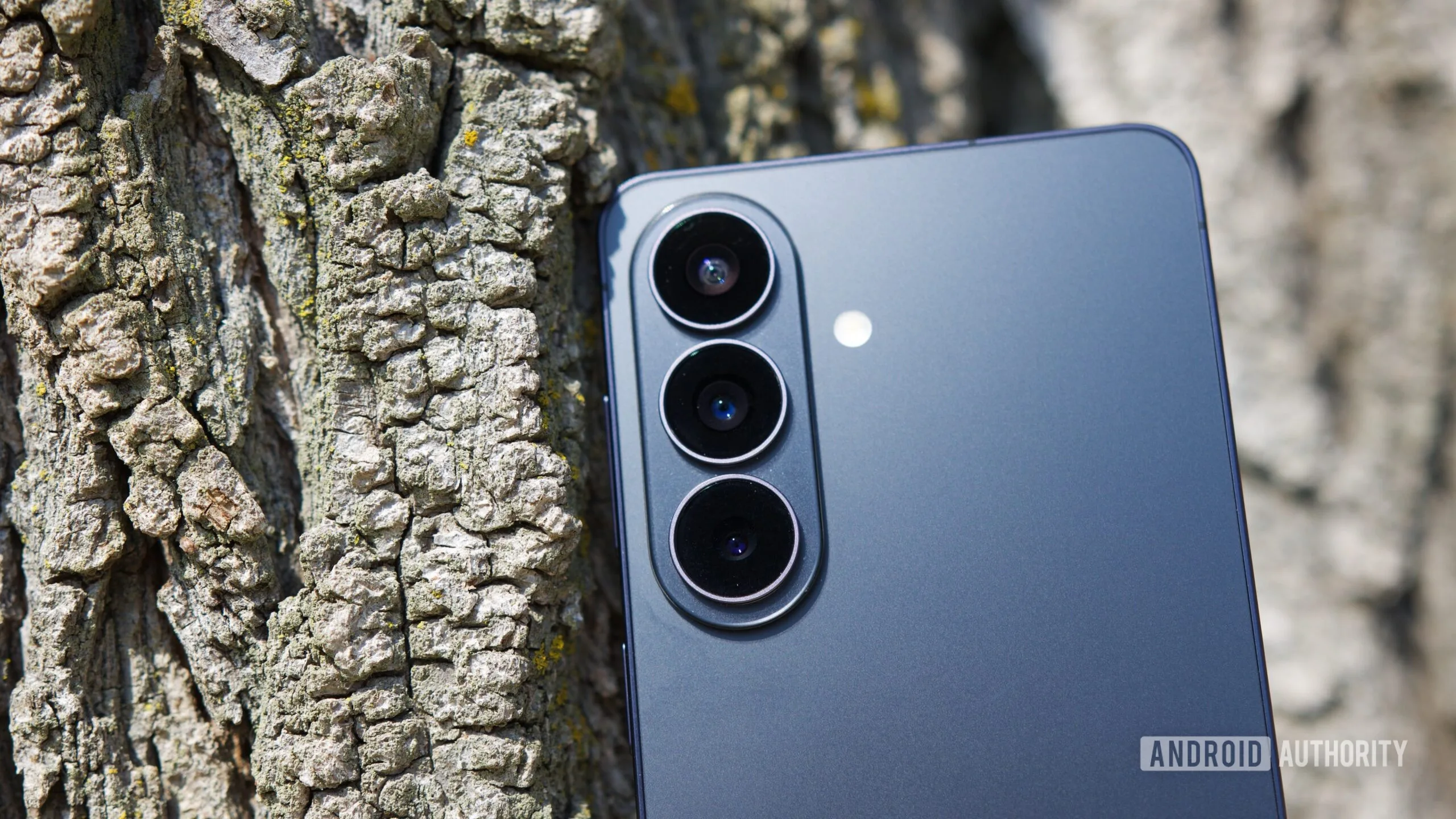
The rear camera array on Samsung’s current Galaxy S26 shows the familiar design language the company is expected to refine again next year.
The Galaxy S27 camera could widen the gap between models
Galaxy Club’s report also points to a new 50-megapixel ultrawide camera for the Galaxy S27 Pro and Galaxy S27 Ultra. That would be a more immediately useful upgrade than it sounds. Ultrawides remain the neglected sibling in many flagship camera systems: fun outdoors, frustrating indoors, and often soft around the edges even when the main camera is excellent.
A higher-resolution ultrawide could improve cropping and detail, but sensor size and autofocus matter more than the headline figure. Samsung’s Ultra models have traditionally carried the company’s most ambitious camera hardware, so limiting the upgrade to Pro and Ultra variants would fit its usual product ladder. The standard model and Plus could get the Sony main sensor while the pricier phones receive a stronger all-around imaging package.
The same split may apply to the front camera. Earlier reporting has suggested a 16-megapixel selfie camera for the Pro and Ultra, while it remains unclear whether the base and Plus phones would leave behind the 12-megapixel unit Samsung has used since the Galaxy S23. Frankly, megapixels are not the selfie-camera crisis. Better motion handling and less face-smoothing would be more welcome than another number on a spec sheet.
Privacy Display may be the bigger gamble
Camera talk is naturally more glamorous, but the most divisive Galaxy S27 rumor may be Samsung’s possible expansion of Privacy Display hardware across the lineup. The idea is simple: make a screen harder for people beside you to read. That is genuinely useful on trains, in airports, and in open-plan offices where everyone’s laptop seems to be angled directly at your inbox.
Yet privacy-screen technology has trade-offs. Narrower viewing angles can compromise the display experience, and reports around Samsung’s existing implementation have raised concerns about dimness and eye strain. If Samsung makes the feature unavoidable rather than optional, it risks solving a problem many users do not have while introducing one they will notice every day.
Samsung usually unveils its Galaxy S phones early in the year, although the Galaxy S26 series arrived later than its typical cadence and began shipping in early March. There is still plenty of time for leaks, revisions, and the occasional rumor to quietly disappear. The Galaxy S27 camera report is credible enough to watch, not solid enough to treat as settled fact.
My read is that Samsung should be judged less on whether it buys from Sony and more on what it does with the component. The Galaxy S27 camera will succeed or fail on the consistency of its results, not the logo printed on its sensor. A better sensor is the easy part. Making the Galaxy S27 consistently take the photo people wanted — without a second attempt, a special mode, or a small prayer to the autofocus gods — is the harder job.