

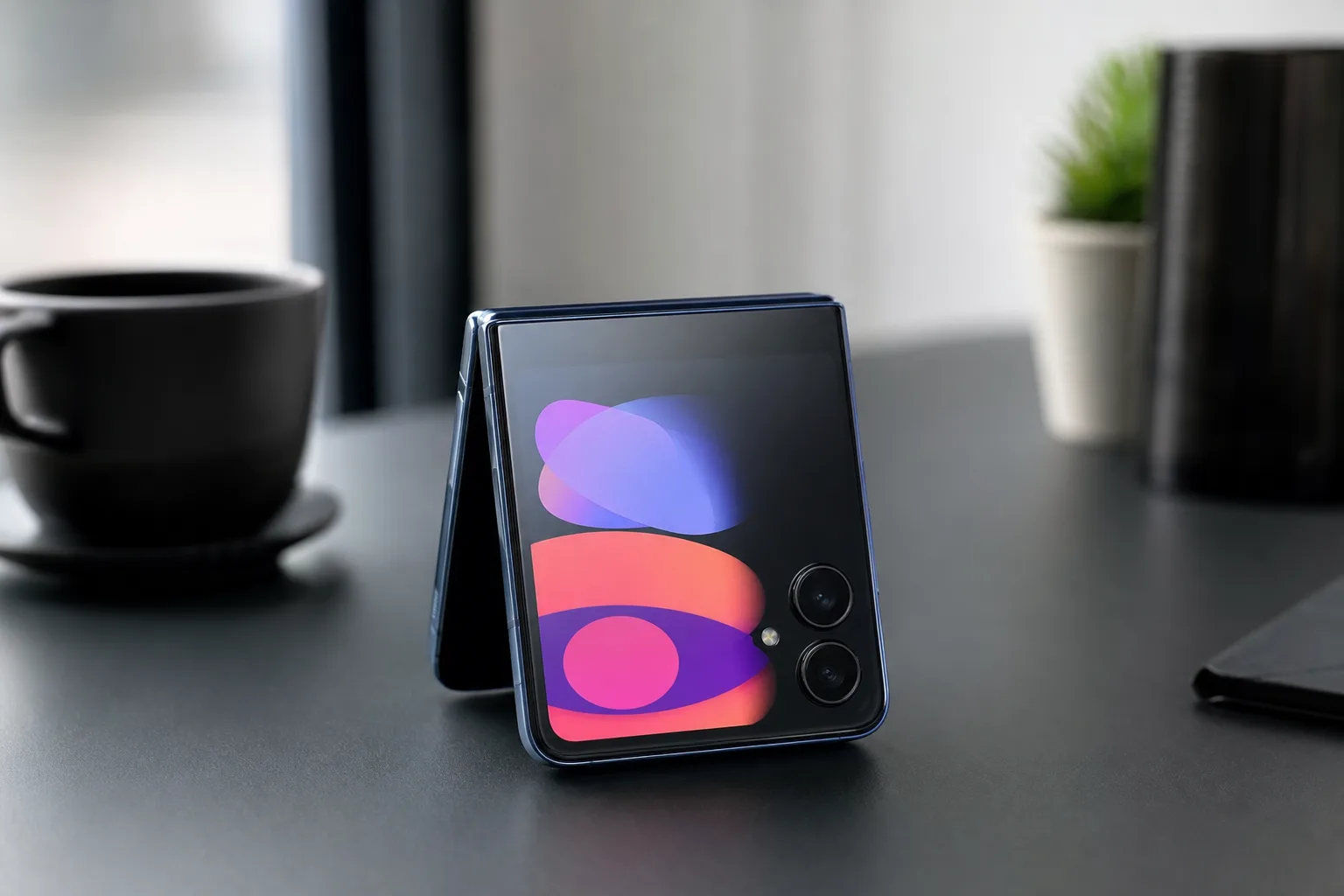
- The Galaxy Z Flip 8 adds a much faster Snapdragon processor, but retains the same battery, charging speeds, and camera hardware.
- Galaxy Z Flip 8 owners coming from the Z Flip 7 will see refinement rather than a compelling reason to trade in.
- Samsung’s improved cover-screen software may matter more in daily use than its modest reduction in thickness and weight.
- A discounted Z Flip 7 could be the smarter buy for shoppers who want Samsung’s foldable design without paying launch pricing.
Table of Contents
Galaxy Z Flip 8 is a refinement, not a reset
Samsung’s latest clamshell arrives with a familiar problem: the Galaxy Z Flip 8 looks like the phone it replaces because, in most meaningful ways, it is. That isn’t automatically a bad thing. The Z Flip 7 was already a polished take on the pocketable foldable formula. But for anyone hoping Samsung would finally address the category’s recurring weak spots — battery endurance, charging speed, or camera flexibility — this year’s update feels conspicuously conservative.
The headline change is inside the shell. Samsung has swapped last year’s Exynos 2500 for Qualcomm’s Snapdragon 8 Elite Gen 5 for Galaxy, claiming a 30% CPU performance gain and a 25% lift in graphics performance. Those are serious figures if they hold up in independent testing. They should make the phone more comfortable with demanding games, video editing, multitasking, and the growing pile of AI-assisted features manufacturers now insist belong in every smartphone.
But a fast chip is only one part of the experience. The Galaxy Z Flip 8 is asking shoppers to pay more for what amounts to a better engine in almost exactly the same car.
The useful upgrades are mostly invisible
Samsung trimmed the new model to 6.1mm when unfolded, down from 6.5mm, and reduced weight from 188g to 180g. Eight grams won’t transform anyone’s life, obviously, but foldables are unusually sensitive to bulk. A flip phone earns its keep by disappearing into a pocket or small bag, so every fraction of a millimeter is earned rather than decorative.
The other practical improvement is Samsung’s FlexWindow, the 4.1-inch outer display used while the phone is shut. Samsung says it has made app access, widgets, layouts, and feature controls more coherent, reducing the number of times users need to unfold the phone. That sounds mundane until you actually live with one of these devices. The cover screen is the front door of a flip phone; if it’s awkward, the entire design starts to feel like a fidget toy with a monthly payment.
Samsung has gradually learned this lesson after years of treating the outside panel as a notification ticker with ambitions. Motorola, meanwhile, has made a point of putting more useful software on the large outer displays of its Razr line. The Galaxy Z Flip 8 appears to be closing that usability gap, although the real question is how many apps Samsung allows to work naturally without workaround software.
Its core specifications otherwise read like a copy-and-paste exercise: a 6.9-inch 120Hz AMOLED inner display, 4.1-inch cover display, 4,300mAh battery, 12GB of RAM, IP48 protection, and the same storage configurations. IP48 is better than the early days of fragile foldables, but buyers should understand what it means: water resistance, yes; immunity from beach sand and pocket grit, no. Hinges remain moving parts, and moving parts remain where expensive phones age least gracefully.
The camera and battery omissions are hard to ignore
The Galaxy Z Flip 8 keeps a 50-megapixel main camera and 12-megapixel ultrawide, with no dedicated telephoto lens. Samsung is instead promoting upgraded AI processing, Photo Assist tools, and a Super Steady Horizontal Lock stabilization feature. Better processing can help with skin tones, dynamic range, night shots, and shaky clips. It can’t manufacture the optical reach of a proper zoom camera.
That distinction matters because flip phones are no longer novelty purchases. Samsung prices them against conventional flagships, where buyers can reasonably expect cameras that work across a wider range of situations. A parent photographing a child from the sidelines, or a traveler trying to frame a distant building, may find software cleverness less persuasive than a 3x lens. Frankly, Samsung has been able to get away with this because compact foldables leave little room for ambitious camera hardware. That excuse becomes thinner each year the category matures.
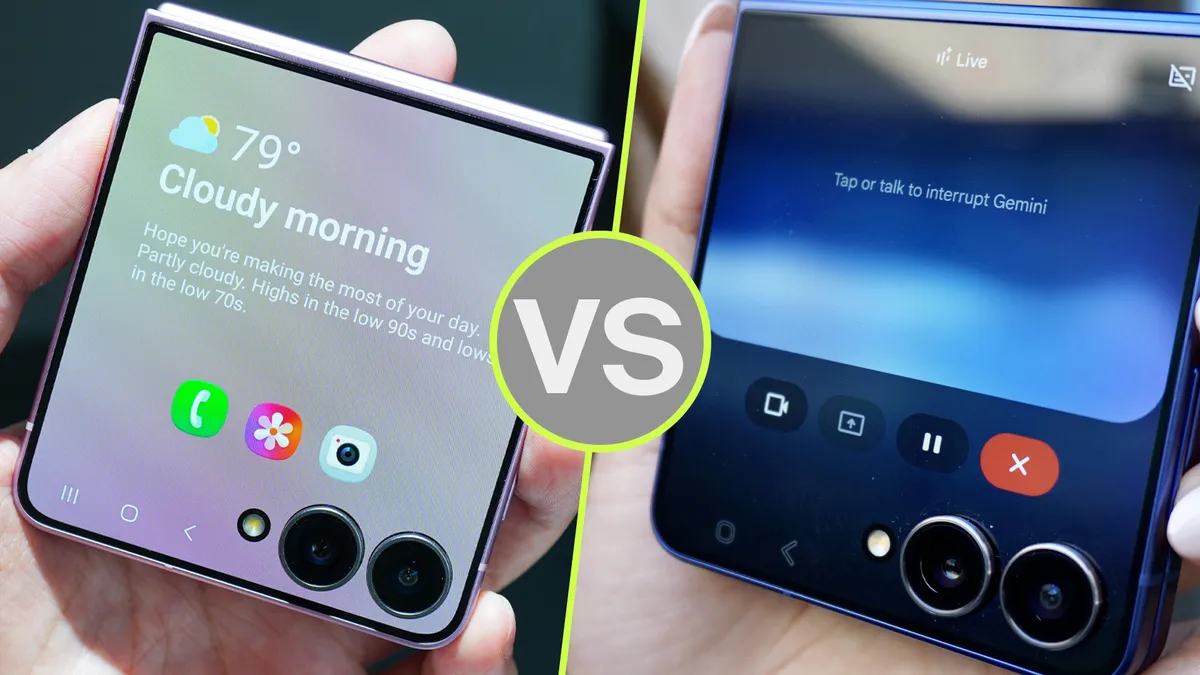
The battery story is similarly static. Capacity remains 4,300mAh and wired charging tops out at 25W. Samsung’s efficiency gains from the Snapdragon chip could improve real-world stamina, and that would be welcome. Still, a flagship-priced phone that takes the same conservative approach to charging feels dated when rivals are pushing larger cells and substantially quicker top-ups.
And the Flip 8 fits a larger industry pattern. Foldables have crossed the threshold from experimental hardware to dependable premium products, but their upgrades have become strangely incremental. Remember when every new slab phone brought a bigger sensor, a brighter screen, or a charging breakthrough? Today, much of the pitch has shifted toward AI processing and thinner bodies. Both can be useful, but neither is a substitute for addressing the features people notice at 8 p.m. with 12% battery left.
Who should buy the Galaxy Z Flip 8?
If you own a Z Flip 6, an older Flip, or a conventional phone from several years ago, the Galaxy Z Flip 8 makes a sensible case. You get current flagship silicon, Samsung’s latest software tools, a more refined physical design, and a cover screen designed to do more than show the time. For someone entering the foldable category, that package will feel fresh.
For Z Flip 7 owners, I’d wait. The performance headroom is real, particularly for people who edit video or push mobile games hard, but the unchanged camera system, battery, and charging setup leave too much of the daily experience untouched. This is the textbook definition of a skip-year upgrade.
The more interesting comparison may be between a launch-priced Galaxy Z Flip 8 and a discounted Z Flip 7. With the earlier phone reportedly falling by roughly $200 to $300 at retailers, its value proposition gets sharper fast. The newer model’s list price is also $100 higher, widening a gap that the spec sheet doesn’t fully justify.
Samsung has not abandoned the flip phone; it has simply chosen to polish it. Buyers can review the company’s broader Galaxy Z Flip lineup to see how far that design has come. But the Galaxy Z Flip 8 also shows Samsung nearing a decision point: next year, a thinner hinge and smarter widgets may no longer be enough. The company needs to prove that a foldable can be the best phone in its price bracket, not merely the most entertaining shape.
Frequently Asked Questions
Is the Galaxy Z Flip 8 worth upgrading from the Z Flip 7?
Probably not for most Z Flip 7 owners. The newer model offers a substantially faster processor, a thinner chassis, and improved cover-screen software, but it keeps the same displays, battery capacity, charging speed, camera sensors, RAM, and storage choices.
Does the Galaxy Z Flip 8 have better cameras?
The camera hardware appears unchanged: a 50-megapixel main camera and 12-megapixel ultrawide. Samsung is relying on newer image processing, editing tools, and improved stabilization, which may refine photos and video but should not create a dramatic generational leap.
What processor does the Galaxy Z Flip 8 use?
Samsung has moved to the Snapdragon 8 Elite Gen 5 for Galaxy, replacing the Exynos 2500 used in the prior model. Samsung says the newer chip improves CPU performance by 30 percent and GPU performance by 25 percent, while also helping with on-device AI work.

