

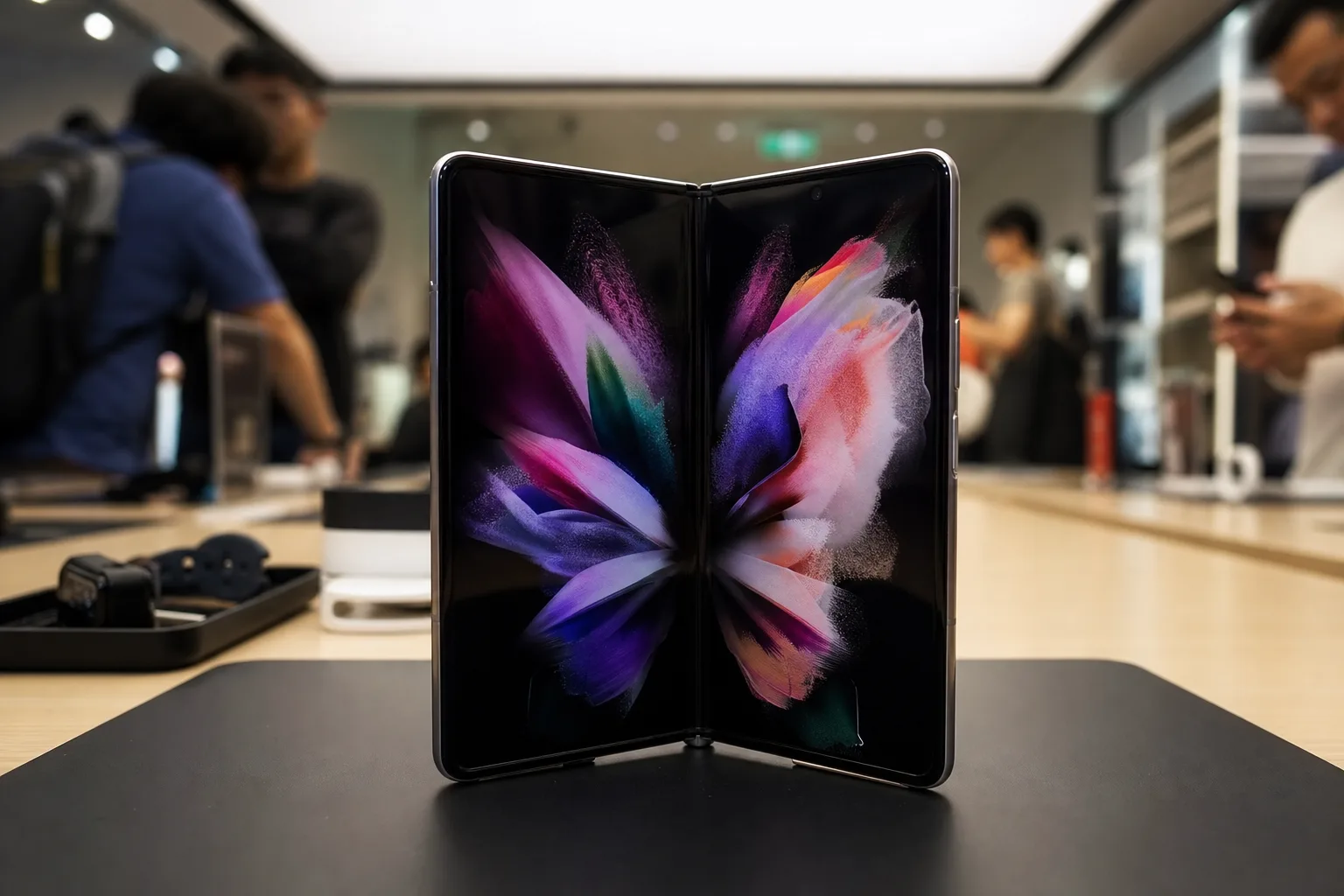
- Galaxy Z Fold 8 pricing in Korea sits roughly 23% below the US, a gap Samsung openly frames as strategic.
- The Galaxy Z Fold 8 Ultra starts at about $1,743 in Korea, compared with $2,099 in the United States.
- Samsung chief TM Roh says Korean buyers provide the feedback and support that help build Galaxy’s global standing.
- Roh also warned that Samsung cannot absorb every component cost increase forever, even with supplier partnerships.
Table of Contents
Samsung’s Galaxy Z Fold 8 pricing has a home-field advantage
The Galaxy Z Fold 8 has arrived with the kind of price tag that makes even committed Android enthusiasts pause before hitting a preorder button. In the US, the standard Fold begins at $1,899, while the Fold 8 Ultra starts at $2,099. But Samsung’s customers in South Korea are looking at a very different bill: the 256GB Ultra reportedly opens at 2.58 million won, or roughly $1,743.
This is not a rounding error, a temporary retailer promotion, or the usual confusion caused by taxes and currency conversion. Samsung Electronics mobile chief TM Roh describes it as a deliberate regional strategy. And frankly, it puts a spotlight on something phone makers usually prefer to leave fuzzy: a flagship’s price has as much to do with market strategy as it does with titanium rails, hinge engineering, memory costs, or whatever new camera sensor is tucked inside.
Roh reportedly told Korean media around the company’s Unpacked event that Korea is central to the Galaxy brand’s global competitiveness. Samsung’s newsroom His argument is straightforward. Galaxy began in Korea, Korean buyers helped shape it, and Samsung intends to reward that market with competitive local pricing.
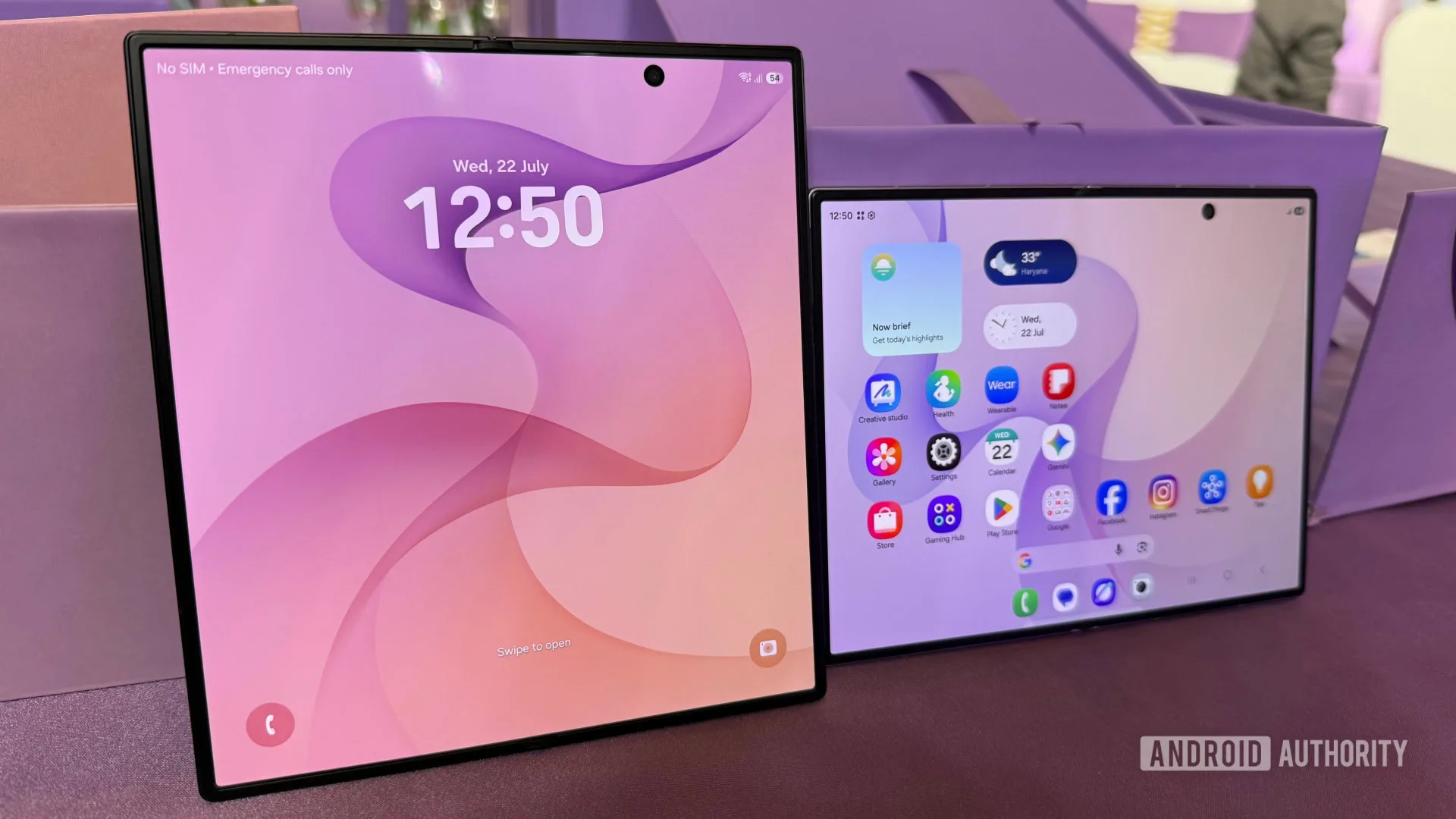
“Galaxy is a brand rooted in Korea, where it began and grew into a global leader,” Roh said, according to reports from the event. He added that Korean consumer support, criticism, and encouragement form a foundation for Samsung’s global position. That may sound like polished corporate language, because it is. But it is also a fairly candid admission that Samsung sees its domestic market as something more valuable than another sales territory.
The Galaxy Z Fold 8 gap is hard to ignore
Put the numbers side by side and the disparity gets uncomfortable fast. The Korean Galaxy Z Fold 8 Ultra price is around 20% lower than the US sticker price and about 44% below the reported European equivalent. For the regular Galaxy Z Fold 8, the divide appears wider: buyers in Korea pay about $1,541, versus $1,899 in America and roughly $2,280 in Europe.
Taxes do explain part of any cross-border comparison. European consumer pricing, for example, generally includes VAT, while US pricing does not include state and local sales tax at checkout. Exchange rates move constantly, too. Yet those factors do not make a gap approaching several hundred dollars disappear. A US buyer cannot reasonably look at Korea’s entry price and conclude the difference is all bookkeeping.
Samsung also faces different competitive conditions at home. Korea remains one of the world’s most sophisticated smartphone markets, with high-end handset adoption, dense carrier competition, and an audience that knows Samsung’s product lineup inside out. Apple is powerful there, but Samsung’s local stature still matters. Keeping the Galaxy Z Fold 8 within reach of premium buyers may be less about generosity than defending the very market that gives Samsung cultural credibility and a living test lab for its most ambitious devices.
Foldables are still a category Samsung needs to normalize. The company has spent years trying to turn the inward-folding phone from a fascinating luxury object into a plausible daily driver. Lower domestic pricing lets Samsung put more units into the wild, generating feedback, developer attention, repair data, and that all-important social proof. Nobody wants to be the only person at a café unfolding a tiny tablet from their pocket. Once it feels familiar, the category has a better shot.
Component costs are real, but they are not the whole story
Roh said Samsung has been absorbing a significant share of rising costs through supply-chain work and joint development with partners. That is believable. Foldables contain more expensive display assemblies, specialized hinges, larger batteries, and tighter packaging constraints than a conventional slab phone. Samsung also has an unusual advantage here: it is deeply involved in screens, memory, chips, and components through its broader corporate empire.
Still, Roh’s qualifier matters more than the reassurance. He said some increases will eventually reach customers when expenses go beyond what Samsung can take on itself. In other words, the Galaxy Z Fold 8 may be cheaper in Korea, but no market is permanently insulated from rising component prices, tariffs, logistics costs, or currency swings.
“Once costs exceed what we can absorb, it becomes inevitable that part of the increase is reflected in launch prices,” Roh said.
That is about as close as an executive gets to saying: do not expect the next one to be cheaper. Samsung has to protect margins while competing with Apple at the premium end and Chinese brands that are increasingly capable at the foldable end. Honor, Huawei, Oppo, Xiaomi, and Vivo have all made the category more crowded, even where their products are unavailable or limited by distribution and trade restrictions.
What overseas buyers should take from this
For buyers abroad, the math is fairly plain: the Galaxy Z Fold 8 price in the US and Europe is partly paying for Samsung’s global ambitions. Marketing, carrier deals, retail support, warranties, regulatory compliance, distribution margins, and local taxes all add weight. So does the willingness of affluent markets to tolerate high launch prices, at least until trade-in offers and carrier financing blur the actual cost.
Samsung knows that most buyers do not hand over $1,899 in one painful transaction. They trade in an old device, split the purchase over 24 or 36 months, and take whatever preorder storage upgrade is on offer. That makes a foldable feel more like a monthly utility bill than a two-thousand-dollar gadget. It also makes the headline price easier for manufacturers to keep raising.
My read is that Samsung’s Korea policy is smart business, but it is not a particularly satisfying answer for everyone else. Calling the domestic market a strategic foundation explains why Korean customers get a better deal; it does not explain why loyal buyers abroad should accept such a steep premium. If Samsung wants foldables to graduate from status symbols, the next real innovation may need to happen on the price sheet.

