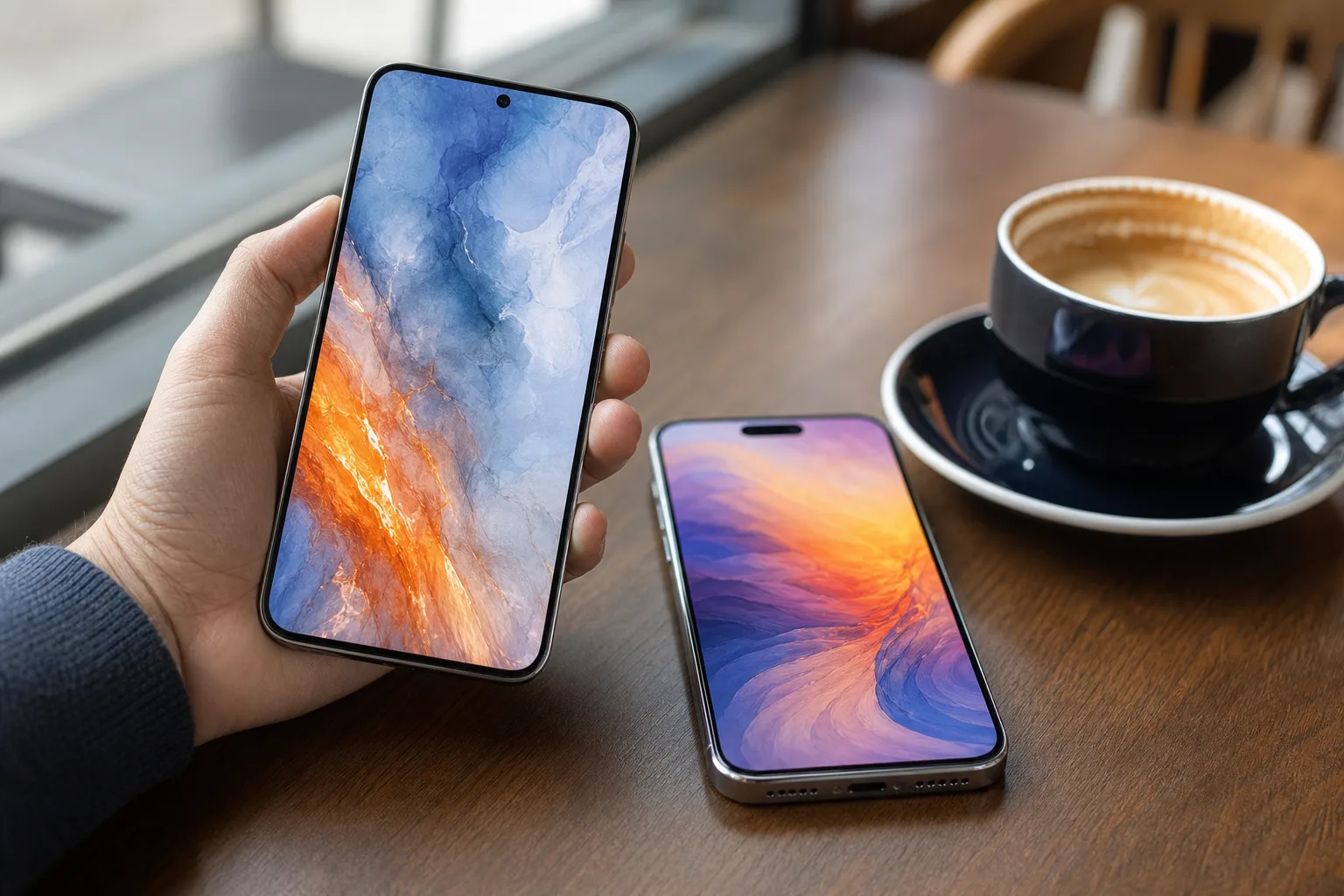
- Google Tensor chips gave Pixel phones distinctive AI features, but plenty of enthusiasts still aren’t sold on their day-to-day speed or efficiency.
- Many Pixel fans say Google Tensor chips have worn thin with buyers who expect flagship-level speed, thermals, and dependable cellular connectivity.
- A move toward TSMC-made Tensor chips could decide whether Pixel finally closes its longstanding silicon credibility gap.
- Pixel buyers may forgive benchmark compromises. Poor battery life, heat, and modem behavior are much tougher to explain away.
Table of Contents
Google Tensor chips have run out of easy excuses
Google Tensor chips were supposed to make Pixel phones feel meaningfully different from every other Android slab. In one sense, they did. Google used them to push on-device voice features, computational photography, call screening, transcription, and its increasingly aggressive AI ambitions. But nearly five years into the Tensor era, the response from Pixel fans points to an awkward reality: plenty of Pixel fans think the hardware bargain has stopped feeling like a bargain.
That frustration isn’t really about benchmark charts, at least not on its own. Most people don’t buy a Pixel to spend Saturday morning running Geekbench. They buy one because Google’s camera processing is excellent, Android updates arrive first, and the software often feels more thoughtful than the spec-sheet arms race elsewhere. The problem is that a flagship phone must still do the boring physical stuff well: stay reasonably cool, hold a signal, preserve battery, and avoid slowing down when the camera, maps, and mobile data are all working at once. For Google Tensor chips, those expectations are now the baseline rather than an optional extra.
When those basics wobble, the clever stuff starts to look like a distraction.
Google has had a fairly clear answer for years. Tensor was not built to beat Qualcomm at raw horsepower; it was built around Google’s own workloads. That argument had merit when Tensor arrived in Pixel phones. Apple had already proved that custom silicon could give a phone maker unusual control over its product, and Google had legitimate reasons to prioritize machine-learning tasks that made Pixel software stand apart.
But custom silicon is a long game. It’s also brutally expensive. Apple’s A-series chips succeed because Apple has spent years building the teams, tooling, and institutional muscle needed to make them excellent. Google entered the race through a closer relationship with Samsung’s Exynos ecosystem, and the resulting compromises have been visible. Pixel devices have repeatedly faced complaints around thermal behavior, battery endurance, and cellular modems, even as their cameras and software won praise.
The Pixel value proposition is harder to defend now
The first few generations of Google Tensor chips could be judged as a work in progress. That grace period doesn’t last forever. By the time a company reaches its fourth or fifth annual attempt, customers reasonably expect the fundamentals to settle down. They don’t need every Pixel to outrun a Galaxy S Ultra in a synthetic test. They do expect a phone that can navigate in a hot car without becoming a hand warmer, or maintain a reliable connection without turning airplane mode into a troubleshooting ritual.
This is where the Android market has changed around Google. Qualcomm’s latest flagship Snapdragon platforms have become increasingly power-efficient, and Samsung has substantially sharpened its own Android software story. That puts Google Tensor chips under a harsher light. Meanwhile, Apple remains the unpleasant comparison nobody in the premium-phone business can entirely escape: iPhones pair leading performance with long support windows and generally predictable battery behavior.
Google’s Pixels still have a personality. That matters. A Pixel camera can produce a great photo with almost comical ease, and features such as Now Playing, Recorder transcription, Call Screen, and spam protection make daily ownership better in ways that a spec sheet won’t capture. Google’s official Pixel lineup also makes a stronger case for long-term software support than many Android competitors have historically managed.
Yet premium buyers don’t evaluate a phone in separate columns. If its camera is superb but its modem is finicky, the experience isn’t “mostly superb.” It’s a great apartment with unreliable plumbing. You’ll talk about the plumbing.
Why Google Tensor chips still matter to Google
Abandoning Google Tensor chips would be far more complicated than the poll’s unhappiest respondents might wish. Google needs a hardware platform that can carry its AI strategy from the cloud onto personal devices. Its Gemini push depends in part on convincing people that local processing can be useful, private, and quick enough to feel natural. Tensor gives Google a route to tune that stack in a way a wholly off-the-shelf Qualcomm design might not.
There’s also a strategic reason to persist. Pixel is not Samsung in scale, and it probably never will be. But it serves as Google’s reference device for Android, its showcase for new AI features, and a testing ground for ideas that eventually find their way into the broader ecosystem. The company doesn’t need to win every market-share battle to justify Pixel; it needs the platform to be credible.
That final word is doing a lot of work. Credibility comes from trust, not from claiming a chip is optimized for AI. If a customer hears that their Pixel uses specialized silicon, they should see the benefit in battery life, camera responsiveness, voice processing, and signal reliability. If instead they mostly notice compromises, the custom-chip story becomes a tax on loyalty.
My read is that Google’s challenge isn’t to make Tensor the fastest chip on Earth. Frankly, that goal may not even be worth chasing. It needs to make Pixel hardware boringly dependable while retaining the few software advantages people can actually feel. There is nothing glamorous about modem tuning, thermal headroom, or standby drain. There is also nothing more important to a phone you carry every day.
A manufacturing change is a real test, not a magic fix
If Google were to shift Tensor manufacturing to TSMC, it would be a significant moment for Google Tensor chips. TSMC manufactures the processors in Apple’s iPhones and many of Qualcomm’s leading products, and its advanced nodes have become the industry’s default answer for companies seeking better efficiency. For Google Tensor chips, the manufacturing choice could shape whether those efficiency gains become noticeable in everyday Pixel use.
Still, manufacturing is only one part of the equation. A chip can be made on an excellent process and still disappoint if its architecture, radio subsystem, packaging, cooling, or software integration falls short. Google also has to prove it can execute its own silicon vision at a yearly consumer-product cadence. This is not a school project where the team gets points for showing its work.
The encouraging case is easy to see. A more independent Tensor design made at TSMC could reduce the lingering Exynos comparisons and give Google a cleaner foundation for years of Pixel features. Better efficiency could translate into less heat and stronger battery life, while a better modem arrangement could erase one of the most persistent Pixel complaints.
The skeptical case is equally fair. Google has asked customers to accept trade-offs for several generations already. Another promise that next year’s silicon will finally fix everything may land differently now, especially when competing Android phones offer fewer excuses at similar prices.
Pixel fans aren’t asking for perfection
The response reflected in the poll shouldn’t be read as a demand to kill the project tomorrow. Plenty of committed Pixel users still value what Tensor enables, and some will gladly accept modest performance compromises for Google’s camera and software experience. The divide is really over whether the compromises remain modest.
For Google, that distinction should be sobering. Google Tensor chips remain central to its Pixel identity, but identity is not immunity. The company has one obvious route forward: make the next generation demonstrably better in the moments users notice before they open a benchmark app. Stronger reception. Cooler operation. Battery life that does not invite caveats.
If Google can deliver that, Tensor becomes the quietly capable engine it was always meant to be. If it cannot, Pixel’s most distinctive piece of hardware may keep looking less like a strategic advantage and more like an annual explanation.
Frequently Asked Questions
Why do Google Tensor chips receive so much criticism?
After nearly five years of Tensor, many Pixel fans feel Google’s custom chips still are not cutting it.
Who makes Google Tensor chips?
The source does not identify who manufactures Google Tensor chips.
Will Google Tensor chips improve in future Pixel phones?
The source does not say whether Tensor chips will improve in future Pixel phones.